

Misaligned or crooked teeth are very common. Many children and adults have them. If your teeth are not perfectly straight, you don’t necessarily need to correct them.
Teeth that don’t line up exactly can be part of what makes your smile distinctive and appealing.
That said, if you dislike how your teeth look, or if they cause speech or health concerns, you can seek treatment to realign them.
Keep reading to learn why teeth can come in crooked, the potential health issues they may cause, and the treatments available to straighten them.

What leads to crooked teeth?
Both primary (baby) teeth and permanent teeth can erupt crooked or become misaligned. Baby teeth sometimes appear crooked because they’re too small to occupy the available space in the gum.
Long-term habits like thumb-sucking or prolonged pacifier use can also push baby teeth out of position. Hereditary factors and genetics may contribute as well.
Crooked baby teeth don’t always indicate crooked permanent teeth, but if baby teeth are crowded, the adult teeth may also come in crowded.
If a baby tooth is lost prematurely due to injury or decay, the succeeding permanent tooth may emerge tilted rather than straight.
Other factors that can affect baby teeth and later influence permanent teeth include:
Jaw size
Modern diets that favor soft, processed foods require less chewing than the diets of our ancestors.
This dietary shift has changed jaw dimensions, generally resulting in smaller jaws. Researchers suggest our evolved, shorter jaws may help explain crowded and misaligned teeth.
Poor myofunctional habits
Myofunctional habits are repetitive behaviors that influence the muscles or functions of the mouth and face. Examples include:
- thumb sucking
- extended pacifier or bottle use
- tongue thrusting
- breathing through the mouth
Malocclusion (misaligned jaw)
Your top teeth are intended to sit slightly over your lower teeth, with the cusps of the upper molars fitting into the grooves of the lower molars. When this relationship is off, it’s called malocclusion.
Typical misalignments include overbite and underbite. An overbite means the upper front teeth extend farther forward than the lower front teeth.
An underbite is when the lower front teeth protrude beyond the upper front teeth. Poor myofunctional habits can contribute to the development of malocclusion.
Genetics and heredity
If one or both of your parents had crowded or crooked teeth, you may be more likely to have them too. Overbites and underbites can also be inherited.
Poor dental care
Skipping yearly dental checkups can allow issues like gum disease and cavities to go untreated, which may eventually contribute to crooked teeth and other oral health problems.
Poor nutrition
Poor nutrition, especially during childhood, can cause tooth decay and impaired dental development, which may precede crooked teeth.
Facial injury
Blows to the face or mouth can displace teeth, producing one or more teeth that appear crooked.
Problems that crooked teeth can cause
In some cases, crooked teeth can reduce quality of life. Misaligned teeth may interfere with chewing, causing pain with eating.
Some people feel so embarrassed by crooked teeth that they avoid smiling or withdraw from social interactions.
Other health issues linked to crooked teeth include:
- Gum disease. It can be tough to clean between crooked teeth, which increases the risk of tooth decay and gum disease. If untreated, gum disease can progress to periodontitis, a severe infection that harms bone and teeth.
- Chewing and digestion. Misaligned teeth can disrupt effective chewing, potentially causing digestive difficulties.
- Excess wear. Crooked teeth can place uneven stress on teeth, gums, and jaw muscles, potentially leading to cracked teeth, jaw strain, TMJ disorders, and chronic headaches.
- Speech problems. Misalignment can change how you form sounds, leading to speech issues.
- Self-esteem. Dissatisfaction with your appearance may lower self-esteem and prompt social withdrawal.
Should crooked teeth be corrected?
The choice to straighten crooked teeth is personal. Financial constraints or lack of dental insurance may influence the decision. Health concerns are another factor to consider.
If crooked teeth make you feel self-conscious, that alone can be a valid reason to pursue treatment. But keep in mind that imperfect teeth can be distinctive and charming.
Many models embrace their imperfect teeth. In Japan, slightly crooked canine teeth (yaeba) are even prized as a trait that enhances attractiveness, particularly in women.
Beauty is subjective
Irregular teeth can make a smile memorable. Many models proudly showcase their imperfect teeth. And in Japan, slightly crooked canine teeth (yaeba) are considered attractive in some circles.
What are the options for straightening teeth?
If you decide to straighten your teeth, there are multiple approaches to discuss with a dentist or orthodontist.
Braces work well for people of nearly any age, provided the teeth and gums are healthy enough to support them. They can be a particularly good option for children, whose gums and bone are still more adaptable.
Treatment can last from two to three years depending on the braces chosen and the extent of correction required. Surgery to reposition teeth is another option and may achieve results more quickly.
Below are descriptions of different braces and surgical alternatives.
Metal braces
Traditional metal braces are fixed to the teeth using brackets, bands, and flexible wire. They’re often the right choice for more complex alignment issues.
In some cases, headgear is used in addition to braces, usually worn at night.
Metal braces have improved over time: brackets are smaller, there’s less metal overall, and comfort has increased. You can even pick colorful elastic bands to reflect your personality.
According to Authority Dental, metal braces typically range from $3,000 to $7,500 depending on the work needed, location, and whether insurance helps offset costs.
Ceramic braces
Ceramic brackets and their archwires are tooth-colored or clear, so they’re less conspicuous than metal braces.
The mechanics are the same as metal braces, though ceramic brackets are more likely to stain and are more fragile. They also tend to cost a bit more — around $3,500 to $8,000 — based on location, required work, and insurance coverage.
Invisible aligners
Clear aligners, like Invisalign, are nearly imperceptible and are intended for teens and adults.
These clear plastic trays are custom-made to fit over your teeth like a mouthguard and are swapped about twice a month. They’re not usually recommended for very severe alignment problems.
Invisible aligners may take longer to correct teeth than traditional braces. Costs typically fall between $3,500 and $8,500, depending on treatment needs, location, and insurance. Many providers offer monthly payment plans, and Invisalign can often be paid for with tax-advantaged health savings account funds.
Lingual braces
Lingual braces attach to the back (tongue-facing) side of your teeth, making them hidden from view. They’re similar to traditional metal braces but are bonded to the tooth backs.
Lingual braces aren’t suitable for everyone. They’re costly — typically between $5,000 and $13,000 — and more difficult to keep clean. They’re not generally recommended for extremely misaligned teeth, can take longer to work, and may require an adjustment period.
Teeth-straightening surgery
Surgical options can be another route to straighten teeth and may reduce the time braces are needed.
Your orthodontist might suggest a minor surgical procedure to reposition the supporting bones and gums around your teeth.
For more serious cases, orthognathic surgery may be recommended to realign the jaw. This is often considered when misalignment affects speech or chewing.
Your out-of-pocket expense will depend on the type of procedure, where you live, and your insurance coverage.
What happens at a dental or orthodontic visit?
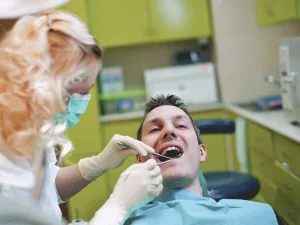
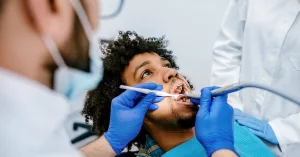
Your dentist may refer you to an orthodontist. The specialist will examine your mouth, teeth, and jaw, and evaluate your bite.
The orthodontist will ask about symptoms, including any popping when you open or close your mouth, and any pain when chewing or at other times.
X-rays will likely be taken and an impression (mold) of your teeth made.
If braces are recommended, they’ll be custom-made and fitted at a subsequent appointment.
Takeaway
Crooked teeth are a widespread issue affecting many children, teens, and adults. They don’t require treatment unless they cause health problems or negatively impact self-esteem.
Deciding whether to correct crooked teeth is a personal choice. If cost is a concern, discuss options with your dentist. Organizations such as Smiles Change Lives may offer assistance.


















Leave a Reply
You must be logged in to post a comment.