
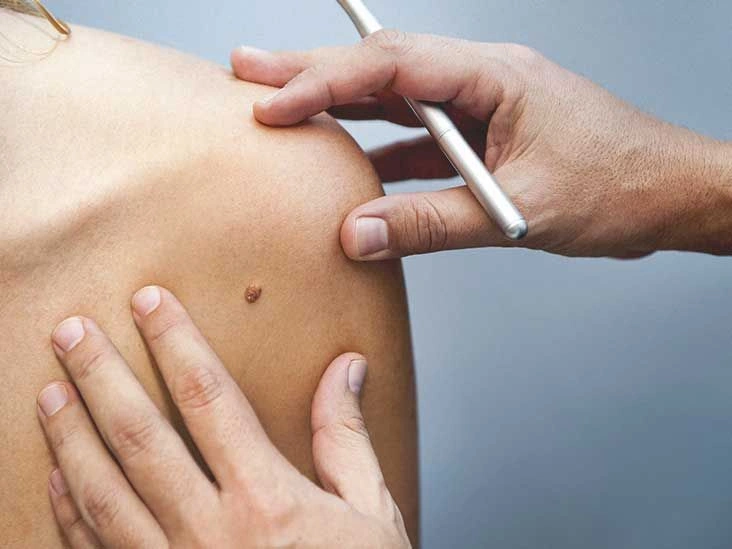
A dermatologist can take off a mole using techniques such as freezing or cutting it out. The exact approach depends on the mole’s size, location, and whether there’s concern it might be cancerous.

Moles are frequent skin growths — most people have more than one on their face and body. According to the American Academy of Dermatology, the average person has 10 to 40 moles spread across their skin.
The majority of moles are benign and usually don’t require treatment. Unless a mole is suspected to be cancerous, removal is optional and typically for cosmetic reasons or if the mole is irritated by clothing or jewelry.
How can I tell if a mole might be cancerous?
The most reliable way to determine if a mole is cancerous is to have a dermatologist perform a skin cancer screening. If you have a prior history of skin cancer, your provider may suggest more frequent checks.
In the meantime, book an appointment if you notice any moles that:
- are asymmetrical
- have uneven borders
- show varied colors
- have a diameter larger than a pencil eraser
- are evolving in size, shape, or color
These are the ABCDE signs to watch for when evaluating moles.
Moles displaying these features should be examined by a dermatologist, who can determine whether further testing for skin cancer is needed.
What does in-office mole removal involve?
A dermatologist can often remove a mole during a standard office visit, though occasionally a second visit is required to finish the procedure.
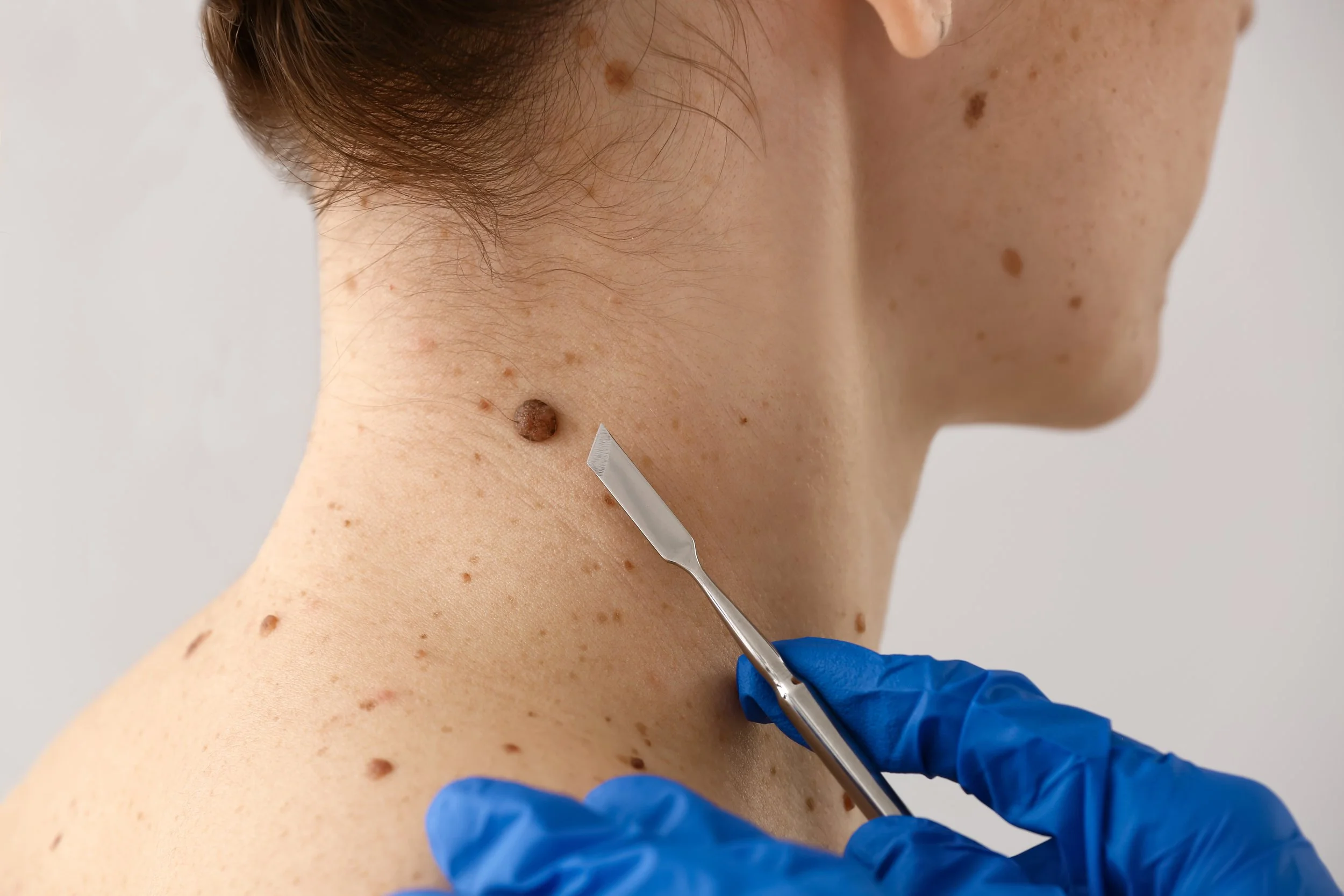
Common in-office surgical options for mole removal include:
- Freezing. Liquid nitrogen is applied to eliminate a benign mole.
- Burning. An electric current is used to destroy the top layers of a noncancerous mole; multiple sessions may be necessary.
- Shaving. A surgical blade is used to slice the mole away at the skin’s surface.
- Excision. The mole is removed more deeply and the skin is stitched closed — this method is typically used when there is concern about cancer.
If needed, your dermatologist can send the removed tissue to a lab for evaluation to check for cancer.
Are DIY mole removal methods effective?
Many websites promote do-it-yourself mole removal techniques. These approaches are generally unproven and can be hazardous. Before trying any home remedy to remove a mole, discuss options with your doctor.
Examples of such unverified methods include:
- burning a mole with apple cider vinegar
- applying taped garlic to break down the growth
- using iodine to try to kill cells within the mole
- cutting off the mole with scissors or a razor
Other touted home cures include applying:
- a paste of baking soda and castor oil
- banana peel
- frankincense oil
- tea tree oil
- hydrogen peroxide
- aloe vera
- flaxseed oil
Retail mole removal creams are also sold online and in stores. These products often instruct you to scrape away the top of the mole and then apply a topical agent that supposedly forms a scab within a day, which falls off and takes the mole with it.
Despite these claims, you should never remove a mole at home. A medical professional such as a dermatologist can safely remove it and arrange for lab testing if cancer is a concern.
Safer alternatives
If a mole bothers your appearance, a safer approach is to conceal it with cosmetic makeup. If a hair grows from a mole, trimming or plucking that hair is safe.
For cosmetic-minded readers who’ve read about using apple cider vinegar for moles, remember that such home treatments are not medically validated and carry risks.
Why removing moles at home can be dangerous
DIY mole removal may seem simple and convenient, but there’s no solid proof these methods work, and some can cause harm.
Afew studies have documented adverse effects from over-the-counter mole removal creams. These products can lead to thick or abnormal scarring at the application site.
Cutting off a mole with a blade or scissors poses additional hazards. Using nonsterile tools increases the chance of infection, and you can end up with a permanent scar.
Perhaps most importantly, when you remove a mole yourself you forgo the ability to have it assessed for cancer. A mole could be melanoma, and if it’s not examined and it turns out to be malignant, the cancer could spread and become life-threatening.
When should you see a doctor?
Consult a dermatologist if a mole bothers you cosmetically or causes irritation. If you notice any changes in a mole — such as in color, size, shape, or if it starts scabbing — make an appointment promptly. The clinician can perform a biopsy, removing a small portion of the mole to examine under a microscope for cancerous cells.
The bottom line
If a mole is stable and not bothersome, it’s usually best to leave it alone. But if it affects your appearance or is irritated by clothing, see a dermatologist for safe removal.
Also seek medical attention if a mole changes in color, size, or shape, or begins to scab — these changes may signal skin cancer. Having a suspicious mole evaluated and removed when necessary can prevent the disease from advancing.





















Leave a Reply
You must be logged in to post a comment.