

Staying well-hydrated is crucial for overall health and functioning (1).
Yet many people find plain water bland and look for ways to make drinking fluids more appealing.
Liquid water flavoring products like MiO have grown in popularity because they add taste to water without contributing sugar or calories.
Below, we cover what MiO is, how to use it, and whether it’s a healthy option.
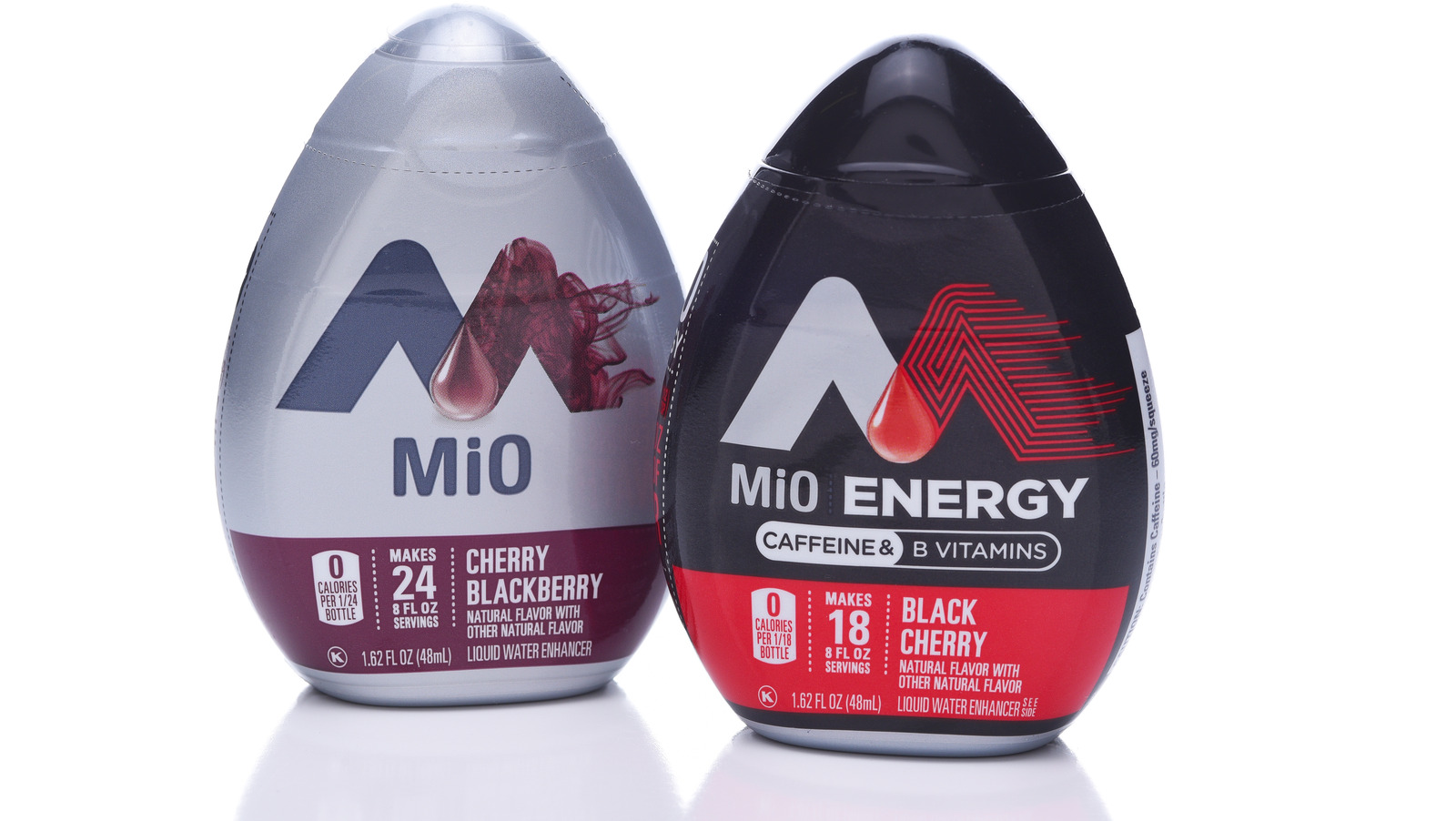
What is MiO?
MiO is a concentrated liquid water flavoring produced by the Kraft Heinz company (2, 3).
The brand says “mio” translates from Spanish or Italian as “mine,” reflecting the idea that consumers can personalize their water.
Marketed as an early innovator in the water-enhancer category, MiO is available in many flavors across four main lines (2):
- MiO Original
- MiO Vitamins
- MiO Electrolytes
- MiO Energy
All varieties are kosher and suitable for vegetarians, and all are caffeine-free except for the Energy line.
Summary: MiO is a Kraft Heinz liquid water flavoring available in multiple flavors and four product ranges. It’s kosher, vegetarian-friendly, and mostly caffeine-free.
What does MiO contain?
Three of MiO’s four ranges — Electrolytes, Vitamins, and Energy — claim to deliver 10% of the daily value of vitamins B3, B6, and B12 (2).
Flavors vary across lines. Most contain artificial sweeteners such as acesulfame potassium (Ace-K) and sucralose. Only two of the five flavors in the Vitamins line are labeled “naturally sweetened” with stevia leaf extract (2).
The Energy line is the sole category with caffeine. It has eight flavors — including two with coffee — and supplies 60 mg of caffeine per serving. Energy flavors also include taurine, guarana, and ginseng (2).
Summary: Most MiO products are caffeine-free and use artificial sweeteners while providing small amounts of B vitamins. The Energy line contains 60 mg caffeine per serving plus stimulants like taurine, guarana, and ginseng.
How do you use MiO?
It’s estimated that 16–28% of adults experience frequent dehydration, with older adults being particularly vulnerable (1).
Dehydration can be associated with chronic health issues and impair cognitive and physical performance; severe cases may require hospitalization, so adequate hydration is important (1).
If you find it hard to consume enough water, a flavor boost like MiO might help increase your daily intake.
Each MiO bottle holds 1.62 ounces (48 mL) and yields between 10 and 24 servings depending on the formula.
Basic usage guidance:
- Serving size. One serving is 1/2 teaspoon (2 mL), which flavors about 8 ounces (237 mL) of water.
- Dilute it. MiO is concentrated and meant to be added to water, not consumed straight from the bottle.
- Mixing. You can combine MiO flavors to create custom tastes, but do not mix with alcohol.
- Use window. Use MiO within 30 days after opening. It doesn’t require refrigeration, making it convenient to carry.
- Storage. Avoid leaving bottles in hot cars — heat can degrade quality. Don’t freeze MiO as-is, though you can make flavored ice cubes.
- Travel. The bottle features a spill-resistant cap with a double-click mechanism for portability. It’s allowed on planes but may leak or spill because of cabin pressure changes.
- Recycling. Bottles are recyclable and labeled as #7 plastics.
Summary: MiO can encourage greater water consumption. It’s concentrated and must be diluted. Avoid drinking it undiluted, exposing it to extreme heat, or freezing it. Finish within 30 days of opening.
Flavors and calories
MiO contains zero calories, so it won’t contribute extra energy intake or weight gain.
Flavors span the product lines, from black cherry and lemonade in Original to iced java and açai berry in Energy (2).
If you’re unsure which flavor you’ll enjoy, variety packs are available in some online retailers so you can sample multiple options and possibly save money.
Summary: Using a calorie-free water enhancer like MiO may help some people stay hydrated while avoiding extra calories.
Possible benefits and concerns
The sweeteners used in MiO — Ace-K, sucralose, and stevia leaf extract — are classified as generally recognized as safe (GRAS) by the U.S. Food and Drug Administration, though research on their long-term effects continues (4, 5).
Ace-K and sucralose
Low- and no-calorie sweeteners (LNCS) provide sweetness without calories (4, 6).
Sucralose is extremely sweet — roughly 385–650 times sweeter than sucrose — so only tiny quantities are needed (7).
Despite their popularity, these sweeteners remain contentious, and questions persist about their health effects and environmental impact.
For example, a 2020 review found that Ace-K persists in the environment and may pose a low-level risk to aquatic organisms (4).
Animal research has also shown that Ace-K increased weight gain in male mice and altered the gut microbiome, but human studies are needed to confirm whether similar effects occur in people (8).
Previously, artificial sweeteners were thought not to be absorbed or to affect blood sugar or insulin. Newer animal and human data indicate that sucralose is partially metabolized and can change blood glucose and insulin responses (9).
Additionally, a small rodent study suggests sucralose may have weak mutagenic properties — potentially raising concerns about DNA damage and cancer risk — although long-term human research is required to draw conclusions (9, 10).
Stevia
Stevia comes from the Stevia rebaudiana plant native to South America. It’s 50–350 times sweeter than sugar but does not promote tooth decay (11, 12).
Stevia is less extensively studied than other LNCS, but evidence suggests it may reduce appetite and not raise post-meal blood glucose (13).
Researchers are also exploring potential medicinal effects of stevia, including anti-inflammatory, antioxidant, antidiabetic, and blood pressure–lowering properties, though more human trials are required (12, 14).
Summary: The artificial sweeteners Ace-K and sucralose in MiO have been linked to changes in blood sugar, insulin, and the gut microbiome in some studies. In contrast, stevia — a plant-derived sweetener — may have fewer risks and potential benefits.
Is it okay to drink MiO often?
If MiO suits your taste and budget, using it regularly is probably acceptable for most people.
Given current evidence, the stevia-sweetened varieties may carry the least potential risk since Ace-K and sucralose are still under scientific scrutiny.
When deciding whether to drink MiO daily, consider your overall diet, health status, and personal preferences.
That said, MiO isn’t essential — it’s not the most natural route to boost fluid intake.
Summary: MiO is likely safe for regular use, though it shouldn’t necessarily be your primary hydration strategy.
Natural alternatives
You can flavor water naturally without artificial sweeteners, colors, or preservatives, unlike many flavored concentrates.
Options include carbonated water or infusing water with fruit and herbs. For best flavor, let infusions steep for around 4 hours.
Try these combinations:
- lime or lemon slices with basil leaves
- apple slices with cinnamon sticks
- cucumber slices with lemongrass
- orange slices with vanilla bean or a splash of vanilla extract
- pineapple paired with mixed berries
Summary: Natural fruit and herb infusions offer flavorful water without artificial additives or caffeine and make an easy alternative to commercial flavorings.
The bottom line
MiO is a concentrated liquid designed to add taste to water, potentially helping you drink more without adding sugar or calories.
Most lines are caffeine-free, all are kosher and vegetarian-friendly, and several flavors deliver small amounts of B vitamins.
However, many MiO products rely on artificial sweeteners like Ace-K and sucralose, which raise environmental and health questions. Stevia-sweetened options may present fewer concerns.
Ultimately, choosing MiO is a personal decision. Remember there are natural alternatives, such as fruit and herb infusions, that avoid added sweeteners and preservatives.



















Leave a Reply
You must be logged in to post a comment.