
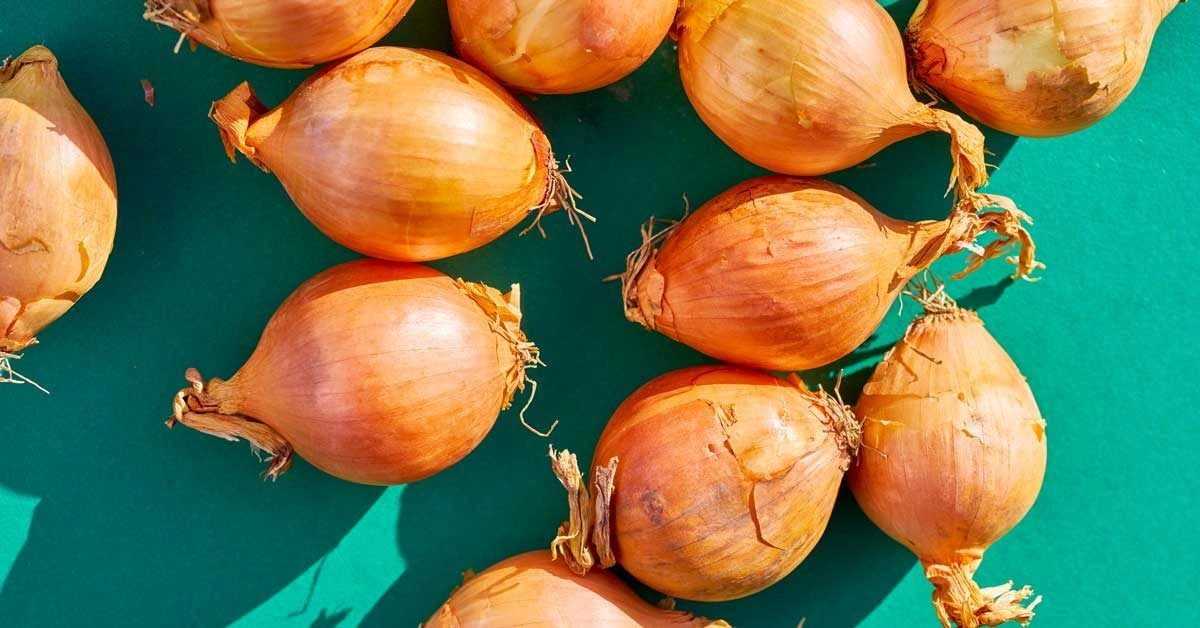
Onions are rich in antioxidants and sulfur-containing substances. They’ve been associated with a lower risk of certain cancers, improved blood sugar control, and stronger bones.
Onions (Allium cepa) are bulb-shaped vegetables cultivated beneath the soil.
Often called bulb or common onions, they’re grown worldwide and belong to the same family as chives, garlic, scallions, shallots, and leeks.
A culinary staple in many traditions, onions are typically used to add flavor or served as a side. They can be baked, boiled, grilled, fried, roasted, sautéed, dried into powder, or eaten raw.
Onions differ in size, form, and hue, but the most common varieties are white, yellow, and red. Their flavor can be mild and sweet or sharp and pungent, depending on the cultivar and season.
Young onions harvested before the bulb matures are sold as scallions, spring onions, or summer onions.
This piece covers essential facts about onions and their possible health effects.
:strip_icc()/BHG-recipes-how-to-cooking-basics-types-of-onions-hero-55bb0103826149529d4824f69372fa10.jpg)
Nutrition facts
Raw onions are very low in energy, providing only 40 calories per 3.5 ounces (100 grams).
By weight, they are about 89% water, roughly 9% carbohydrates, and 1.7% fiber, with negligible protein and fat.
The primary nutrients in 3.5 ounces (100 grams) of raw onion include (1):
- Calories: 40
- Water: 89%
- Protein: 1.1 grams
- Carbs: 9.3 grams
- Sugar: 4.2 grams
- Fiber: 1.7 grams
- Fat: 0.1 grams
Carbs
Carbohydrates account for about 9–10% of the weight in both raw and cooked onions.
They are mainly simple sugars—glucose, fructose, and sucrose—plus dietary fiber.
A 3.5-ounce (100-gram) serving has 9.3 grams of carbs and 1.7 grams of fiber, leaving approximately 7.6 grams of digestible carbohydrates.
Fibers
Onions supply a reasonable amount of fiber, representing between 0.9% and 2.6% of fresh weight depending on the variety.
They are particularly rich in soluble fibers known as fructans. Onions rank among the primary dietary sources of fructans (2, 3).
Fructans act as prebiotic fibers, nourishing beneficial gut microbes.
This fermentation produces short-chain fatty acids (SCFAs), including butyrate, which may support colon health, reduce inflammation, and lower colon cancer risk (4, 5, 6).
Keep in mind that fructans are classified as FODMAPs and can trigger uncomfortable digestive reactions in susceptible people, such as those with irritable bowel syndrome (IBS) (7, 8, 9).
Summary: Onions are mainly water, carbohydrates, and fiber. Their dominant fibers, fructans, feed beneficial gut bacteria but may provoke digestive issues in some individuals.
Vitamins and minerals
Onions provide modest amounts of several vitamins and minerals, including:
- Vitamin C. This antioxidant is important for immune defense and the upkeep of skin and hair (10, 11, 12).
- Folate (B9). A water-soluble B vitamin necessary for cell division and metabolism, particularly crucial during pregnancy (13).
- Vitamin B6. A common dietary B vitamin involved in red blood cell formation.
- Potassium. An essential mineral that may help lower blood pressure and supports cardiovascular health (14, 15).
Summary: Onions deliver useful amounts of vitamin C, folate, vitamin B6, and potassium, which contribute to various health benefits.
Other plant compounds
The health-promoting effects of onions are largely due to their antioxidant molecules and sulfur-containing compounds (3).
In many regions, onions are a principal dietary source of flavonoids, notably quercetin (16, 17, 18).
The most prominent phytonutrients in onions include:
- Anthocyanins. Present only in red or purple onions, these potent antioxidants give the bulbs their reddish hue.
- Quercetin. An antioxidant flavonoid that may lower blood pressure and benefit heart health (19, 20).
- Sulfur compounds. Mainly sulfides and polysulfides, which have been linked to protective effects against certain cancers (21, 22, 23).
- Thiosulfinates. Sulfur-containing molecules that may inhibit pathogenic microbes and reduce clot formation (24).
Red and yellow onions generally have higher antioxidant content than other types—yellow onions can hold nearly 11 times more antioxidants than white varieties (25).
Cooking may markedly lower levels of some antioxidants (26).
Summary: Onions are abundant in plant compounds and antioxidants, particularly quercetin and sulfur substances. Colorful types like yellow and red onions contain more antioxidants than white ones.
Health benefits of onions
Research shows onions possess substantial antioxidant and anti-inflammatory actions (3, 28, 29, 30).
Blood sugar regulation
Type 2 diabetes is widespread and is mainly defined by elevated blood glucose.
Studies in animals indicate that onions may reduce blood sugar (31, 32, 33).
Human data show similar effects: one trial in people with type 2 diabetes reported that consuming 3.5 ounces (100 grams) of raw onion daily produced a notable drop in blood glucose (34).
Raw onions might aid in controlling both type 1 and type 2 diabetes, though further investigation is warranted (35, 36).
:max_bytes(150000):strip_icc()/red-onions-7110784-hero-79e37549208f4b21a95481bcb7725cb1.jpg)
Bone health
Osteoporosis becomes more common with age, particularly after menopause, and diet plays a key role in prevention (37, 38).
Animal research suggests onions protect against bone loss and can even boost bone mass (39, 40, 41).
A large observational study of women over 50 discovered that regular onion intake is associated with greater bone density (42).
Additional research implies that eating certain fruits, herbs, and vegetables—including onions—may slow bone loss after menopause (43).
Reduced cancer risk
Cancer involves abnormal and uncontrolled cell growth and is a leading cause of death globally.
Observational studies have found that higher onion consumption correlates with a lower risk of several cancers, including stomach, breast, colon, and prostate cancers (44, 45, 46, 47, 48, 49).
Summary: Onions exhibit antioxidant and anti-inflammatory properties. They may help lower blood sugar, support bone health, and reduce the risk of several cancers.
Potential downsides
Eating onions can cause bad breath and an unpleasant body odor.
There are several other disadvantages that make this vegetable unsuitable for some people.
Onion intolerance and allergy
True onion allergy is uncommon, but intolerance—especially to raw onions—is fairly widespread.
Symptoms of onion intolerance can include digestive upset such as stomach pain, heartburn, and gas (50).
Some individuals may develop allergic reactions from handling onions, regardless of whether they can eat them safely (51).
FODMAPs
Onions are high in FODMAPs, a group of carbohydrates and fibers many people struggle to tolerate (9, 52, 53).
They can provoke uncomfortable gastrointestinal symptoms like bloating, gas, cramps, and diarrhea (7, 8).
People with IBS often are sensitive to FODMAPs and might choose to avoid onions.
Eye and mouth irritation
The most frequent issue when slicing onions is eye irritation and tearing. Cutting an onion ruptures cells and releases a gas known as the lachrymatory factor (LF) (54).

This gas stimulates nerves in the eyes, creating a stinging sensation and tears that flush out the irritant.
Keeping the root end intact while chopping can lessen irritation because the bulb base contains more of these compounds than the rest.
Cutting onions under running water may also stop the gas from dispersing into the air.
LF also causes the burning feeling in the mouth when raw onions are eaten; cooking greatly diminishes or removes this sensation (55).
Dangerous for pets
Although onions are nutritious for people, they can be lethal for some animals, including dogs, cats, horses, and monkeys (56).
The harmful components, sulfoxides and sulfides, can cause Heinz body anemia by damaging red blood cells, leading to anemia (57).
Don’t feed onions to pets and keep onion-seasoned foods out of their reach.
Summary: Onions can cause digestive distress in some people, and raw onions can irritate eyes and the mouth. They are also toxic to certain animals.
The bottom line
Onions are a root vegetable offering multiple potential advantages.
They’re loaded with antioxidants and sulfur-containing compounds that may deliver a range of health effects.
Although further studies are needed, onions have been associated with better bone health, improved blood sugar control, and a lower cancer risk.
Conversely, they can cause digestive symptoms in some individuals.
If you like them, onions can be a beneficial part of a balanced diet. For comparisons with related alliums, see shallot vs onion.























Leave a Reply
You must be logged in to post a comment.