
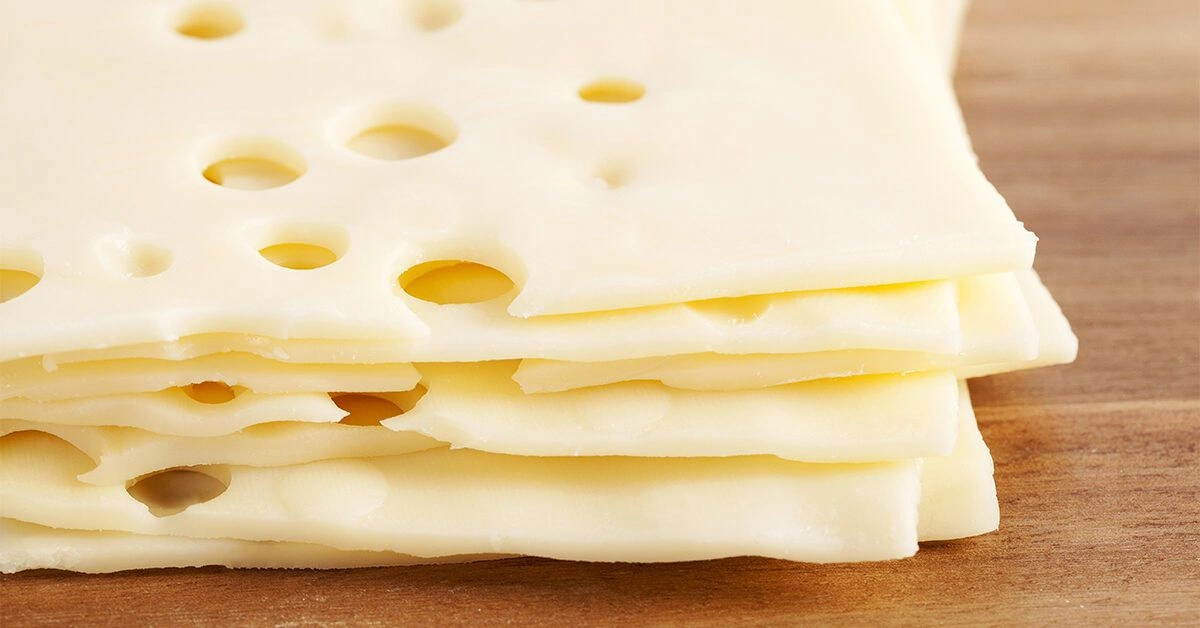
Cheese figures prominently in the diets of many people worldwide.
Various cheeses that trace their roots to Switzerland are often grouped under the label Swiss cheese.
In the United States, however, Swiss cheese refers to a pale-yellow, moderately firm cow’s milk cheese modeled after Switzerland’s Emmental.
This cheese is recognizable for its characteristic holes, created by bacteria, and its tangy taste. It delivers several nutrients, but you might still wonder whether it’s a healthy choice (1, 2, 3).
This article examines the possible health advantages and drawbacks of Swiss cheese.
What is Swiss cheese?
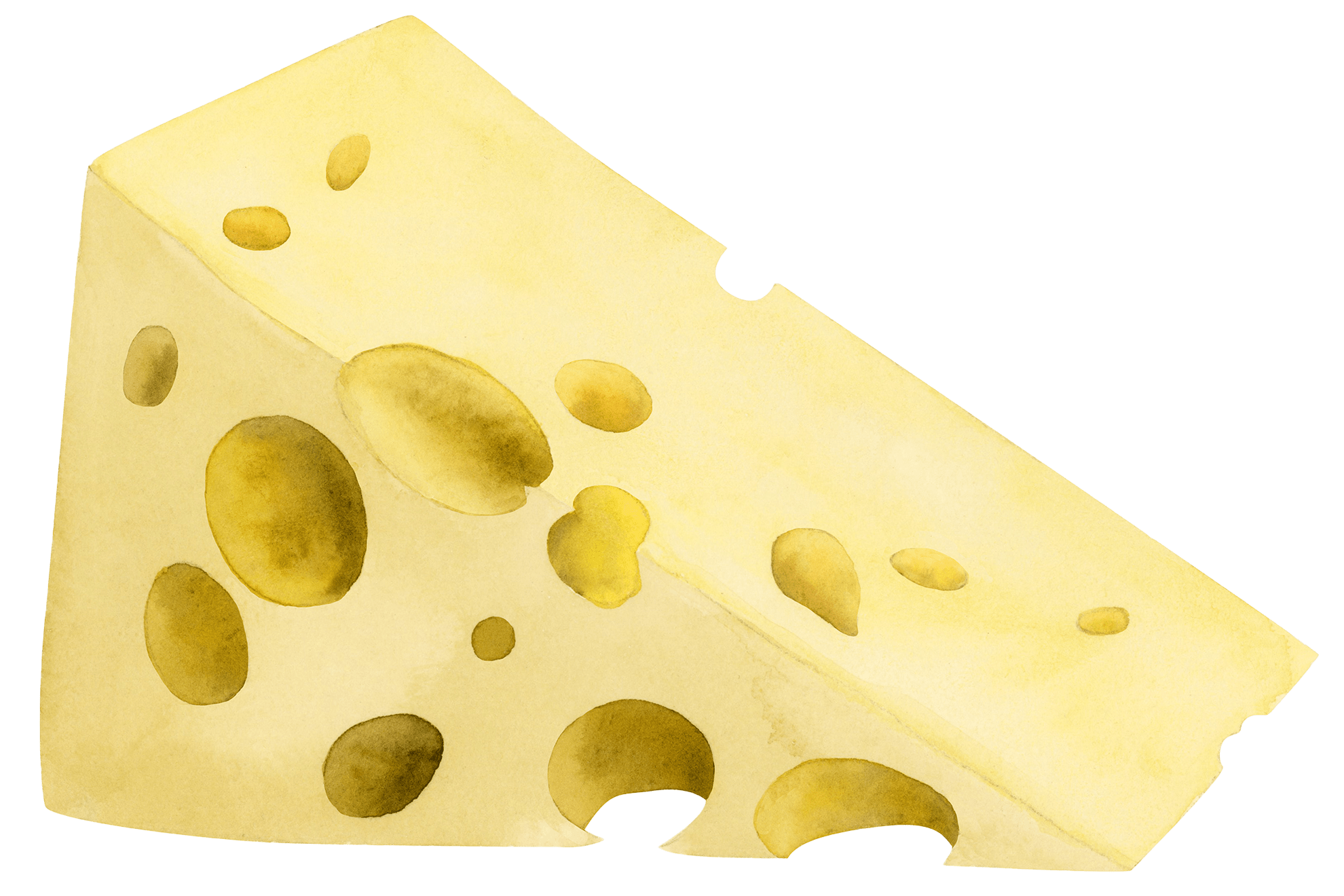
American-style Swiss cheese is modeled after Emmental from Switzerland — a pale-yellow cheese known for its visible holes, also called “eyes.”
It differs from classic Emmental in that it’s produced without a rind and generally tastes milder (4).
Production involves fermenting cow’s milk with specific bacteria to form curds. The curds are drained of whey, pressed, salted, and inoculated with another bacterial strain before being aged until ready to eat (5).
The microbes break down lactose and milk proteins into lactic acid, shaping the cheese’s texture and flavor (6, 7).
Swiss cheese is classified as a semi-hard cheese that keeps its form fairly well when heated (8).
It’s commonly used on sandwiches, burgers, pastries, omelets, pasta dishes, and in fondue.
Summary: American Swiss cheese is inspired by Swiss Emmental. It features a milder tang than Emmental, a pale-yellow hue, and distinctive holes. It’s versatile — great on sandwiches, croissants, and many other recipes.
Swiss cheese nutrition
Swiss cheese is an excellent source of protein and calcium. Although it contains considerable saturated fat, its sodium content is lower than that of many other widely eaten cheeses.
One slice — roughly 1 ounce (28 grams) — of Swiss cheese contains (9):
- Calories: 110
- Protein: 7.5 grams
- Carbs: 0.5 grams
- Fat: 9 grams
- Saturated fat: 5 grams
- Calcium: 25% of the Daily Value (DV)
- Magnesium: 2.5% of the DV
- Phosphorus: 16% of the DV
- Sodium: 2% of the DV
- Zinc: 8% of the DV
- Vitamin A: 10% of the DV
- Vitamin B12: 16% of the DV
As shown, Swiss cheese also provides notable phosphorus and vitamins A and B12.
Summary: Swiss cheese supplies minerals like zinc and phosphorus, plus vitamins A and B12. It’s particularly high in protein and calcium.
Swiss cheese health benefits
Swiss cheese offers several nutrients that support a balanced diet.
A strong source of protein
Protein is essential for building and repairing muscles, tissues, skin, and hair. It’s required for growth, maintenance, and proper cell function (10).
Animal-derived proteins, such as those in Swiss cheese, are typically higher quality than plant proteins because they are complete — supplying all nine essential amino acids that the body cannot synthesize on its own (11).
Consuming adequate protein may help with weight control by promoting prolonged feelings of fullness (12).
In a 3-month trial involving 118 overweight adults, those following a higher-protein diet — 0.6 grams of protein per pound (1.34 grams per kg) daily — were compared with a standard-protein group at 0.36 grams per pound (0.8 grams per kg) per day (13).
The high-protein participants lost 7% of their body weight versus 5% in the standard group, and experienced notable reductions in blood sugar, cholesterol, and triglycerides (13).
Other studies indicate that protein-rich, dairy-based snacks improve appetite control and reduce subsequent food intake compared with snacks high in fats or carbohydrates (10, 14).
While individualized recommendations vary by health status, age, and activity, adults are commonly advised to consume at least 0.36 grams of protein per pound of body weight (0.8 grams per kg) daily (12, 15).
For a person weighing 150 pounds (68 kg), that equates to about 55 grams of protein per day.
A slice or two of Swiss cheese can be an easy way to boost protein intake and stave off hunger between meals.
High calcium content
One slice of Swiss cheese supplies roughly a quarter of your daily calcium requirement (9).
Calcium from dairy is absorbed more efficiently than calcium from many plant sources like broccoli or spinach (16).
A review of 59 studies found that consuming more than 800 mg of calcium per day was associated with modest increases in bone mineral density (17).
Low bone mineral density can elevate fracture risk. While calcium alone won’t dramatically boost bone density, including calcium-rich foods helps maintain bone health across the lifespan (18).
Moreover, daily calcium intake above 1,000 mg has been linked with better insulin sensitivity, improved cholesterol metrics, and lower blood pressure (19).
Low in lactose
Lactose is the milk sugar that the enzyme lactase breaks down into simpler sugars in the digestive tract (20).
Individuals with lactose intolerance produce insufficient lactase, and consuming excess lactose can cause bloating, gas, diarrhea, and abdominal discomfort (21).
Most people with lactose intolerance don’t have to eliminate dairy entirely; many can tolerate about 12–15 grams of lactose daily (22).
Swiss cheese is low in lactose — around 0.4 grams per slice — making it a suitable option for many with lactose sensitivity, although total intake should be considered.
Summary: Swiss cheese is rich in protein and calcium, which can promote satiety and support bone health, respectively. In moderation, it’s often tolerated by people with lactose intolerance.
Potential downsides of Swiss cheese
As with most foods, excessive consumption of Swiss cheese can carry drawbacks.
High saturated fat content
Swiss cheese provides about 23% of the Daily Value for saturated fat.
Some studies suggest diets high in saturated fats may elevate LDL (“bad”) cholesterol, increasing arterial plaque risk and potentially contributing to blood clots and hypertension (23).
In a 6-day trial, individuals with overweight or obesity replaced typical Western saturated fat sources with walnuts, yielding a diet lower in saturated fat and richer in mono- and polyunsaturated fats (24).
The walnut-rich regimen led to significant reductions in blood pressure and a modest drop in total cholesterol compared with the Western diet (24).
Despite concerns, an expanding body of research suggests the link between saturated fat intake and heart disease may be weaker than once thought (25, 26, 27, 28, 29).
Still, current USDA guidance recommends limiting saturated fat by choosing lower-fat dairy and lean proteins while cutting back on cakes, cookies, pastries, and ice cream (27, 30).
Consulting a physician or registered dietitian can help determine the best dietary approach for you.
May increase your sodium intake
Diets high in sodium are associated with raised blood pressure and greater cardiovascular risk (31).
At about 2% of the DV per slice (28 grams), Swiss cheese is lower in sodium than many cheeses like cheddar (8% of the DV) and feta (14% of the DV), though values differ by brand (9, 32, 33).
Even so, consuming too much Swiss cheese could contribute to excessive sodium intake.
In a 5-year study comparing regular salt with a salt substitute, participants aged 60+ with hypertension experienced lower blood pressure and reduced stroke and heart disease risk when using the substitute (34).
Those who need to watch sodium should be mindful of portions. Limiting servings to 1–2 slices (28–56 grams) per sitting can help control sodium intake.
Summary: While Swiss cheese can be part of a healthy diet in moderation, some people should monitor its saturated fat and sodium levels. Keeping portions to 1–2 slices (28–56 grams) per serving may help with moderation.
The bottom line
Swiss cheese is a somewhat firm, pale-yellow cheese akin to Emmental.
It’s particularly rich in protein and calcium and low in lactose, and it also supplies nutrients such as zinc, phosphorus, and vitamins A and B12.
However, its saturated fat and sodium contents could pose health concerns if consumed in large amounts.
Whether you add it to a sandwich or an omelet, Swiss cheese can be a nutritious element of your diet when enjoyed in moderation.
Just one thing
Try this today: Top whole-grain crackers with Swiss cheese for a filling, protein-packed snack.






















Leave a Reply
You must be logged in to post a comment.