
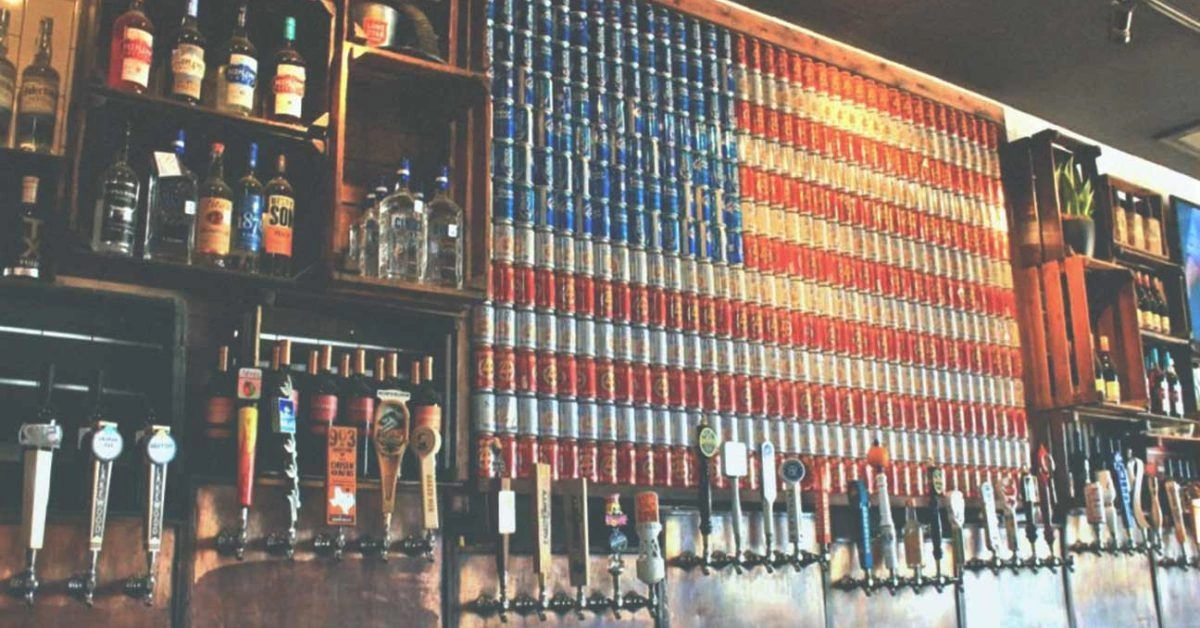
The calorie content for a typical 12-ounce pour of the country’s 10 most widely consumed beers falls roughly between about 95 calories at the low end and just under 150 calories at the high end.
In the United States, we don’t have a monarch — our head of state is a president, not a king. Still, when it comes to cultural influence, beer sometimes plays a near-regal role for many Americans.
:max_bytes(150000):strip_icc()/beer-nutrition-information-353027_final-b34ccda1d2ba4ec889309df2b8b9b5af.png)
For plenty of people, beer commands loyalty the way a sovereign might. Folks will march into all sorts of situations guided largely by their allegiance to a cold one.
Have you ever woken up after a night of drinking with a throbbing hangover? If so, you might’ve followed the call of King Beer a bit more faithfully than others. As Billy Currington put it, “God is great, beer is good, and people are crazy.”
Check a breakdown of each state’s favorite brews, and you’ll see that America bows to a diverse array of ruling beers. Every state tends to favor a particular domestic, craft, or imported beer, and those choices often reveal something about local tastes.
At the national level, though, Americans gravitate toward a relatively predictable lineup of domestic and imported beers — none of the nation’s craft darlings appear on the list of America’s 10 best-selling beers.
Though beer aficionados might lament that none of the beers from the 50 Best Craft Breweries in America 2016 have become nationwide blockbusters, there’s no denying the appeal of the dependable, widely distributed brews people habitually stock in their refrigerators.
Instead of barrel-aged imperial stouts or zesty, fruity barleywines, most Americans reach for reliable, easy-drinking staples like Coors Light and Corona, as well as college-party mainstays such as Bud Light and Natural Light.
Viewed through a health lens (yes, beer can have a place in a balanced diet), these popular brews are generally simple and on the lighter side. More elaborate beer styles typically carry more calories (if pale lagers are the monarch, darker ales are the king’s advisory council).
We’ve done the math to present calorie, carbohydrate, and protein counts for a 12-ounce American standard serving (standard serving sizes vary internationally) of the nation’s top-selling beers. For related nutrition context you might also find this piece on how much sugar in beer useful.
Bud Light
Noticed Bud Light’s recent brand refresh? The packaging changed, but the beer inside stayed the same. Each can or bottle carries 110 calories, 6.6 grams of carbs, and 0.9 grams of protein.
If you’re thinking of bringing your dog along on a liquor run, remember: driving with Bud Light and a canine companion can be risky.
Budweiser
Budweiser — David Chang’s recent collaborator — remains hugely popular. If you’ve ever driven down a highway littered with crushed cans, Budweiser likely pops up more than most.
Compared with Bud Light, Budweiser is larger across the board: it contains 145 calories, 10.6 grams of carbs, and 1.3 grams of protein. For ABV reference, Budweiser is about 5 percent, while Bud Light is roughly 4.2 percent.
Busch
Anheuser-Busch places a few entries on America’s best-selling beer list, and one we’ll spotlight is Busch — a favorite among outdoorsy types.
Why do outdoorsmen like Busch? The brand offers camouflage cans and designs featuring fish like walleye and crappie. A 12-ounce serving of Busch delivers 114 calories, 6.9 grams of carbs, and 0.8 grams of protein.
If you want a lower-calorie option to sip while foraging or trekking in the wild, Busch could be a fit.
Busch Light
If 114 calories feels like too much, Busch Light is an alternative. Per 12-ounce can it has 95 calories, 3.2 grams of carbs, and 0.7 grams of protein. Curiously, Busch Light is slightly higher in alcohol than regular Busch — Busch Light clocks in at 4.3 percent ABV versus 4.1 percent for Busch.
With fish-decorated cans and a fairly potent-yet-drinkable light option, it’s easy to see why Anheuser-Busch seems poised for global beer influence.
Coors Light
Coors Light, one of two MillerCoors beers on the roster, is favored by guys who want a beer that doesn’t taste strongly like beer. Marketed to evoke the Rocky Mountains, some find it tastes closer to plain water — and a recent lawsuit challenged the product’s Rocky Mountain claims.
In a light beer taste test, staffers described Coors Light as having sweaty or horsey notes. Nutritionally, each silver can contains 102 calories, 5 grams of carbs, and under 1 gram of protein.
Corona Extra
Corona Extra, one of the most-loved imports by Americans, is highly drinkable. A 12-ounce serving won’t devastate your health, but at 148 calories, about 14 grams of carbs, and negligible protein, Corona Extra is the second most caloric beer on our list.
Heineken
The heaviest beer on our list, by a single calorie, is another import. Everyone seems to know someone who exclusively drinks Heineken, though the reason for that brand loyalty varies. A 2012 National Journal study even suggested political leanings might correlate with beer choices — Republicans favor Sam Adams while Democrats prefer Heineken.
Based on Heineken’s reported nutrition per 100 milliliters and scaling to 12 ounces, a bottle contains roughly 149 calories, 11 grams of carbs, and zero grams of protein.
Michelob Ultra
Like Coors Light, Michelob Ultra attracts many dads. In The Daily Meal’s light beer taste test, testers described it as having a “pleasant non-flavor” and virtually no aroma, making it seem more like heavy water than beer.
Each Michelob Ultra can lists an ABV of 4.2 percent and contains 95 calories, 2.6 grams of carbs, and 0.6 grams of protein — tying it with Busch Light and another brand for the lowest calorie beers on our roundup.
If your strategy to slim down centers on avoiding carbs — even the healthier ones — you’ll be glad to know that Mich Ultra contains the fewest carbs among America’s top-selling beers.
Miller Lite
The other MillerCoors representative on the list, Miller Lite, is a mainstay in bars, backyards, and garages nationwide. Often promoted by athletes (see endorsements here), Miller Lite has about 4.17 percent ABV, 96 calories, 3.2 grams of carbs, and under 1 gram of protein per 12-ounce serving.
Heading to one of the top tailgating colleges? You’ll blend in if you tote along a 30-pack of this lighter lager.
Natural Light
If your tailgate lands you at a frat house (maybe one of the 11 wildest frat parties), prepare to be surrounded by waves of Natural Light.
Another Anheuser-Busch offering, Natty Light contains 95 calories, 3.2 grams of carbs, and 0.7 grams of protein per 12-ounce serving, making it nearly identical nutritionally to Busch Light.
The two diverge slightly in alcohol: Natural Light has a lower ABV of 4.2 percent. Sure, one or two Natties can fit into a sensible diet, but downing a dozen in an hour greatly raises the chance of blacking out.
















Leave a Reply
You must be logged in to post a comment.