

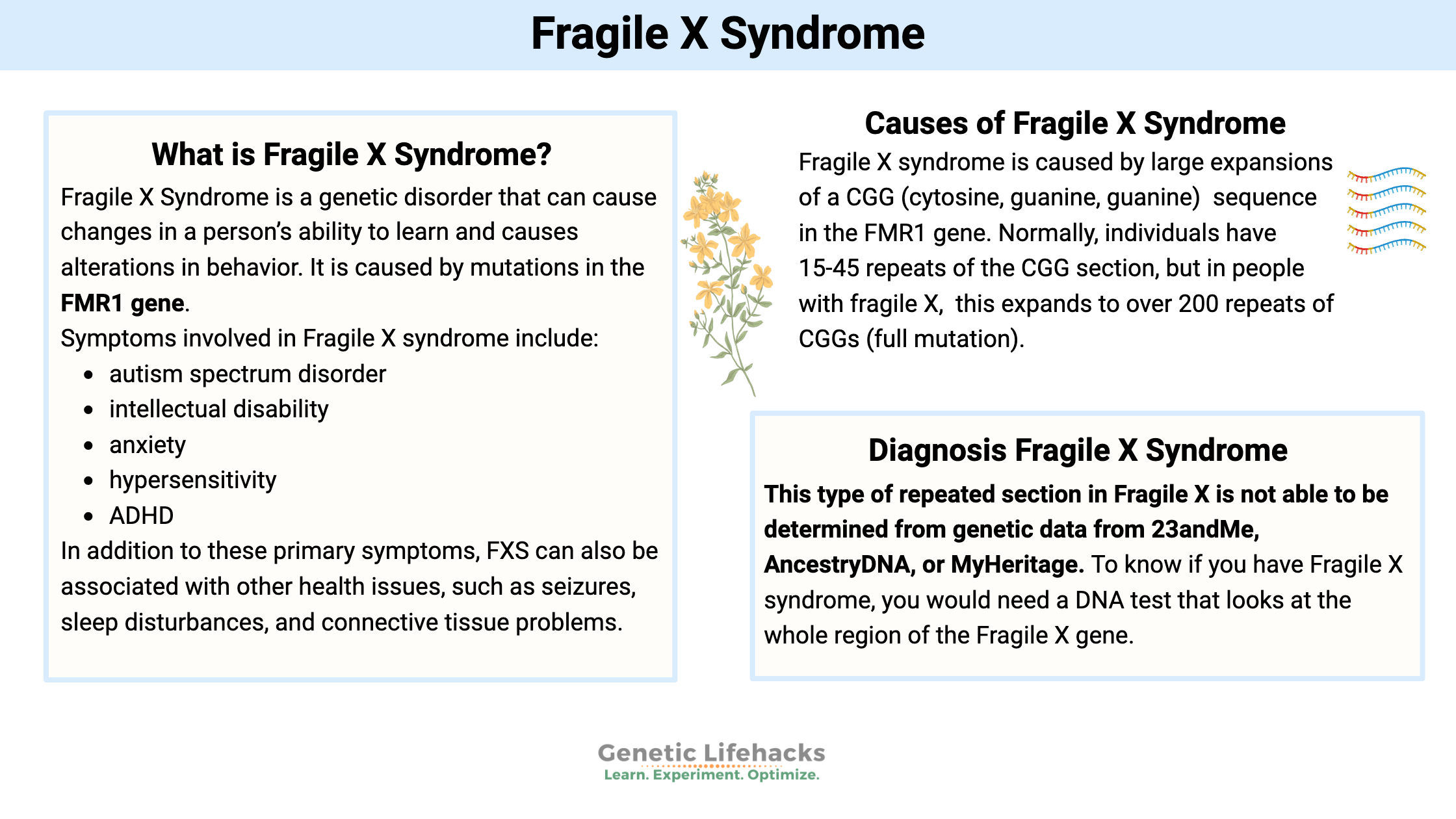
Fragile X syndrome (FXS) and autism spectrum disorder (ASD) can occur together. Although FXS is a recognized genetic contributor to ASD, not everyone with FXS is autistic, and many autistic people do not have FXS.
FXS is a hereditary condition caused by a mutation in the FMR1 gene. It results in reduced levels of FMRP, a protein crucial for brain development.
FXS is a major inherited cause of intellectual disability and can affect multiple domains of behavior and physical growth.
ASD is a neurodevelopmental condition characterized by challenges in communication, social interaction, and restrictive or repetitive behaviors. Genetic factors are estimated to explain up to 30% of ASD cases, but many autistic individuals do not have an identifiable genetic syndrome.
The origins of ASD are often unknown and likely involve a complex mix of genetic influences, environmental exposures, and alterations in brain structure and function.
In what ways is fragile X syndrome connected to autism?
FXS and ASD are distinct conditions that frequently co-occur. Similarities in symptoms can make it hard to differentiate them without genetic testing.
A 2017 review reports that roughly 60% of individuals with FXS also meet criteria for ASD, while FXS explains only about 6% of ASD cases. In other words, a substantial portion of people with FXS are autistic, but only a small fraction of autistic people have FXS.
The genetic link between FXS and ASD is intricate. Researchers identify FXS as the single most common genetic cause of ASD, but many other genetic contributors exist. Studies have associated more than 800 genes and various genetic disorders with ASD.
Some people with FXS display autistic characteristics without fulfilling formal ASD diagnostic criteria.
A 2019 review proposes that symptom overlap between FXS and ASD may stem from dysregulation of FMRP. FXS directly reduces FMRP levels. FMRP influences genes and neural pathways implicated in ASD, suggesting FMRP dysregulation could be a shared molecular factor behind overlapping features.
Further investigation is required to clarify the common underlying mechanisms behind the symptom overlap of FXS and ASD.
Is it possible to have fragile X syndrome without autism?
Yes. You can be diagnosed with FXS and not have ASD, and you can be autistic without having FXS.
Although many people with FXS meet ASD criteria, about 40% do not. Only a small share of ASD cases are directly attributable to FXS.
What symptoms do FXS and ASD share?
Genetic testing is used to confirm FXS. If ASD is suspected as well, clinicians assess specific behaviors and developmental patterns to establish a diagnosis.
Each person’s experience is unique; environmental and developmental factors influence outcomes. People with FXS or ASD will not all present the same behaviors, appearance, feelings, or thinking.
Some overlapping symptoms that may appear in both FXS and ASD include:
- social difficulties
- hyperactivity
- trouble with attention
- intellectual disability or learning challenges (less common in ASD but possible)
- delays in language and communication
- repetitive speech patterns (echolalia)
- social anxiety and timidity
- reduced or atypical eye contact
- heightened sensory sensitivity (especially to sound or touch)
- restrictive or repetitive actions
- strong preference for routines
Restricted interests or intense focus on a narrow set of activities are frequent in ASD and may be less evident in FXS.
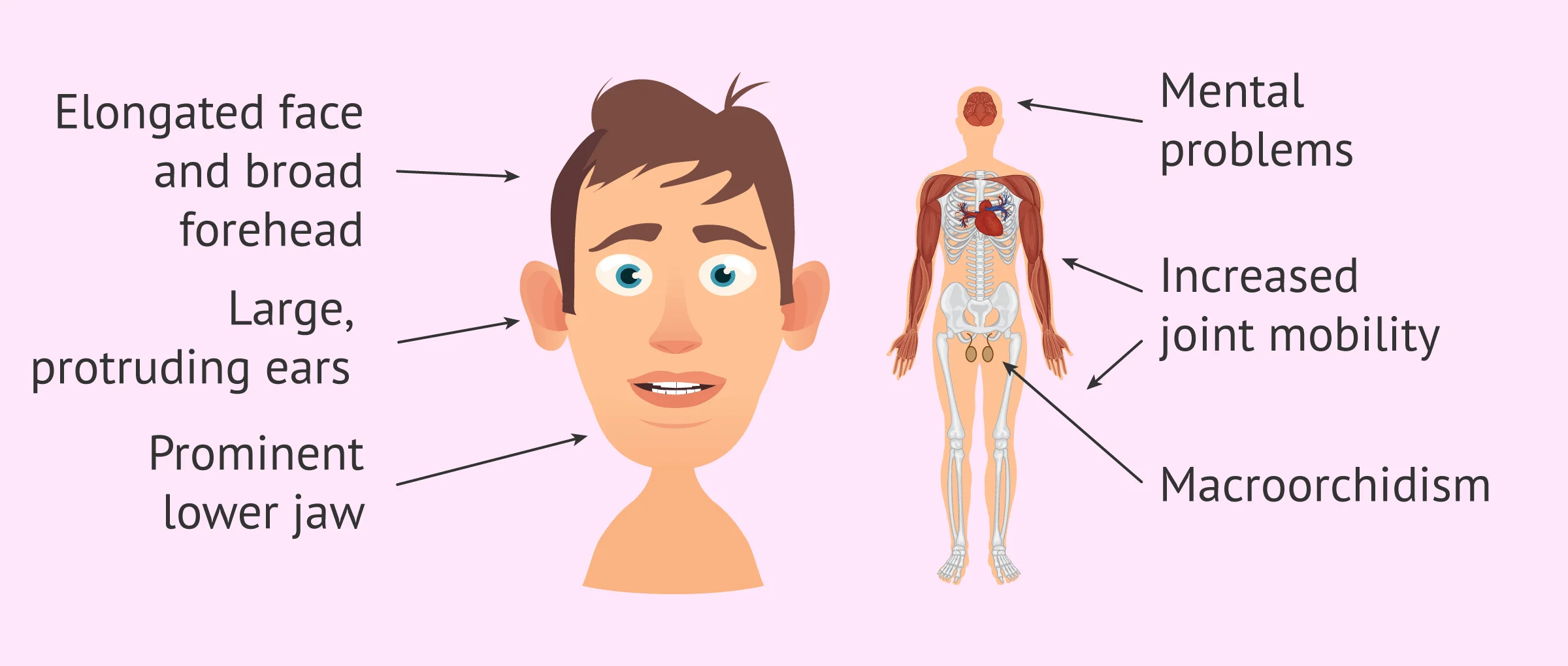
A notable difference lies in physical features. ASD has no defining physical characteristics, but some children with FXS may develop distinct traits that become more apparent with age, such as:
- larger head size
- prominent ears
- elongated, narrow face
- flat feet
- pronounced forehead
- hyperflexible joints
Intellectual disability refers to delays in cognitive skills like learning, problem solving, and complex reasoning. It is a hallmark of FXS, though it varies in presence and severity from mild to profound.
Intellectual disability is uncommon among autistic children but can occur alongside ASD. ASD primarily features social communication differences and restrictive or repetitive behaviors and interests.
The National Fragile X Foundation (NFXF) notes that similar symptoms in FXS and ASD may arise from different root causes and might present differently.
For instance, limited eye contact and social difficulty in FXS often relate to social anxiety. In ASD, they are more likely due to reduced social awareness or challenges interpreting social signals.
Repetitive behaviors also differ subtly. The NFXF reports that repetitive actions in FXS tend to be restricted to body stiffening and hand flapping, while repetition in ASD may take more varied forms.
When considering a dual diagnosis of FXS and ASD, clinicians examine the specifics of each individual’s symptoms.
What treatments are available for fragile X syndrome?
There is no cure for FXS, but symptoms can be managed with medications, therapies, and practical supports. Because FXS manifests differently across individuals, treatment is tailored to each person’s needs.
Medications for FXS target mood issues, hyperactivity, and inattention. Sertraline, for instance, is an antidepressant commonly used to treat anxiety symptoms in people with FXS.
Providers may also prescribe medicines to manage medical problems often associated with FXS, including:
- gastrointestinal conditions
- reduced muscle tone
- ear and sinus infections
- urinary tract infections
- eye problems
- seizure disorders
To support development and daily living skills, an FXS care plan may include:
- educational supports
- classroom accommodations
- speech-language therapy
- occupational therapy
- physical therapy
- behavioral interventions
- parent training
- mental health services
What supports help autistic children?
Depending on needs, autistic children may benefit from:
- specialized educational programs
- classroom accommodations
- behavioral therapies
- social skills instruction
- occupational therapy
- speech-language therapy
- parent coaching
- sensory-friendly environments
- alternative communication methods
- regular medical care
- mental health support
Medication is infrequently used for ASD itself but may be helpful when symptoms such as anxiety, hyperactivity, or attention difficulties occur.
Children with both FXS and ASD may need extra supports. A 2017 study found that children with both conditions were more likely to have seizures, sleep problems, and disruptive behaviors than those with only FXS.
Bottom line
FXS and ASD are separate diagnoses that can coincide. FXS is the most common single-gene contributor to ASD. Many children with FXS are autistic, but only a small portion of autistic children have FXS.
Clinicians generally confirm FXS through genetic testing, and the pattern of overlapping symptoms helps determine whether ASD is also present.
Although there is no cure for FXS, a combination of medications, therapies, and educational supports can help manage symptoms. These same approaches may assist children with ASD who need additional support.















Leave a Reply
You must be logged in to post a comment.