

Key takeaways
- Multiple influences — such as heredity, aging, hormonal shifts, and stress — can alter hair growth, making it slower or halting it altogether.
- Home approaches like scalp massages, aloe vera, and rosemary oil might encourage hair growth and help preserve existing hair, though they’re unlikely to restore hair lost from true balding.
- Medical options including minoxidil, finasteride, hair transplantation, and scalp micropigmentation exist to slow further loss and encourage new growth.
Many people discover that their hair seems to stop growing beyond a certain length. Perhaps it thins in a particular area, won’t extend past a set point, or one side appears to lengthen faster than the other.

This piece explores why hair may cease growing and what steps you can take to achieve more length.
Hair cycle
The hair growth process comprises four stages. You might observe faster growth during certain phases of this cycle.
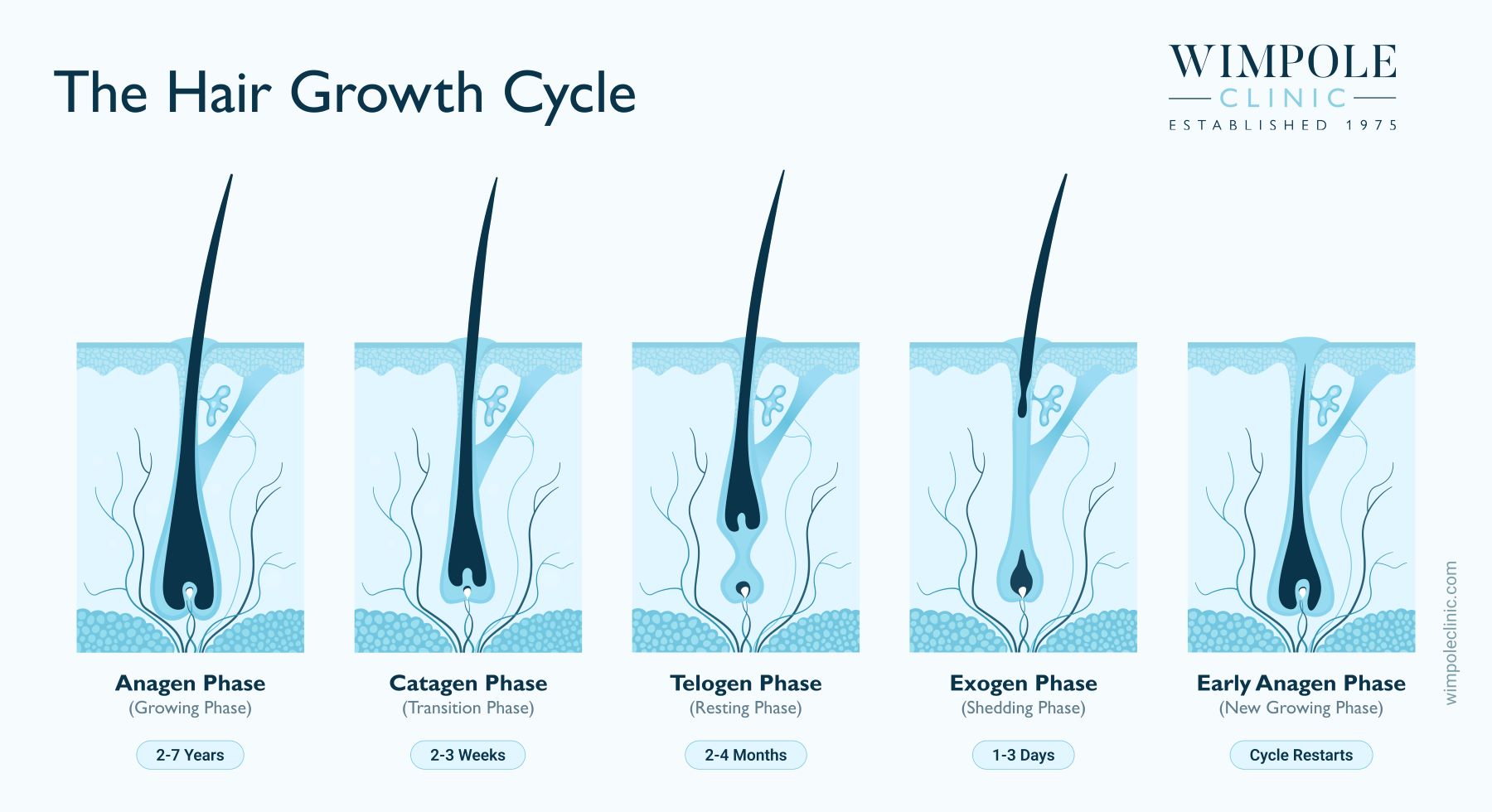
Not every follicle is synchronized; it’s estimated that about 90% of hairs are in the active growth (anagen) stage at any one time. The cycle includes:
- Anagen phase: The active growth stage, typically lasting 2 to 8 years. During pregnancy, hair often stays in anagen for the duration, which is why pregnant people frequently have thicker, shinier hair.
- Catagen phase: A short transition phase when growth stops but the hair doesn’t immediately shed. It lasts around 4 to 6 weeks.
- Telogen phase: The rest phase when hair eventually falls out. You may notice more shedding in the shower or on your pillow. This lasts roughly 2 to 3 months.
- Exogen phase: The shedding stage when hairs naturally come away from the scalp with washing and brushing. It generally spans 2–5 months and involves losing about 50–100 hairs daily while new hairs emerge in the follicles.
Why won’t hair grow?
Beyond the natural cycle, several factors can slow hair growth or stop it altogether.
- Genetics: Family history influences hair thinning for people of all genders, encompassing female pattern hair loss (FPHL) and male pattern hair loss (MPHL). If close relatives have thinning hair, you may be more likely to experience it too.
- Age: Many postmenopausal females assigned at birth (FAABs) experience hair loss due to altered hormone levels. The American Hair Loss Association notes that by age 50, about 85% of males assigned at birth will have noticeably thinner hair.
- Hormones: Thyroid dysfunction can disrupt thyroid hormone production and lead to hair loss. Androgens, including testosterone, can also be involved in some types of hair loss.
- Stress: Elevated stress releases cortisol, which can halt hair growth. Stress may exacerbate certain alopecias, cause follicular inflammation, and trigger telogen effluvium, a temporary hair-shedding condition.
- Immune system: Conditions like alopecia areata and primary cicatricial alopecia arise from immune system malfunctions.
- Other health conditions: Hair growth problems can be linked to serious health issues such as liver or kidney failure, rheumatologic diseases, sarcoidosis, or cancer.
Certain medications can also hinder growth or cause shedding — chemotherapy is a prime example. If you have other symptoms along with hair loss, discuss them with your doctor to investigate possible underlying causes.
Why won’t hair grow in certain situations?
Your specific situation can influence why hair isn’t growing.
After a haircut
Hair typically grows about a quarter to half an inch per month, which may make growth seem slow, especially after a major cut.
Frequent trims can actually support faster length retention because they remove split ends that would otherwise break and make hair appear shorter.
A break from hair coloring may help too, since dyes can damage hair and contribute to slower growth or breakage.
In one spot
If growth stalls in a single area or you see patchiness, this could indicate alopecia areata. In such cases, your doctor can advise on suitable treatments.
On one side
Hair can indeed grow unevenly between sides. Each follicle has its own blood supply, so one side might receive better circulation and thus grow faster.
Also, regularly sleeping on the same side of your head can impede growth on that side due to friction and pressure.
After a stressful event
Major life stressors can cause pronounced hair shedding. Events that commonly trigger this include:
- surgery
- childbirth
- the death of a loved one
Shedding may happen after a single traumatic incident or over a prolonged period of stress.
What can I do if my hair isn’t growing?
There are at-home approaches that may help preserve your hair. Bear in mind that regrowing hair lost to true balding is challenging. Home-based methods include:
- Scalp massage: This boosts circulation to the scalp and may improve hair thickness.
- Aloe vera: Aloe can condition scalp and strands and might strengthen hair, reducing breakage.
- Rosemary oil: This essential oil has been shown to stimulate hair regrowth in some cases of alopecia.
- Geranium oil: Research in animals indicates this oil can enhance circulation and support hair growth, though human studies are limited.
- Biotin: Biotin might aid hair growth predominantly when a deficiency exists, which is uncommon. Evidence on biotin’s effects is also limited.
- Saw palmetto: A botanical ingredient with mixed research; it may inhibit 5-alpha-reductase, the enzyme that converts testosterone into dihydrotestosterone (DHT), a hormone tied to hair loss.
How can I speed up hair growth?
Prescription and clinical treatments are available for those seeking to prevent further thinning or to encourage growth after loss. Medical interventions include:
- Minoxidil : An over-the-counter first-line treatment for male and female pattern hair loss, supported by evidence.
- Finasteride (Propecia): This medication acts by blocking 5-alpha-reductase, the enzyme implicated in hair loss.
- Hair transplant : A surgical option where a clinician relocates hair to cover bald areas.
- Scalp micropigmentation : A cosmetic technique that simulates denser hair by tattooing small shadow-like dots on the scalp.
Optum Now is operated by RVO Health. By clicking on this link, we may receive a commission. Learn more.
Other ways to get length
There are additional strategies to create the look of fuller, longer hair.
Hair extensions
Extensions are a practical solution when your hair won’t grow beyond a certain point. A stylist can stitch or bond them in, or you can use clip-in options at home for a temporary boost.
Diet tweaks
Eating a balanced mix of nutrients can support hair growth. Key nutrients for hair include:
- vitamin D
- zinc
- copper
- magnesium
- selenium
- iron
- B vitamins
- vitamin A
- biotin
- antioxidants
Toupee
A toupee is a hairpiece designed to blend with your existing hair and can be adhered over bald areas to temporarily convey a fuller appearance.
Sprays
Hair concealer sprays can be applied to thinning spots to make hair look denser.
When to talk with a doctor
If you feel unwell when hair loss begins, or your scalp is sore or inflamed, see your physician. They can help identify the underlying cause.
Consult a dermatologist or primary care provider before starting prescription drugs or undergoing invasive treatments.
The bottom line
Hair may stop growing or slow for numerous reasons, including genetics, age, hormones, and stress. Growth can cease in a particular area or appear slower on one side.
Various treatment paths exist for sluggish hair growth, including:
- medications
- supplements
- dietary adjustments
- cosmetic procedures
Always consult your doctor if you have additional symptoms alongside hair loss or if your scalp is irritated or inflamed.


















Leave a Reply
You must be logged in to post a comment.