
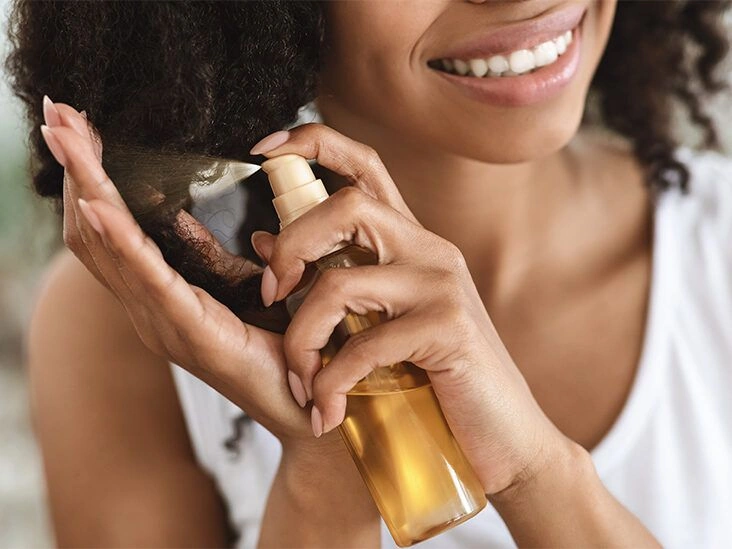
Essential oils are obtained from plants through techniques such as distillation or evaporation. While they’re best known for their fragrance, essential oils also contain potent chemical constituents that might offer health advantages.
Traditional, Eastern, and homeopathic medicine systems have long employed essential oils as natural therapeutic agents.
Certain essential oils, when adequately diluted, could support the health of your hair and scalp. Keep reading to discover various essential oils for hair and the potential benefits they may provide.
:max_bytes(150000):strip_icc()/lavender-essential-oil-for-hair-5194583_13-7963040a498f441ca265a4863ed01408.JPG)
Lavender essential oil
Lavender essential oil contains active compounds that may have anti-inflammatory, antioxidant, and antifungal actions. This oil could possibly improve scalp health, although further research is necessary to clarify its direct effects on human scalp and hair.
Some practitioners have used lavender essential oil combined with other oils to encourage hair regrowth in a small group of people with alopecia. Because lavender was part of a blend rather than used alone, more study is required to determine its individual effect.
The National Center for Complementary and Integrative Health (NCCIH) notes that lavender has a long history of use in skincare products, aromatherapy, and baths. It’s generally considered safe, but some individuals may experience allergic reactions.
A few drops of lavender oil are often mixed into a carrier oil, such as olive or melted coconut oil, and applied to the scalp as a hair mask.
Read more about lavender essential oil for hair, including how to apply it.
Peppermint essential oil
Peppermint oil contains menthol, which produces a cooling, tingling sensation when placed on the skin.
Animal research reported that peppermint oil increased follicle count, follicle depth, and overall hair growth when applied to mice. Nevertheless, more research is needed to see if similar effects occur in humans.
According to available guidance, applying diluted peppermint oil to the skin is likely safe and may offer benefits such as easing tension headaches. However, it can also provoke skin irritation and rashes in some people.
Read more about using peppermint essential oil for hair.
Rosemary essential oil
Rosemary essential oil may support hair thickness and growth through its capacity to stimulate cellular regeneration.
In an older study, rosemary oil performed comparably to minoxidil, a common hair growth medication, and caused less scalp itching as a side effect. It has also been included in mixes used to treat alopecia.
Nonetheless, larger trials are required to validate its effectiveness and role, including among people without alopecia.
Read more about using rosemary essential oil for hair.
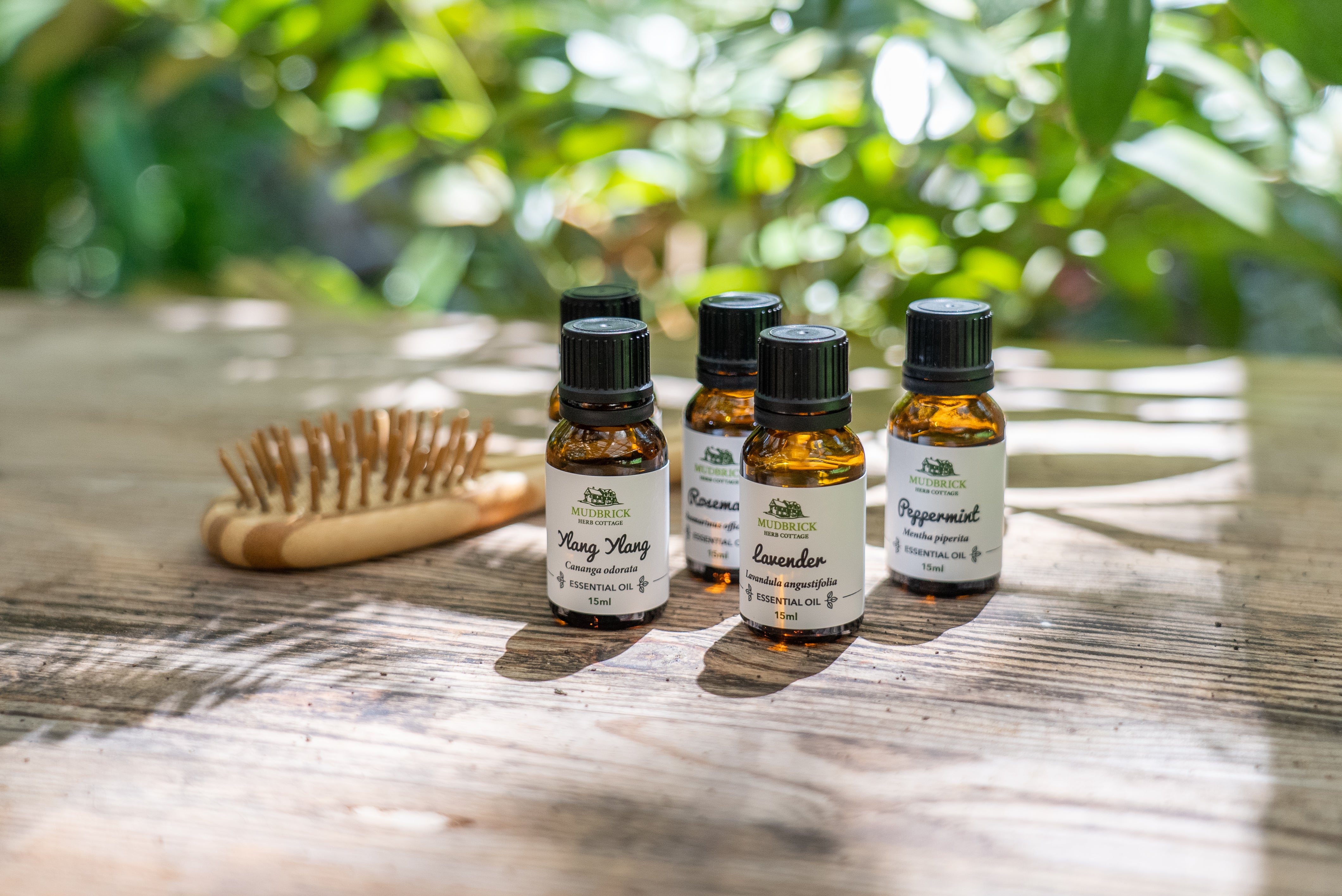
Cedarwood essential oil
Cedarwood essential oil is believed to encourage hair growth and reduce shedding by balancing the scalp’s oil-producing glands. It also exhibits antifungal and antibacterial effects, which may be useful for conditions that contribute to dandruff or hair thinning.
Several small studies summarized in a review found that cedarwood extract, used in a blend with other oils, helped decrease hair loss and promote regrowth and thickness in people with alopecia areata. Since it was part of a mixture, further research is necessary to isolate cedarwood’s specific contribution.
Cedarwood oil may not be readily available in larger supermarkets, but it can often be purchased at smaller health stores or online.
Read more about the possible benefits and precautions of cedarwood oil.
Lemongrass essential oil
A review on lemongrass essential oil indicates that a 10% lemongrass oil tonic may help reduce and manage dandruff. The authors suggest the effect could stem from lemongrass’s antifungal qualities.
However, more and larger studies are needed to substantiate this use of lemongrass essential oil.
Learn more about potential applications of lemongrass essential oil.

Sage essential oil
Common sage may support hair growth by prompting the cells responsible for hair production to enter a proliferative phase, according to laboratory and animal studies.
Yet this potential benefit requires further confirmation in human studies to determine whether the effect translates to people. Additional research is also needed to identify optimal dosages and application routines.
Learn about essential oils derived from sage.
Tea tree essential oil
Tea tree oil possesses anti-inflammatory, antibacterial, and antimicrobial properties. When applied topically, it may aid in promoting hair growth.
A small 2013 study found that a blend of tea tree oil, diclofenac (an anti-inflammatory), and minoxidil (Rogaine) improved hair growth more than minoxidil alone. Larger studies are necessary to confirm this finding. Because tea tree oil was included as an anti-infective agent in the mixture, its independent benefit remains unclear.
Tea tree products vary in concentration, so it’s important to follow manufacturer instructions. Some preparations are highly concentrated oils, while others are formulated in creams or carrier oils.
The NCCIH reports that tea tree oil has antiseptic qualities and may help with fungal infections, but it can also cause rashes and skin irritation.
Read more about the effects of tea tree oil on the scalp.
Ylang-ylang essential oil
Ylang-ylang essential oil shows anti-inflammatory, antimicrobial, and antioxidant properties.
A 2021 study on essential oils in cosmetics notes that ylang-ylang oil may assist tissue regeneration.
One report suggests it could be helpful for scalp psoriasis and dandruff, though that study’s aim was to formulate a nanoparticle-containing gel to enhance ylang-ylang absorption rather than to directly evaluate its benefits.
More evidence is needed to determine the utility of this oil for hair and scalp health.
Read more about potential uses and benefits of ylang-ylang essential oil.
Risks and potential complications
The primary risk with essential oils is skin irritation and allergic reactions. This risk increases when an essential oil is applied undiluted, so it’s crucial to always mix it with a carrier oil before topical use.
Signs of skin irritation include:
- contact dermatitis
- burning, stinging, or painful tingling
- color changes in the affected area
Topical essential oil use for hair health should be limited to older adolescents and adults. If you think a child might benefit from essential oils, consult their pediatrician first to confirm safety.
Certain oils, such as peppermint, should not be applied to a child’s face because they can cause breathing difficulties.
To check for sensitivity, test a small patch of the diluted mixture on the skin before widespread application.
Takeaway
Essential oils can be a low-risk, cost-effective way to enhance hair health and are straightforward to use.
For many people, blending a few drops into a carrier oil or adding them to shampoo and applying the mixture to the scalp regularly may improve hair growth, strength, or shine.
You can also explore other herbs that may benefit your hair and scalp.


















Leave a Reply
You must be logged in to post a comment.