
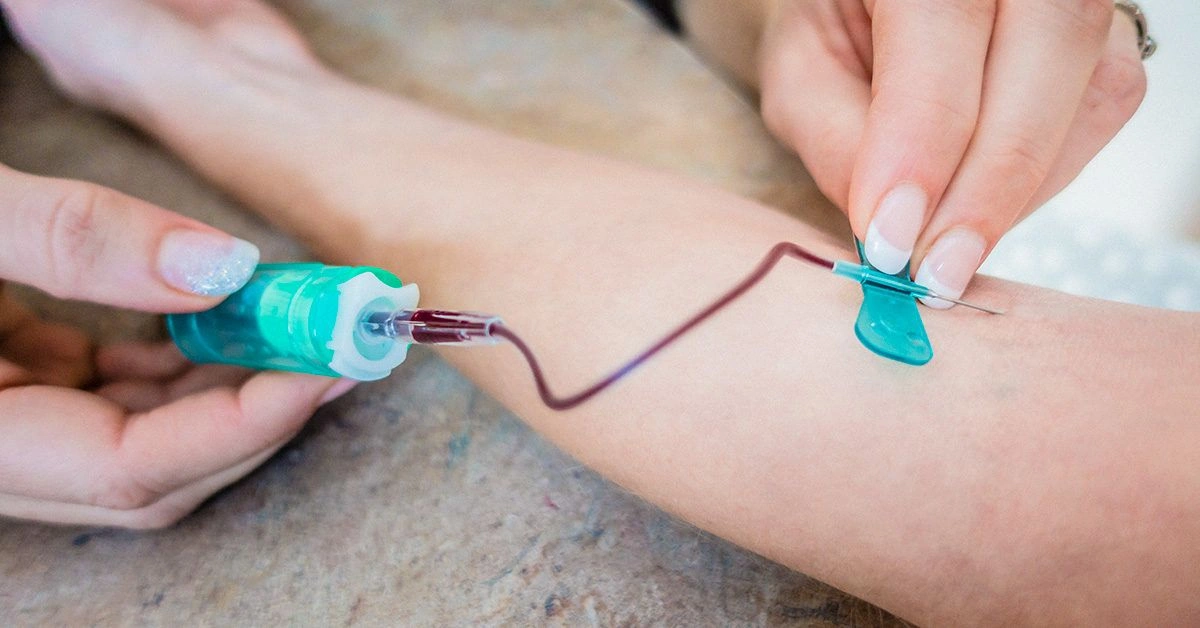
A butterfly needle is an instrument used to reach a vein for obtaining blood samples or administering medications.
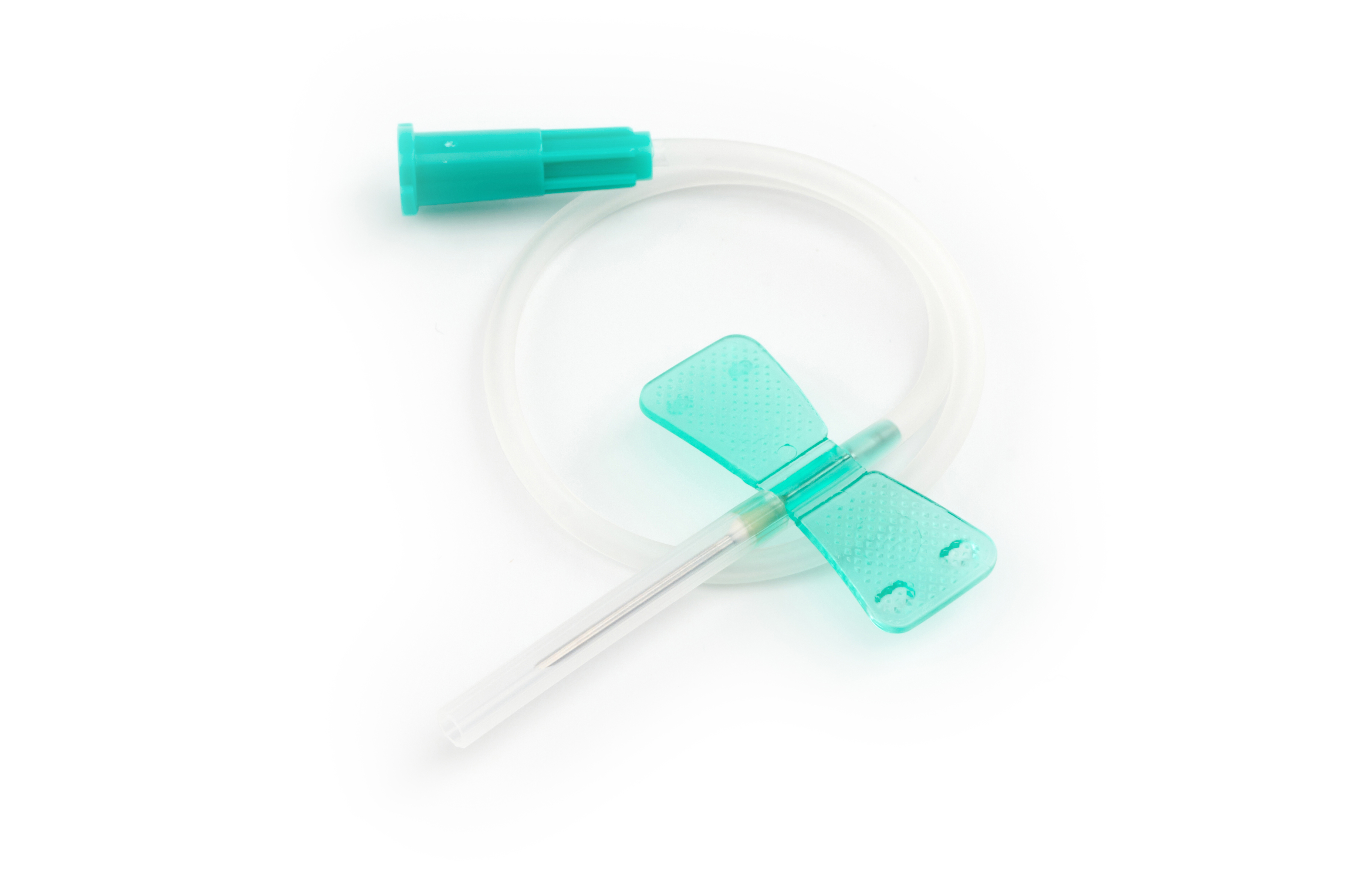
Some clinicians refer to a butterfly needle as a “winged infusion set” or a “scalp vein set.” The name comes from the small plastic “wings” on each side of the hollow needle that help secure and manipulate it during venous access.
Although designs may differ somewhat, most butterfly needles consist of a needle housed in a winged plastic sheath that’s pulled back to expose the needle. The needle connects to flexible tubing that often ends in a luer lock — a threaded fitting that allows a syringe to be twisted onto it.
How is a butterfly needle used?
Clinicians use butterfly needles to draw blood or to access a vein for intravenous (IV) drug administration.
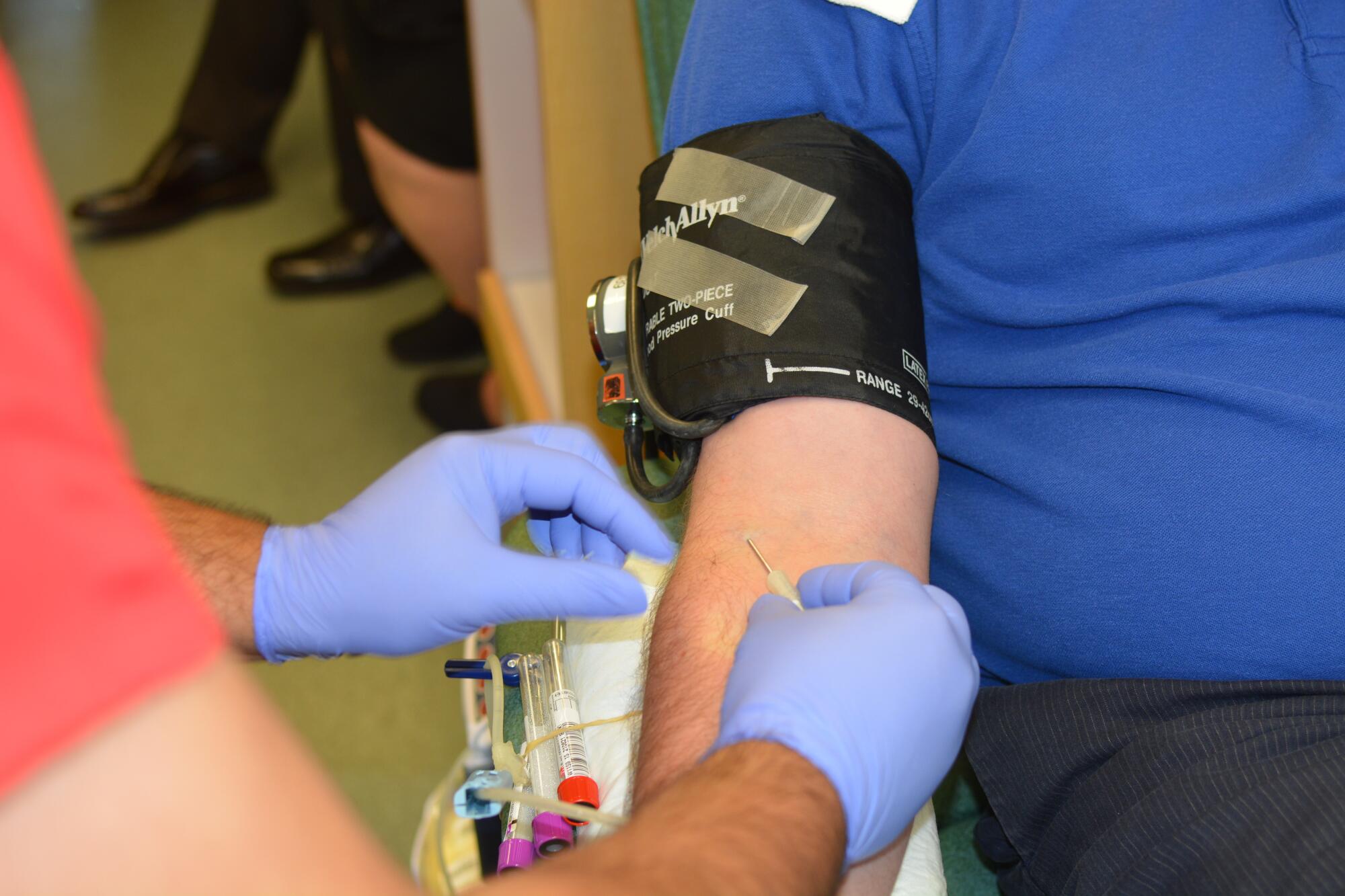
Alternatively, they may opt for an intravenous catheter, which contains a retractable needle inside a protective sleeve. The needle is introduced into the vein and then retracted, leaving the plastic catheter in place.
That contrasts with a butterfly needle, where the metal needle itself remains within the vein rather than leaving a plastic sheath behind. Typically, butterfly needles are shorter than IV catheters.
Certain situations favor one device over the other, and blood collection is a common example where a butterfly needle may be preferred.
A clinician might choose a butterfly needle for blood draws in these situations:
Venipuncture
Venipuncture refers to a phlebotomist accessing a vein to collect blood. A phlebotomist is a trained professional dedicated to drawing blood.

Butterfly needles are frequently employed for patients who present challenges for venipuncture, such as:
- older adults
- infants
- children
- individuals labeled “difficult sticks”
Because the butterfly needle requires a shallower insertion angle than an IV catheter, the shorter needle length allows more precise placement in fragile, small, or rolling veins.
Butterfly needles are also commonly used for blood donation or collection for a blood bank. The tubing attached to the needle is flexible and easily connected to collection systems.
IV hydration
If you require IV fluids, a nurse or physician may use a butterfly needle to gain venous access. IV hydration is used for dehydration or when you can’t eat or drink due to illness or before surgery.
The hollow needle permits infusion of fluids to help restore hydration and maintain fluid balance.
Medication
A butterfly needle also enables clinicians to administer IV medications, often delivered by pushing the drug through a syringe. Intravenous delivery is useful when oral intake is not possible or when rapid medication action is necessary.
Butterfly needles are usually not intended for prolonged IV therapy because the needle can more easily dislodge from the vein. In such cases, doctors may recommend central venous access or a peripherally inserted central catheter (PICC) for longer-term medication or fluid administration.
What sizes are available?
Butterfly needles are manufactured in multiple sizes, expressed in gauges. Typical gauges range from 18 to 27; a higher gauge number indicates a thinner needle.
Most commonly used sizes are 21 to 23 gauge. Very small gauges (e.g., 25 to 27) increase the risk that blood will hemolyze or clot because of the narrower lumen.
What are the advantages of a butterfly needle?
A 2016 study reported that blood samples collected with butterfly needles had about half the rate of hemolysis compared with samples drawn from an existing IV catheter.
An earlier study identified needle type as a major factor predicting whether a blood specimen would become hemolyzed, finding butterfly needles less likely to cause sample breakdown than IV catheters.
Using butterfly needles can also be beneficial for individuals with bleeding disorders like hemophilia or von Willebrand disease.
Because butterfly needles allow venous access with a small-caliber needle for infusions or draws, they may lower the chance of significant bleeding after a blood draw or IV puncture.
What are the disadvantages of a butterfly needle?
Butterfly needles used for IV fluids or medications leave the actual metal needle in the vein. By contrast, an IV catheter provides a thin, flexible tube without a needle tip. Leaving a needle in place could potentially damage the vein or adjacent structures if it’s accidentally pulled out.
Duration of safe use for butterfly needles varies by manufacturer; some manufacturers advise limiting infusion time to no more than five hours.
Insertion of butterfly needles can sometimes be tricky. The short needle may slip back out of the vein, necessitating another attempt.
To reduce accidental needlesticks, certain butterfly models include a push-button safety that retracts the needle after blood collection. Occasionally this button can be activated prematurely.
The takeaway
A butterfly needle can simplify blood draws for people whose veins are typically hard to access or for those with conditions that increase bleeding risk.
These needles are particularly useful for patients with small, collapsing, or elusive veins. When performed by a skilled clinician, butterfly needle venipuncture can be relatively straightforward and minimally uncomfortable.













Leave a Reply
You must be logged in to post a comment.