

Jicama offers vitamins, minerals, and beneficial fiber. When included in a balanced diet, it may support heart health and a healthy gut microbiome.
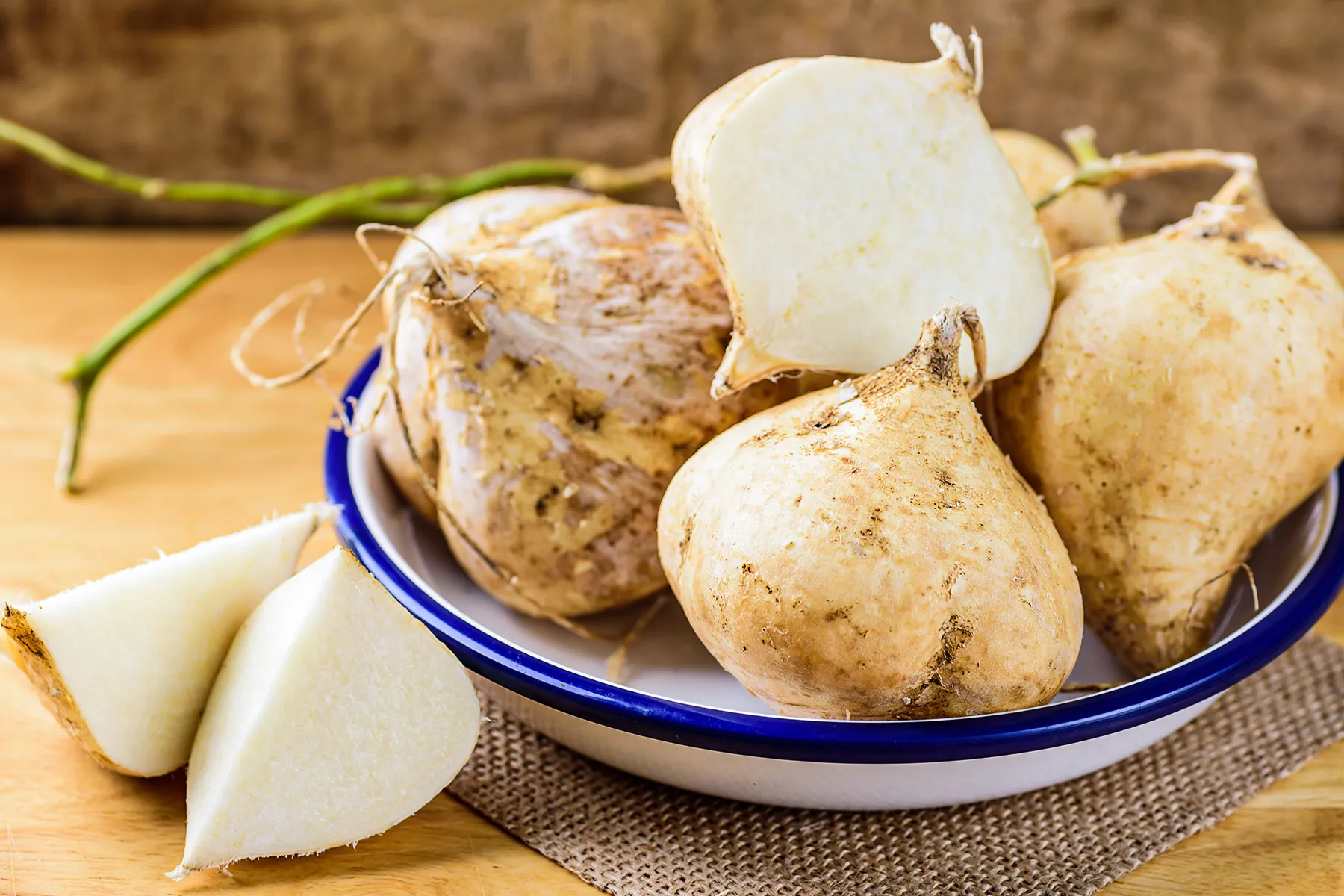
Jicama is a round root vegetable with thin, papery, golden-brown skin and a starchy white interior.
Native to Mexico, jicama is now cultivated in warm regions such as Central America, Southeast Asia, and parts of Africa, among others.
Its flesh is juicy and crisp, with a mildly sweet, nutty taste. Some describe it as a cross between a potato and a pear, while others liken it to a water chestnut.
Other common names include yam bean, Kuzu-imo, Mexican potato, Mexican water chestnut, and Chinese turnip.
Below are 8 health and nutritional advantages of jicama.
1. Rich in nutrients
Jicama boasts a notable nutrient composition.
One cup (130 grams [g]) supplies the following nutrients:
- Calories: 49
- Carbs: 11.5 g
- Protein: 1 g
- Fat: 0.1 g
- Fiber: 6.4 g
- Vitamin C: 29% of the RDA
- Folate: 4% of the RDA
- Iron: 4% of the RDA
- Magnesium: 4% of the RDA
- Potassium: 6% of the RDA
- Manganese: 4% of the RDA
The majority of jicama’s calories come from carbohydrates, with small amounts of protein and fat. It delivers a variety of essential vitamins and minerals alongside a considerable fiber content.
2. Loaded with antioxidants
Jicama contains various antioxidants, plant compounds that help guard cells from damage.
One cup (130 g) of jicama provides 26.3 mg of vitamin C — nearly one-third of the RDA for adult men and about 35% for adult women. It also contains antioxidants such as vitamin E, selenium, and beta-carotene.
Antioxidants neutralize free radicals, harmful molecules that can produce oxidative stress and damage cells.
Oxidative stress has been associated with multiple chronic conditions, including cancer, diabetes, heart disease, and cognitive decline.
A 2021 review reported that many antioxidants and phytochemicals in jicama’s leaves, seeds, and tuber may combat oxidative stress and lower the risk of chronic illness.
3. May support heart health
Jicama contains nutrients that may support cardiovascular health.
For example, one cup (130 g) provides 6.4 g of fiber, which is roughly one-fifth of the recommended daily amount for adults.
A 2018 review indicates that fiber can help reduce the risk of heart disease and stroke. It may also lower LDL “bad” cholesterol and reduce blood pressure — two major cardiovascular risk factors.
A 2016 study found that consuming 16.6 ounces (500 mL) of jicama juice reduced the likelihood of blood clot formation and lowered diastolic blood pressure — both relevant to heart disease and stroke risk.
4. Supports digestion
Dietary fiber may help regulate digestion by softening and bulking stools and promoting gastric emptying, which can ease the passage of stool through the digestive tract.
One cup (130 g) of jicama offers 6.4 g of fiber, contributing to daily fiber targets.
Jicama is also a source of inulin, a prebiotic fiber that may help relieve constipation, lower blood sugar, and reduce inflammation, among other benefits.
Because jicama is high in water, it may further ease constipation by supporting daily fluid intake.
5. Beneficial for gut bacteria
Jicama is rich in inulin, a prebiotic fiber.
Prebiotics are fermentable substances that the beneficial bacteria (probiotics) in your gut can use for fuel.
A diet rich in prebiotics may boost populations of “good” gut microbes while reducing harmful species.
A 2019 mouse study involving diabetic mice showed that probiotic yogurt made with jicama reduced blood sugar more than standard probiotic yogurt, possibly due to inulin.
Consuming prebiotic-rich foods like jicama may encourage bacteria that could lower the risk of chronic illnesses such as heart disease, obesity, and kidney disease.
Gut microbes nourished by inulin may also influence weight control, metabolism, immune function, and mood.
6. Potential anticancer effects
A 2021 review suggested that jicama’s anticancer activity might be linked to the phytochemical rotenone, which has demonstrated several anticancer effects.
The reviewers caution that rotenone is toxic and may cause adverse effects. They note, however, that two derivatives — rotenoisin A and rotenoisin B — have been developed and may have potential in treating breast and liver cancers.
A 2014 study identified a ribosome-inactivating protein from jicama seeds, named pachyerosin, which may have a role in treating gastric cancer by inhibiting the growth of human hepatoma cells.
Additionally, jicama’s antioxidants, fiber, and prebiotic content have all been associated with cancer-preventive effects.
7. May help with weight management
Jicama is nutrient-dense — offering many nutrients while remaining low in calories.
A 2019 animal study found that jicama supplementation supported weight loss and prevented blood sugar spikes in mice fed a high-sugar diet.
Its high fiber content has been shown to support weight loss by increasing satiety, reducing appetite, and enhancing metabolism.
Jicama may also aid weight control through effects on insulin resistance, a contributor to obesity.
Insulin resistance occurs when cells respond less effectively to insulin, making it harder for glucose to enter cells for energy; instead, glucose remains in the bloodstream and raises blood sugar levels.
A 2015 study in mice reported that consuming jicama might improve insulin sensitivity and lower blood sugar.
8. Very versatile
Jicama can be eaten raw or cooked and incorporated into many recipes.
After peeling off the tough brown skin, the white flesh can be sliced or cubed.
:max_bytes(150000):strip_icc()/jicama-GettyImages-1384657380-b7f882fcf8de4f9497ac82976dc9fdd4.jpg)
Ways to include jicama in your meals:
- Add it to vegetable salads for extra crunch.
- Mix with mango, pineapple, or papaya for a tropical fruit salad.
- Slice thickly and serve with dips like guacamole or hummus.
- Include on a vegetable platter.
- Stir-fry with sesame oil and rice vinegar.
- Squeeze lime and sprinkle chili powder for a zesty snack.
Frequently asked questions
Is jicama a natural laxative?
Jicama isn’t a laxative per se, but it contains a high level of fiber. Consuming adequate fiber may help relieve constipation and normalize bowel movements.
Why does jicama upset my stomach?
Because jicama is rich in fiber, eating too much can cause symptoms such as bloating, abdominal pain, gas, and diarrhea.
What is the toxin in jicama?
The toxin present in jicama seeds is known as rotenone.
The bottom line
Jicama is a nutritious addition to your diet.
It’s rich in fiber and antioxidants, which may aid digestion, support weight management, and lower the risk of chronic disease.
Plus, jicama is crisp and tasty and can be enjoyed on its own or combined with many different foods.























Leave a Reply
You must be logged in to post a comment.