

Experiencing blurry vision in one or both eyes first thing in the morning is a common concern. In many situations, it’s harmless, and your sight becomes clear again after a few blinks or gently rubbing your eyes. If you’re wondering How to fix blurry vision after waking up, understanding the underlying reason is the first step toward choosing the right solution.
Morning blurriness can stem from a wide range of causes, from simple dryness to more complex medical conditions. Identifying why it happens makes it easier to determine whether you need a quick home remedy, lifestyle adjustment, or medical treatment.
Below are 10 possible reasons for blurred vision upon waking and what you can do to address each one.
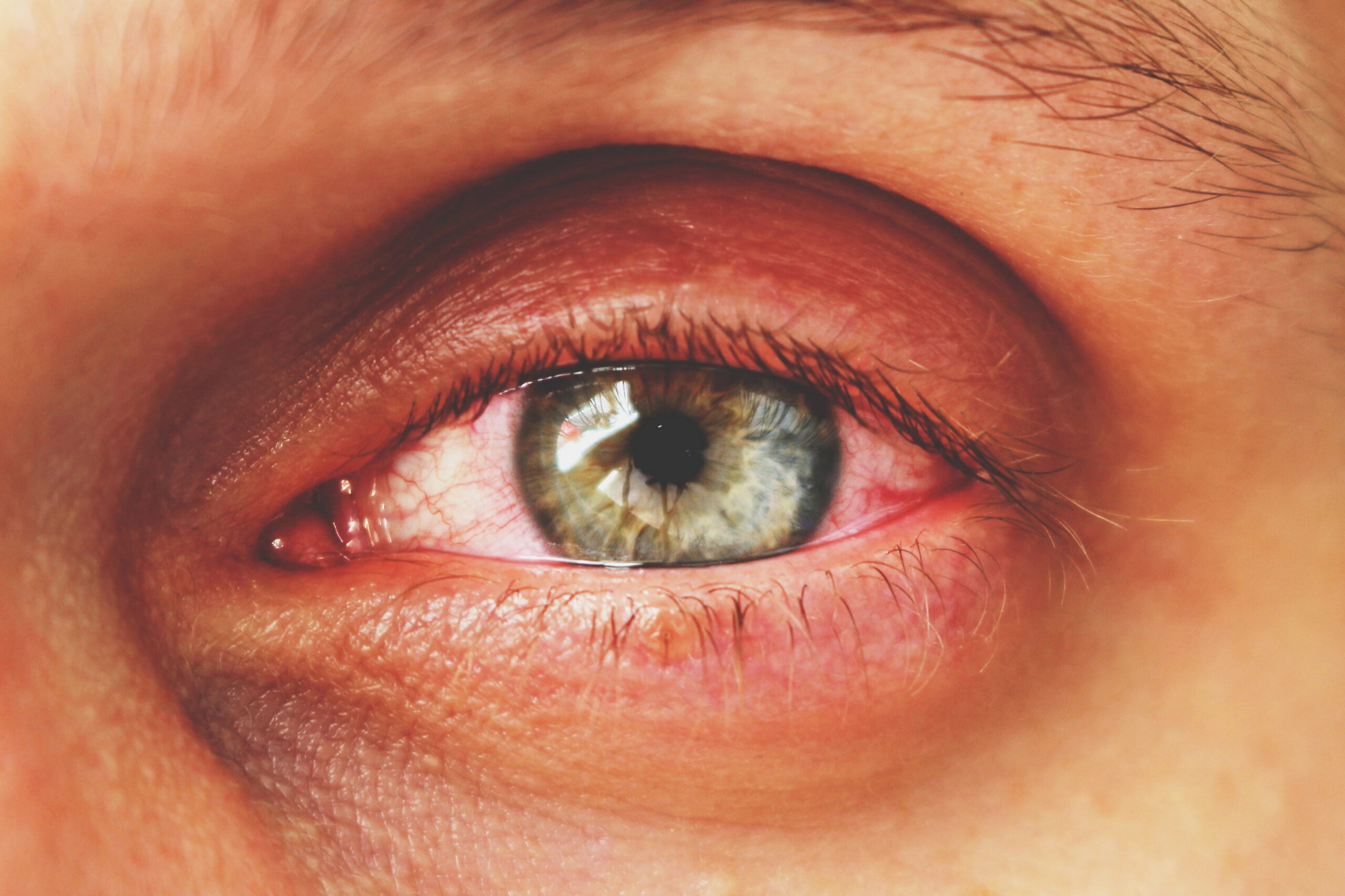
Why you might have blurry vision in the morning
Whether your vision appears cloudy every day after you wake up or only occasionally, several potential explanations could be responsible. Let’s explore the most common causes of early-morning visual changes.
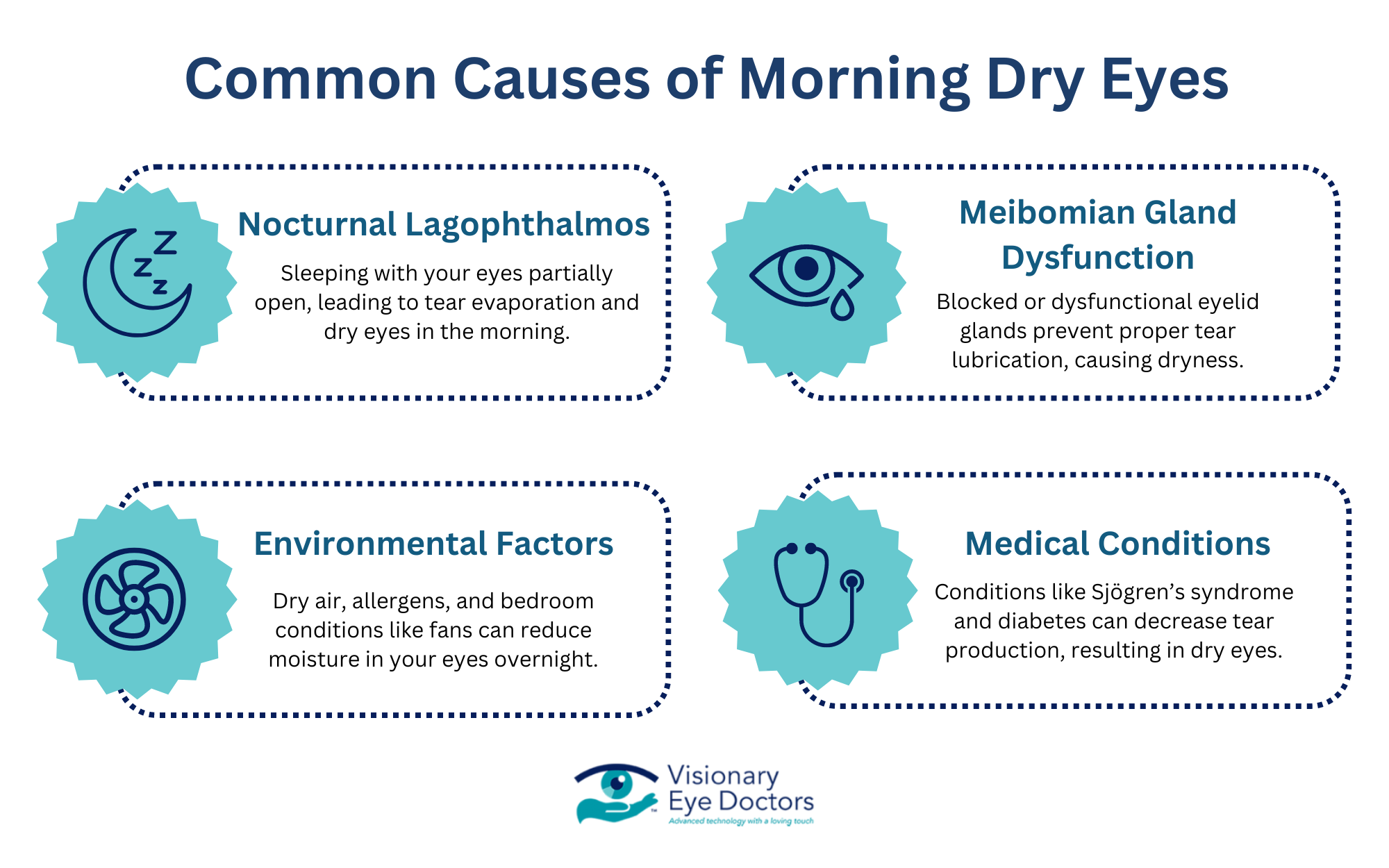
Dry tears
Your tears play a vital role in lubricating, nourishing, and protecting the surface of your eyes. Tear production continues even while you sleep.
However, during the night, tear evaporation or reduced tear stability can leave the surface of your eyes temporarily dry. When this happens, the cornea may not be evenly hydrated, leading to hazy or blurry vision upon waking. Blinking several times after getting out of bed often helps redistribute moisture and clear your sight. Using lubricating drops can also support those looking for ways to manage How to fix blurry vision after waking up caused by dryness.
Eye allergies
Allergic reactions affecting the eyes can trigger itching, puffiness, excessive tearing, and dryness. This irritation may result in blurred vision in the morning.
If symptoms seem worse when you wake up, allergens in your bedroom — such as dust mites, pet dander, or even laundry detergent residue on bedding — could be contributing factors. Managing environmental triggers and using appropriate allergy eye drops may significantly reduce morning blurriness.
Sleeping on your face
Sleeping face down may increase the risk of floppy eyelid syndrome (FES), a condition in which the upper eyelid becomes loose and loses elasticity.
This can lead to irritation, burning, tearing, and blurry vision after waking. Although FES can affect anyone, it is more frequently seen in obese men. Adjusting your sleeping position to your back or side may help prevent these symptoms.
Fuchs’ corneal dystrophy
Fuchs’ corneal dystrophy is an inherited disorder that causes cornea swelling during sleep, which can result in cloudy or blurred vision in the morning. As the day progresses and fluid evaporates from the cornea, vision often gradually improves.
This condition is more common in women, with symptoms typically appearing around age 50. Persistent morning fogginess that improves later in the day may warrant evaluation by an eye specialist.
Taking certain medications before bedtime
Some medications, including antihistamines, sleeping aids, cold medicines, and high blood pressure medication, may decrease tear production overnight. Reduced lubrication while sleeping can cause dry eyes and blurred vision upon waking.
If medication is contributing to the issue, speak with your doctor about possible adjustments or supportive treatments such as nighttime artificial tears.
Sleeping with contact lenses
Wearing contact lenses while sleeping can limit oxygen flow to the cornea. This increases the risk of dryness, irritation, and blurry vision in the morning. To protect your eye health, always remove contact lenses before going to bed and clean them properly.
If you notice persistent fogginess after sleeping with lenses or using eye coverings, you may also benefit from reading about How to fix blurry vision after sleep mask for additional guidance.
Drinking alcohol before bedtime
Alcohol consumption can contribute to dehydration, which may affect tear production and cause dry eyes. As a result, you might experience temporary blurry vision in the morning after drinking.
Staying well hydrated and limiting alcohol intake in the evening may reduce the likelihood of this effect.
Blood sugar problems
Both high and low blood sugar levels can lead to blurred vision upon waking. In these cases, visual changes are often accompanied by other symptoms such as dizziness, weakness, fatigue, increased urination, or excessive hunger.
Elevated blood sugar can be an early warning sign of diabetes. If you regularly experience these symptoms together, a medical evaluation is important.
Oil gland problems
The meibomian glands, located along the eyelid margins, produce oil that helps prevent tear evaporation. If these glands produce excessive oil or become dysfunctional during sleep, they may contribute to irritation and blurry vision in the morning.
Warm compresses and proper eyelid hygiene can sometimes improve gland function. However, be cautious when using warming products, as improper use may contribute to Heated eye mask blurry vision in certain cases.
Sleeping underneath a fan
Using a fan at night can make your bedroom more comfortable, but constant airflow may dry out your skin and eyes — even with your eyelids closed. This dryness can lead to itching, irritation, and blurry vision after waking.
Redirecting the airflow away from your face or using a humidifier may help maintain adequate moisture levels.
Do you need to see your doctor?
If your vision clears quickly after blinking or gently rubbing your eyes, and the blurriness occurs only occasionally with an obvious cause, you may not need medical attention.

However, persistent, unexplained blurry vision — especially when accompanied by additional symptoms — should not be ignored. Schedule an appointment with your doctor for a thorough evaluation.
Blurry vision in the morning can sometimes signal a stroke, which is a medical emergency. If you suspect a stroke, call 911 immediately.
Get emergency medical care if you suspect a stroke
Recognizing stroke symptoms quickly and seeking emergency assistance can save a life and improve long-term outcomes.
Experts recommend you BE-FAST:
- Balance: Are they having trouble with balance or coordination?
- Eyes: Are they experiencing visual symptoms, like double vision or blurry vision?
- Face: Does one side of their face droop if they try to smile?
- Arms: Can they lift both arms or is one arm weak or numb?
- Speech: Is their speech slurred or difficult to understand?
- Time: If any of the above symptoms are present, time to call 911 or your local emergency services.
Immediate treatment helps reduce the risk of permanent brain injury, long-term disability, or death. When in doubt, seek emergency care.
Other warning signs may include:
- dizziness
- a headache
- tingling or numbness on one or both sides of your body
- slurred speech
A head injury or concussion sustained before bed can also cause blurry vision the next morning. Additional concussion symptoms may include:
- lack of coordination
- a headache
- nausea
- dizziness
- ringing in the ear
How is blurry eyes in the morning diagnosed?
If eye allergies are suspected, your doctor may diagnose the issue based on symptoms such as redness, watering, and itching. Allergy eye drops are often effective in relieving blurred vision related to allergic reactions.
In other situations, a comprehensive eye examination may be necessary. This can include measuring visual acuity and evaluating the optic nerve, cornea, and retina to identify structural or functional abnormalities.
An eye dilation exam may also be performed. Special eyedrops are used to widen the pupil, allowing your doctor to examine the back of your eyes in detail.
Additional tests may measure tear production and assess how quickly tears evaporate, which is especially helpful when investigating dry eye syndrome.
If you experience blurry vision along with fatigue, increased urination, or excessive hunger, your doctor may check your blood glucose levels to rule out blood sugar problems.
What are the treatment options for blurred vision in the morning?
Morning blurry vision does not always require treatment, particularly if it resolves quickly. However, when it stems from an underlying medical condition, addressing the root cause is essential.
Medical treatment options
Treating the underlying issue typically improves visual clarity.
For example, if Fuchs’ corneal dystrophy leads to corneal swelling, your doctor may prescribe eyedrops designed to remove excess fluid from the cornea.
In cases of eye allergies, antihistamines may reduce symptoms, though they can sometimes worsen dryness. Antihistamine eye drops formulated specifically for ocular use may help minimize blurriness while addressing inflammation.
Home remedies
Applying lubricating eyedrops before bedtime or immediately after waking can help restore moisture to the eye’s surface. This simple step may prevent or reduce early-morning blurriness.
Maintaining good sleep hygiene, staying hydrated, and protecting your eyes from excessive airflow can also support long-term eye comfort.
How can you prevent blurry vision in the morning?
To reduce the chances of waking up with cloudy vision, consider these preventive strategies:
- Drink plenty of fluids throughout the day to maintain overall hydration, including eye moisture.
- Avoid alcohol before bedtime.
- Keep your bedroom clean and wash bedding regularly to limit allergens.
- Remove contact lenses before sleep and clean your contact lens case daily.
- Avoid sleeping directly under a fan or with airflow pointed at your face.
- Sleep on your back or side rather than face down.
- Aim for 7–8 hours of quality sleep each night, as inadequate rest may contribute to eye discomfort and dryness.
Takeaway
Blurry vision in the morning can affect anyone from time to time. In most instances, it is temporary and resolves quickly. However, ongoing or worsening symptoms may signal a more serious issue.
If your blurred vision happens frequently, persists throughout the day, or occurs alongside other concerning symptoms, consult a healthcare professional for proper diagnosis and guidance on How to fix blurry vision after waking up safely and effectively.























Leave a Reply
You must be logged in to post a comment.