
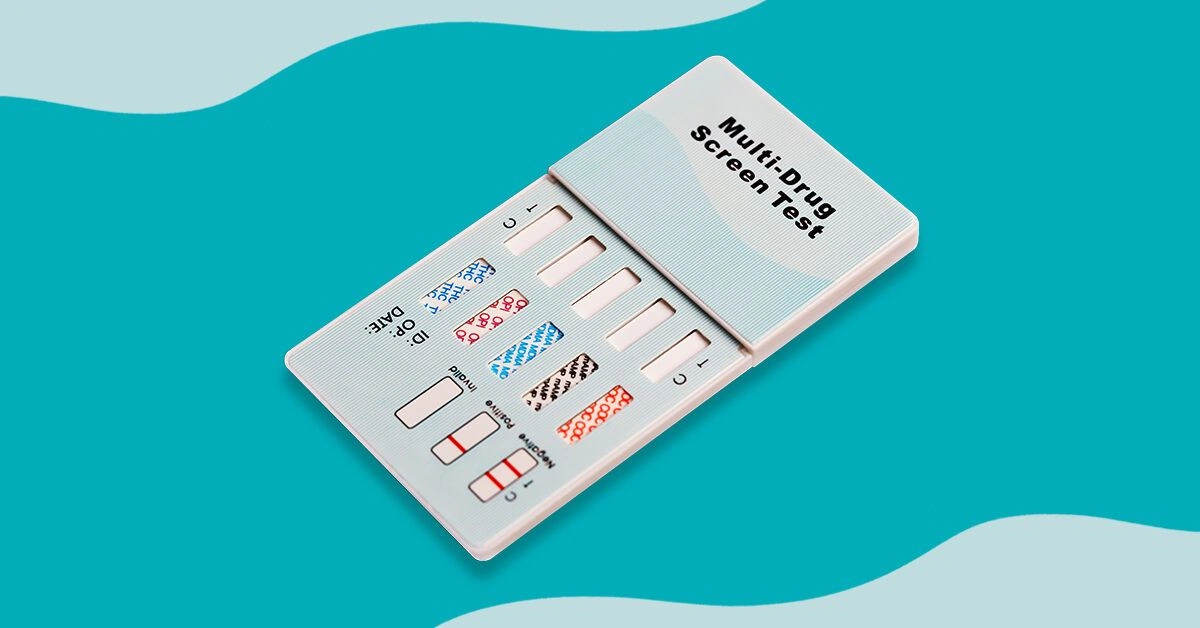
At-home drug tests use urine or saliva samples to determine whether illegal substances or prescription medications are in your system.

These kits serve as an alternative to visiting a laboratory or healthcare facility for drug screening.
Certain at-home tests combine a two-step approach that lets you collect a sample at home and then send it to a lab for confirmatory analysis. The first stage is the home sample collection; the second stage is laboratory confirmation for definitive results.
While these tests offer ease and convenience, they also have limitations. Below is an overview of how these kits operate, their reliability, the best timing for testing, and what you can reasonably expect from the outcomes.
What are at-home drug tests?
At-home drug tests are most often urine or saliva-based kits used to detect specific substances. These can include illegal drugs, legitimately prescribed medicines, or prescription drugs used improperly. Drugs commonly identified by at-home tests include:
- barbiturates
- benzodiazepines
- cocaine
- ecstasy
- marijuana
- methadone
- methamphetamines
- oxycodone
- prescription pain relievers
- tricyclic antidepressants
In clinical settings, testing options may include urine, hair, saliva, or blood samples. At-home kits typically use urine or saliva because they can sometimes deliver immediate or very fast results.
These home kits also rely on straightforward equipment and easy-to-follow procedures that require minimal training or prior experience.
You can buy an at-home kit that checks for a single drug (for example, cocaine, methamphetamine, or THC—the active ingredient in marijuana) or multi-panel kits that screen for multiple substances from one sample.
When selecting a kit, carefully review the labeling to ensure it tests for the substances you need and within the appropriate detection window.
How they work
Urine at-home drug tests usually involve urinating into a collection container and dipping a test strip or using a cassette that reacts with the urine. The reagent on the strip interacts with metabolites in the urine and changes color to signal the presence of certain drugs.
Most drugs are lipid-soluble, meaning the liver metabolizes them and excretes byproducts that the kidneys filter into urine. A urine test contains chemicals that react with these metabolites, causing a color change when a drug is detected.
Saliva tests work in a comparable way: a swab of the inner cheek or a saliva sample is introduced to a test device or strip, and reagents react with drug components to produce a visible color shift if substances are present.
Although reaction and reading times vary by product, many at-home kits display results within about five minutes after contact with urine or saliva.
Pros and cons of using at-home drug tests
Pros
- They’re usually simple to use and avoid needle sticks.
- They can be completed at home.
- Urine and saliva kits can often detect substances within hours after use.
- The tests tend to be inexpensive (commonly under $20 per kit).
Cons
- Sample collection may require supervision to ensure integrity.
- Some people experience “shy bladder” and may struggle to provide a urine sample on demand.
- Recent eating or drinking may affect the accuracy of certain saliva tests.
- Insurance typically doesn’t pay for these kits.
Key features of an at-home drug test
Shopping in a pharmacy aisle or browsing online for at-home drug kits can be overwhelming. Here are important aspects to consider so you choose a suitable kit for yourself or someone you care about.
Substances tested
Some kits screen for a single drug, while others can detect a dozen or more substances at once. Make sure the kit you buy tests for the specific drug(s) you’re concerned about and operates within the detection window you need.
Ease of use
Although each kit includes detailed instructions, the packaging often gives a sense of how simple or complex the process will be.
If the steps look confusing or you’re worried about collecting an accurate sample, consider a different kit or method.
Customer reviews can be helpful for gauging how user-friendly a particular product tends to be.
Test type
Generally, saliva kits screen for fewer substances than urine kits. If you need coverage for many drugs, a urine-based test may be the better option.
Optional features of at-home drug tests
Some kits offer add-ons, which typically raise the price compared to standard tests.
Laboratory confirmation
If you want the most reliable outcome, a laboratory confirmation option provides greater accuracy compared with single-step home tests or saliva kits that don’t offer lab follow-up.
Keep in mind that adding a lab confirmation step requires extra time for shipping and processing, so results will take longer.
What to consider when shopping for an at-home drug test
When buying at-home kits, look for products authorized for use in the United States and cleared by the Food and Drug Administration (FDA).
The FDA reviews these kits for accuracy and for how clear the instructions are, which helps support more dependable results for users. The FDA also offers a searchable list of cleared home-use tests.
Safety and risks
At-home tests can produce inaccurate results if user error or improper sample collection occurs. To reduce risks, you should:
- Follow the test instructions exactly as provided.
- Collect and store urine or saliva according to the manufacturer’s guidance.
- Take into account any medications you’re taking that might affect results. For instance, prescribed amphetamines (like Adderall) for ADHD can cause a positive amphetamine result since at-home tests can’t distinguish between prescription use and illicit amphetamine use.
If procedures aren’t followed properly, tests can produce false positives or false negatives, which could have serious consequences if an absent drug is reported as present.
Are at-home drug tests covered by insurance?
Generally, insurance does not pay for at-home drug kits unless a clinician provides a letter of medical necessity explaining why the tests are required for medical reasons on a one-time or ongoing basis.
FSA and HSA eligibility
If you have a medical necessity letter, you may be able to buy tests using funds from a flexible spending account (FSA) or health savings account (HSA). Check with your benefits administrator before purchasing to confirm whether your FSA or HSA plan will reimburse the expense.
Who should use an at-home drug test?
At-home drug tests can be useful in several situations, including:
- Clinical: You might need to produce a drug test as evidence of sobriety or ongoing abstinence, or an insurer could request a test to qualify for a life insurance plan.
- Employment: Some jobs require pre-employment screening or periodic/random drug testing. Confirm with your employer whether an at-home test is acceptable as documentation.
- Legal: Courts usually do not accept at-home kit results as legal proof of sobriety. If you plan to use a home test for legal purposes, get approval first. Law enforcement may use rapid field tests to screen for drugs.
- Personal: If you suspect someone used a drug unintentionally or want to check a family member, an at-home test can provide quick information. Parents sometimes use these tests to screen for illicit drug use.
Remember an at-home test captures a single point in time. A negative result now doesn’t rule out a later positive result. For monitoring a loved one, repeated testing may be needed to increase confidence in the findings.
Frequently asked questions about at-home drug tests
How accurate are at-home drug tests?
These kits can detect certain substances in urine or saliva but don’t quantify how much of the drug is present.
Some synthetic or “designer” drugs may escape detection by at-home urine tests because their chemical structures are frequently modified and may not be recognized.
No at-home test is perfectly accurate; false positives and false negatives can occur. Repeating tests at different times can help verify a positive result.
How long will drugs show in a urine test?
Detection windows vary by substance. For example, marijuana can test positive within 1 to 3 hours after use and for up to about 7 days in many cases.
THC may remain detectable for several weeks in frequent or heavy users due to its longer elimination half-life. Amphetamines, such as methamphetamine, can show up within 4 to 6 hours after use and remain detectable for up to about 3 days.
Saliva tests typically have shorter detection windows. Marijuana may be detectable in saliva for up to 24 hours, while cocaine, morphine, or heroin can be present in saliva for roughly 36 hours. Hair testing offers one of the longest detection windows—up to about 90 days.
How long can at-home drug tests detect drugs?
At-home kits have expiration dates. A test purchased years ago may no longer perform reliably.
Shelf life varies by manufacturer. Store kits at room temperature and avoid extreme heat or cold to help preserve their accuracy.
Takeaway
At-home drug tests are a reasonably reliable way to screen for illegal substances or prescription medications, but accuracy can be influenced by user error and by certain designer drugs.
Carefully following the included instructions will help produce the most trustworthy results. If needed, repeat testing at different times or on different days to reduce the risk of false positives or negatives.


















Leave a Reply
You must be logged in to post a comment.