
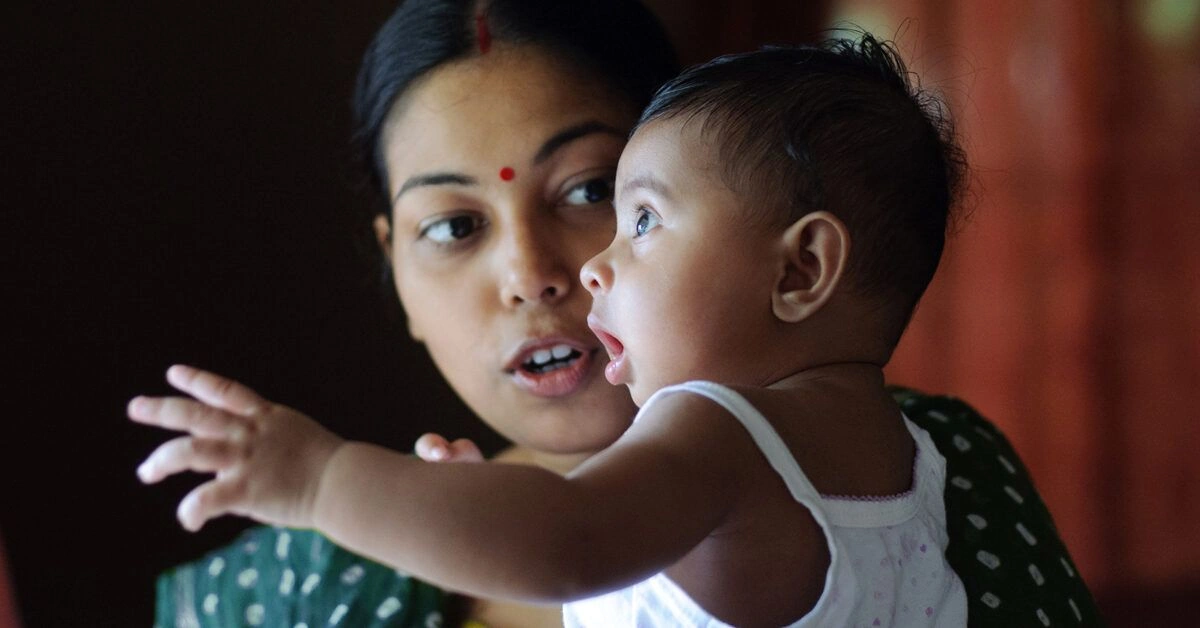
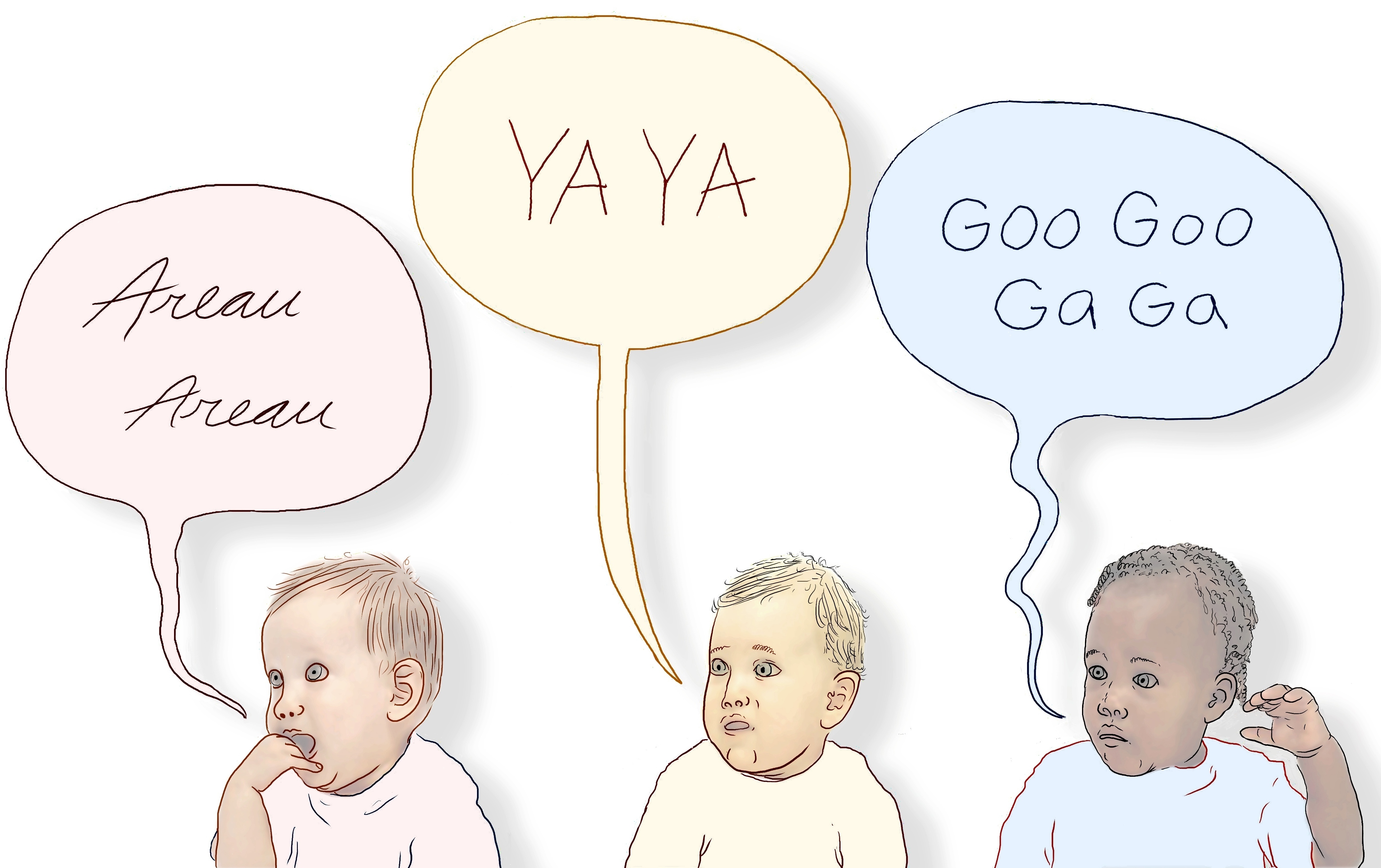
Aside from “mama” and “dada,” few utterances are as closely tied to infant speech as “goo-goo” and “gaa-gaa.” Want to mimic an infant? Spout a series of nonsensical syllables with no pattern, and presto—you’ll sound like an 8-month-old in no time.
Those random assortments of vowels and consonants that infants produce are known as babbling.
And while it may seem totally trivial when your little one chatters to themselves while flinging peas into the crevices of their highchair, you might ask: Is babbling truly as pointless to a baby’s communication as it appears?
Not at all. In fact, a variety of professionals—from speech therapists to pediatricians—recognize that babbling plays a vital role in an infant’s language development. It helps them refine their articulation and begin to express ideas.
Here’s what to understand about this early communication stage and how you can support your little babbler to keep practicing those baby sounds.
What is babbling?
Babbling is often referred to as baby talk (or jargon, once it starts mirroring the rhythms of real speech) because it typically makes no sense to people with mature language. It sounds like someone dumped a mix of letters into a box, scrambled them, and scattered them about.
To be clear, although babbling is an essential milestone on the path to communication, the individual utterances don’t carry meaning. In other words, if your infant keeps saying “babababababa” at breakfast while pointing at a backpack, they aren’t intentionally labeling it “backpack.” They’re simply babbling.
Still, babbling is meaningful. It’s how your child first practices combining sounds and, later, linking those sounds to meanings.
Babbling is surprisingly nuanced, and researchers identify three main varieties that correspond to different infant ages:
- Marginal babbling. From about 4 to 6 months, your baby may begin to expand vowel sounds and pair vowels with consonants. Most utterances are single syllables—imagine “daa” or “baa.”
- Canonical babbling. Between roughly 6 and 10 months, babies produce more distinct syllable sounds and begin chaining several together. This is when the “goo-goo” and “gaa-gaa” noises become common. Canonical babbling can be reduplicated—where the same syllable repeats (“deedeedeedee”)—or non-reduplicated—where the syllables vary (“meebaagoo”).
- Conversational babbling. You’ve probably seen clips of infants “arguing” with a parent in pure baby talk yet using speech-like patterns. That’s conversational babbling: babies don’t yet use real words but grasp that conversation includes expression, pauses, volume shifts, and gestures. This phase often begins around 10 months and precedes the child’s first true words.
At what ages does babbling occur?
Babies make noises from the moment they’re born, but true speech progress typically begins around 4 months of age.
They’ll mostly babble up until around 12 months, when their communicative skills accelerate. As they begin to speak actual words and match them with real-world items (like “Mama” and “Dada”), babbling tends to taper off.
Want a clearer timeline? Here you go:
- 2 to 4 months: cooing, gurgling, and prolonged vowel sounds
- 4 to 6 months: marginal babbling—vowels and consonants combined into single syllables
- 6 to 10 months: canonical babbling—those single syllables start repeating or varying to form strings of sounds
- 10 to 15 months: first words begin to appear
- 15 months and beyond: more consistent verbal expression (and more talking!)
Why are babbling and cooing important?
Remember when we mentioned that professionals appreciate how critical baby talk is? Let’s revisit that point.
In the initial 1–2 months of life, infants mainly communicate by crying and then smiling. Shortly after, they begin to coo—which, besides being irresistibly cute, signals that your baby is tuning into verbal communication.
It also indicates they’re exercising and strengthening the oral muscles necessary for speech, experts say, because although babies frequently suck from a breast or bottle, the muscles used for talking are slightly different.
Babbling is even more pivotal. Babies are keen imitators, and imitation is a primary way they learn. Fascinatingly, babbling also serves as a form of social interaction.
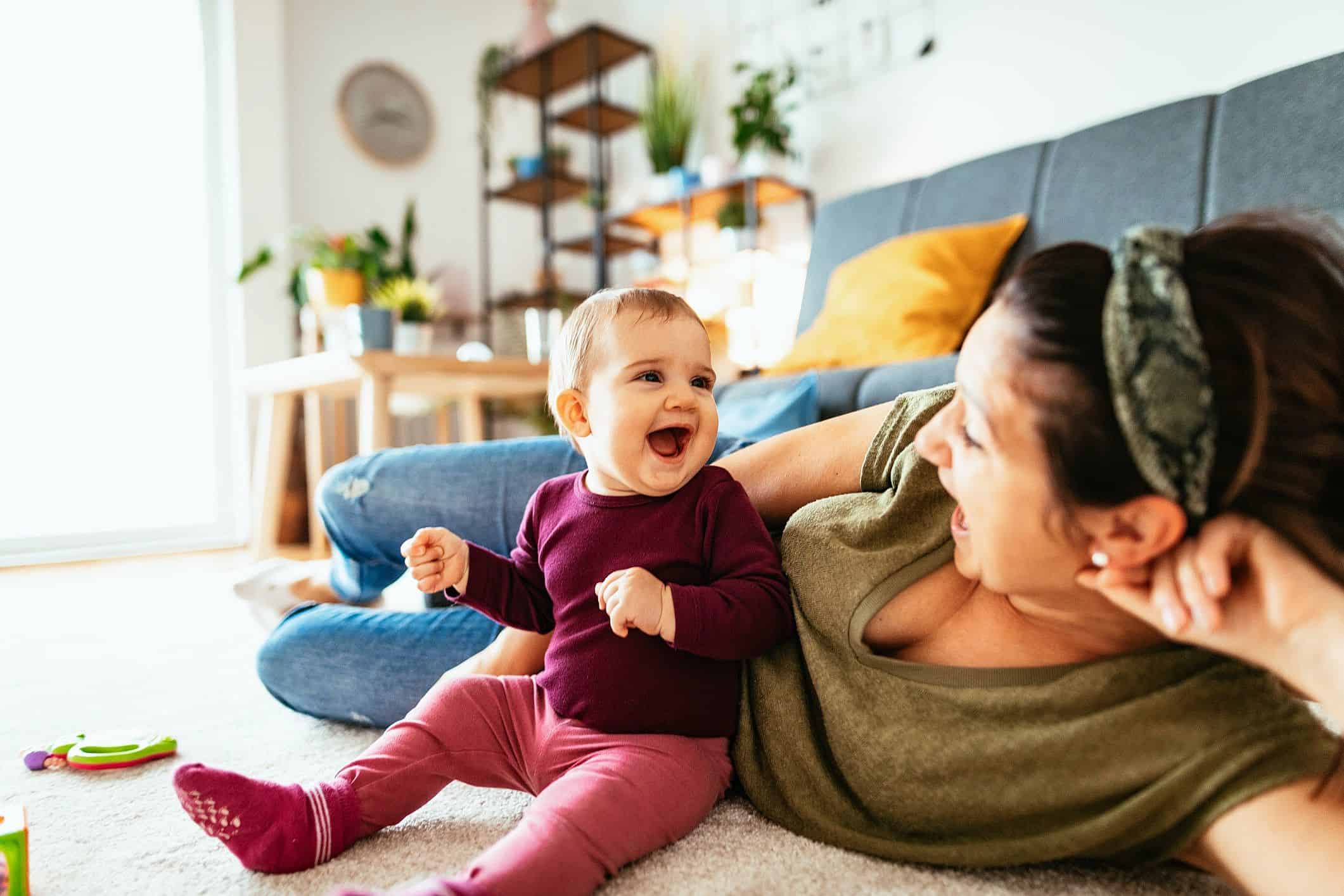
A 2017 study suggests that the “conversations” between infants and their mothers, specifically, shape language growth. When mothers respond to their babbling babies, the infants’ language improves—yet babies may also be provoking these responses to practice turn-taking in conversation.
Conversely, a 2019 study indicates that a lack or delay in canonical babbling can be an early sign of certain developmental conditions, like autism, and links baby talk with later language progress.
How long should babbling last?
All infants develop at their own pace, but typically most begin babbling around 4 to 6 months and wind down around 12 months (or when they utter their first words).
There’s natural variation, but by 18 months most children are no longer primarily babbling.
When you should speak with a pediatrician
If your baby hasn’t begun babbling (or at least cooing) by 4 or 5 months, try not to worry—there’s some leeway. However, if your infant is 8 months and still not babbling, it’s a good idea to consult your pediatrician.
Delayed language milestones can stem from multiple causes, from hearing or speech issues to developmental diagnoses such as autism.
Early assessment and intervention for any developmental concern can greatly improve outcomes, so don’t hesitate to ask questions.
If a pediatrician suspects hearing problems or speech delays, they’ll probably refer you to an audiologist and possibly a speech-language pathologist. If there’s concern about neurological issues, your child might be referred to a developmental pediatrician or a related specialist.
How you can encourage your babbling baby’s language skills
If your little one is starting to babble and you want to foster that progress, there are several effective strategies you can try:
- Respond to them. If someone kept ignoring you, would you keep talking? The more you engage with your baby’s emerging speech—treating their sounds as meaningful—the more they’ll be motivated to vocalize (and the quicker they’ll pick up the right words).
- Narrate your day. Label people and objects. Describe what you’re taking from the fridge. Point out things while on a walk. Babies learn by linking words to the sights around them, so making those connections repeatedly helps language stick. Talk about what you’re doing as you do it, and your baby’s vocabulary may take off.
- Sing. Singing exposes babies to vocabulary and speech rhythms, so warm up and sing familiar nursery rhymes often.
- Read. It may feel odd to read “Goodnight Moon” to a 4-month-old, but infants absorb an enormous amount. Every exposure to sounds, sentence flow, intonation, and structure helps. Experts recommend starting to read from birth and continuing consistently.
- Imitate them (in a helpful way). Not to mock, but to validate their attempts at communication. Mirroring their vocal patterns encourages them to initiate more speech. Even echoing similar sounds—rather than perfect replicas—and replying promptly can accelerate language development, according to 2014 research. For instance, if baby says “bababa” while holding a ball, you might answer, “Yes, you have a ball. Is it the blue ball?”
- Maintain eye contact. This shows your child you’re focused and attentive, reinforcing their attempts to communicate.
The takeaway
Hearing your baby babble is charming and amusing. But babbling also has an important function in their language development.
Typically beginning around 4 to 6 months and continuing through the first year, babbling precedes first words.
You can nurture this stage by engaging in back-and-forth “conversations” with your baby and surrounding them with language in many forms—talking, singing, and reading—to support their path to real speech.


















Leave a Reply
You must be logged in to post a comment.