
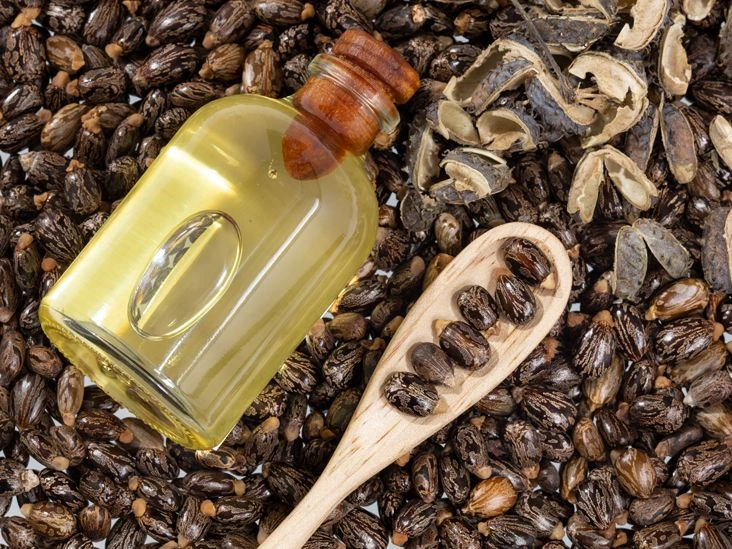
Navel pulling involves putting castor oil on the belly button and gently rubbing it with the idea that this will boost digestion, support natural detoxification, and encourage weight loss. However, there’s no scientific proof that these benefits actually occur.
If you’ve been browsing social media lately, you might have run into the trend called navel pulling. A quick search on platforms like TikTok shows many videos on the subject, some with thousands of views.

The practice draws from Ayurvedic traditions and centers on putting oils on and around the navel area.
Advocates of navel pulling attribute numerous health benefits to the practice, but it’s not the miracle cure it’s sometimes portrayed as.
Are there any proven benefits to applying castor oil to the belly button?
Navel pulling stems from principles in Ayurveda, a traditional Indian medical system that is thousands of years old. Broadly, Ayurveda emphasizes natural, whole-person approaches to support the body, mind, and spirit.
The technique focuses on the so-called Pechoti gland located behind the belly button. According to proponents, this gland is a junction for thousands of blood vessels that can facilitate absorption of oils into the body.
Ayurveda isn’t the only traditional system to treat the navel. Some Traditional Chinese Medicine (TCM) techniques also involve applying substances to the navel area to manage issues such as chronic diarrhea.
Supporters say navel pulling can do things like:
- improve digestive function by reducing bloating and regulating bowel movements
- detoxify the body
- aid in weight loss
- ease symptoms of conditions such as endometriosis and ovarian cysts
Most of these assertions are anecdotal—based on personal reports rather than controlled research.
Is there scientific evidence for navel pulling?
There is no scientific proof that a Pechoti gland exists. The anatomy of the belly button is actually much simpler.
During fetal development, the umbilical cord contained a vein and two arteries, not thousands of vessels. After birth, those blood vessels regress and form ligaments.
This means there aren’t vessels running directly from the navel into your body. Ultimately, your belly button is a scar from where the umbilical cord was attached.
Likewise, there’s no research showing that navel pulling achieves the health effects its advocates claim. Searches for terms like “navel pulling” or “castor oil belly button” produce no peer-reviewed studies supporting these benefits.
Could navel pulling still offer some advantages?
Although navel pulling likely isn’t the panacea some promote, it might offer limited benefits.
For instance, castor oil has documented anti-inflammatory and antimicrobial properties and is high in fatty acids. Because of these qualities, it may help certain skin issues like acne and can act as a moisturizer or gentle cleanser.

The practice also includes massaging the abdomen, and abdominal massage has evidence for aiding digestion. A 2023 meta-analysis found that abdominal massage may increase bowel movement frequency in people with constipation, and other studies support this result.
Are there any risks linked to navel pulling?
Scientific literature hasn’t identified specific benefits of navel pulling or thoroughly investigated risks tied to it.
If you have sensitive skin, castor oil can cause irritation, itching, or allergic reactions. For that reason, it’s wise to perform a patch test before using castor oil more extensively on your skin.
Abdominal massage is generally safe when done gently. Avoid vigorous or painful pressure.
Evidence-based approaches for digestion and detox
If you want scientifically supported methods to improve digestion, consider these options.
Castor oil can work as an oral laxative; the U.S. Food and Drug Administration (FDA) has approved it for that specific use.
Other commonly used treatments include fiber supplements such as psyllium (e.g., Metamucil), osmotic laxatives like polyethylene glycol (MiraLAX), and stimulant laxatives such as bisacodyl (Dulcolax).
Additional home strategies for constipation and bloating include:
- increasing dietary fiber and adequate fluid intake to ease stool passage
- regular physical activity to support consistent bowel movements
- cutting back on foods that commonly cause gas and bloating, like raw cruciferous vegetables, beans, wheat, and carbonated drinks
If constipation or bloating persists, consider seeing a healthcare provider to investigate underlying causes.
Conditions such as irritable bowel syndrome (IBS), celiac disease, and diverticulitis can lead to persistent changes in digestion, including constipation and bloating.
Takeaway
Navel pulling is an Ayurvedic-derived practice that involves applying castor oil to the belly button and massaging it. Many of the claimed benefits relate to digestion, such as easing constipation or bloating.
However, there’s no scientific evidence that navel pulling reliably provides these effects, and information about its potential risks is limited.
To manage constipation and bloating, you can adjust diet, increase physical activity, and use over-the-counter remedies. If symptoms are frequent or severe, consult a healthcare professional for evaluation and guidance.




















Leave a Reply
You must be logged in to post a comment.