

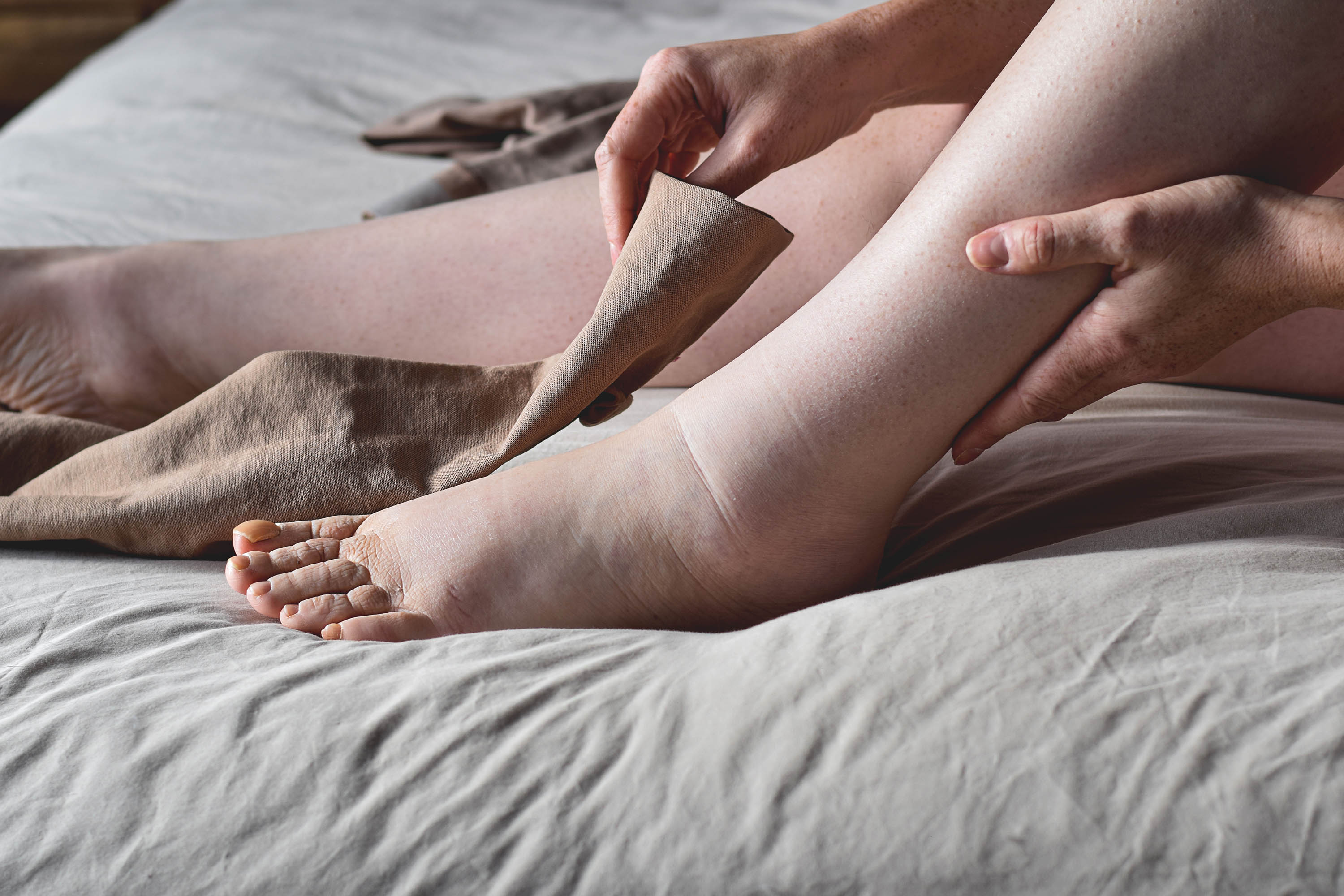
Diabetes can harm blood vessels, causing poor circulation that leads to fluid accumulation in the feet, ankles, and lower legs. This swelling is called edema. Wearing compression stockings, staying active, and using other strategies may help ease swelling.
Edema refers to abnormal swelling of the feet and ankles when excess fluid collects in the tissues. It can be generalized or localized to a particular area.
It’s normal to notice some swelling after eating a lot of salty foods or remaining in one position for extended periods. Hormonal shifts can also cause temporary swelling. However, these are not the only triggers.
Diabetes and swelling
Diabetes is a disorder in which the body either doesn’t produce enough insulin or doesn’t use it effectively. Insulin is a hormone released by the pancreas that helps cells take in glucose.
When insulin isn’t used properly, glucose levels in the bloodstream rise. Persistently high blood sugar can damage the inner lining of small blood vessels, impairing circulation.
Poor circulation may permit fluid to pool in the feet and ankles, resulting in visible swelling.
Other causes of swelling
Chronic high blood sugar can also injure nerves in the legs and other areas, producing numbness that makes it harder to notice injuries such as sprains, fractures, and cuts.
Untreated sprains or fractures can become swollen, and unattended cuts are more likely to get infected. If you have diabetes, inspect your feet often for cuts, bruises, and other injuries.
See a podiatrist from time to time if you have concerns about circulation or nerve damage in your lower limbs.
According to the National Health Service, additional diabetes-related factors that can contribute to foot swelling include:
- obesity
- venous insufficiency
- heart problems
- kidney issues
- side effects from medications
In uncommon cases, edema may be due to an increased tendency for leaky capillaries or occasionally from using large doses of insulin.
If you’re experiencing swelling related to diabetes, below are nine tips to help manage fluid in your feet.
Use compression socks
Compression socks apply graduated pressure to your feet and legs, which can boost circulation and decrease swelling, according to 2017 research.
These socks typically extend from the foot up to the knee. Wear them during the day and remove them at bedtime. Ask your physician whether you need them on one leg or both.
They should not be excessively tight. Begin with light compression and increase it only if needed. Overly tight compression can actually hinder circulation. Avoid placing compression garments over open sores or wounds.
Elevate your feet
Raising your feet above heart level helps fluid return to the central circulation instead of collecting in the lower limbs, which reduces swelling, according to the NHS.
You can prop your feet up while sitting on a couch or when lying in bed.
If you work at a desk and can’t keep your legs above heart level, try using a footstool or small ottoman to ease swelling.
The Legs Up the Wall yoga pose can also be beneficial. To perform it:
- Lie on your back and place your buttocks near a wall.
- Lift your legs and rest them vertically against the wall while staying flat on your back.
- Hold the position for about 5 to 10 minutes.
Exercise regularly
Exercise not only helps with weight control and blood sugar management, it also supports circulation and can reduce swelling caused by inactivity, says the NHS.
To begin, consider lower-impact activities such as swimming, cycling, and walking.
A 2018 review found that combining aerobic exercise with resistance training is most effective for improving blood glucose control.
Manage your weight
Achieving and maintaining a healthy weight can help you control diabetes, according to the American Diabetes Association.
Keeping blood sugar within target ranges reduces the risk of damage to small blood vessels that can impair circulation and lead to swelling.
Other advantages of a healthy weight include less joint stress, lower cardiovascular risk, and greater energy.
Stay hydrated
Although it may seem counterintuitive, drinking more water can actually reduce fluid retention: increased fluid intake usually leads to more urine output. The body tends to conserve water when dehydrated.
Check with your doctor before increasing fluids. If edema stems from heart or liver disease, your provider may recommend limiting fluid intake.
Limit salt
Consuming too much salt can worsen swelling. The U.S. Dietary Guidelines for Americans advise no more than 2,300 milligrams (mg) of sodium per day.
If you have diabetes you might need a lower sodium target — talk with your clinician about the right amount for you.
To reduce salt:
- Choose fresh fruits and vegetables more often.
- Avoid processed and packaged foods.
- Select low-sodium canned options when needed.
Try seasoning with herbs and spices such as:
- garlic powder
- oregano
- rosemary
- thyme
- paprika
Get up and move every hour
Prolonged sitting can make swelling worse. Make a habit of standing or taking a brief 3- to 5-minute walk at least once every hour to encourage circulation.
Try magnesium supplements
Magnesium supports nerve function and blood sugar regulation. Fluid retention may sometimes indicate low magnesium levels.
Generally, adult men need about 400 to 420 mg of magnesium daily, while adult women need about 310 to 360 mg, per the National Institutes of Health. Needs are higher during pregnancy and breastfeeding.
Consult your doctor before starting magnesium supplements to ensure they’re appropriate for you.
High supplemental doses can cause diarrhea, abdominal cramps, and nausea. In severe cases, excess magnesium can lead to irregular heartbeat or cardiac arrest.
People with chronic kidney disease should be cautious: very high supplemental intakes (above 350 mg daily) can cause magnesium to accumulate in the blood and produce muscle weakness.
Soak your feet in Epsom salt
Epsom salt (magnesium sulfate) can help soothe aching feet and lower swelling. Mix Epsom salt into a footbath or basin of warm water for a relaxing soak.
If you have diabetic neuropathy, always test the water with your hands first to avoid burning your feet. Do not soak feet with open wounds in Epsom salt.
When to reach out to a doctor
Contact your healthcare provider if the swelling is new, worsening, or widespread. They can diagnose the cause and recommend appropriate treatments.
Swelling in someone with diabetes may come from conditions linked to diabetes, such as obesity, venous insufficiency, or heart failure.
If swelling affects only one side of the body, seek medical attention promptly — this could signal deep vein thrombosis, a blood clot in a deep leg vein that typically produces severe pain, swelling, redness, or skin color changes.
Also, check your feet regularly for wounds to prevent infection. See a clinician if you have sores, ulcers, or blisters that won’t heal.
The bottom line
Foot swelling can happen with or without diabetes, but diabetes is a common contributor because of multiple related factors.
Home strategies like elevating the legs, staying active, and maintaining hydration may ease swelling. Still, discuss any new or persistent swelling with your doctor.
Also, if you have concerns specifically about a swollen big toe, include that in your checkups so your provider can assess and advise appropriately.
Article resources
- Barbosa AGR, et al. (2017). Evaluation of chemical composition and antiedematogenic activity of the essential oil of Hyptis martiusii Benth. https://pmc.ncbi.nlm.nih.gov/articles/PMC5272940/
- Dietary Guidelines for Americans 2020-2025. (2020). https://www.dietaryguidelines.gov/sites/default/files/2021-03/Dietary_Guidelines_for_Americans-2020-2025.pdf
- Diabetic neuropathy (nerve damage). (2024). https://www.diabetes.org.uk/guide-to-diabetes/complications/nerves_neuropathy
- Lose weight for good. (n.d.). https://www.diabetes.org/healthy-living/weight-loss
- Magnesium. (2022). https://ods.od.nih.gov/factsheets/Magnesium-HealthProfessional
- Pan B, et al. (2018). Exercise training modalities in patients with type 2 diabetes mellitus: A systematic review and network meta-analysis. https://pmc.ncbi.nlm.nih.gov/articles/PMC6060544/
- Sebai, H, et al. (2013). Lavender (Lavandula stoechas L.) essential oils attenuate hyperglycemia and protect against oxidative stress in alloxan-induced diabetic rats. https://lipidworld.biomedcentral.com/articles/10.1186/1476-511X-12-189
- Swollen ankles, feet, and legs (oedema). (2022). https://www.nhs.uk/conditions/oedema/
- Wu SC, et al. (2017). Control of lower extremity edema in patients with diabetes: Double blind randomized controlled trial assessing the efficacy of mild compression diabetic socks. https://pmc.ncbi.nlm.nih.gov/articles/PMC5429175/



















Leave a Reply
You must be logged in to post a comment.