

Key Takeaways
- Original Medicare (Parts A and B) generally pays for back surgery when a physician determines it is medically necessary. Part A handles inpatient hospital services, while Part B covers physician services during a hospitalization and outpatient care after discharge.
- Medicare includes many common back operations, such as discectomy, laminectomy, and spinal fusion, but patients should verify with their provider that the specific procedure is eligible for coverage.
- Out-of-pocket costs for back surgery under Medicare vary and are hard to pin down in advance because medical needs can change; a ballpark for patient responsibility could be in the range of roughly $1,500 to $2,000 depending on the procedure and circumstances.
If a physician determines your back operation is medically necessary, Original Medicare (Part A and Part B) will usually provide coverage.
Your doctor can clarify what type of operation is advised and whether Medicare will cover that specific procedure.
This article outlines Medicare’s coverage for back surgery, which procedures are generally included, and what costs you might expect.
2026 Medicare changes
We are updating this piece to reflect cost and policy changes for 2026.
Learn more about upcoming updates: Open Enrollment for Medicare: Key Changes to Know About Your Plan
Medicare coverage for back surgery
Medicare’s coverage of back operations typically follows the same rules that apply to other medically necessary surgeries, hospitalizations, and post-op care.
Medicare Part A (hospital insurance)
Part A covers inpatient hospital services provided that:
- the hospital participates in Medicare
- you are admitted with a formal physician’s order stating the need for inpatient care
Your hospital stay may require approval from the facility’s Utilization Review Committee.
Services covered under Medicare inpatient care include:
- semi-private rooms (private rooms only if medically required)
- general nursing services (not private-duty nursing)
- meals
- medications given as part of inpatient treatment
- hospital services and supplies (excluding personal items like slipper socks or razors)
Medicare Part B (medical insurance)
Part B covers physician services you receive while hospitalized and outpatient care after you leave the hospital.
Additional coverage options, such as Medigap (Medicare Supplement), Medicare Part D (prescription drug coverage), or Medicare Advantage plans, may be available once you qualify for Medicare.
If you carry extra coverage alongside Medicare, it will influence the portion of costs you owe for surgery and recovery.
How much does back surgery cost with Medicare?
Estimating exact costs before back surgery is challenging because specific medical needs aren’t known ahead of time. For instance, you might require an unexpected extra day in the hospital.
To get an estimate of your potential costs:
- Ask your surgeon and the hospital for an estimate of what you’ll owe for the operation and postoperative care. Confirm if there are recommended services that Medicare doesn’t cover.
- If you have supplemental insurance (for example, a Medigap plan), contact your insurer to learn what they will pay and what your share will be.
- Check your Medicare account (MyMedicare.gov) to see whether you have met your Part A and Part B deductibles.
The table below offers an example of potential costs:
| Coverage | Potential costs |
| Medicare Part A deductible | $1,632 in 2024 |
| Medicare Part B deductible | $240 in 2024 |
| Medicare Part B coinsurance | generally 20% of Medicare-approved amounts |
Medicare Part A coinsurance is $0 for days 1 through 60 for each benefit period (after payment of your Part A deductible).
Examples of back surgery costs
Medicare.gov publishes prices for certain procedures. Those figures exclude physician fees and are based on nationwide Medicare averages from 2024.
The following table gives a sense of what you might owe for some procedures related to back surgery.
| Procedure | Average cost |
| Diskectomy | The average cost of a diskectomy (aspiration of a lower spine disc accessed through the skin) in a hospital outpatient department is $14,225; Medicare pays $12,256 and the patient’s portion is $1,969. |
| Laminectomy | The average cost of a laminectomy (partial removal of bone to relieve pressure on the spinal cord or nerves at a lower-spine level) in a hospital outpatient department is $7,727; Medicare pays $6,182 and the patient owes $1,545. |
| Spinal fusion | The average cost of spinal fusion (joining two or more vertebrae so they heal as a single solid bone) in a hospital outpatient department is $12,965; Medicare covers $11,247 and the patient’s share is $1,717. |
Does Medicare cover all types of back surgery?
While Medicare generally pays for surgeries that are medically necessary, confirm with your physician that the specific operation they recommend qualifies for Medicare coverage.
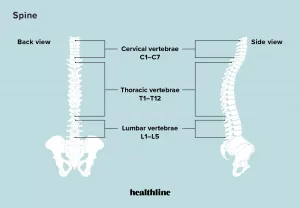
Common back procedures include:
- discectomy
- spinal laminectomy and decompression
- vertebroplasty and kyphoplasty
- nucleoplasty and plasma disk compression
- foraminotomy
- spinal fusion
- artificial disc replacement

Takeaway
If your physician determines back surgery is medically necessary, Original Medicare (Parts A and B) will usually cover the procedure.
Determining exactly how much you will pay after Medicare is applied is difficult because the precise services you’ll require aren’t always known ahead of time. Your surgeon and the hospital can provide reasonable estimates to help you plan.





















Leave a Reply
You must be logged in to post a comment.