

Key takeaways
- Mounjaro (tirzepatide) is a prescription medication used alongside diet and physical activity to help adults with type 2 diabetes control blood glucose. Mounjaro is provided as a subcutaneous injection.
- Common adverse effects include nausea, diarrhea, and reduced appetite. Rare but serious complications such as acute pancreatitis and gallbladder issues can also occur.
- Mounjaro is not FDA-approved specifically for weight reduction, although clinicians may prescribe it off-label for that purpose.
Mounjaro basics
Mounjaro is a brand-name drug whose active molecule is tirzepatide. (The active ingredient is the component responsible for the medication’s therapeutic effect.) There is currently no generic form of this medication.
Mounjaro carries a boxed warning — the FDA’s strongest caution. For more on this, see the “What should be considered before using Mounjaro?” section.

What is Mounjaro used for?
Mounjaro is prescribed together with exercise and a nutritious diet to help manage blood glucose in adults with type 2 diabetes.
Type 2 diabetes causes elevated blood sugar. Persistently high blood glucose increases the chance of other health problems, including heart disease, kidney disease, vision loss, and nerve damage. Keeping blood sugar under control helps lower those risks.
Common signs of type 2 diabetes can include:
- increased thirst
- more frequent urination
- feeling tired
- blurred vision
- slow-healing cuts or sores
Mounjaro addresses type 2 diabetes by reducing blood glucose levels through several mechanisms:
- stimulating your body to release more insulin (the hormone that lowers blood sugar)
- decreasing glucose production by the liver
- slowing gastric emptying, which can prolong feelings of fullness
What are Mounjaro’s side effects?
As with many medications, Mounjaro can lead to mild or serious side effects. The lists below highlight some commonly reported reactions but do not cover every possible effect.
Remember that side effects can vary based on your other health conditions and concurrent medications.
Your prescriber or pharmacist can provide more detailed information about potential adverse effects and offer strategies to minimize them.
Mild side effects
Below are some of the milder side effects reported with Mounjaro. For a more complete list, consult Mounjaro’s prescribing information or speak with your healthcare provider.
Reported mild side effects include:
- nausea and vomiting
- diarrhea
- reduced appetite
- constipation
- abdominal discomfort
- injection site reactions
- acid reflux or heartburn
Mild reactions to medications often resolve in days to a few weeks. If symptoms persist or are troublesome, contact your doctor or pharmacist.
Serious side effects
Serious adverse events from Mounjaro are uncommon but possible. If you experience serious symptoms, contact your physician immediately. If you suspect a medical emergency, call 911 or your local emergency services without delay.
Reported serious side effects include:
- acute pancreatitis (inflammation of the pancreas)
- gallbladder disorders
- hypoglycemia (low blood glucose)
- severe gastrointestinal effects, such as intense nausea, vomiting, or diarrhea, which can lead to dehydration and sudden kidney injury
- boxed warning: potential risk of thyroid cancer
See the “What should be considered before using Mounjaro?” section for more information about the boxed warning.
Does Mounjaro make you tired?
In clinical studies, fatigue or tiredness was not commonly reported as a direct side effect of Mounjaro.
However, fatigue might occur secondary to other side effects such as hypoglycemia or severe GI symptoms. Individual responses vary, and tiredness can also be a symptom of type 2 diabetes itself.
If you notice increased tiredness after beginning Mounjaro, discuss possible causes and remedies with your doctor.
Allergic reactionSome individuals may develop an allergic response to Mounjaro. Allergic symptoms can range from mild to severe.Mild allergic signs include skin rash, itching, and flushing (warmth, swelling, redness, or darkening of the skin).Severe allergic reactions may cause swelling beneath the skin—often around the eyelids, lips, hands, or feet—as well as swelling of the tongue, mouth, or throat, which can lead to breathing difficulties.What to doIf you notice mild allergic symptoms like a small rash, contact your provider promptly. They may recommend treatments to control symptoms and decide whether you should continue Mounjaro.If you experience signs of a severe allergic reaction, such as swelling or trouble breathing, call 911 or your local emergency number immediately. These signs can be life-threatening and require urgent care.If your clinician confirms a serious allergy to Mounjaro, they may switch you to a different medication.
Mounjaro cost and savings
Cost can be an important consideration when evaluating Mounjaro, regardless of whether you have insurance. The price you pay depends on factors like your treatment plan, the specific Mounjaro product you use, and the pharmacy you choose.
If you need help covering your prescription, discuss options with your doctor or pharmacist. A Mounjaro Savings Card may be available to reduce out-of-pocket costs.
Mounjaro coupons
To lower expenses for your Mounjaro prescription, consider the Optum Perks coupons listed on offer.
Note: Optum Perks is affiliated with HealthEH. These coupons cannot be used in conjunction with insurance copays or benefits.
Discover more about Mounjaro
Optum Now is managed by RVO Health. Clicking the link may generate a commission. Learn more.
What are some frequently asked questions about Mounjaro?
Below are answers to commonly asked questions about Mounjaro.
Are there long-term side effects of Mounjaro?
Potentially. Some adverse effects are transient, particularly the milder ones. For instance, nausea, diarrhea, or constipation may last only a few days to weeks after starting therapy.
More serious reactions can have longer-lasting consequences, such as acute pancreatitis or severe GI complications that may result in kidney injury. In clinical trials, these severe events were rare, but when they occur they can require extended treatment.
If you have concerns about long-term risks, discuss them with your healthcare provider.
Does Mounjaro cause body aches?
Mounjaro is not commonly associated with generalized body aches. This symptom was not frequently reported in studies. However, Mounjaro may cause conditions that present with back or abdominal pain.
For example, pancreatitis can cause persistent back or abdominal pain, and vomiting may occur. If you experience such symptoms while on Mounjaro, seek medical attention promptly.
Abdominal pain might also signal gallbladder disease, another potential adverse effect. Gallbladder problems often require urgent medical care and may be accompanied by fever, nausea, and vomiting.
If you develop body pains while taking Mounjaro, contact your physician immediately so the cause can be identified and treated. If you suspect an emergency, call 911 or your local emergency services.
Is Mounjaro used for weight loss?
Mounjaro is not FDA-approved for weight loss. Nonetheless, when prescribed along with exercise and a healthy diet, some patients experience weight reduction while taking Mounjaro.
Clinicians may also prescribe Mounjaro off-label for weight control. (Off-label prescribing means a drug is used for a purpose other than its official approval.)
In trials, some people taking Mounjaro lost weight. This effect may stem from slowed digestion that prolongs satiety, improved blood sugar control and insulin responsiveness, or side effects like nausea and reduced appetite. If you’re specifically interested in weight management, ask your clinician about options such as mounjaro diet and whether alternatives like Zepbound — which contains the same active ingredient and is approved for weight loss — may be appropriate.
Talk with your doctor if you have questions about weight changes while taking Mounjaro.
Is Mounjaro insulin?
No. Mounjaro is not insulin. It belongs to a class of medications that act as dual glucose-dependent insulinotropic polypeptide (GIP) and glucagon-like peptide-1 (GLP-1) receptor agonists. Mounjaro is the first drug with both GIP and GLP-1 activity.
While Mounjaro differs from insulin, it increases insulin sensitivity and prompts the pancreas to secrete more insulin after meals. For details on its mechanism, consult your prescriber or pharmacist.
Mounjaro is sometimes used concurrently with insulin for treating type 2 diabetes. See the “How is Mounjaro used?” section for examples of insulin that may be used alongside it.
If you want to compare Mounjaro and insulin further, speak with your healthcare provider or pharmacist.
What is Mounjaro’s dosage?
Your clinician will determine the dose of Mounjaro that’s suitable for you. The doses outlined here are commonly used, but always follow your provider’s prescription.
Form and strengths
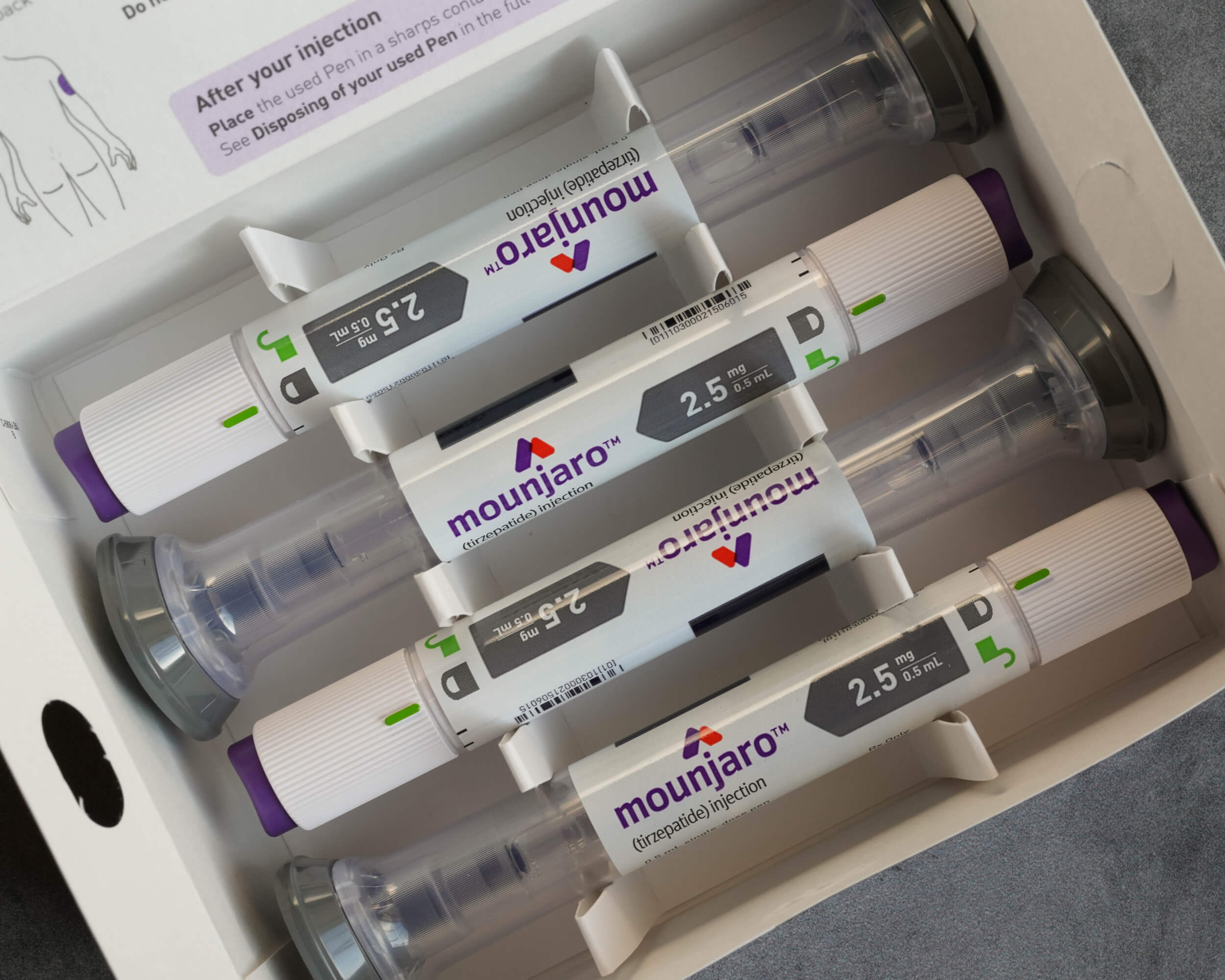
Mounjaro is supplied as a liquid in single-dose, prefilled pens for subcutaneous injection.
Available strengths include:
- 2.5 milligrams (mg) per 0.5 milliliters (mL)
- 5 mg/0.5 mL
- 7.5 mg/0.5 mL
- 10 mg/0.5 mL
- 12.5 mg/0.5 mL
- 15 mg/0.5 mL
Recommended dosages
Mounjaro is administered once weekly. Providers usually begin treatment at 2.5 mg once weekly and, after about 4 weeks, titrate up to 5 mg weekly. Starting low helps the body adapt to the medication.
If blood glucose remains inadequately controlled, your clinician may raise the dose every 4 weeks in 2.5 mg increments until the desired effect is reached. The maximum recommended dose is 15 mg per week.
Questions about Mounjaro’s dosing
Common dosing questions and answers include:
- What if I miss a dose of Mounjaro? If you miss a scheduled dose, take it as soon as you remember if it’s within 4 days of the missed dose. Then resume your usual weekly schedule. If more than 4 days have passed, skip the missed dose and take the next dose on your regular day. Ensure doses are at least 72 hours apart.
- Will I need to use Mounjaro long term? Likely yes. Mounjaro treats type 2 diabetes, a chronic condition. If the medication is effective for you, your clinician will generally recommend ongoing use.
- How long does Mounjaro take to work? Mounjaro begins to exert effects shortly after the first injection, but measurable changes in blood glucose may take weeks. Many people observe improvements within several weeks of starting therapy. Ask your provider about expected timelines for your situation.
How is Mounjaro used?
Your clinician will instruct you on how to use Mounjaro, including the dose, frequency, and the optimal time of day to inject. Follow their directions carefully.
Using Mounjaro
Mounjaro is supplied in single-use prefilled pens and is injected beneath the skin once weekly. It may be taken with or without food.
Common injection sites include the abdomen, thigh, or upper arm. (You’ll need someone else to inject into your upper arm.) Rotate injection locations to reduce the risk of local skin irritation.
Before beginning treatment, your provider or pharmacist can demonstrate the injection technique. For step-by-step instructions or a video, visit the manufacturer’s “how to use Mounjaro” page.
If you take insulin in addition to Mounjaro, you may inject both into the same general area (for example, the thigh) but should use sites that are several inches apart to minimize injection site reactions. Do not mix insulin and Mounjaro in the same syringe.
If you have concerns about administration, ask your clinician or pharmacist.
Using Mounjaro with other drugs
Your doctor may combine Mounjaro with other medications to better control blood sugar. Examples include:
- metformin (Fortamet, Glumetza)
- insulins, such as insulin lispro (Admelog, Humalog, Lyumjev) and insulin glargine (Lantus, Basaglar, Toujeo)
- glimepiride (Amaryl)
- rosiglitazone
- linagliptin (Tradjenta)
- canagliflozin (Invokana)
Combining Mounjaro with other diabetes medicines, particularly insulin, can increase the chance of hypoglycemia (low blood sugar), which can be dangerous if not treated promptly.
Your clinician may monitor your glucose more frequently and could reduce doses of other antidiabetic drugs to lower the risk of hypoglycemia.
What should be considered before using Mounjaro?
Discuss your overall health, existing medical conditions, and other medications with your clinician before starting Mounjaro. Important considerations are outlined below.
Interactions
Interactions occur when a drug’s effects are altered by other medications, vaccines, foods, or supplements.
Before using Mounjaro, inform your clinician of all prescription and over-the-counter medications, vitamins, herbal products, and supplements you use. Your doctor or pharmacist can advise you about potential interactions.
Mounjaro may interact with various medications, including:
- insulins, such as insulin glargine (Lantus, Basaglar, Toujeo) and insulin lispro (Admelog, Humalog, Lyumjev)
- sulfonylureas, such as glipizide (Glucotrol XL), glyburide (DiaBeta, Glynase), and glimepiride (Amaryl)
- warfarin (Jantoven)
- combined oral contraceptives such as ethinyl estradiol/norethindrone (Junel)
This list isn’t exhaustive. Consult your prescriber or pharmacist for a complete evaluation of possible interactions.
Boxed warning
Mounjaro has a boxed warning regarding a potential risk of thyroid C-cell tumors. This is the FDA’s most serious type of warning, intended to inform clinicians and patients about potentially dangerous effects.
Animal studies showed an increased incidence of thyroid tumors with Mounjaro, but it’s unclear whether the drug increases the risk of medullary thyroid carcinoma (MTC) in humans.
If you or a close relative has a history of MTC or you have multiple endocrine neoplasia type 2 (MEN 2), inform your clinician prior to starting Mounjaro. In such cases, an alternative therapy is likely to be recommended.
While on Mounjaro, monitor for signs of thyroid cancer, such as:
- a lump or swelling in the neck
- trouble swallowing
- difficulty breathing
- hoarseness
Your clinician may suggest periodic blood tests or thyroid ultrasounds during treatment.
Discuss any concerns about thyroid cancer risk with your clinician or pharmacist.
Other precautions
Mounjaro may not be suitable for everyone. Certain health conditions and circumstances could influence whether it’s an appropriate choice.
Talk with your clinician about your medical history. Factors to consider include:
- history of pancreatitis
- kidney impairment
- diabetic retinopathy
- gastroparesis or other digestive motility disorders
- planned surgery requiring general anesthesia
- oral contraceptive use
- prior allergic reactions
- alcohol use
- pregnancy
- breastfeeding
What should be done in case of overdose?
Do not inject more Mounjaro than prescribed, as overdosing can produce serious adverse effects.
What to do if you use too much Mounjaro
If you believe you’ve injected too much Mounjaro, call your doctor. You can also contact 800-222-1222 to reach America’s Poison Centers or use their online resources. However, if you have severe symptoms, call 911 or your local emergency number immediately or go to the nearest emergency department.
Disclaimer: HealthEH has made a concerted effort to ensure the accuracy, completeness, and currency of the information provided. This article, however, is not a substitute for the expertise of a licensed healthcare professional. Always consult your doctor or another qualified healthcare provider before starting any medication. Drug information is subject to change and may not encompass all uses, directions, precautions, warnings, interactions, allergic responses, or adverse effects. The absence of specific warnings does not imply that a medication or combination is safe, effective, or suitable for all patients or all uses.
If you’re interested in practical advice regarding side effects like sulfur-smelling burps that can sometimes be reported with diabetes medications, see guidance about mounjaro sulfur burps.





















Leave a Reply
You must be logged in to post a comment.