
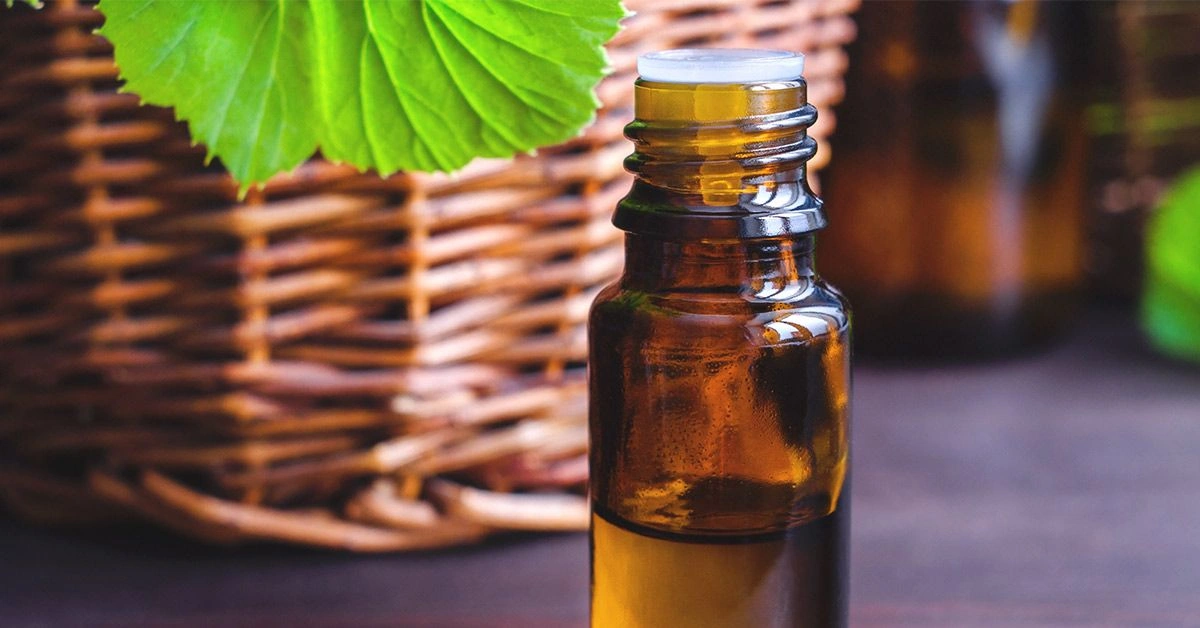
Geranium essential oil is obtained through steam distillation of the leaves of Pelargonium graveolens, a plant native to South Africa. Traditional medicine attributes a wide array of healing uses to this plant.

Geranium is cultivated in numerous locations around the world, including parts of Europe and Asia. There are several cultivars and strains of the pink-hued flower, each carrying a fresh floral aroma. While the scent differs somewhat across varieties, their chemical makeup, benefits, and applications are largely similar.
Geranium oil is a common component in perfumes and beauty products. In aromatherapy, the essential oil is inhaled via diffusers or diluted with carrier oils and rubbed onto the skin for calming effects.
Scientists have investigated geranium essential oil in a variety of human and animal experiments, and there is also anecdotal support for many of its uses. It is believed to possess antioxidant, antibacterial, anti-inflammatory, antimicrobial, and astringent qualities.
Geranium essential oil benefits
Some uses of geranium essential oil are supported by a solid body of research, while others require further study. Always consult a healthcare professional before using it, and do not replace prescribed medications with geranium oil.
Geranium oil may help with the following issues:
Acne, dermatitis, and inflammatory skin conditions
A 2017 review found that geranium essential oil’s antibacterial, antimicrobial, and antiseptic actions can help reduce acne outbreaks, skin irritation, and topical infections when applied to the skin.
Its anti-inflammatory effects also make it useful for several inflammatory disorders, including those that affect the skin.
One study suggested geranium oil could act as an anti-inflammatory agent with minimal adverse effects.
Edema
An animal study indicated that the oil’s anti-inflammatory properties might reduce swelling in the legs and feet caused by edema.
There are anecdotal reports that adding geranium essential oil to bath water can help relieve this swelling. More clinical research is necessary to confirm its effectiveness for edema.
Nasal vestibulitis
Nasal vestibulitis is a painful condition that can arise during certain cancer therapies.
A small observational study and anecdotal reports indicate that geranium essential oil may alleviate nasal symptoms associated with this condition, including bleeding, scabbing, soreness, dryness, and ulcers.
In that study, geranium oil was blended with sesame oil and administered as a nasal spray to women receiving chemotherapy for breast cancer.
Infection
Several studies show that geranium essential oil can combat bacterial infections. Thanks to its antimicrobial and antibacterial properties, it appears effective against multiple bacterial species.
One study reported that geranium oil was roughly as effective as amoxicillin against certain bacteria like Staphylococcus aureus, although it did not work against Listeria monocytogenes in that trial.
Neurodegenerative disease
Conditions such as Alzheimer’s, multiple sclerosis, Parkinson’s, and amyotrophic lateral sclerosis (ALS) involve differing degrees of neuroinflammation.
A study revealed that high levels of citronellol — a constituent of geranium oil — inhibited nitric oxide production, thereby reducing inflammation and neuronal death in the brain.
Researchers suggest geranium essential oil might offer benefits for neurodegenerative disorders involving neuroinflammation.
Menopause and perimenopause
A study found that aromatherapy using geranium essential oil promoted salivary estrogen secretion.
Investigators proposed that geranium oil could help women with lower estrogen levels and symptoms related to menopause and perimenopause.
Stress, anxiety, and depression
Aromatherapy is increasingly used in clinical settings. A randomized clinical trial involving first-time laboring women showed that inhaling geranium essential oil produced a calming effect and reduced anxiety during the first stage of labor.
Informal reports also indicate geranium oil may foster relaxation and ease low mood. One animal study examining Reunion geranium (Pelargonium roseum willd) essential oil found it effective at decreasing stress and exhibiting antidepressant-like properties in mice.
Shingles pain
Shingles can lead to postherpetic neuralgia, a painful nerve-related condition of the skin.
One study reported that applying geranium oil topically reduced postherpetic neuralgia pain within minutes. The relief was temporary and required reapplication as needed.
Allergies
A preliminary study suggested the citronellol in geranium essential oil might help lessen allergic responses, though additional research is required.
Anecdotes indicate that topical application may ease itching from allergic reactions, likely due to the oil’s anti-inflammatory effect.
Wound care
Informal reports claim geranium essential oil can help stop minor bleeding by promoting clotting and causing vasoconstriction. Its antibacterial and antiseptic traits may also support wound healing.
Diabetes
In Tunisia, geranium oil has a traditional role in lowering hyperglycemia.
An animal study found that daily oral dosing substantially decreased glucose levels in rats. Researchers noted potential benefits for managing high blood sugar in diabetes but emphasized the need for further research.
People should not ingest geranium essential oil. While more human studies are necessary, using it in a diffuser or applying diluted oil topically may offer similar benefits.
Geranium oil vs. rose geranium oil
Geranium and rose geranium essential oils are produced from different varieties within the Pelargonium graveolens species.

Their chemical profiles and therapeutic properties are nearly the same, so both are similarly useful. Rose geranium oil tends to have a slightly more floral aroma reminiscent of roses; for those interested in this variation, see rose geranium oil.
How to use geranium oil
Geranium essential oil can be mixed with a carrier oil such as sesame oil and applied topically. Use it as a spot treatment for pimples or itchy areas, or as a massage oil.
Some carrier oils can trigger allergic reactions. Perform a patch test on a small skin area before broad use to ensure no sensitivity occurs.
Follow these dilution guidelines when blending essential oils with carriers. For adults, a starting point is 15 drops of essential oil per 6 teaspoons of carrier oil (about a 2.5% dilution). For children, 3 to 6 drops per 6 teaspoons is generally considered safe.
For aromatherapy, you can place a few drops on paper towels or fabric (that won’t be damaged), use a room diffuser, or employ personal inhalers like aroma sticks for portable use.
Never swallow essential oils.
Geranium oil side effects
Used properly, geranium oil is safe for most people. Some individuals may develop a rash or burning sensation when applied to the skin. Always dilute essential oils with a carrier before topical use.
Small amounts of geranium oil are sometimes used in baked goods and are considered safe in tiny quantities. The effects of consuming large amounts are unclear.
Where can I buy rose geranium oil?
Rose geranium oil is available wherever essential oils are sold, including health food stores and specialty pharmacies. You can also find products online.
How to make geranium oil at home
If you have several weeks to spare, you can prepare geranium-infused oil at home:
- Trim about 12 ounces of rose geranium leaves from the plant.
- Half-fill a small clear glass jar with olive or sesame oil and fully submerge the leaves.
- Seal the jar and place it on a sunny windowsill for seven days.
- Strain the oil through cheesecloth into another glass jar, leaving the leaves behind.
- Add a fresh batch of geranium leaves to the oil.
- Seal and return the jar to the sunny windowsill for another week.
- Repeat this process weekly for three more weeks for a total of five weeks.
- Decant the infused oil into a tightly sealed bottle and store in a cool, dry place; use within one year.
Alternatives to geranium oil
There are numerous essential oils with therapeutic properties you might consider depending on the condition you want to address. Options include:
- lavender for depression, anxiety, acne, and skin irritation
- chamomile for sore muscles, pain, and swelling
- peppermint oil or clary sage for relief of menopausal symptoms
Takeaway
Geranium essential oil has a long history of traditional use for various health issues. Scientific studies indicate potential benefits for anxiety, depression, infections, and pain, and it is thought to have antibacterial, antioxidant, and anti-inflammatory actions.
Always consult a healthcare provider before using essential oils, and don’t replace prescribed treatments with them.




















Leave a Reply
You must be logged in to post a comment.