

Granulomatous conjunctivitis is a severe eye ailment, with some instances potentially life-threatening. It frequently arises from infections, inflammatory diseases, and autoimmune conditions.
Similar to other forms of conjunctivitis (pink eye), the primary symptoms involve inflammation of the mucous membrane covering the white area of the eye.
“Granulomatous” denotes the existence of granulomas within the eye, which are clusters of white blood cells. Granulomas can develop anywhere in the body, including the skin, mouth, and internal organs.
Discover more about granulomatous conjunctivitis, including possible symptoms, causes, and available treatment options.
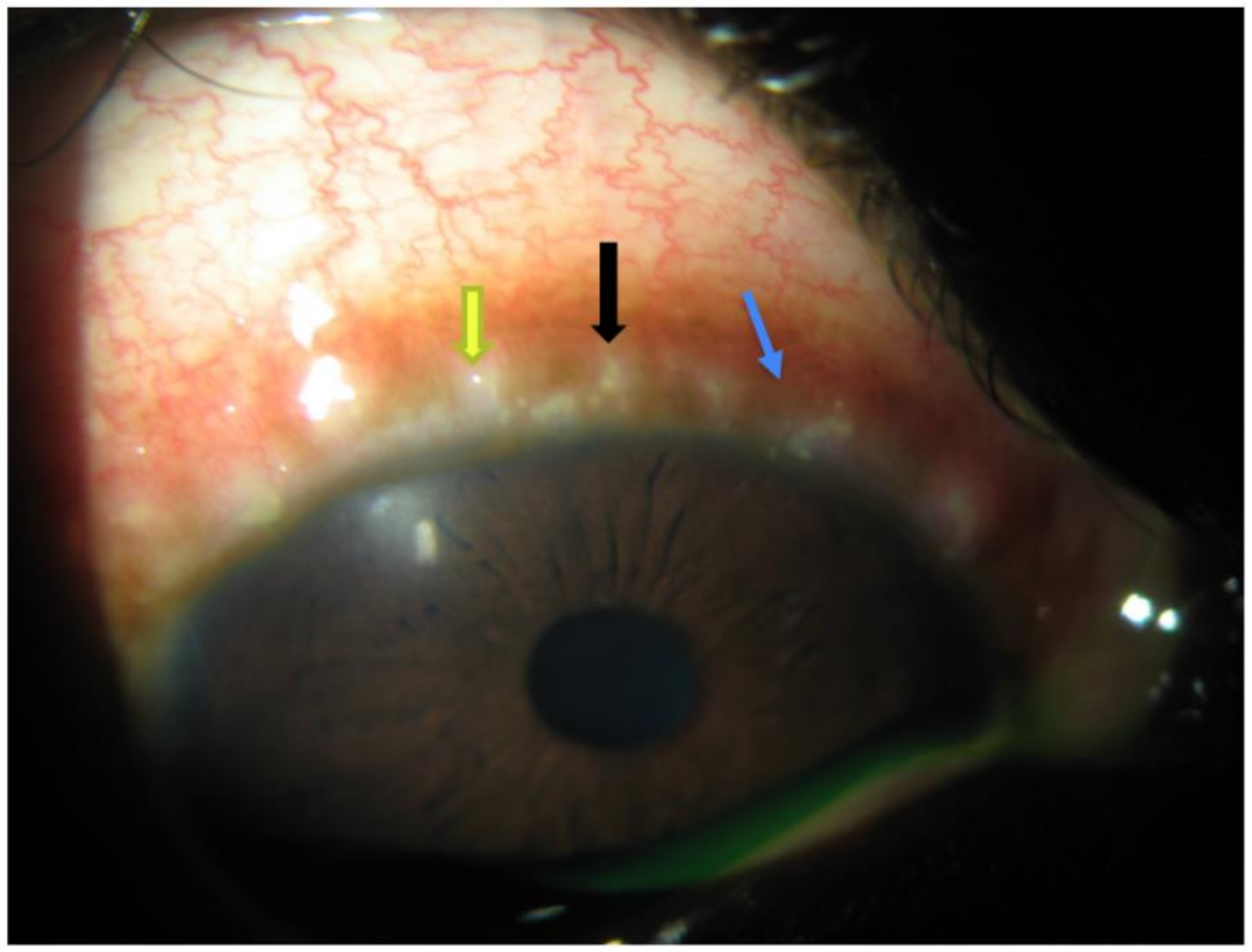
Granulomatous conjunctivitis symptoms
A defining indicator of this type of pink eye is the formation of granulomas. These are tiny nodules forming when white blood cells accumulate and cluster together. Granulomas can appear anywhere on the eye and may be pink, red, or skin-toned.
Granulomatous conjunctivitis shares several symptoms with other forms of pink eye. These include:
- redness of the white of the eye
- eye swelling
- swelling of the upper eyelid
- itchiness
- tearing
- discharge
Depending on the underlying cause, granulomatous conjunctivitis may affect one eye or both. Over time, this pink eye type can also lead to vision impairment.
What causes granulomatous conjunctivitis?
Granulomas form in the body as a reaction to inflammation. This includes inflammation occurring in the eye with conjunctivitis. The root inflammation may be triggered by:
- infections, such as tuberculosis or cat-scratch disease
- inflammatory conditions, such as sarcoidosis or vasculitis
- autoimmune disorders, such as Crohn’s disease
- exposure to allergens or irritants
- foreign objects in the eye
- chronic granulomatous disease (CGD), a rare genetic disorder affecting how white blood cells handle pathogens like bacteria and fungi
Unlike bacterial and viral conjunctivitis, granulomatous conjunctivitis isn’t always contagious. This means the granulomas themselves cannot be passed to others, similar to allergic forms of conjunctivitis.
Nevertheless, bacterial or viral pink eye can also lead to granulomas forming. The eye nodules might not be contagious, but the underlying infection can still be transmitted to others.
Granulomatous conjunctivitis may also result from foreign objects lodged in the eye. Examples include fibers, dirt, and sand. In response to the object, white blood cells may aggregate around the area and eventually fuse.
Who is at risk for granulomatous conjunctivitis?
Given the multiple potential causes of granulomatous conjunctivitis, anyone can develop it if they encounter a foreign object in their eye or if they contract serious infections.
Having an autoimmune or inflammatory condition may also raise the risk of developing this type of pink eye.
What are the complications of granulomatous conjunctivitis?
Conjunctivitis symptoms can be uncomfortable and disrupt daily life. Some forms of pink eye are not curable, such as those caused by viruses.
If left untreated, granulomatous conjunctivitis may lead to vision problems, including potential vision loss.
Granulomatous conjunctivitis and Parinaud oculoglandular syndrome
Researchers also think that granulomatous conjunctivitis could precede Parinaud’s oculoglandular syndrome (POGS). This condition stems from cat-scratch disease.
POGS involves granulomatous conjunctivitis in one eye. Fever and swollen lymph nodes are also common features.
When to seek medical help
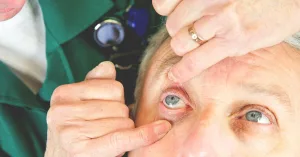
Any suspected case of conjunctivitis should be evaluated by an eye specialist. They can help identify the type of pink eye you have and provide appropriate treatment options.
It’s crucial to consult a doctor if you notice a nodule, or granuloma, on your eye. This is a key sign of granulomatous conjunctivitis.
Medical emergencySome causes of granulomatous conjunctivitis, such as CGD or tuberculosis, may be life-threatening if untreated. Visit the nearest emergency department if you have pink eye symptoms and: possibly have a foreign object embedded in your eye, experience severe eye pain, or have vision loss.
Granulomatous conjunctivitis diagnosis
A physician can often detect a granuloma on the eye during an examination. Diagnostic steps may include:
- reviewing your signs and symptoms
- examining the conjunctiva closely
- physically assessing the eye to determine if other areas are inflamed
- smear or culture of mucus or tissue from the affected eye
- visual acuity testing
Granulomatous conjunctivitis treatment
Treatment for granulomatous conjunctivitis varies based on the underlying cause. Options may include:
- short-course antibiotics or antifungals for acute infections like tuberculosis
- long-term antibiotics or antifungals to help prevent infections (in individuals with CGD)
- steroid eye drops to reduce inflammation
- oral steroids for systemic inflammation, such as in autoimmune or inflammatory conditions
- antihistamine eye drops to relieve itchiness
An eye care professional may also advise cold compresses to reduce eye inflammation, along with artificial tears to ease discomfort.
Can granulomatous conjunctivitis be prevented?
Prevention of granulomatous conjunctivitis ultimately depends on the underlying cause.
If you are exposed to someone with a viral or bacterial eye infection, you may be at risk of developing it as well. To protect yourself, wash hands regularly and avoid touching the eye area.
For systemic diseases, managing the condition can help prevent complications like this form of pink eye.
You can also take measures to reduce granulomatous conjunctivitis linked to foreign objects entering the eye. Wear protective eyewear when using power tools and sunglasses when outdoors.
Takeaway
There are many varieties of conjunctivitis — or pink eye. Granulomatous conjunctivitis is one such form characterized by inflammation and the presence of a granuloma, a white blood cell-filled nodule on the eye.
Treatment for granulomatous conjunctivitis depends on the root cause. Eye conditions like conjunctivitis should be properly diagnosed by a physician to ensure up-to-date therapy. If you experience pink eye symptoms accompanied by a granuloma, seek medical advice promptly.


















Leave a Reply
You must be logged in to post a comment.