

One tablet of Xanax reaches its peak therapeutic effect in roughly 2 hours and may remain in your body for about a day. The medication, however, can be identified in blood and urine for a considerably longer period. Factors such as your metabolic rate, the dose taken, body mass, and general health can all influence how long it lingers.
This medication carries boxed warnings. These are the FDA’s strongest cautions. Boxed warnings notify clinicians and patients about effects that could be dangerous.
- Combining benzodiazepines with opioid medications raises the chance of profound drowsiness, slowed breathing, coma, and even death. Alprazolam should not be used with an opioid unless no alternative treatments exist.
- Using benzodiazepines, even when taken as prescribed, can lead to physical dependence and potentially life-threatening withdrawal if stopped abruptly.
- This drug can also be misused and lead to addiction. Misusing Alprazolam increases the risk of overdose and fatal outcomes.
- Only use this medication exactly as directed by your physician. Discuss any safety concerns with your healthcare provider.
Alprazolam (Xanax) is part of the benzodiazepine class. It’s prescribed to ease symptoms of anxiety and panic disorders.
The typical person clears half of a Xanax dose from their body in about 11.2 hours, per the Xanax prescribing label. It can take several days for your system to eliminate Xanax completely.
Read on to learn how long Xanax remains in your body and the detection windows for various testing methods.
How quickly does Xanax take effect?
Benzodiazepines differ in how long they act. For instance, midazolam (Nayzilam) is short-acting, while clonazepam (Klonopin) lasts longer. Xanax falls in the intermediate range.
After ingestion, Xanax is absorbed and much of it binds to circulating proteins. It reaches its highest concentration in the body in about 1 to 2 hours. Although the precise mechanism isn’t fully understood, it is known to depress the central nervous system to help reduce anxiety.
After peaking, your body begins metabolizing it and its effects gradually wane.
How long does a single Xanax dose relieve symptoms?
Having Xanax in your system does not mean you’ll feel its effects the entire time. You typically notice reduced anxiety within 1 to 2 hours after taking it. With regular dosing, blood levels can be maintained so the sensation of relief persists.
There are extended-release formulations of Xanax made to provide longer coverage so fewer daily doses are necessary. These formulations can remain active in your body for a longer duration.
How long will Xanax be detected on drug tests?
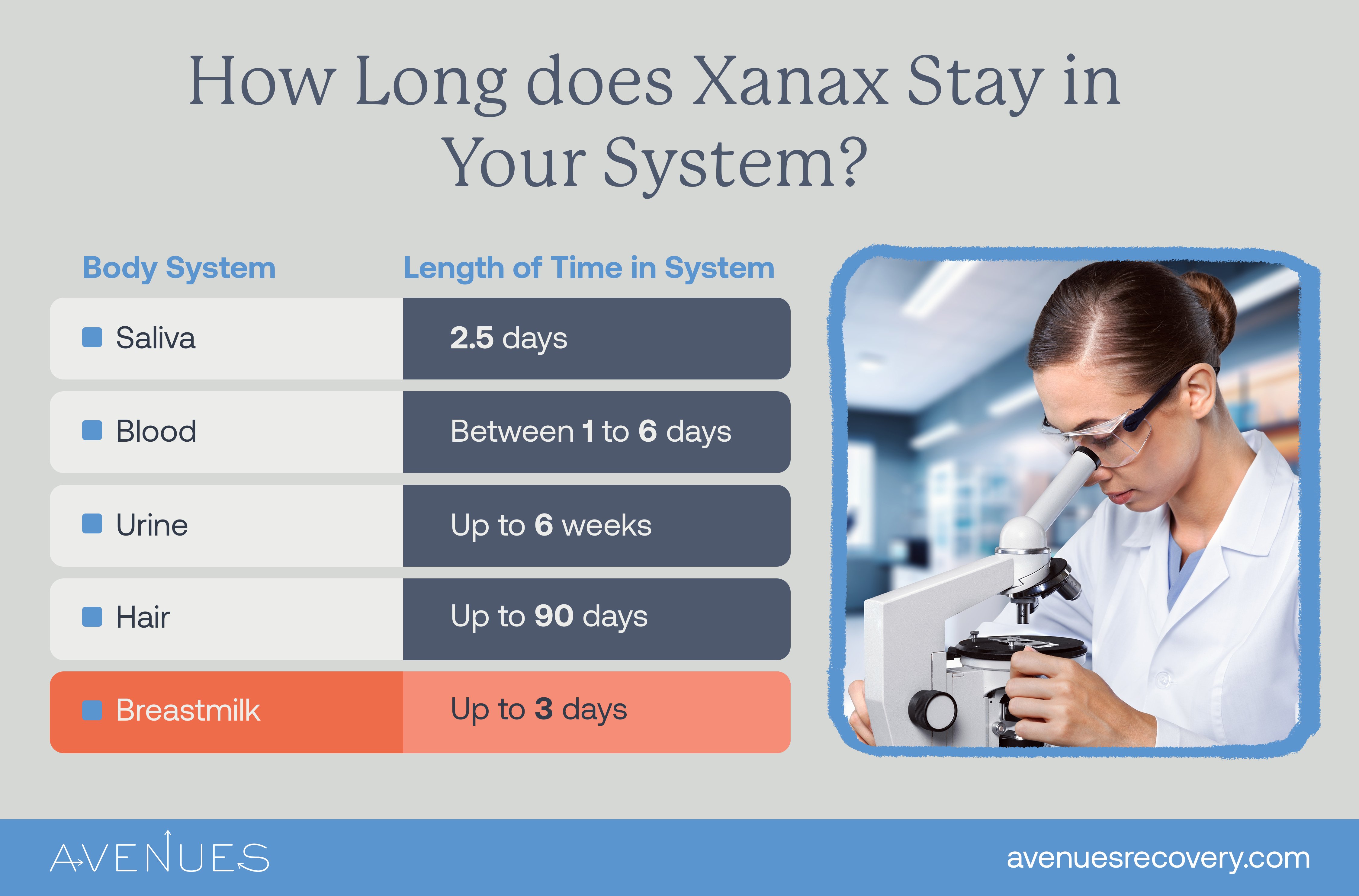
Clinicians can detect Xanax using several specimen types. The testing method influences how long Xanax remains detectable. Common methods include:
- Blood. Detection windows in blood vary. Most people have about half the dose of Xanax remaining in circulation within a day, but complete elimination can take several more days, according to the prescribing information. Laboratories may detect Xanax in blood up to 4 to 5 days after use, even when effects are no longer felt.
- Hair. Testing of head hair can reveal Xanax for as long as 3 months, per the United States Drug Testing Laboratories. Because body hair grows more slowly, it may show positive results for up to 12 months after ingestion.
- Saliva. A 2015 study with 25 participants using oral fluid samples found the longest detectable period for Xanax was about 2.5 days.
- Urine. Not all urine assays can identify benzodiazepines or distinguish Xanax specifically, as noted in the Journal of Laboratory Medicine. Some urine drug screens can detect Xanax for up to 5 days.
These detection windows depend on how quickly your body metabolizes Xanax and the sensitivity of the laboratory assay.
.jpg?v=1722502237)
Xanax and pregnancy
Because clinical trials rarely involve pregnant women, much information comes from case reports and observational studies that suggest potential risks.
Physicians generally assume Xanax crosses the placenta and may affect the fetus. Many clinicians advise stopping Xanax, especially during the first trimester, to lower the risk of birth defects.
If Xanax is used during pregnancy, the newborn could be born with the drug in their system. It’s crucial to have an open conversation with your doctor about Xanax use during pregnancy and possible effects on the baby.
Does Xanax transfer into breast milk?
Yes — Xanax can pass into breast milk. A 1995 study detected Xanax in lactation fluid and reported an average half-life in breast milk of about 14.5 hours, per the British Journal of Clinical Pharmacology.
Nursing while taking Xanax can make an infant more sedated and potentially affect breathing. Because Xanax can lower seizure threshold, an infant withdrawing from the drug might be at risk for seizures.
Most clinicians discourage using Xanax while breastfeeding unless absolutely necessary. They may recommend shorter-acting alternatives or medications with different effects that are less likely to impact the baby.
What influences how long Xanax remains in your body?
Multiple factors determine how long Xanax stays in your system. Some conditions prolong its presence, while others shorten it.
Xanax tends to remain longer in these situations:
- Alcoholic liver disease. Because the liver metabolizes Xanax, impaired liver function slows clearance. In this group, the average half-life is about 19.7 hours, according to the prescribing information.
- Older adults. Elderly individuals usually metabolize Xanax more slowly. The average half-life in older people is around 16.3 hours, per the Xanax label.
- Obesity. The mean half-life for someone with obesity is approximately 21.8 hours — about 10 hours longer than an average-weight person, according to the prescribing information.
Xanax may be cleared more quickly if you take medications that accelerate drug metabolism, known as inducers. Examples include:
- carbamazepine
- fosphenytoin
- phenytoin
- topiramate (Topamax)
These drugs are often prescribed to control seizures.
Other agents that can increase the elimination of drugs include the herbal supplement St. John’s wort and the antibiotic rifampin (Rifadin).
Optum Now is operated by RVO Health. By clicking on this link, we may receive a commission. Learn more.
The bottom line
Xanax is not the shortest-acting benzodiazepine nor the longest. Your body will generally metabolize most of a Xanax dose within a day. Remaining quantities may not produce noticeable effects but can still be detectable by tests.




















Leave a Reply
You must be logged in to post a comment.