
Fingernail fungal infections can require a long time to resolve, and you might not see the affected nail fully regenerate for several months. Prescription therapies remain the only proven means to eliminate nail fungus.
If you’ve observed nail discoloration paired with gradual thickening, you could be facing a fingernail fungal infection.
Nail fungus (onychomycosis) is a prevalent infection that occurs when fungi invade and spread within the nail. Although most instances involve toenails, fingernails can also become infected.
Nail fungus typically develops slowly and, if untreated, can become persistent. There’s no rapid cure for fingernail fungus, and prescription medications are the treatments that can eliminate it.
If you suspect fingernail fungus, read on to learn about treatment options and ways to possibly stop the fungi from spreading to other nails.
How to treat fingernail fungus quickly at home
Researchers have noted an interest in alternative approaches to nail fungus treatment to limit medication side effects.
However, there’s limited proof supporting many home remedies, and they may not eradicate the infection. They also generally don’t act any faster than physician-prescribed therapies.
Consider the following home approaches as supplements to medical care:
Nail scraping
Although not guaranteed to fully cure a fingernail infection, nail scraping aims to slowly remove portions of the affected nail each day over about 2 to 3 weeks.
The method typically uses an over-the-counter kit containing urea paste to soften the nail and a scraping tool. You wash and dry the affected nail, apply the paste, cover it with a bandage for 24 hours, then scrape the softened nail.
Nail scraping may help reduce active infection but doesn’t eliminate all fungal organisms. Antifungal medication may still be necessary.
Tea tree oil
Tea tree oil is believed to possess antimicrobial and antifungal effects and is marketed as a natural option for treating nail fungus when used topically.
While tea tree oil might offer some benefit against fingernail fungus, more clinical trials are needed to validate its effectiveness. Additionally, it can irritate the surrounding skin.
Vicks VapoRub
Vicks VapoRub, commonly used for cough relief and to ease cold symptoms, contains active ingredients like camphor, eucalyptus oil, and menthol, which have prompted interest in topical uses such as treating nail fungus.
Only one study (published in 2011) has explored Vicks VapoRub for fungal nails, and most participants saw positive outcomes after 48 weeks. That research mostly addressed toenail fungus.
If you opt to try Vicks VapoRub on fingernail fungus, the common approach is daily topical application. Bear in mind there are no standardized guidelines for using it to treat fungal nails.
When to seek medical attention
See a healthcare provider if you have signs or symptoms that suggest a fingernail fungal infection. These include:
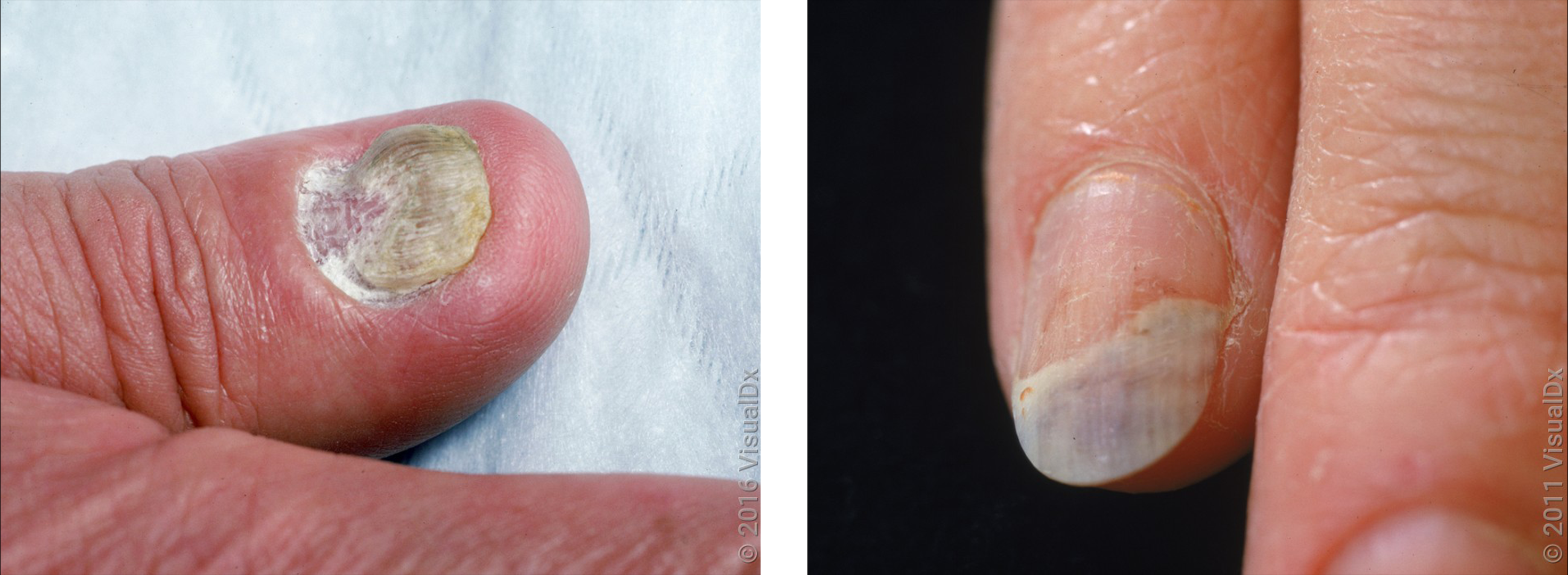
- nail discoloration (white, yellow, brown, or even green/black)
- white specks on the nail
- nail thickening or increased brittleness
- thin nails that break easily
- difficulty trimming nails due to textural changes
- pain in the affected finger
You should also consult a doctor if you have the above symptoms and an underlying condition that raises your risk of fungal infection, such as an autoimmune disorder, psoriasis, or diabetes.
If you’ve already begun treatment but aren’t seeing improvement within a few weeks, contact your provider as the therapy may not be effective.
Medical treatments for nail fungus
Medical interventions are the only reliable way to fully eliminate fingernail fungus. They can also help stop the infection from spreading to other nails, body areas, or people.
Possible treatments a physician may suggest include:
- Antifungal medications: Available as oral pills or topical lacquers, these are reported to be effective in up to 80% of nail infection cases.
- Combination therapy: In some situations, a provider may prescribe both topical and oral antifungals to tackle the infection.
- Laser therapy: For infections unresponsive to medications alone, lasers may help destroy fungal cells using concentrated light energy.
- Surgery: In severe or resistant cases, surgical removal of the infected nail may be considered.
- Chemical (nonsurgical) removal: A nail can sometimes be removed non-surgically with chemical agents.
Your doctor will discuss the pros and cons of each option. For example, oral antifungals tend to be effective but can have side effects, whereas topical treatments are safer systemically but are less potent than oral drugs.
How long it takes for fingernail fungus to clear
No home remedy has been proven to fully eradicate nail fungus. Even medical treatments, while effective, require time to work.
Typically, it can take 4 to 6 months for fingernails to grow back healthier after antifungal therapy. In some cases, a full recovery of the nail may take 6 to 18 months.
If laser therapy is recommended, multiple sessions over the span of a year may be necessary.
When nail removal is used as a last resort, expect at least a year for a normal new nail to grow back.
Remember that the restored nail might not match its previous appearance exactly.
How to tell if the nail fungus is dying
If treatment is effective, you may notice the nail beginning to show healthier growth within a few months. Still, the only certain method to confirm eradication is laboratory analysis of a nail or skin specimen.
Watch for other indicators beyond color changes. Fungal infections can spread through the nail, causing it to become crumbly and fragile, and the nail may break off easily.
How to stop fingernail fungus from returning
After treating a fingernail fungal infection, take precautions to lower the chance of recurrence or spread. You can reduce your risk by:
- keeping hands clean and dry
- washing hand and bath towels frequently
- avoiding sharing towels with others
- keeping nails trimmed short using sterilized scissors or clippers
- not sharing nail clippers with other people
Also consider natural adjuncts that some people use alongside medical care, such as essential oil for toenail fungus, though these should not replace physician-prescribed treatments.
Common questions about treating nail fungus
Mild fingernail fungal infections sometimes don’t need medical therapy. If your doctor does recommend treatment, you may want to discuss these common questions.
What’s the best over-the-counter nail fungus remedy?
There’s no single top OTC cure for nail fungus. To completely eliminate the underlying infection, consult a healthcare provider about prescription antifungal options.
What’s the best treatment for severe fungal nails?
Oral antifungals are generally considered the most effective option for severe nail fungus, though lasers or nail removal may be alternatives.
What’s the quickest way to treat fingernail fungus?
There is no rapid cure for fingernail fungus. Prescription antifungals can eliminate most infections, but it can still take several months for the nail to return to normal.
Takeaway
If you notice signs of a fingernail fungal infection, DIY approaches may be tempting. However, there’s currently no evidence that any home remedy alone can fully clear a fungal nail infection.
Because fingernail fungal infections take time to resolve, adhere to the treatment plan prescribed by your healthcare professional. Do not discontinue medications early just because you don’t see immediate improvement, as stopping treatment prematurely can allow the fungus to return.















Leave a Reply
You must be logged in to post a comment.