
Vinegar possesses antifungal and antibacterial qualities that may help slow the progress of foot fungus, reduce foot odor, and comfort dry, rough feet.
We put a lot of strain on our feet. They support us all day, often confined in ill-fitting footwear. It’s no surprise that many people develop blisters, soreness, unpleasant smells, and fungal infections such as athlete’s foot.
Luckily, a straightforward fix may already be in your pantry.
Why vinegar?
Vinegar is a diluted form of acetic acid that’s both multipurpose and generally safe. We use it in cooking and cleaning — and as a treatment for tired, sore, and smelly feet.
Acetic acid exhibits antifungal and antibacterial activity. Vinegar might inhibit the growth of certain kinds of foot fungus and some skin infections.
A 2020 study indicates that distilled white vinegar can be effective against Sarocladium kiliense, a soil-associated fungus that can cause a skin disease called mycetoma.
NOTE: Avoid the treatments described below if you have diabetes. People with diabetes should have any foot problems managed by a healthcare team.
For athlete’s foot
Athlete’s foot is a fungal infection that affects the toes. The affected skin may turn red and peel, and the condition often causes burning and itching.
For mild cases, a vinegar soak can be helpful. The antifungal effects also make vinegar soaks a reasonable option for toenail fungal issues. Soak your feet for 10 to 15 minutes daily in a vinegar bath until the infection improves.
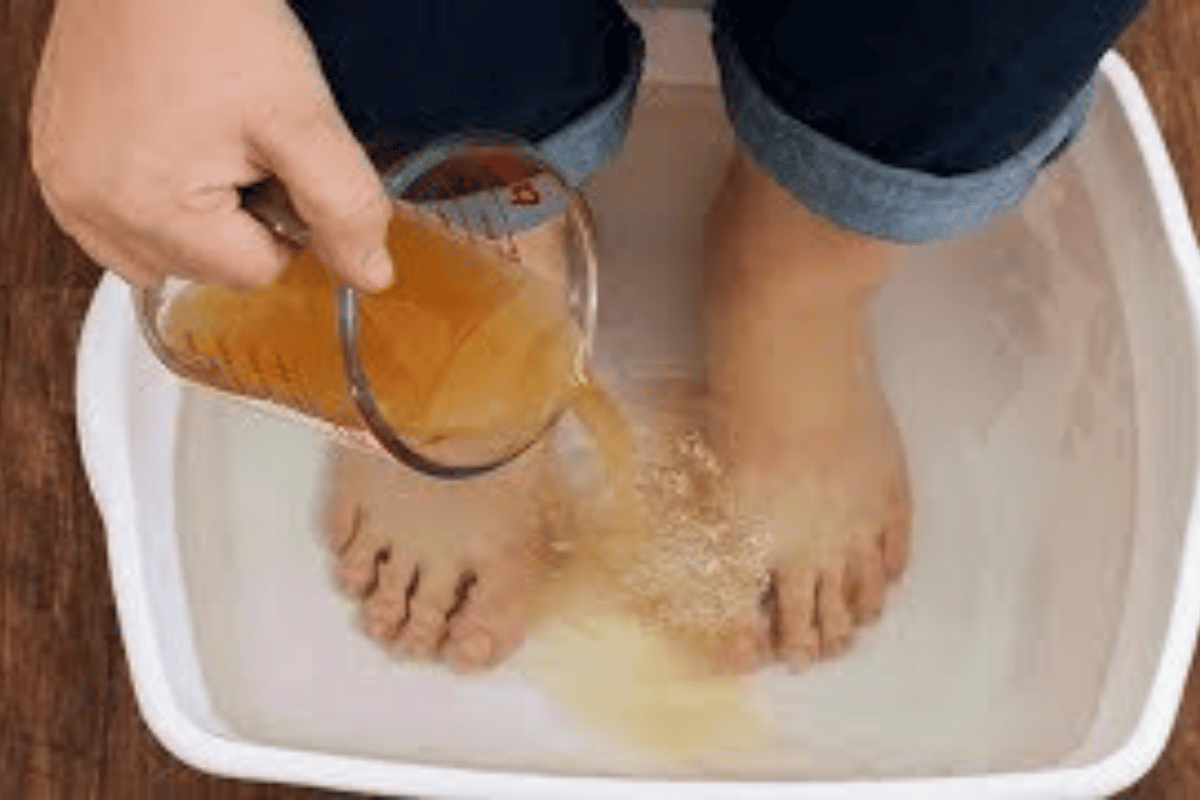
You can slowly extend soak time if tolerated. It may take 2 to 3 weeks or more to notice symptom relief. When symptoms improve, it often means the fungal infection has been treated for a sufficient duration.
It may also help to soak socks in vinegar.
High-quality evidence showing vinegar’s strong effectiveness is lacking. Vinegar won’t work for every fungal species, but trying this home remedy carries relatively little risk.
If symptoms fail to improve, worsen, or spread up the foot, seek medical care. If your feet become excessively dry and cracked, reduce soaking frequency to a couple of times per week instead of daily.
For foot odor
Vinegar can also disinfect the feet, which helps reduce or eliminate foot odor by removing odor-causing bacteria.
Before soaking, wash your feet well with soap and water. Then relax with your feet in a vinegar soak.
Besides soaking, lifestyle habits matter when addressing foot odor.
For instance, choose shoes made of leather or canvas. These materials let your feet breathe, unlike plastic-based footwear. Also opt for breathable cotton or wool socks. When at home, go barefoot when practical.
Quick tips
- Wear breathable cotton or wool socks.
- Choose canvas or leather shoes that allow airflow.
- Go barefoot at home when safe to do so.
For warts
Vinegar is a mild exfoliant, so it can be used to help treat calluses and warts. After a soak, use a pumice stone to file away hardened skin.
You can also dab vinegar directly onto the affected spots with a cotton ball.

For dry feet
Vinegar foot soaks can soothe dry, cracked feet. Use cool water since hot water may further dry the skin. Soak nightly, then apply moisturizer and slip on socks.
Soaking too frequently or for excessively long sessions can make dryness worse, so use this remedy sparingly for dry, cracked feet.
Making the vinegar foot soak
Vinegar won’t harm your feet when properly diluted. A typical ratio is 1 part vinegar to 2 parts water.
If you tolerate the diluted soaks and see no change, you can try a stronger mix.
The soak will have a noticeable odor, but the smell fades as the vinegar dries from your skin. You can add essential oils to mask the scent if you prefer.
Takeaway
Vinegar is an inexpensive, readily available remedy for several common foot problems. Plus, soaking your feet after a long day can be quite relaxing.




















Leave a Reply
You must be logged in to post a comment.