

Getting a tattoo usually involves some discomfort, but how much it hurts depends on where it’s placed and your individual pain tolerance. Areas with little cushioning, lots of nerve endings, or very thin skin are generally more painful to tattoo.
Tattooing works by repeatedly piercing the top layer of your skin with a fine needle carrying pigment. Because of this, most people feel pain to some degree, though the intensity varies from person to person.
In general: the least painful spots have more fat, fewer nerve endings, and thicker skin.
The most painful spots have minimal fat, a high density of nerve endings, and thin skin. Areas over bone are typically especially sensitive.
Keep reading to learn how painful tattoos tend to be in different locations on the body.
A visual guide to average tattoo pain
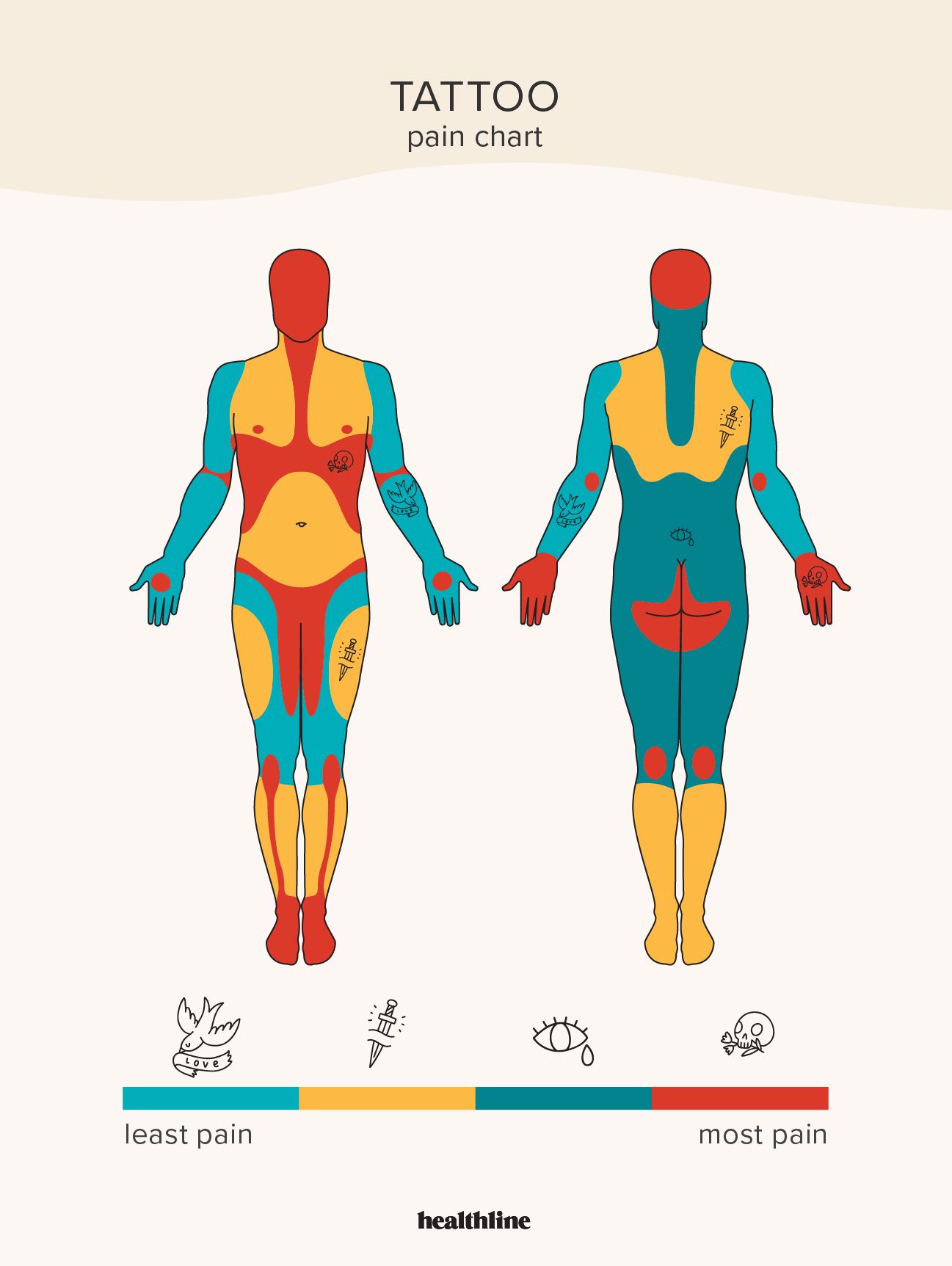
Which areas are painful to tattoo?
Getting inked on parts of the body that have many nerve endings, lie close to bone with minimal fat padding, or have very thin skin tends to hurt more. Pain in these regions can range from intense to severe.
These commonly include:
- skull, neck, and spine
- rib cage
- areola and nipple
- armpit and inner bicep
- inner or outer elbow
- wrist, palm, and finger
- stomach
- groin and inner thigh
- kneecap or the back of the knee
- shin
- ankle, foot, and toe
Which areas are less painful to tattoo?
Areas that are cushioned by fat, have firmer skin, fewer nerve endings, and are not directly over bone usually cause less discomfort. Pain in these zones tends to be low to moderate.
These locations often include:
- chest
- back
- upper arm and shoulder
- forearm
- outer thigh
- calf
Factors that may affect pain
Research indicates that people who already have tattoos may have a higher pressure pain threshold than those without tattoos.
Though evidence is limited, age and body weight might influence how much a tattoo hurts. Older skin can bruise more easily or be more sensitive than younger skin.
Individuals with loose skin after weight loss may experience greater sensitivity, and people with very low body fat may feel increased pain during tattooing.
What does it feel like to get a tattoo?
There are several common sensations people report while being tattooed.
Knowing these feelings ahead of time helps set expectations and lets you recognize when pain is beyond the usual range.
Dull or background pain
When the machine starts buzzing and the needle first pricks your skin, your body releases stress hormones like adrenaline.
These hormones can partially blunt the pain, making it feel like a constant, dull ache beneath the surface. The sensation may fluctuate in intensity during the session.
Staying distracted — for example, chatting with your artist, listening to music, or watching something — can help keep you in the dull ache phase.
Vibrating pain
When the needle works over an area above bone, nerves in the bone can sense the vibration, especially with fast needle movement. This produces a vibrating-type pain.
Burning pain
Burning pain feels similar to pressing something hot against your skin for a long time.
It often occurs in spots where the artist works for prolonged periods, due to the skin becoming raw and the repeated trauma from the needle striking the same area.
Scratching pain
Scratching pain can resemble the sensation of claws scraping your skin.
This tends to be worse when multiple needles are used simultaneously, as during shading, rather than with a single needle.
Sharp or stinging pain
Sharp or stinging pain can feel like numerous tiny bee stings. It’s most common when the artist uses fewer needles — or a single needle — to add intricate detail or an outline.
Areas with thinner, tighter skin, such as the wrists and biceps, are more prone to this sharp, stinging feeling.
Although professional artists are skilled, beginners or less practiced tattooers may press too hard. Excessively sharp or severe pain could indicate the needles are penetrating too deeply.
This may lead to a tattoo defect called a blowout, where ink spreads beneath the proper layer of skin, resulting in a blurry appearance.
The bottom line
Most people experience pain when getting a tattoo, but there are ways to help reduce discomfort. Discuss your worries with your tattoo artist during the consultation.
They can advise on which placements will be more or less painful given your body and the design you want. Your artist can also talk about numbing options and how best to use them.
Staying well-hydrated, cutting back on caffeine, and avoiding alcohol before your session can also help. If you’re concerned about related symptoms like ear pain or headache after a session, learn more about ear pain and headache.
















Leave a Reply
You must be logged in to post a comment.