How to Wrap Your Hands for Boxing


- Why should you wrap your hands for boxing?
- Kinds of wraps used in boxing
- Cotton wraps
- Elastic bandage wraps
- Gel wraps
- Competition wraps
- Step-by-step: How to wrap your hands for boxing
- 1. Unroll the wrap
- 2. Put your thumb through the loop
- 3. Secure the wrist
- 4. Wrap the palm
- 5. Wrap the thumb and anchor at the wrist
- 6. Wrap between the fingers
- 7. Re-wrap the hand
- 8. Fasten and test
- Things to consider when wrapping your hands
- The takeaway
Every boxer puts on a few essential items before they throw their initial punch.
Hand wraps act as the primary safeguard, shielding your hands and wrists from harm while inside boxing gloves.
This guide explains which wraps to choose and how to apply them before stepping into the ring.
Why should you wrap your hands for boxing?
It’s important to wrap your hands before slipping on boxing gloves.
Hand wraps help protect the tendons and ligaments in your hands and provide added support for your wrist.
They may also assist in transferring force from your fist to the target. A study from 1984 reported that without hand wraps, a person’s punching power was noticeably lower than when wrapped.
A much smaller 2015 study, however, found that wraps can reduce punching force, though they do provide improved protection for the hands. Overall, further research is required before definitive conclusions can be drawn.
Wrapping your fists also limits sweat transfer from your hand to the glove, which helps keep gloves cleaner and reduces unpleasant smells.
Kinds of wraps used in boxing
There are multiple types of wraps you can select from. Below are common choices:
Cotton wraps
These are well-suited for regular boxing practice because they’re reusable.
They generally come in lengths from 108 to 210 inches (457 to 533 cm). Shorter wraps are handy for shadow boxing or those with smaller hands, while longer wraps are preferable for sparring (practicing with a partner).
Elastic bandage wraps
These resemble cotton wraps but incorporate elastic fibers, allowing them to conform snugly to your hand during use.
Over time the elastic may wear out, and some boxers might find them a bit bulky.
Gel wraps
These are worn by sliding them on rather than winding them around the hand. They tend to be pricier than cotton or elastic wraps and don’t offer as much wrist support.
A study that examined hand and wrist injuries among boxers over seven years found nearly equal rates of wrist and hand injuries during training, so gel wraps are best avoided unless you need the convenience.
Competition wraps
These are composed of gauze and tape combined in proportions mandated by boxing regulations.
They’re single-use and require a different wrapping method that typically needs an assistant, making them impractical for everyday practice.
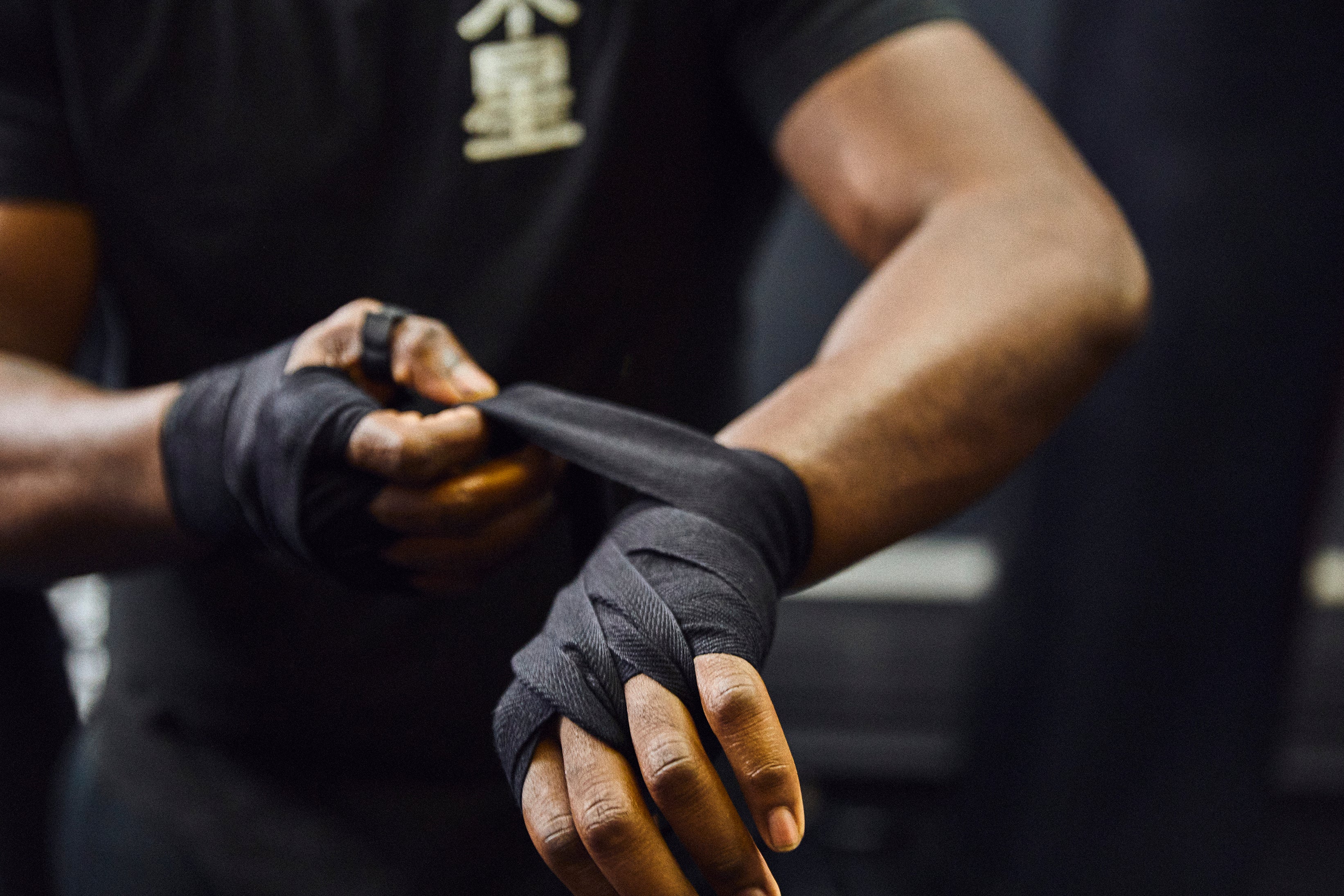
Step-by-step: How to wrap your hands for boxing
1. Unroll the wrap
Unfurl the hand wrap you’ve chosen. One end will have a fastening method (such as Velcro), and the other end will have a loop.
Many wraps include markings indicating which side should face down. If there are no labels, note where the adhesive is so you wrap in the correct direction.
2. Put your thumb through the loop
Extend your hand with a straight wrist and spread your fingers. Place your thumb through the loop at the wrap’s end.
3. Secure the wrist
Wind the wrap from the thumb area across the back of your wrist three or four times as needed, keeping the fabric flat and smooth as you go.
4. Wrap the palm
Bring the wrap across the back of your hand, just above the thumb, and then across the palm three times, finishing near the base of the thumb.
5. Wrap the thumb and anchor at the wrist
Wrap from the thumb’s base up and over, then back down, finishing with another pass around the wrist for added reinforcement.
6. Wrap between the fingers
Begin at the inside of the wrist and run the wrap between each finger, returning to the inside of the wrist. Start between your pinkie and ring finger first, then move inward between each finger.
7. Re-wrap the hand
Circle once around the wrist, then loop around the hand again. Finish with a final long wrap around the wrist.
8. Fasten and test
Attach the end to the Velcro and then test by throwing a few punches to check if the wrap is too tight or too loose. The aim is for the wrist and hand to feel stable but not so constricted that making a fist is difficult.
Things to consider when wrapping your hands
- You can always re-wrap if the tension feels incorrect. The wrap’s purpose is to protect the wrist, hand, and fingers inside the glove and to bolster the force of your punches.
- The more coverage you want, the longer the fabric should be.
- For solo workouts or those with smaller hands, choose shorter lengths.
- If your wrap is too short to go between every finger, you can anchor the thumb and then wrap the hand before securing the Velcro.
The takeaway
Wrap your hands before putting on gloves when training on the bag, shadow boxing, or sparring.
Hand wraps may boost the power of your punches, but more importantly, they protect your hands, fingers, and wrists in a sport where injuries are common.
Frequently Asked Questions
Hand wraps should feel snug enough to stabilize the wrist and compress the knuckles without cutting off circulation. You should still be able to make a fist comfortably; if fingers tingle or go pale, loosen the wrap and reapply.
Common lengths range from about 108 to 210 inches. Shorter wraps (around 108–120 in) suit smaller hands or solo workouts; longer wraps give more wrist and knuckle coverage for sparring.
Yes. Cotton wraps are made to be reused; wash them regularly to remove sweat and odor. Elastic wraps are also reusable but may lose stretch over time.
Yes, include the thumb in your wrapping pattern to help secure it and reduce the risk of sprains. Anchor the wrap at the wrist, loop around the thumb, then return to the wrist before continuing.
You should feel added support across the wrist and knuckles and be able to make a solid fist. Test by throwing a few light punches—if the wrist feels unstable or the wrap shifts, reapply with firmer, even tension.





Related Posts
10 Ways to Stretch and Strengthen Your Lats
Sep 15, 2026 • 20 min read
Pregnancy Yoga Stretches for Back, Hips, and Legs
Sep 15, 2026 • 5 min read
Try the Superman Exercise to Stand Tall and Proud
Sep 18, 2026 • 32 min read
How to Do Chair Dips
Oct 4, 2026 • 21 min read
The No BS Guide to Building Lean Muscle
Sep 19, 2026 • 34 min read