
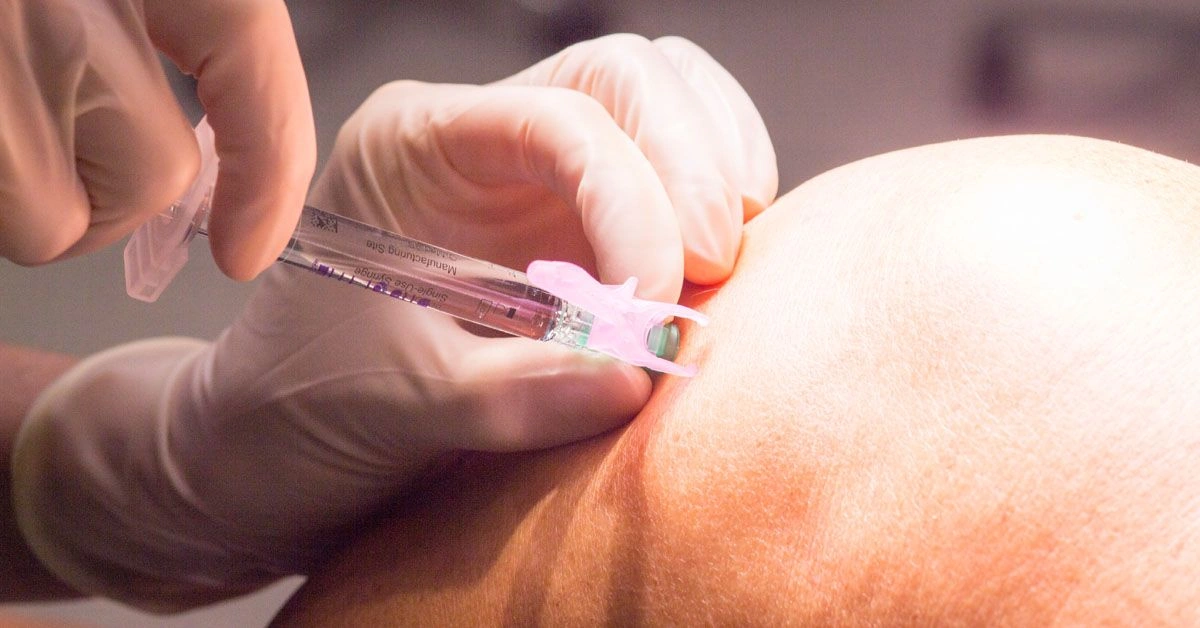
Medicare provides coverage for knee gel injections used to treat knee osteoarthritis when they are considered medically necessary. However, the amount you pay out of pocket will depend on which part of Medicare is responsible for your coverage.
Knee gel injections are medically known as hyaluronic acid injections and are also referred to as viscosupplementation or, less formally, rooster comb injections.

If you’re researching Knee gel injections cost Medicare cover, understanding eligibility rules and how benefits apply under different parts of Medicare can help you plan financially and medically. Below, we explain when coverage applies and what expenses you may be responsible for.
When does Medicare cover gel shots for the knee?
Medicare will pay for knee gel injections as a treatment for knee osteoarthritis if you satisfy specific criteria. These include:
- receiving a physician-confirmed diagnosis of symptomatic osteoarthritis of the knee
- having imaging studies that verify your osteoarthritis diagnosis
- trying at least three conservative therapies — such as pain or anti-inflammatory medications, physical therapy, exercise programs, weight management strategies, or assistive devices like a cane or knee brace — without adequate relief
- attempting glucocorticoid injections without sufficient improvement or being unable to receive them because of another medical condition
If you’ve previously completed a series of injections, Medicare may approve another round if you:
- continue to meet the original eligibility requirements
- experience a return of symptoms
- had measurable pain relief from the initial series
- wait at least 6 months after your first series before starting another
For individuals enrolled in a Medicare Advantage (Part C) plan rather than Original Medicare (Parts A and B), coverage is administered by a private insurer. These plans must provide benefits that are at least equal to Part A and Part B and may sometimes extend coverage for knee gel injections beyond the standard criteria.
To better understand treatment options and compare products, you may find it helpful to review What is the best gel injection for knees, which discusses commonly used formulations and how they differ.
How many years can you get gel shots in your knee?
There is no strict lifetime limit on how many years you can receive gel injections in your knee. Typically, a standard treatment cycle consists of about five shots administered over several weeks. When the injections are successful in reducing pain and improving joint function, another course is often needed approximately six months later.
Different manufacturers recommend varying dosing schedules. Examples of knee gel shot brands include:
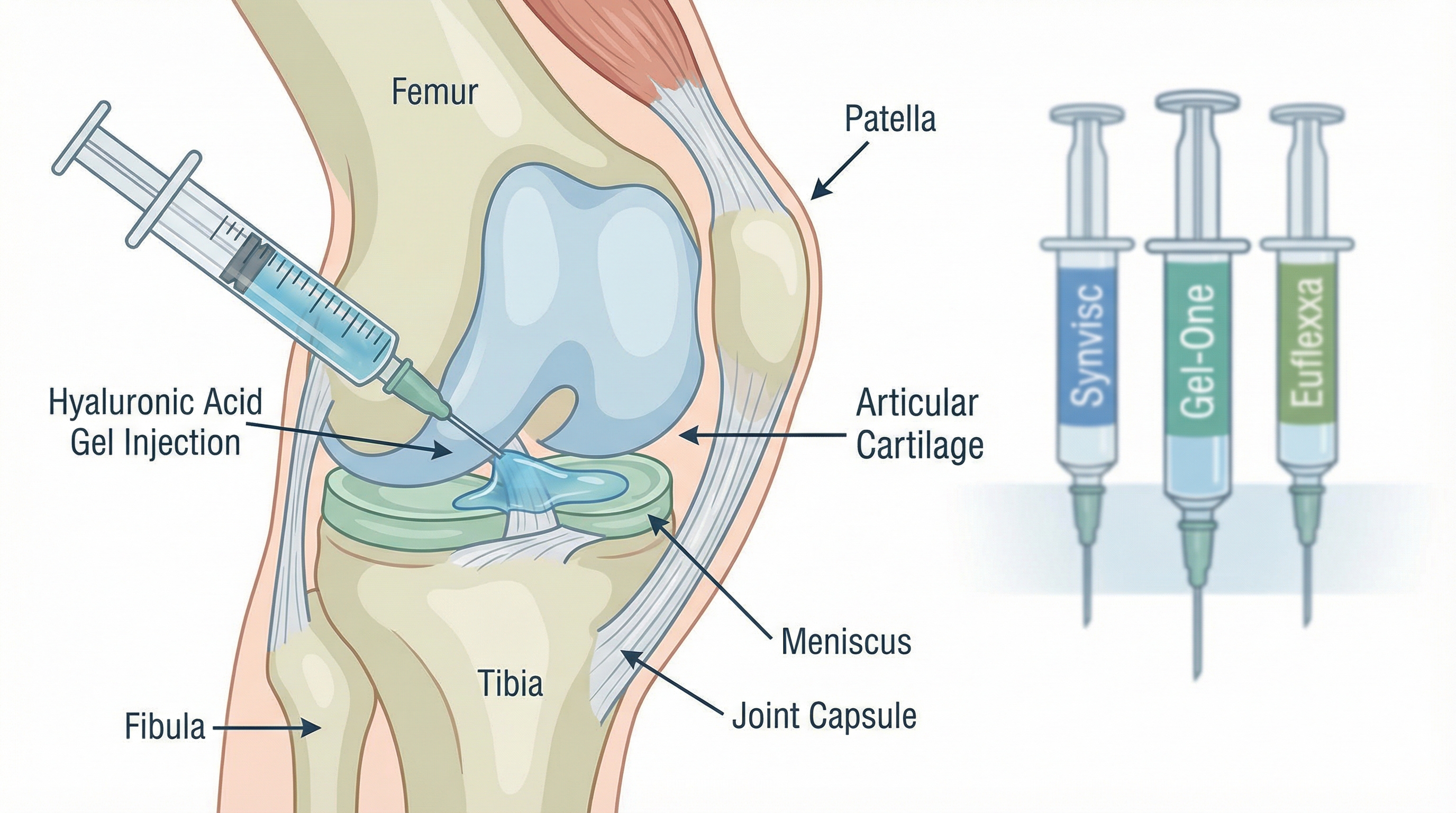
- Synvisc
- Hyalgan
- Orthovisc
- Monovisc
- Supartz
- Eufexxa
- Gel-One
- Supartz
- Supartz FX
To qualify for Medicare reimbursement, your treatment must follow the approved treatment regimen associated with the specific brand your healthcare professional administers. Additionally, at least six months must pass between injection series.
Because osteoarthritis is a chronic, progressive joint condition, viscosupplementation is often part of a broader management plan that may include low-impact exercise, strengthening therapy, and weight control. Maintaining muscle support around the knee and reducing joint strain can help extend the benefits of each injection cycle.
What is the cost of gel knee injections with Medicare?
A 2022 study examining nonsurgical treatments for knee osteoarthritis reported that knee gel injections were the highest-priced option, ranging from $913 and $1,019 per session.
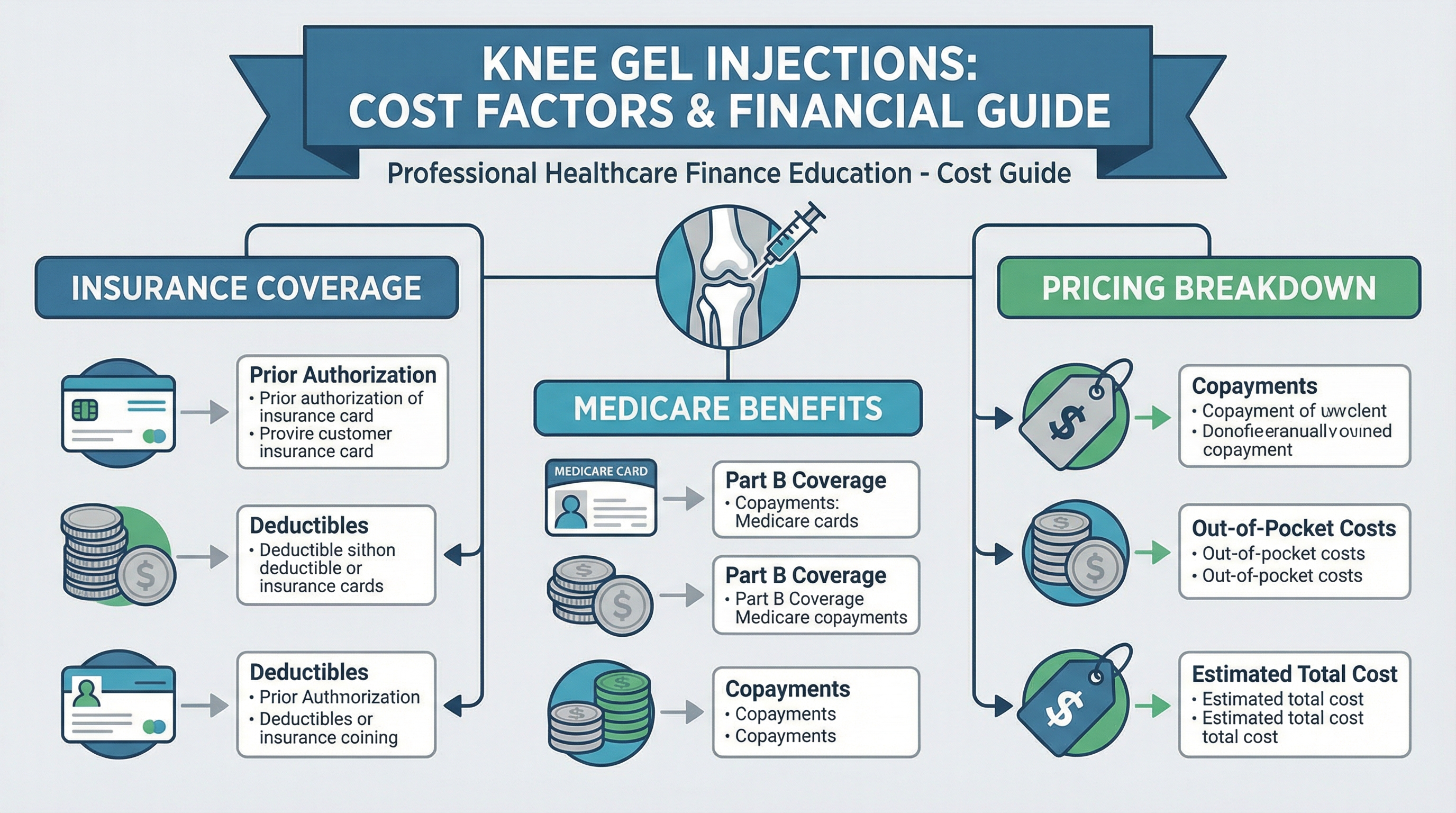
Your personal expense per injection may differ based on several factors, including:
- the medical setting where the injection is performed
- whether ultrasound guidance is required for precise placement
- whether treatment is needed in one knee or both
If you have Original Medicare (Parts A and B) and meet eligibility requirements, you must first satisfy the 2025 deductible of $257. After the deductible is met, Part B generally covers 80% of the approved amount, leaving you responsible for the remaining 20% coinsurance.
Those with a Medigap plan may have assistance covering some or all of the Part B coinsurance, premium, or deductible, depending on the specific policy details.
If you’re enrolled in Medicare Advantage (Part C), your out-of-pocket costs will depend on your plan’s structure, copayments, and network requirements. Many plans require you to receive care from in-network physicians or outpatient facilities. Seeking care outside your plan’s network could result in higher expenses or full out-of-pocket responsibility.
Because pricing can vary significantly, reviewing Knee gel injections cost information in advance may help you estimate your potential financial responsibility and compare coverage options.
For more details about related services, see: “Does Medicare Cover Pain Management?”
Takeaway
Knee gel injections — also known as hyaluronic acid injections, viscosupplementation, and rooster comb injections — may offer meaningful symptom relief for individuals living with knee osteoarthritis.
Original Medicare covers these treatments when they meet established medical necessity requirements. Medicare Advantage (Part C) plans must provide at least the same level of coverage and may offer additional benefits depending on the policy.
Understanding eligibility criteria, approved treatment intervals, and how Knee gel injections cost Medicare cover applies to your specific situation can help you make informed decisions about managing knee osteoarthritis while planning for potential out-of-pocket expenses.





















Leave a Reply
You must be logged in to post a comment.