
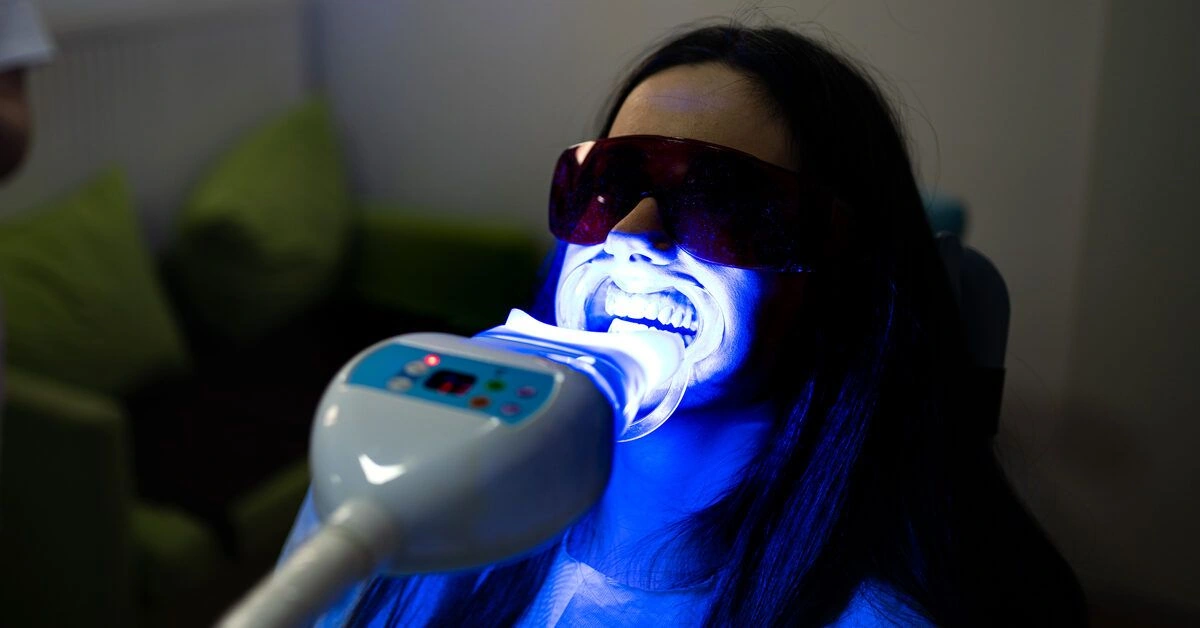
Laser teeth whitening is an in-office bleaching treatment performed by a dentist. It differs from other whitening approaches because it combines a bleaching gel with a focused light source. A laser emits a concentrated beam of high-intensity light.
This article explains the procedure, potential side effects, and typical costs of laser teeth whitening. It also covers how long you can expect the results to last.
About laser teeth whitening
Laser teeth whitening is a professional treatment intended to make teeth appear brighter. It’s sometimes called laser bleaching.
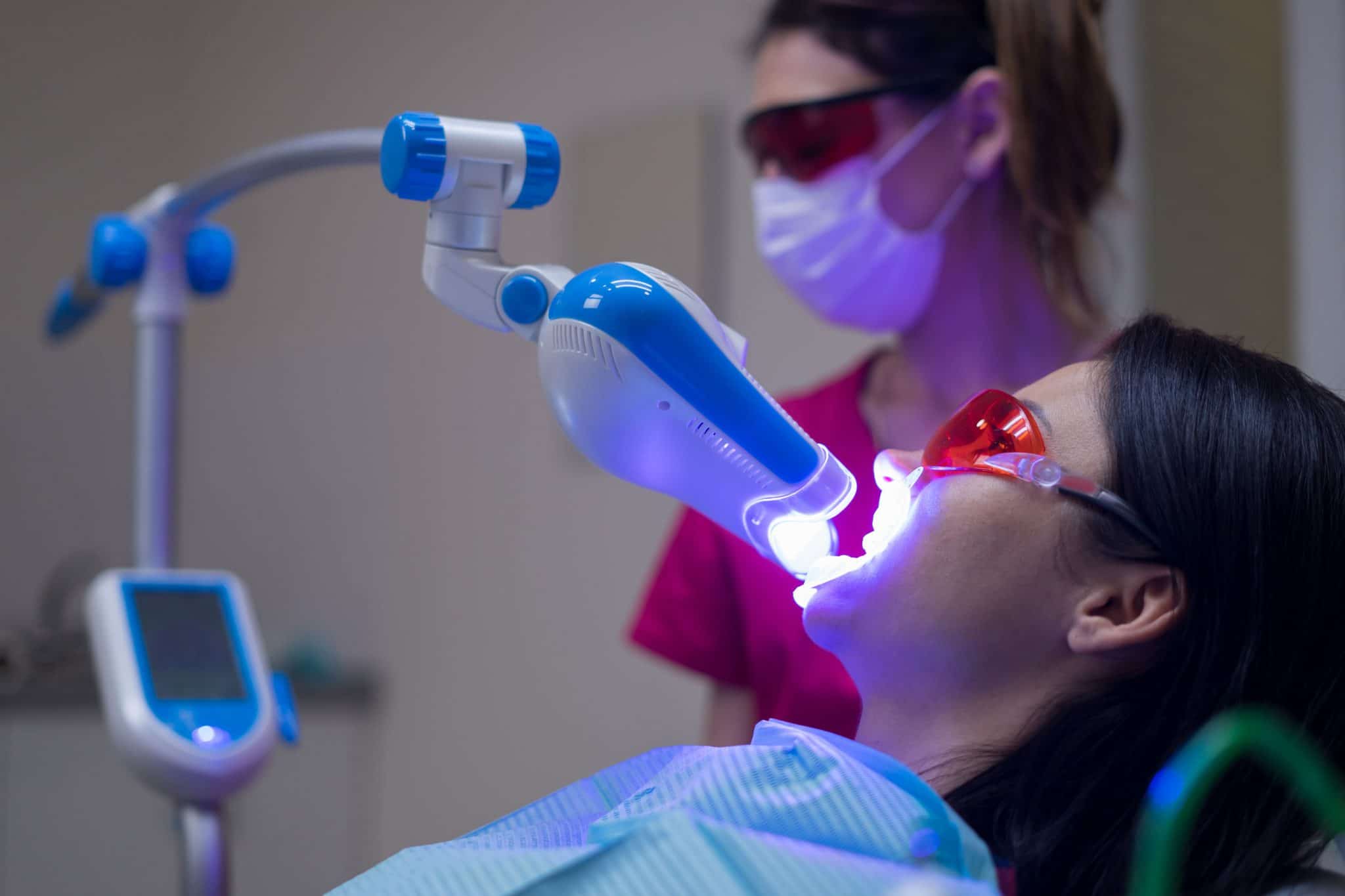
During the session, a bleaching gel is placed on the teeth. A laser is then aimed at the teeth, heating the gel. This activates the whitening agents and alters the molecules that cause stains.
The aim of laser whitening is to reduce discoloration and produce a visibly whiter smile.
Teeth can become discolored for various reasons, such as:
- consumption of staining foods and beverages like coffee and tea
- tobacco use
- natural aging
- trauma to the mouth
- certain drugs, including some antihistamines and chemotherapy agents
Compared with other in-office whitening methods that use UV light or bleaching gels alone, outcomes appear comparable, according to a 2014 literature review.
For this reason, the Food and Drug Administration (FDA) regards the use of lasers for tooth whitening as an “off-label” application in dentistry, and the American Dental Association does not formally endorse lasers for this purpose, per a 2014 literature review.
How does laser teeth whitening work?
Laser whitening is performed in a dental clinic and typically takes between 30 and 60 minutes.
The precise steps may differ depending on your needs. A common sequence includes:
- Your dentist will insert a rubber or plastic mouth prop to help keep your mouth open.
- You’ll be given protective eyewear to shield your eyes from the light.
- A gum barrier will be placed to protect your soft tissues; this may be a light-cured resin.
- The dentist applies a bleaching gel to the front surfaces of your teeth.
- After a short interval, the dentist directs a laser at the treated teeth.
- The laser warms the gel, which activates its bleaching action.
- Finally, the gum barrier is removed and the gel is rinsed away.
Anecdotal reports suggest the procedure is generally painless, though teeth can be more sensitive than normal for roughly 24 hours afterward.
Bleaching can potentially affect tooth enamel or the tooth pulp—the innermost tissue that contains nerves and blood vessels.
To minimize harm, avoid excessive or frequent whitening. A qualified dentist can advise on an appropriate schedule and use techniques that protect your teeth and gums.
How long do results last?
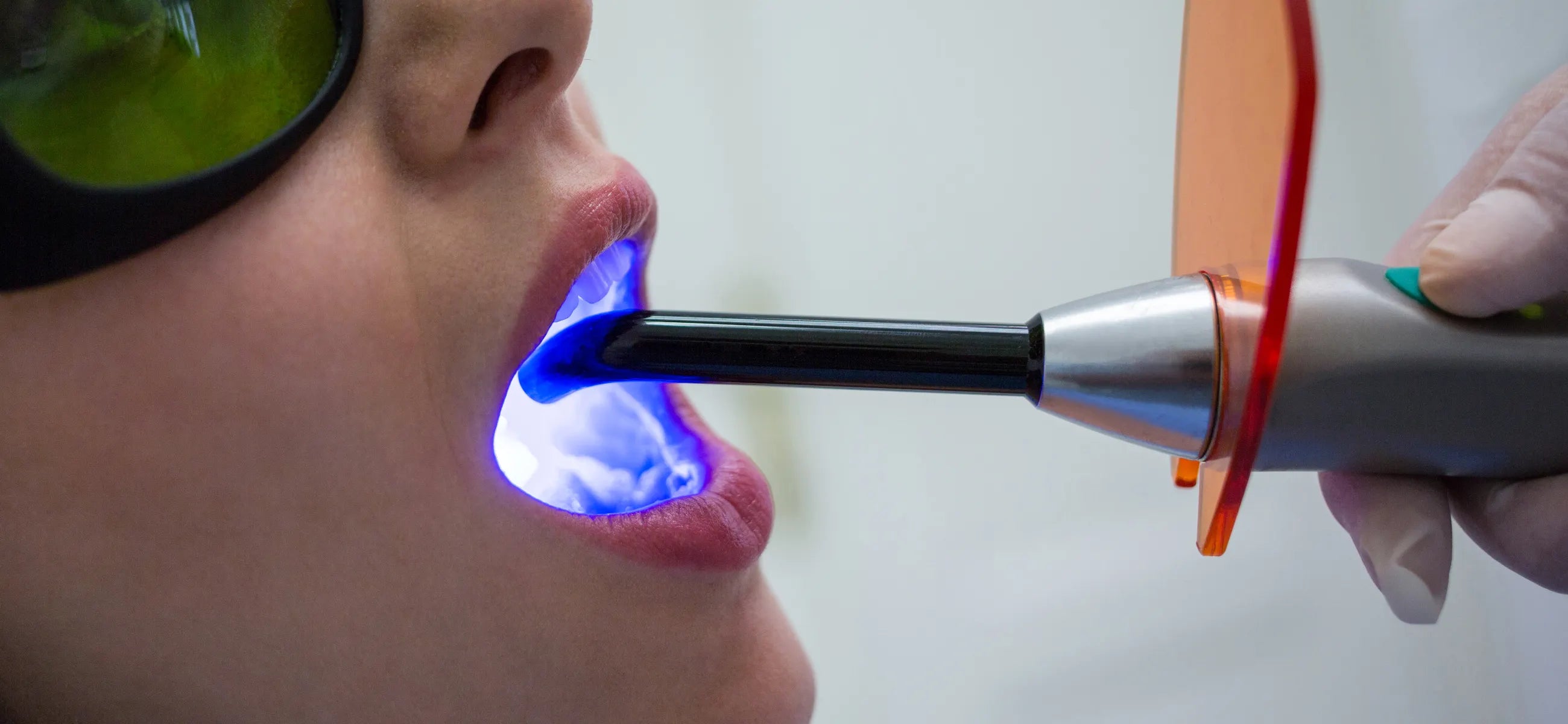
Laser whitening is effective at reducing tooth stains.
This in-office approach usually employs stronger bleaching agents than over-the-counter at-home options. As a result, laser whitening tends to be more potent and provides quicker results compared with at-home treatments like daily whitening strips or whitening toothpastes.
Results are not permanent and typically persist from a few months up to around 3 years, which is longer than many home-based methods.
How long the whitening endures depends on factors such as:
- the starting shade of your teeth
- how often you undergo treatments
- your lifestyle and dietary habits
- the type of bleaching gel and laser technology used
Most people will need about three to four sessions to reach their desired level of whiteness.
Changing certain habits may help prolong the effects, including:
- cutting back or stopping tobacco use
- limiting consumption of stain-causing foods and drinks, such as coffee and red wine
- avoiding trauma to the mouth, which can promote staining
If you’re considering alternatives, discuss with your dentist options like zoom teeth whitening or supplemental approaches such as blue light teeth whitening to see what fits your goals.
Pros and cons of laser teeth whitening
Pros
- faster results compared with many at-home products
- effects may last up to three years
- performed by a trained dental professional
Cons
- more expensive than over-the-counter options
- may require several visits to the dentist
- can increase gum irritation and tooth sensitivity
What are the risks?
Laser tooth whitening carries potential risks. Possible side effects include:
- heightened tooth sensitivity
- gum irritation or injury
- damage to tooth pulp or surrounding tissues
- loss of fluoride and minerals in tooth enamel
- greater chance of erosion or decay
The procedure may not be appropriate if you:
- are undergoing orthodontic treatment
- have tetracycline-related discoloration
- have an orofacial tumor, malformed tooth, or oral injury
- are taking painkillers, anti-inflammatories, or certain antibiotics
- have exposed dentin or weakened enamel
Laser bleaching won’t lighten dentures or crowns. If these restorations are on your front teeth, laser whitening may not be suitable.
How much does it cost?
Laser whitening is a cosmetic service and is usually not covered by dental insurance, so you’ll likely pay out of pocket. A single session typically ranges from about $100 to $450, depending on the clinic and location.
Because three to four sessions are commonly recommended for optimal results, total costs can range roughly from $400 to $1,800 or more. Contact your chosen dental office for personalized pricing.
The bottom line
Laser teeth whitening is a cosmetic dental treatment that uses a bleaching gel activated by a laser to reduce tooth discoloration and brighten your smile.
It is generally more powerful than at-home methods like whitening strips, but it’s costlier and not commonly covered by insurance.
The procedure can produce side effects such as increased sensitivity, enamel erosion, and greater risk of decay. Speak with a dentist to decide if laser whitening is a suitable option for you.





















Leave a Reply
You must be logged in to post a comment.