
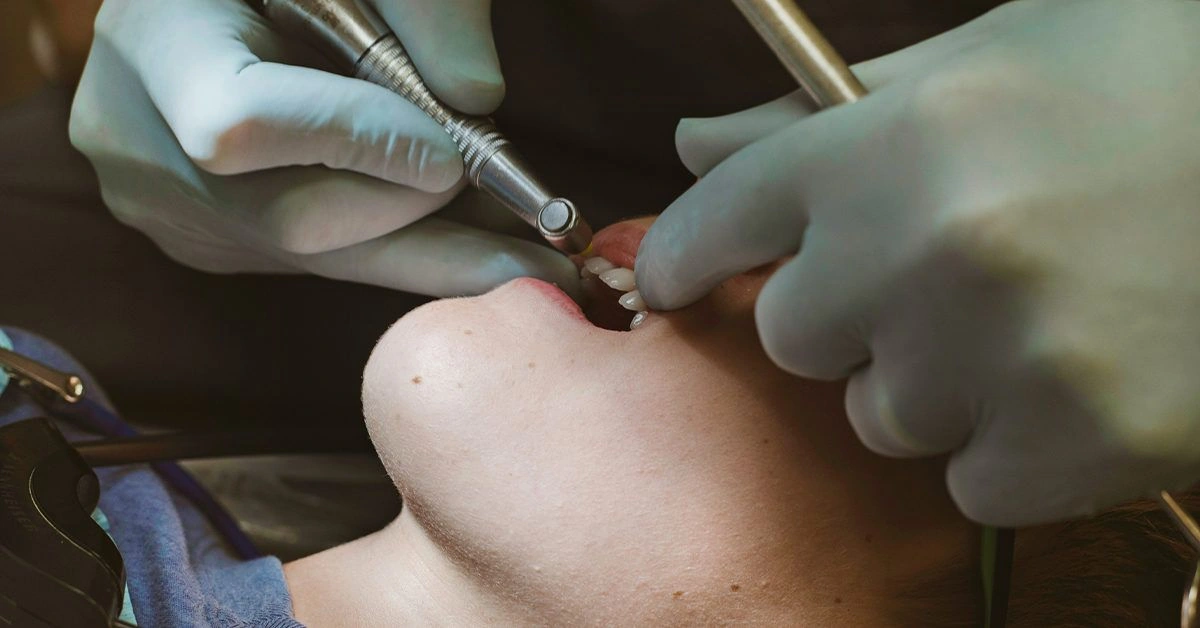
Having straight teeth and an attractive smile can significantly boost your confidence.
If you have an overjet, sometimes referred to as buck teeth, you may feel embarrassed and hide your grin. You might even steer clear of social gatherings, which can lead to loneliness and low mood. Fortunately, there are treatments that can help.
In this article, you’ll discover how to identify an overjet, how it differs from an overbite, and what options are available to enhance the look of your smile.

What does an overjet look like?
An overjet occurs when the top teeth stick out and sit over the lower teeth. An overjet affects more than just appearance — it can make chewing, drinking, and biting more difficult and may cause jaw discomfort.
Some overjets are mild and barely visible, while others are more pronounced. Besides trouble biting or chewing, poor dental alignment can make it hard to fully close your lips. You might also experience speech issues or frequently bite your tongue or the inside of your cheek.
Remember, it’s normal for the upper front teeth to rest slightly ahead of the lower front teeth when your mouth is closed — typically about 2 millimeters (mm). With an overjet, however, the upper front teeth extend past the lower front teeth by more than 2 mm.
What causes an overjet?
There isn’t a single factor that causes an overjet; instead several influences can contribute to the condition.
Often, an overjet runs in families. If one or both parents have an overjet, you may inherit the tendency. This can happen if the lower jawbone is underdeveloped, causing the upper teeth to project farther forward than normal.
Genetics isn’t the only cause. An overjet can also develop from childhood habits such as thumb or finger sucking.
A tongue thrust can also encourage an overjet, as can prolonged pacifier use.
What’s the difference between an overjet and an overbite?
People sometimes use overjet and overbite interchangeably, but they’re not identical.
In both conditions, the upper teeth sit in front of the lower teeth. With an overjet, though, the upper front teeth project forward at an angle relative to the lower teeth.
In contrast, an overbite involves the upper teeth overlapping the lower teeth without that angled protrusion; the teeth remain relatively vertical or angled downward.
How’s an overjet treated?
For a mild overjet, treatment may not be necessary. If the alignment bothers you or causes functional issues, treatment choices include:
1. Dental braces
Braces are designed to straighten and align teeth by slowly moving them into new positions. Various types of braces can correct an overjet, including traditional metal braces and removable clear aligners.
The time needed to correct an overjet with braces depends on how severe it is. Usually, treatment takes about 18 to 24 months.
Braces for adults can cost roughly between $5,000 and $7,000.
2. Veneers
Your dentist might recommend veneers for an overjet. Veneers are thin porcelain pieces bonded to the front surface of teeth. They’re custom crafted to resemble natural teeth.
Veneers can conceal misaligned teeth and other aesthetic flaws. According to the Consumer Guide to Dentistry, conventional porcelain veneers can endure about 10 to 15 years and cost approximately $925 to $2,500 per tooth.
3. Dental bonding
In dental bonding, a composite resin is used to reshape and resize teeth, helping make protruding teeth less conspicuous.
The resin is durable like natural enamel, and once applied the bonding can last for several years before needing repair or replacement. Dental bonding is more affordable, typically costing around $350 to $600 per tooth.
4. Crown
A dental crown, or cap, is a custom-made covering that fits over the entire visible part of a tooth. It can give protruding teeth a more aligned and consistent appearance.
According to the Cleveland Clinic, the typical cost for a dental crown ranges from $800 to $1,500 or more per crown, and a crown can last roughly 5 to 15 years.
Who should you see for treatment?
If you’re worried about your teeth or smile, begin by scheduling an appointment with your dentist.
Your dentist can assess your teeth and recommend the appropriate treatment. In many cases, a general dentist can perform veneers, bonding, and crown procedures.
They can also refer you to an orthodontist to explore other options. Orthodontists focus on jaw alignment and straightening teeth and can fit braces.
For a severe overjet, you might need corrective jaw surgery, in which case you’d consult an oral surgeon.
This surgery can realign your jaw and teeth. Orthognathic surgery can cost between $20,000 to $40,000. If deemed medically necessary, your health insurance may cover the procedure.

The takeaway
An overjet doesn’t always cause trouble. However, it can sometimes make speaking, eating, chewing, and drinking more difficult.
If it causes issues or you’re unhappy with your smile, speak with your dentist. They can create a treatment plan tailored to you or refer you to an orthodontist.
Correcting an overjet can improve function and also enhance your smile and self-esteem.





















Leave a Reply
You must be logged in to post a comment.