

Meralgia paresthetica
Meralgia paresthetica, sometimes referred to as Bernhardt-Roth syndrome, develops when the lateral femoral cutaneous nerve becomes compressed or irritated. This sensory nerve is responsible for providing feeling to the outer surface of your thigh.
When this nerve is under pressure, it can lead to numbness, tingling, stinging, or a burning sensation along the outer thigh. Importantly, this condition affects sensation only and does not interfere with your ability to move or control your leg muscles.
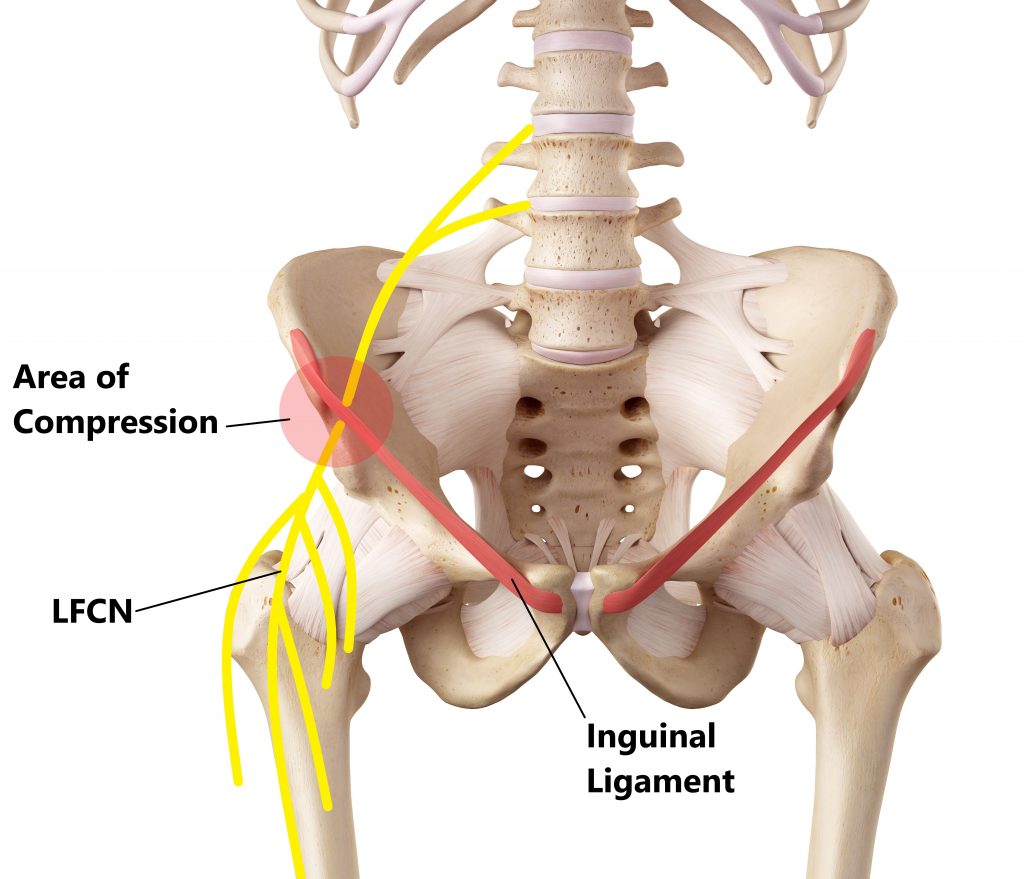
Many people explore conservative approaches such as Meralgia paresthetica exercises to help ease nerve irritation and improve mobility. These exercises, when combined with medical guidance, may support symptom relief by reducing pressure on the affected nerve and strengthening surrounding structures.
Initial meralgia paresthetica treatment
Because meralgia paresthetica is frequently linked to weight gain, obesity, pregnancy, or wearing tight garments, simple lifestyle adjustments can often make a noticeable difference. Choosing looser clothing to reduce pressure around the hips and waist may relieve nerve compression. Your doctor may also recommend gradual weight loss if excess body weight is contributing to the condition.

In cases where occupational gear places strain around the waist—such as heavy belts or equipment—addressing these external factors is important. For example, individuals experiencing symptoms related to Gun belt syndrome may benefit from redistributing weight or modifying their equipment setup to decrease nerve compression.
If discomfort interferes with your daily activities, your healthcare provider might suggest an over-the-counter (OTC) pain reliever such as:
- aspirin
- acetaminophen (Tylenol)
- ibuprofen (Motrin, Advil)
In addition to medication, targeted stretching and strengthening routines can be beneficial. Many individuals report improvement with Meralgia paresthetica exercises that focus on the lower back, abdominal core, pelvis, and hips. Strengthening these areas may enhance posture, reduce mechanical strain, and decrease pressure on the lateral femoral cutaneous nerve. Gentle hip flexor stretches and core stabilization exercises are commonly incorporated as part of a broader conservative management plan.
Treatment of persistent meralgia
While external compression is a common cause, meralgia paresthetica may also arise from direct trauma to the thigh or underlying conditions such as diabetes. When symptoms persist despite lifestyle changes and conservative care, additional medical treatment may be necessary.
If your pain is intense or your symptoms have not improved after more than 2 months of conservative management, your doctor may discuss advanced options, including those outlined in comprehensive Meralgia paresthetica treatment strategies.
- Corticosteroid injections to temporarily relieve pain and reduce inflammation
- Tricyclic antidepressants to relieve the pain for some people with meralgia paresthetica
- Anti-seizure medications to help reduce pain. Your doctor might prescribe gabapentin (Neurontin, Gralise), pregabalin (Lyrica), or phenytoin (Dilantin).
- In rare cases, surgery. Surgical decompression of the nerve is an option only for people with severe and long-lasting symptoms.
These interventions aim to reduce nerve inflammation, calm abnormal nerve signaling, and improve overall comfort. Surgical decompression is typically reserved for individuals whose symptoms are both severe and persistent despite other therapies.
Takeaway
For many people, the numbness, tingling, or burning pain associated with meralgia paresthetica can be improved with straightforward measures such as weight management, wearing less restrictive clothing, and engaging in appropriate Meralgia paresthetica exercises. Early attention to posture, hip flexibility, and core strength may also help minimize ongoing nerve irritation.
If initial strategies do not provide adequate relief, your doctor can recommend medication options, including corticosteroids, tricyclic antidepressants, and anti-seizure medications, depending on the severity of your symptoms.
In situations where symptoms are severe and long-lasting, surgical decompression may be considered. Working closely with your healthcare provider ensures that your treatment plan is tailored to the underlying cause and severity of your meralgia paresthetica, supporting both symptom control and long-term nerve health.



















Leave a Reply
You must be logged in to post a comment.