List of the Best Low Carb Fruits and Vegetables

- List of the best low carb fruits
- 1. Watermelon
- 2. Berries
- What does “net carbs” mean?
- 3. Cantaloupe
- 4. Avocados
- 5. Honeydew
- 6. Peaches
- List of the best low carb vegetables
- 1. Cucumbers
- 2. Iceberg lettuce
- 3. Celery
- 4. White mushrooms
- 5. Spinach
- 6. Swiss chard
- 7. Broccoli
- 8. Bell peppers
- 9. Zucchini
- 10. Cauliflower
- 11. Asparagus
- 12. Alfalfa sprouts
- 13. Radishes
- 14. Arugula
- 15. Radicchio
- 16. Tomatoes
- Other vegetables
- Vegetable nutrition chart
- Types of low carb diets
- The takeaway
Adding low carb fruits and vegetables to your daily menu can make it easier to stay on track with your carbohydrate goals while still supplying your body with essential vitamins and minerals. For individuals who are also reviewing a Zero fructose foods list to better manage sugar intake, understanding which produce options are naturally lower in carbs and fructose can be especially helpful.
For many people, consuming enough fruits and vegetables each day can be challenging, even though their importance is widely recognized.
Beyond delivering key nutrients that support everyday bodily functions, research shows that a diet rich in fruits and vegetables may help lower the risk of certain cancers and other chronic diseases . These protective effects are largely attributed to fiber, antioxidants, vitamins, and plant compounds such as phytochemicals.
Fresh produce is typically low in fat and calories, which makes it appealing for individuals aiming to manage their weight. However, if you’re cutting back on carbohydrates, you might question whether fruits and vegetables fit into your plan.
While fruits and vegetables do contain carbohydrates, that doesn’t mean they should be eliminated. Carb content varies widely among different types. By selecting the right options and paying attention to portion sizes, you can enjoy their nutritional benefits while maintaining a lower-carb intake. This approach is also useful for those comparing options alongside a Zero fructose foods list to minimize fructose exposure.
Below, you’ll find carefully selected lists of some of the best low carb fruits and vegetables to include in a healthy low carb lifestyle.

List of the best low carb fruits
Some low carb eating plans recommend limiting fruit, at least during certain phases. That’s because fruit generally contains more carbohydrates than most vegetables due to its naturally occurring sugars, including fructose.
If your healthcare provider has advised you to restrict sugar or specifically fructose, it’s important to follow their guidance. In such cases, reviewing resources like High fructose fruits to avoid or a detailed High fructose fruits and vegetables list can provide additional clarity. Otherwise, many people can incorporate moderate portions of lower-carb fruits into their meal plans without difficulty.
Here are some of the top low carb fruit options.
1. Watermelon
This classic summer fruit is among the lowest in carbohydrate content, containing just 7.55 g per 100 g of fruit. It is relatively low in fiber, so most of these carbohydrates are absorbed. Watermelon also provides vitamin A and has a high water content, which can help you feel full while keeping calorie intake modest. Even the rind offers potential health benefits.
2. Berries
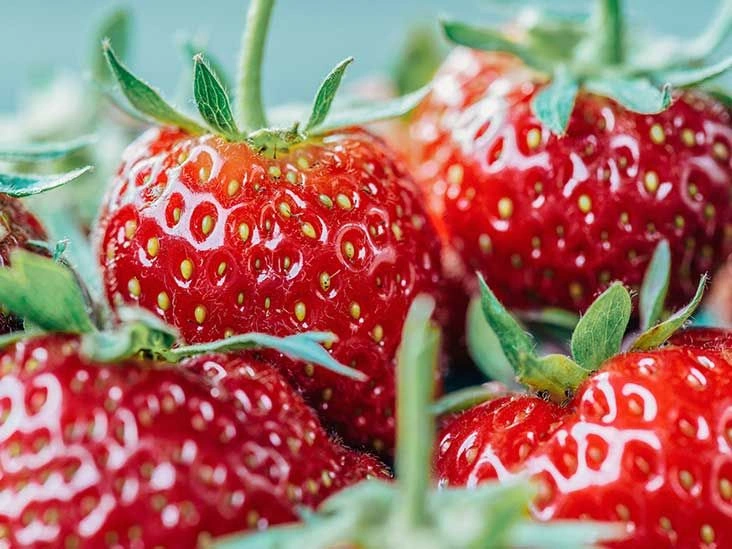
Berries are a favorite among those monitoring carbohydrate intake. Strawberries contain the fewest carbs of the common berries, while blackberries offer the lowest net carbs.
Per 100 g of strawberries, you’ll get 7.68 g of carbohydrates and 2 g of fiber, resulting in 5.68 g of net carbohydrates.
For 100 g of blackberries, there are 9.61 g of carbohydrates and 5.3 g of fiber, yielding only 4.31 g of net carbohydrates.
Raspberries are another excellent choice, providing just 5.44 g of net carbohydrates per 100 g serving. They are rich in antioxidants, potassium, and vitamin C, along with phytochemicals that may help protect against certain chronic diseases.
What does “net carbs” mean?
Some fruits appear lower in carbohydrates per serving because they contain more water or significant amounts of fiber. Net carbs refer to carbohydrates that are digestible and impact blood sugar levels.
Although fiber is technically a carbohydrate, the body does not absorb it in the same way as other carbs, so it does not raise blood glucose. For this reason, many people subtract fiber from total carbohydrates to calculate net carbs.
To determine net carbs, simply subtract the grams (g) of fiber from the total carbohydrate content listed.
3. Cantaloupe
This sweet orange melon is refreshing in warm weather and contains only 8.16 g of carbohydrates and 0.9 g of fiber per 100 g, resulting in 7.26 g of net carbohydrates.
Melons are often considered lower-fructose fruits, which may be useful for those loosely modeling their choices after a Zero fructose foods list. Enjoy cantaloupe on its own, with tuna salad, or blended with lime, mint, and water for a refreshing beverage.

4. Avocados
Avocados are technically a fruit and are impressively low in net carbohydrates. A 100 g serving contains approximately 8.53 g of carbohydrates and 6.7 g of fiber, leaving just 1.83 g of net carbohydrates.
They also provide heart-healthy monounsaturated fats. Add sliced avocado to salads, wraps, or serve alongside boiled eggs for a satisfying, nutrient-dense option.
5. Honeydew
Honeydew melon contains 9.09 g of carbohydrates and 0.8 g of fiber per 100 g, equaling 8.29 g of net carbohydrates. It also supplies vitamin C and potassium, an electrolyte important for maintaining healthy blood pressure, pH balance, and metabolic function.
For a balanced appetizer, try pairing honeydew with prosciutto for a sweet-and-savory combination.
6. Peaches
Peaches are naturally sweet and juicy yet relatively moderate in carbohydrates. Per 100 g, they contain 10.1 g of carbs and 1.5 g of fiber, resulting in 8.6 g of net carbohydrates. Pairing sliced peaches with cottage cheese makes for a balanced, lower-carb snack.
List of the best low carb vegetables

Vegetables are often less concerning than fruits when it comes to carbohydrate content because they generally contain less natural sugar.
Even on a carbohydrate-restricted plan, vegetables should remain a cornerstone of your diet. They are high in fiber and typically lower in calories per serving than other food groups. In addition, they provide essential vitamins, minerals, and beneficial plant compounds.
As a general rule, vegetables with higher water content tend to have fewer carbohydrates per serving.
Here are some of the best low carb vegetable options.
1. Cucumbers
Cucumbers are hydrating and crisp. When peeled, they contain just 2.16 g of carbs per 100 g. With peel, they provide 3.63 g , which is still low.
2. Iceberg lettuce
Iceberg lettuce contains only 2.97 g of carbohydrate per 100 g. Combine it with other nutrient-rich vegetables to create a satisfying low carb salad.
3. Celery
Celery also contains 2.97 g of carbs per 100 g. It works well in salads, soups, casseroles, or paired with unsweetened nut butter.
4. White mushrooms
White mushrooms provide just 3.26 g of carbs per 100 g. Add them to omelets or stir-fries for a flavorful, low carb boost.

5. Spinach
Each 100 g serving of spinach contains 3.63 g of carbohydrate — roughly 1 g per cup. It’s an easy addition to salads, smoothies, or sautéed dishes.
6. Swiss chard
Swiss chard is another nutrient-dense leafy green with 3.74 g of carbs per 100 g. It’s delicious sautéed with garlic or added to soups.
7. Broccoli
Raw broccoli contains 6.64 g of carbs and 2.6 g of fiber, resulting in 4.04 g of net carbs per 100 g. Enjoy it raw, steamed, or stir-fried with olive oil, garlic, and ginger.
8. Bell peppers
Bell peppers offer 6.03 g of carbs per 100 g. They’re excellent raw as a snack or sautéed with other vegetables.
9. Zucchini
Zucchini contains only 3.11 g of carbs per 100 g. Spiralized into “zoodles,” it makes a popular low carb substitute for pasta.
10. Cauliflower
With 4.97 g of carbs and 2.0 g of fiber, cauliflower nets 2.97 g of carbs per 100 g. It can be processed into a rice alternative or used in a variety of creative low carb recipes.
11. Asparagus
Asparagus has 4.11 g of carbs per 100 g. Steam or roast it and finish with fresh lemon juice.
12. Alfalfa sprouts
Alfalfa sprouts contain 2.1 g of carbs per 100 g. They add texture and nutrients to salads and sandwiches.
13. Radishes
Radishes provide 3.4 g of carbs per 100 g. Enjoy them sliced in salads or as a crunchy snack with a pinch of sea salt.
14. Arugula
Arugula contains 3.65 g of carbs per 100 g. It’s rich in vitamin A, vitamin K, vitamin C, folate, and calcium, with a distinctive peppery flavor.
15. Radicchio
Radicchio has 4.48 g of carbs per 100 g. Its firm leaves can be used as wraps or grilled for added depth of flavor.
16. Tomatoes
Tomatoes contain 3.89 g of carbs and 1.2 g of fiber, resulting in 2.69 g of net carbs per 100 g. They’re versatile in salads, soups, and sauces.
Other vegetables
Fermented vegetables such as sauerkraut or kimchi can diversify your intake while providing probiotics that support gut health. Choose fermented varieties without added sugar.
Vegetable nutrition chart
Below is a convenient reference for the nutritional value of 100 g of selected low carb vegetables. Values are for raw vegetables and may vary slightly with cooking.
| Vegetable | Total carbohydrates | Fiber | Net carbs | Calories | Fat | Protein |
| alfalfa sprouts | 2.1 g | 1.9 g | 0.2 g | 23 | 0.69 g | 3.99 g |
| celery | 3.0 g | 1.6 g | 1.4 g | 16 | 0.2 g | 0.7 g |
| iceberg lettuce | 3.0 g | 1.2 g | 1.8 g | 14 | 0.1 g | 0.9 g |
| zucchini | 3.11 g | 1.0 g | 2.11 g | 17 | .32 g | 1.21 g |
| white mushrooms | 3.3 g | 1.0 g | 2.3 g | 22 | 0.3 g | 3.1 g |
| radishes | 3.4 g | 1.6 g | 1.8 g | 16 | 0.10 g | 0.68 g |
| spinach | 3.6 g | 2.2 g | 1.4 g | 23 | 0.4 g | 2.9 g |
| cucumber | 3.6 g | 0.5 g | 3.1 g | 16 | 0.1 g | 0.7 g |
| arugula | 3.65 g | 1.6 g | 2.05 g | 25 | 0.66 g | 2.58 g |
| Swiss chard | 3.7 g | 1.6 g | 2.1 g | 19 | 0.2 g | 1.8 g |
| asparagus | 3.88 g | 2.1 g | 1.78 g | 20 | 0.12 g | 2.20 g |
| tomatoes | 3.89 g | 1.2 g | 1.69 g | 18 | 0.2 g | 0.88 g |
| radicchio | 4.48 g | 0.9 g | 3.58 g | 23 | 0.25 g | 0.25 g |
| bell peppers | 5.88 g | 1.2 g | 3.51 g | 18 | 0.0 g | 1.18 g |
| cauliflower | 4.97 g | 2.0 g | 2.97 g | 25 | 0.28 g | 1.92 g |
| broccoli | 6.64 g | 2.6 g | 4.04 g | 34 | 0.4 g | 2.8 g |
* Nutritional values as determined by the USDA for raw, uncooked vegetables.
Types of low carb diets
How many low carb fruits and vegetables you include depends on the specific dietary pattern you’re following.
- General low carb. According to the American Diabetes Association, the recommended daily allowance for carbohydrate intake is 130 g per day. Consuming less than this amount daily is generally considered a low carb diet.
- Caveman diets. Approaches such as the “paleo” or “primal” diet typically reduce carbohydrate intake to a range of 100–150 g per day, sometimes as low as 50 g, depending on individual goals.
- Ultra-low carb. Very restrictive plans like the ketogenic diet usually limit carbohydrates to 20–50 g per day.
Regardless of the approach, most people can incorporate several servings of low carb fruits and vegetables each day.
Before making significant dietary adjustments, especially drastic reductions in carbohydrate intake, consult your doctor or a registered dietitian.
The takeaway
A low carb eating pattern doesn’t have to revolve solely around protein and fat. Fruits and vegetables can—and should—remain key components of your meal plan.
Keeping a list of low carb produce options on hand, and understanding how they compare with a Zero fructose foods list, can help you create balanced, satisfying meals while meeting your carbohydrate goals.
Support Questions
A zero fructose foods list identifies foods containing little to no fructose, a natural sugar. This list is often used by individuals aiming to minimize fructose intake for health reasons, such as managing sugar sensitivity or following specific dietary plans.
Fruits like watermelon, berries (especially strawberries and blackberries), cantaloupe, and avocados are among the lowest in both carbohydrates and fructose, making them suitable choices for low carb and reduced fructose diets.
Net carbs are calculated by subtracting the grams of fiber from the total carbohydrates in a serving. This value represents the digestible carbohydrates that impact blood sugar, which is useful for low carb and ketogenic diet planning.
Yes, many vegetables are low in carbohydrates and are encouraged on low carb diets. Options like cucumbers, spinach, celery, cauliflower, and zucchini are excellent choices due to their high fiber and nutrient content with minimal net carbs.
Low carb diets typically allow more carbohydrates (often under 130g daily) and can include moderate portions of low carb fruits and vegetables. Keto diets are more restrictive, usually limiting carbs to 20-50g daily, requiring stricter selection and portion control of produce to stay within ketosis.
Read Next




Related Posts
Silver Cuisine Meal Delivery for Older Adults: A Complete Review
Aug 30, 2026 • 21 min read
Olives 101: Nutrition Facts and Health Benefits
Aug 26, 2026 • 23 min read
8 Surprising Health Benefits of Cloves
Jul 30, 2026 • 20 min read
What Causes Love Handles and How To Get Rid of Them
Sep 20, 2026 • 17 min read
Carbohydrates in Brown, White, and Wild Rice: Whole vs. Refined Carbs
Aug 5, 2026 • 11 min read