

Occasional, gentle neck cracking usually isn’t harmful. However, performing it improperly, excessively, or with too much force can actually increase pain or lead to discomfort.
People commonly crack various joints — knuckles, fingers, toes, backs, and the neck.
Motivations differ: some seek pressure relief in their shoulders or neck, others do it as a stress response, and many simply have a habitual tendency.
So, does cracking your neck offer any benefit? The short answer is: sometimes — and sometimes not.
Read on to understand the possible hazards, what occurs when you self-manipulate your neck, and when professional care is warranted.
What produces that popping or cracking noise?
When a joint is cracked, the capsule surrounding it is stretched. Those capsules contain synovial fluid, and stretching them reduces pressure on the joint.
As pressure drops, dissolved gases in the fluid form bubbles and change into gas. The sudden formation of these bubbles makes the popping sound. This phenomenon — referred to as cavitation — is generally not harmful.
In the neck, several pairs of facet joints sit on either side of the vertebrae.
Cracking the neck stretches those facet joint capsules, allowing the fluid to disperse within the capsule. When the fluid transitions to gas, the joint emits a pop.
That popping sensation is why neck cracking often feels like a pressure release in the area.
Are there benefits to cracking your neck?
When performed appropriately and not too frequently, neck cracking can temporarily alleviate joint pressure.
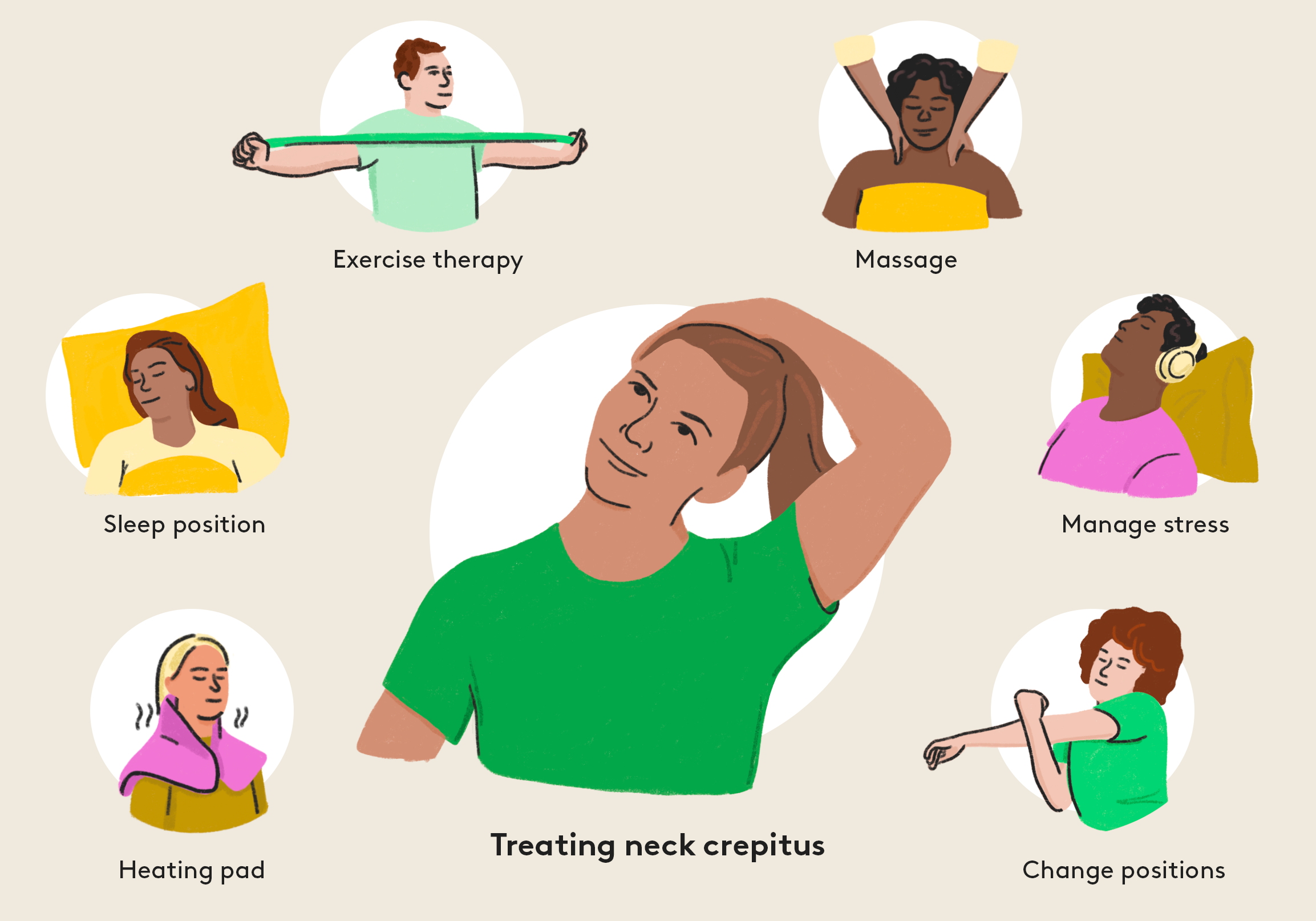
While there can be some benefit, consult a physician or chiropractor beforehand. They can assess whether it’s safe for you and suggest alternative relief strategies.
A 2011 study found that chiropractic neck adjustments can have a positive psychological effect. Many people associate the audible pop with successful realignment and pressure release.
Sometimes simply hearing the crack makes a person feel better even if no actual pressure was released or the joint wasn’t fully adjusted — a classic placebo response.
Cracking the neck also prompts the release of endorphins. Produced by the pituitary gland, endorphins help modulate pain; their release can create sensations of relief and satisfaction after a pop.
What risks are associated with cracking your neck?
Forceful neck cracking can compress or irritate nerves. A pinched nerve can be intensely painful and may limit or prevent neck movement.
Excessive force can also strain the muscles surrounding the joints and the joints themselves, making neck movement uncomfortable.
A strong urge to crack the neck frequently can be related to hypermobility, where a joint moves beyond its normal range.
Repeatedly yielding to this urge can overstretch the ligaments, causing chronic instability. Over time, unstable neck joints may become more vulnerable to osteoarthritis.
The neck contains major blood vessels. In rare cases, aggressive or repeated manipulation can damage a vessel or trigger clotting, potentially blocking blood flow to the brain.
Is chiropractic care advisable?
If you crack your neck occasionally and don’t experience persistent pain or other symptoms, you probably don’t need chiropractic or medical treatment.
However, if you frequently crack your neck and never feel satisfied, chiropractic care might help reduce the urge and address underlying joint issues.
See a clinician if you notice:
- Unusual swelling in the neck, which could indicate fluid accumulation, injury, or infection
- Neck joint pain, especially ongoing pain without an obvious explanation
- Reduced joint mobility due to aging or conditions such as osteoarthritis
A chiropractor can perform joint manipulations to ease pressure or pain that drives the desire to crack your neck.
Evidence on chiropractic outcomes is mixed: some people benefit, but overall proof of effectiveness is inconclusive.
If manipulations are performed improperly, there can be serious complications, including vertebral artery dissection.
Chiropractors may also recommend lifestyle adjustments — such as exercise and weight management — to reduce neck strain.
They can suggest home treatments too, like applying heat or cold to ease pain and swelling.
The bottom line
Cracking your neck can produce temporary relief for some people.
But if you crack it frequently and experience ongoing pressure or pain, consult a healthcare professional. They can identify and treat underlying causes contributing to your discomfort.
A medical provider can also instruct you on safer ways to relieve neck tension to minimize potential long-term harm to the joints, muscles, nerves, and surrounding tissues.



















Leave a Reply
You must be logged in to post a comment.