

Married couple Susan and Michael Dixon open up about how using Ozempic has influenced their overall health and significantly reshaped the way they think about and interact with food.

When Susan Dixon, 51, learned she had prediabetes — meaning her blood glucose levels were elevated but not yet within the diagnostic range for type 2 diabetes — her physician prescribed Ozempic off-label to help manage her risk factors.
“I have an [aortic aneurysm], so because of my heart condition and because I’m pre-diabetic, my doctor wanted me to get some weight off,” Susan told HealthEH.
By that time, she was already familiar with the medication. Her husband, Michael, 54, had started Ozempic roughly six months earlier to treat his type 2 diabetes and reduce his A1C to below 6. After four months on the drug, his A1C dropped to 5, and he experienced a 15-pound weight loss.
“Seeing Michael’s success absolutely influenced me wanting to try it,” Susan explained.
For many people researching Ozempic weight loss results 1 month, real-life experiences like Susan’s provide helpful insight into what early changes may look like. Over the years, she had experimented with several structured programs, including Weight Watchers and Jenny Craig, which led to temporary weight reduction. Prior to her wedding in 2008, she also used the prescription medication phentermine and lost 40 pounds.

Despite those efforts, long-term weight maintenance remained difficult. Like many adults managing metabolic health concerns, she found that the pounds often returned. She says Ozempic has delivered the most sustainable results so far. Within six weeks of starting treatment, she lost 14 pounds, a change that motivated her to continue focusing on blood sugar control and heart health.
For individuals comparing timelines or looking into strategies such as a structured 6 week plan Ozempic weight loss results, Susan’s early progress mirrors what some patients notice during the initial phase of therapy when appetite suppression is most pronounced.
How Ozempic changed their relationship with food
“[Ozempic] made me feel full and made my interest in food not really there. Michael would say, ‘What’s for dinner?’ and I thought, ‘I don’t really care.’ I’d have some cereal and a few bites of food, and I’d be okay. Food did not interest me,” she said.
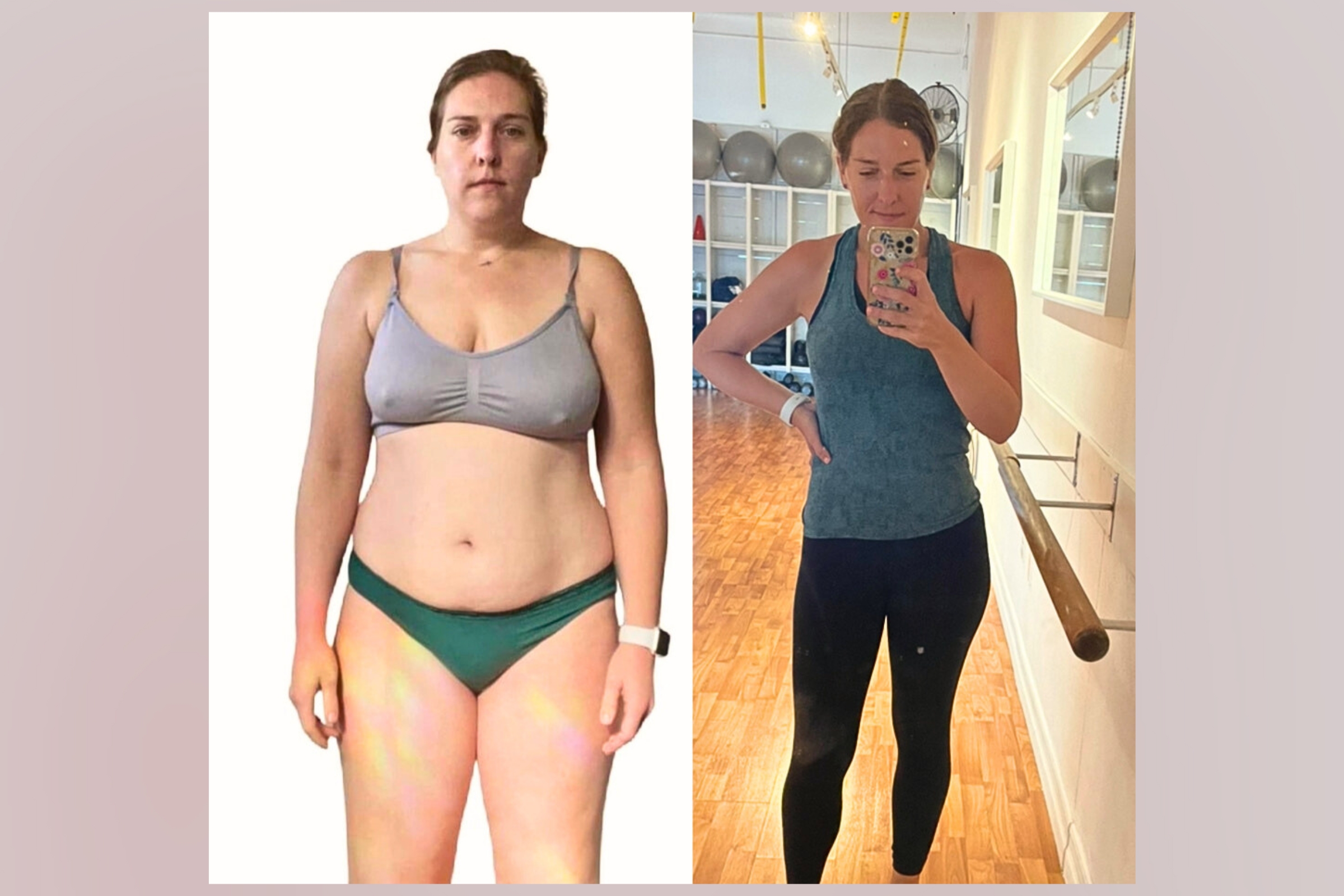
The active ingredient in Ozempic, semaglutide, supports weight loss by increasing satiety, slowing gastric emptying, and helping lower blood sugar levels, according to Dr. Rekha B. Kumar, associate professor of medicine at Cornell and Chief Medical Officer at Found. By acting as a GLP-1 receptor agonist, semaglutide helps regulate appetite and glucose metabolism, which can contribute to both improved A1C and gradual fat loss.
Michael initially turned to Ozempic strictly to better manage his type 2 diabetes and bring down his blood sugar — not with weight loss as a primary goal. Over the 15 years he has lived with diabetes, he said he never actively pursued weight reduction.
“I’m not someone who follows a diet, so I wasn’t the best patient and didn’t watch carbs and sugar intake,” he told HealthEH. “I’ve never had a desire or drive to lose weight. I have to get more into that mindset because I know I should lose more weight.”
Once he began treatment, he quickly noticed he felt satisfied sooner during meals. As a result, his portions naturally decreased to about half of what he previously consumed.
“I eat half a sandwich and say ‘Oh, I’m full.’ That’s why I lost weight,” he said.
After several years on Ozempic, he has adapted to recognizing and honoring those fullness cues.
“I’m able to put that other half sandwich down and I try to stop eating when I realize I’m full,” Michael said.
Susan also adjusted to smaller portion sizes and noticed a shift in her desire for alcohol.
“I wasn’t a big drinker and drank socially before, but now if I have a second glass of wine or drink, it makes me feel ill, so I’ve cut down,” she said.
Because they are both using Ozempic, the couple feels it has strengthened their shared commitment to healthier habits, including minimizing late-night snacking and being more mindful about dessert choices.
“Michael not wanting to eat makes me not want to eat. We try very hard not to snack between meals. If I say, ‘it’s time for dessert or popcorn before bed,’ and I notice he hasn’t eaten them, then I don’t have anything,” said Susan.
For couples navigating metabolic conditions together, shared routines — from balanced meals to understanding 6 week plan Ozempic weight loss results dosage considerations — can reinforce consistency and long-term adherence.
How the Ozempic shortage has affected the couple in different ways
In 2022, the Food and Drug Administration announced shortages of Ozempic. The limited supply sparked controversy, particularly as some individuals were prescribed the medication off-label for weight loss.
The shortage impacted Susan and Michael differently.
Throughout his time on Ozempic, Michael was able to refill his prescription. However, in recent months, his insurance stopped approving a 90-day supply. Previously, he received a cost-saving benefit that covered two months and provided the third month free. Now, he can only obtain a one-month supply at a time.
“Michael didn’t have an issue because his dosage is lower than mine. At the time of the shortage, my dosage was at 1mg and I couldn’t find that 1mg anywhere,” said Susan.
As a result, she went without Ozempic for two-and-a-half months and regained between 10 and 12 pounds during that interruption.
Ozempic rebound is common
This pattern is both common and anticipated, explained Dr. Sethu Reddy, president of the American Association of Clinical Endocrinology. When patients lose access to Ozempic — whether due to supply disruptions or insurance changes — progress in weight management and glycemic control may be reversed.
“The effects of GLP-1 analogs are not permanent and if the therapy is discontinued, their therapeutic effects dissipate,” Reddy told HealthEH. “Theoretically, these medications will be taken for several years, but it is well known that those with type 2 diabetes eventually lose their ability to make insulin and eventually will need insulin therapy.”
Kumar emphasized that long-term planning is essential when initiating medication for chronic conditions such as diabetes and obesity.
“If someone is taking Ozempic off-label or Wegovy on-label, those would need to be continued for weight maintenance as well,” said Kumar. “Long-term use of medicine for weight management is not unique to the GLP-1 class of medicines, but is true for all medicines used for weight management.”
By February 2023, Susan was able to restart Ozempic, and her physician increased her dose. Since resuming therapy, she has lost 5 pounds.
“I don’t feel as successful as I used to feel before I had to stop taking it. It’s working still but not as well as it did in the beginning. My appetite is not as suppressed, but like before, food doesn’t excite me,” said Susan.
Despite challenges, using Ozempic has positively affected their health
Even so, the medication has effectively reduced her blood sugar levels. If her readings continue to improve to the point where she no longer meets the criteria for prediabetes, her physician indicated she would likely transition to Wegovy to continue focusing on weight management.
“I would be happy to no longer have to take Ozempic for blood sugar control, and I’d take Wegovy to try to lose more weight,” said Susan.
Michael intends to remain on Ozempic for as long as it is prescribed for his diabetes management.
“I also take metformin for my diabetes, so I’ll keep taking that and Ozempic since they both seem to be working,” he said.
For patients exploring Ozempic weight loss results 1 month and beyond, the Dixons’ experience highlights an important reality: while early appetite suppression and measurable weight changes can be encouraging, sustained benefits often depend on ongoing treatment, consistent medical supervision, and complementary lifestyle habits such as mindful eating and blood sugar monitoring.























Leave a Reply
You must be logged in to post a comment.