
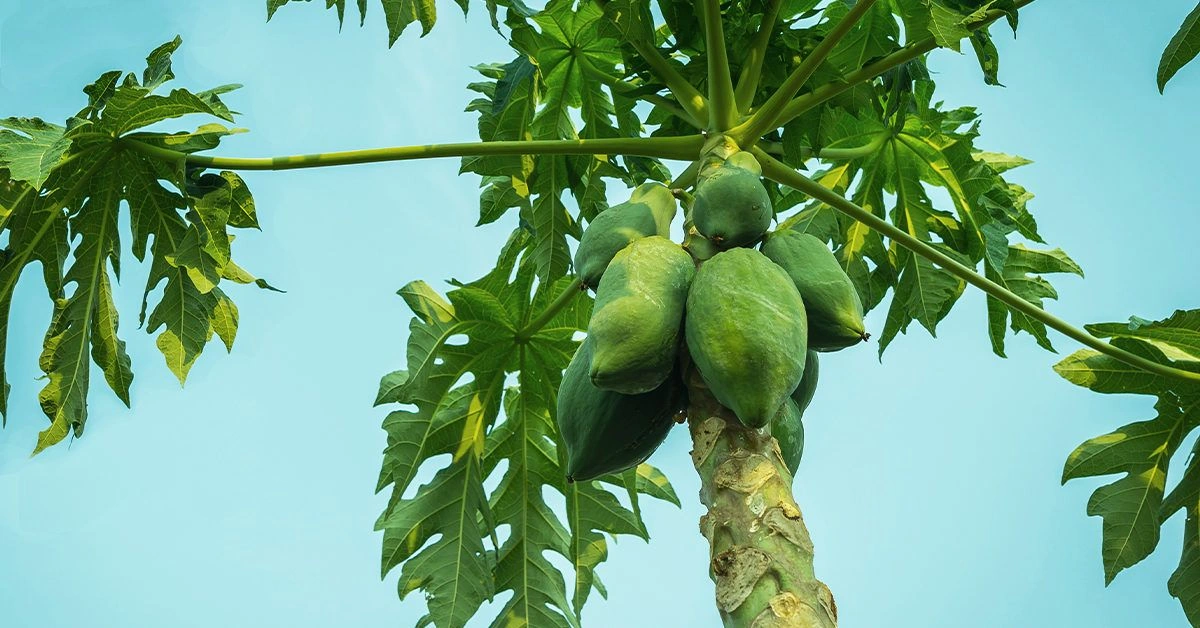
Carica papaya — commonly called papaya or pawpaw — is a tropical, fruit-bearing tree indigenous to Mexico and the northern regions of South America.
Today, papaya ranks among the most extensively cultivated crops globally. Its fruit, seeds, and leaves are widely employed in both culinary applications and traditional remedies.
Papaya leaf contains distinct plant compounds that have shown diverse pharmacological promise in laboratory and animal research.
Although high-quality human trials are limited, many papaya leaf formulations — including teas, extracts, capsules, and juices — are used to address ailments and promote wellbeing in various cultures.
Below are 7 emerging uses and potential advantages of papaya leaf.
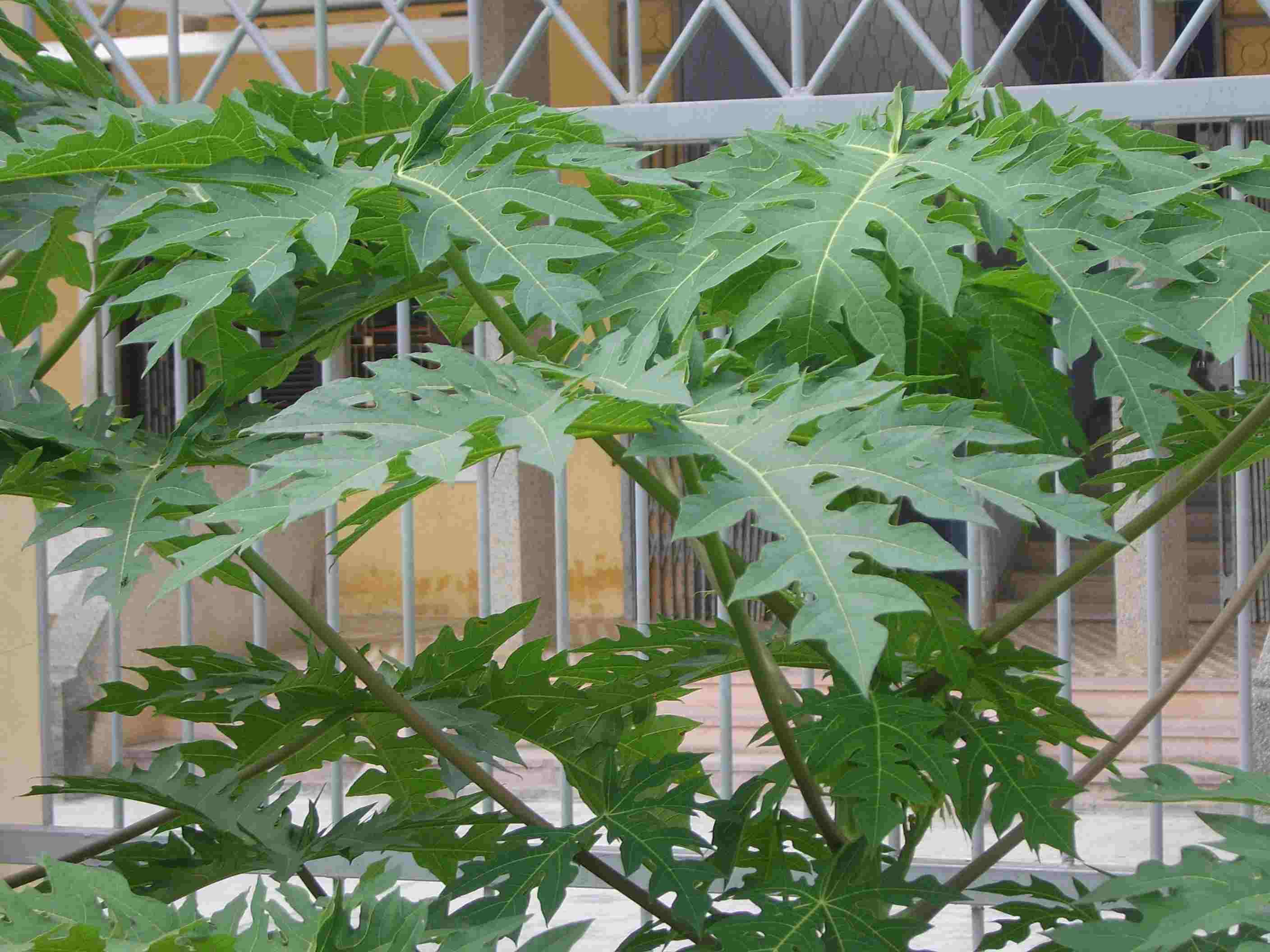
1. May ease symptoms associated with dengue fever
One of the most notable medicinal claims for papaya leaf is its potential to relieve certain symptoms tied to dengue fever.
Dengue is a mosquito-transmitted viral infection that can cause flu-like symptoms such as fever, fatigue, headache, nausea, vomiting, and skin rashes (1).
Severe infections may also lead to reduced platelet counts, which raises the risk of bleeding and can be life-threatening if not managed (1).
While dengue has no definitive cure, various supportive treatments exist — among them preparations made from papaya leaf.
Three clinical studies involving several hundred dengue patients reported that papaya leaf extract significantly increased platelet counts (2, 3, 4).
Additionally, papaya leaf interventions were associated with few adverse effects and were reported to be more economical than some conventional approaches.
Summary: Research indicates papaya leaf extract may raise platelet levels in people suffering from dengue fever.
2. May help regulate blood sugar
Papaya leaf is used in Mexican traditional medicine as a natural approach to managing diabetes and stabilizing blood glucose (5).
Animal studies in diabetic mice have shown that papaya leaf extract exerts antioxidant effects and can lower blood sugar, possibly by protecting insulin-producing pancreatic cells from damage and premature death (5, 6).
However, there’s no direct clinical evidence demonstrating similar benefits in humans.
Further research is necessary to establish whether papaya leaf could be a useful adjunct for controlling elevated blood glucose in people.
Summary: Papaya leaf has traditional use for diabetes and animal studies suggest glucose-lowering effects, but human data are lacking.
3. May support digestion
Papaya leaf teas and extracts are commonly used as alternative remedies to ease digestive complaints like gas, bloating, and heartburn.
Papaya leaf supplies dietary fiber — a component that supports healthy digestion — and contains the enzyme papain (7).
Papain is known for breaking down large proteins into smaller, more digestible peptides and amino acids; it’s even used as a meat tenderizer in cooking.
One trial found that supplemental papain derived from papaya fruit eased digestive symptoms, including constipation and heartburn, in people with irritable bowel syndrome (IBS) (8).
Specific studies examining papaya leaf itself for digestive disorders are lacking.
Most support for digestive benefits comes from anecdotal experience, and there is no guarantee papaya leaf will improve digestion for everyone.
Summary: Compounds in papaya leaf might ease digestive issues, but solid scientific evidence is limited.
4. May have anti-inflammatory properties
Various papaya leaf products are used to address a wide range of inflammatory complaints, both internal and external, including skin irritation, sore muscles, and joint discomfort.
Papaya leaf contains several nutrients and phytochemicals with potential anti-inflammatory effects, such as papain, flavonoids, and vitamin E (7, 9, 10).
An animal study showed that papaya leaf extract reduced swelling and inflammation in the paws of arthritic rats (11).
However, human trials confirming these effects are not available.
Therefore, current scientific evidence is insufficient to determine whether papaya leaf can effectively treat acute or chronic inflammation in people.
Summary: Papaya leaf holds compounds with potential anti-inflammatory action, but human research is still needed.
5. May encourage hair health
Topical papaya leaf preparations — such as masks and juices — are commonly applied to the scalp to promote hair growth and improve scalp condition, though proof of effectiveness is very limited.
Research suggests that elevated oxidative stress may contribute to hair loss, and diets rich in antioxidants might help reduce oxidative damage and support hair growth (12).
Papaya leaf contains antioxidant compounds, including flavonoids and vitamin E (10).
Advocates point to papaya leaf’s antioxidant content as the rationale for its use on hair, but there’s no robust evidence that applying papaya leaf topically stimulates hair regrowth.
Some forms of dandruff are linked to excessive growth of the fungus Malassezia, which can impair hair health (13).
Papaya leaf exhibits antifungal activity in laboratory studies, which leads some to believe it may help scalp health by inhibiting dandruff-causing fungi (14).
However, papaya leaf has not been specifically tested against Malassezia, so its actual effect on dandruff and hair growth is uncertain.
Summary: Papaya leaf is often applied to the scalp to support hair growth, but scientific proof for this use is lacking.
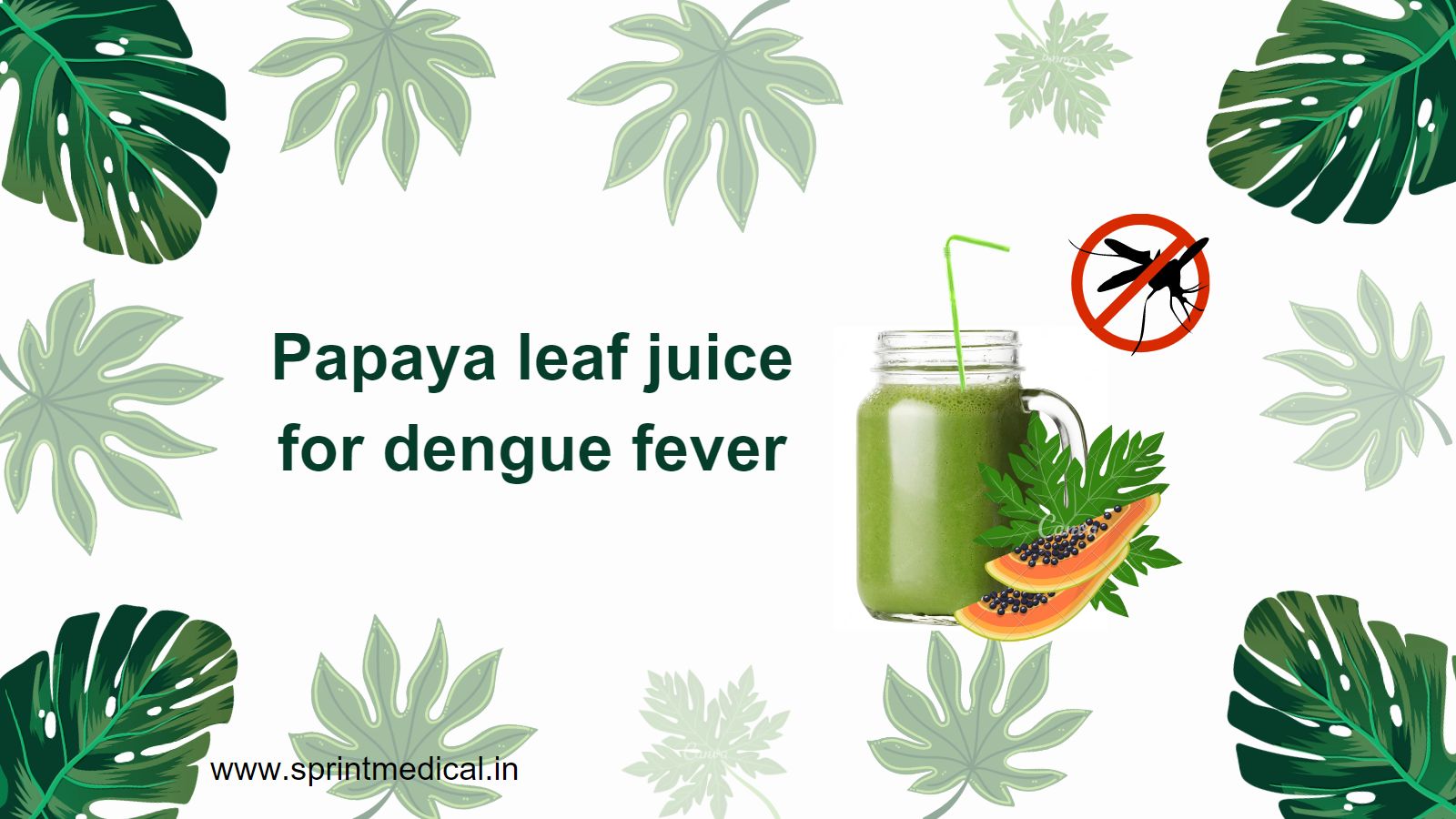
6. May benefit skin health
Papaya leaf is consumed or applied topically as a way to help maintain soft, clear, and youthful-looking skin.
The enzyme papain in papaya leaf can act as a topical exfoliant, removing dead skin cells and potentially lowering the risk of clogged pores, ingrown hairs, and acne.
In addition, papaya enzymes have been used to support wound healing; one study found they reduced scar formation in rabbits (15, 16).
Summary: Enzymes in papaya leaf can function as exfoliants to remove dead skin cells and may help reduce acne and the visible appearance of scars.
7. May possess anticancer activity
Papaya leaf has a history in traditional medicine for preventing and treating certain cancers, but contemporary research remains preliminary.
In laboratory settings, papaya leaf extract has inhibited prostate and breast cancer cell growth, but these results have not been reproduced in animal or human studies (17, 18).
While eating papaya leaves and other antioxidant-rich foods may contribute to cancer prevention efforts, they have not been shown to cure cancer (19).
Summary: Test-tube work suggests papaya leaf extract can inhibit cancer cell growth, but human evidence is absent.
Safety considerations
Although further study is needed to confirm many of the claimed benefits of papaya leaf, it generally has a favorable safety profile.
A 2014 animal study reported no toxic effects even at high doses, and human studies have documented few adverse reactions (20).
Still, anyone allergic to papaya should avoid consuming papaya leaves in any form. If you are pregnant or nursing, speak with your healthcare provider before using any papaya leaf products.
While papaya leaf itself is usually safe for most individuals, it’s important to select high-quality products when buying supplements.
Regulation of nutritional and herbal supplements is limited in some countries, including the United States.
Manufacturers aren’t always required to prove product safety or effectiveness prior to sale, so supplements may contain contaminants or undeclared ingredients.
To reduce risk, choose supplements that have undergone third-party purity testing by organizations such as NSF or the US Pharmacopeia.
Dosage
There is insufficient evidence to provide exact dosage guidance for most proposed uses of papaya leaf.
However, for dengue fever, taking three doses of up to 1 ounce (30 mL) of papaya leaf extract daily is considered safe and has been used effectively in studies (21).
If you’re uncertain about an appropriate amount for your situation, consult a qualified healthcare professional.
Summary: Papaya leaf is generally safe for many people, but if you’re buying supplements, choose products verified by third-party testing.
The bottom line
Papaya is one of the world’s most widely grown plants, and its fruit, seeds, and leaves are used in many culinary and medicinal contexts.
Papaya leaf is commonly taken as an extract, tea, or juice and has demonstrated the ability to help with dengue-related platelet declines.
Other suggested benefits include reducing inflammation, aiding blood sugar control, supporting skin and hair health, and possibly inhibiting cancer cells, though evidence for these uses is limited.
Papaya leaf is usually well tolerated, but should be avoided by those with an allergy to papaya.
Always talk with your healthcare provider before adding herbal supplements to your health regimen, and if you’re researching related topics, see also papaya in pregnancy.






















Leave a Reply
You must be logged in to post a comment.