Saliva Molecular Biomarkers: Early, Non‑Invasive Wins

- What Are They?
- Definition – the building blocks
- Saliva disease markers vs. molecular biomarkers
- Why saliva mirrors our health
- How Are They Detected?
- Collecting the sample
- Laboratory platforms
- Can point‑of‑care replace the lab?
- Clinical Applications
- Cancer detection
- Periodontal and peri‑implant disease
- Systemic conditions
- Supporting non‑invasive early diagnosis
- Benefits, Limitations & Safety
- Advantages over blood or tissue biopsies
- Challenges to keep in mind
- Mitigating risks
- Future Frontiers – Precision Medicine Research
- Integration into precision‑medicine pipelines
- Will saliva replace invasive diagnostics?
- Practical Guide for You
- When to order a salivary panel
- Home collection tips
- Interpreting results
- Conclusion
Imagine being able to catch a disease before it even shows a symptom, without a single needle prick. That’s the promise of saliva molecular biomarkers – tiny clues hidden in the fluid that constantly bathes our mouths. In this friendly walk‑through, I’ll explain what these biomarkers are, how they’re measured, and why they matter for you and your loved ones. Think of it as a chat over coffee, where we explore a fascinating science that could one day land on your bathroom shelf.
What Are They?
Definition – the building blocks
When we say “saliva molecular biomarkers,” we’re talking about any measurable molecule in saliva that reflects a physiological or pathological state. This includes:
- Micro‑RNAs (miRNA) – tiny RNA strands that control gene expression.
- DNA methylation patterns – chemical tags on DNA that turn genes on or off.
- Proteins and cytokines – such as interleukin‑6 (IL‑6) or matrix‑metalloproteinase‑8 (MMP‑8).
- Metabolites – small chemicals produced by our cells.
- Extracellular vesicles (EVs) – nano‑packages that ferry DNA, RNA, and proteins.
Saliva disease markers vs. molecular biomarkers
“Saliva disease markers” is a broader term that may include any indicator—clinical, microbial, or molecular. Molecular biomarkers specifically refer to the nucleic acids, proteins, or metabolites that scientists can quantify with lab techniques.
| Biomarker Type | Source | Typical Disease Context |
|---|---|---|
| miRNA | Salivary exosomes | Oral cancer, ovarian cancer |
| DNA methylation | Cell‑free DNA | Breast cancer, autoimmune disease |
| Protein (IL‑6, MMP‑8) | Glandular secretion | Periodontitis, peri‑implantitis |
| Metabolite (lactate) | Cellular metabolism | Diabetes monitoring |
Why saliva mirrors our health
Saliva is produced by three major glands and countless minor ones, drawing not just water but also a cocktail of blood‑derived molecules. According to a 2023 review, “saliva reflects systemic physiology because many blood components cross the gingival crevicular fluid and enter the oral cavity” a study . In short, what’s happening inside often shows up on the surface.
How Are They Detected?
Collecting the sample
Getting a reliable saliva sample is easier than you think, but a few habits matter:
- Fast for at least 30 minutes (no food, drink, gum).
- Rinse gently with water to clear debris.
- Choose unstimulated saliva for baseline studies, or stimulated (chewing parafilm) if you need larger volumes.
- Collect into a sterile tube, keep on ice, and centrifuge within 30 minutes to remove cells.
- Aliquot supernatant and store at –80 °C for long‑term analysis.
Laboratory platforms
Several technologies turn those tiny molecules into readable data:
- qRT‑PCR – amplifies specific miRNA or mRNA sequences.
- Next‑generation sequencing (NGS) – gives a comprehensive view of all nucleic acids present.
- Mass spectrometry – identifies and quantifies proteins and metabolites with exquisite sensitivity.
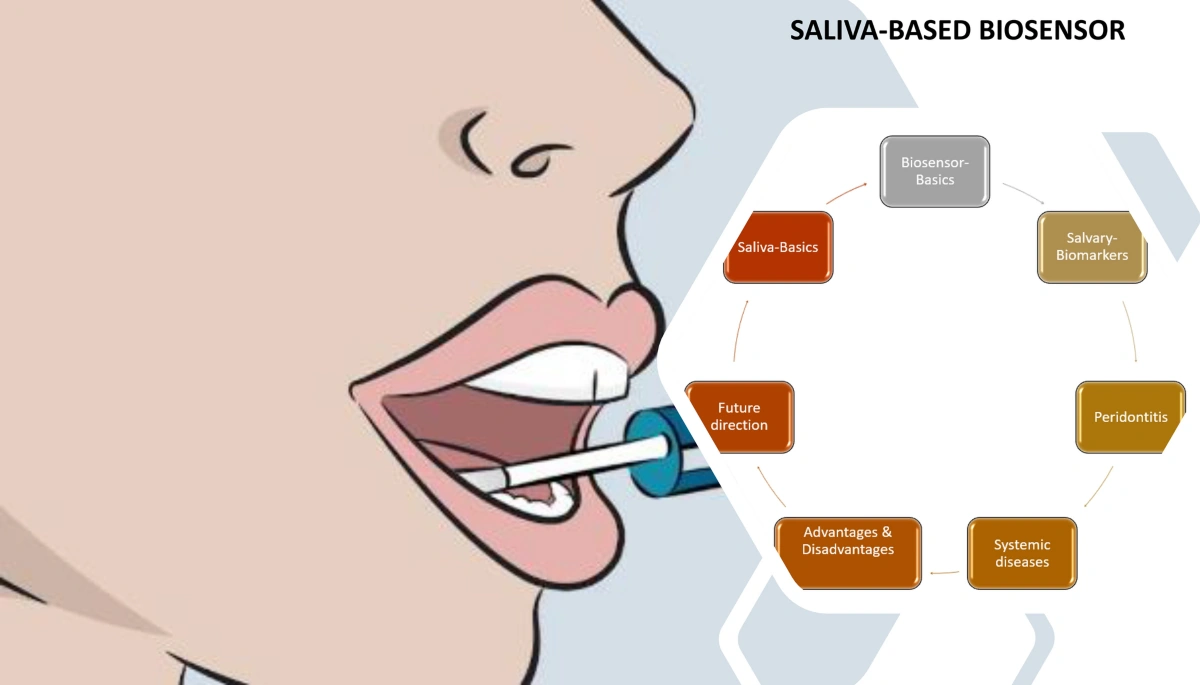
- Biosensor chips – emerging point‑of‑care devices that convert molecular binding events into electrical signals.
Can point‑of‑care replace the lab?
Early prototypes, like lateral‑flow strips for cortisol or colorimetric kits for lactate, are already selling in pharmacies. While they lack the depth of NGS, they’re perfect for routine monitoring. Imagine a home‑testing kit that tells you whether your non‑invasive early diagnosis is on track—no clinic visit required.
Clinical Applications
Cancer detection
Saliva shines in oncology because many tumors shed DNA, RNA, and proteins into body fluids. For oral squamous cell carcinoma (OSCC), researchers have identified a panel of miRNAs (miR‑21, miR‑31, miR‑145) that discriminates early‑stage cancer from healthy tissue. A 2021 ovarian‑cancer review even highlighted saliva‑based ctDNA as a promising marker a study. These findings suggest that a simple spit test could flag a tumor before it becomes visible on imaging.
Case‑study idea
Consider “Anna,” a 48‑year‑old who noticed a persistent “something off” in her mouth. A dentist collected her saliva, ran a miRNA panel, and the results suggested a high OSCC risk. A subsequent biopsy confirmed a lesion at stage I—treatment was swift, and Anna avoided aggressive therapy. Stories like Anna’s illustrate the real‑world impact of saliva cancer risk assessment.
Periodontal and peri‑implant disease
Chronic gum inflammation leaves a molecular fingerprint. Studies have shown that IL‑1β, IL‑6, MMP‑8, and MIP‑1α levels rise dramatically in patients with periodontitis. A large cohort (209 subjects) demonstrated that combining these markers boosts diagnostic sensitivity from 70 % to over 90 % a study . Saliva disease markers can therefore guide both early treatment and monitoring of therapy success.
Practical tip
If you’re a dentist, consider ordering a salivary panel for patients with “bleeding gums” before deciding on invasive probing. It’s painless, inexpensive, and can reassure patients who dread the dental chair.
Systemic conditions
Because saliva captures blood‑derived molecules, it can reflect diseases far beyond the mouth:
- Diabetes – elevated glucose and advanced glycation end‑products appear in saliva, correlating with HbA1c.
- Cardiovascular disease – inflammatory cytokines (CRP, IL‑6) measured in saliva predict arterial stiffness.
- COVID‑19 – viral RNA detection in saliva matched nasopharyngeal swabs in a 2021 meta‑analysis a study.
Supporting non‑invasive early diagnosis
All of these applications share a common theme: they let clinicians intervene far earlier than traditional methods. By catching an abnormal biomarker trend, doctors can order confirmatory tests, start lifestyle changes, or commence therapy while the disease is still manageable.
Benefits, Limitations & Safety
Advantages over blood or tissue biopsies
- No needles—perfect for children, the elderly, or needle‑phobic patients.
- Frequent sampling—monitor treatment response week by week.
- Real‑time snapshot—saliva reflects current metabolic activity better than frozen serum.
Challenges to keep in mind
Even the most promising technology has hurdles:
- Hydration status can dilute or concentrate biomarkers.
- Oral microbiome may interfere with nucleic‑acid assays.
- Lack of standard reference ranges—most labs still use research‑grade cut‑offs.
- Analytical sensitivity—detecting low‑abundance ctDNA requires highly specialized equipment.
Mitigating risks
Here’s a quick checklist for clinicians:
- Collect duplicate samples whenever possible.
- Standardize fasting time and collection method.
- Use validated commercial kits with built‑in controls.
- Report assay performance (limit of detection, coefficient of variation) transparently.
Future Frontiers – Precision Medicine Research
Integration into precision‑medicine pipelines
Imagine a future clinic where a patient’s electronic health record (EHR) automatically pulls in weekly salivary profiles, runs AI algorithms, and flags a rising “cancer‑risk score.” Researchers are already building such pipelines: saliva‑omics → data‑fusion → personalized risk stratification a study. This is the essence of precision medicine research.
Emerging biomarkers for saliva cancer risk
Recent pilot work (2024) highlighted three new candidates:
- Exosomal miR‑1246 – elevated in early oral and pancreatic cancers.
- ctDNA KRAS G12D mutation – detectable in saliva of smokers with lung nodules.
- Metabolite signature (elevated polyamines) – associated with breast cancer recurrence.
Will saliva replace invasive diagnostics?
Experts agree that saliva will augment rather than fully replace biopsies in the next decade. Regulatory agencies need standardized protocols, and clinicians must be educated on interpretation. Yet the momentum is undeniable—companies are filing FDA‑clearance for salivary COVID‑19 tests, and several biotech startups are courting investors for cancer‑screening kits.
Practical Guide for You
When to order a salivary panel
Think of saliva testing as a triage tool. Use it when:
- Patients present vague systemic symptoms (fatigue, weight loss) and you need a quick screen.
- Monitoring disease activity in known conditions (e.g., periodontitis, OSCC).
- Assessing response to a new therapy—especially when blood draws are impractical.
Home collection tips
- Wash hands, avoid toothpaste for at least an hour.
- Spit gently into the provided tube—no forceful blowing.
- Seal, label with date/time, and store in the fridge if the lab isn’t reached within 4 hours.
Interpreting results
Most labs deliver a report with three columns:
| Marker | Measured Value | Risk Interpretation |
|---|---|---|
| miR‑21 (relative units) | 1.8 | Elevated – consider further imaging. |
| MMP‑8 (ng/mL) | 75 | High – indicates active periodontitis. |
| IL‑6 (pg/mL) | 4.2 | Within normal range. |
Discuss any “elevated” markers with your provider; they will decide whether a confirmatory test (biopsy, imaging) is warranted.
Conclusion
Saliva molecular biomarkers are more than just a scientific curiosity—they’re a practical, patient‑friendly gateway to early, non‑invasive health insights. From spotting oral cancers before they spread to monitoring gum health and even hinting at systemic disorders, these tiny molecules hold a big promise. While challenges around standardization and sensitivity remain, the surge in precision medicine research and the rise of point‑of‑care biosensors mean we’re on the cusp of a new diagnostic era.
So, the next time you brush your teeth, think of the saliva you’re producing as a discreet messenger carrying vital health information. If you’re curious about how these tests can fit into your own health plan, talk to your dentist or primary‑care doctor about a salivary panel. And, of course, feel free to share what you’ve learned—maybe your friend will thank you for the early warning.
Frequently Asked Questions
They are measurable molecules—such as miRNAs, DNA methylation patterns, proteins, cytokines, metabolites, and extracellular vesicles—found in saliva that reflect physiological or pathological conditions.
A reliable sample is obtained by fasting for at least 30 minutes, gently rinsing the mouth, collecting unstimulated saliva into a sterile tube, keeping it on ice, and processing (centrifugation and storage) within 30 minutes.
Saliva can reveal tumor‑derived DNA, RNA, and proteins before they appear on imaging, especially for oral, ovarian, and some systemic cancers. While not a full replacement for biopsies, they serve as an early‑screening tool that prompts further diagnostic work.
Emerging biosensor chips and lateral‑flow strips offer rapid, painless results for markers like cortisol or lactate. They are less comprehensive than laboratory‑based NGS or mass spectrometry but are useful for routine monitoring and quick screening.
Key challenges include variability from hydration status, interference from the oral microbiome, lack of standardized reference ranges, and the need for highly sensitive equipment to detect low‑abundance targets.
Read Next





Related Posts
Ultrasounds Aren't Typically Used to Detect Cervical Cancer: Learn Why
Aug 31, 2026 • 19 min read
Is the Pain in My Tailbone Cancer?
Aug 21, 2026 • 10 min read
Can Carpenter Ants Bite You?
Aug 4, 2026 • 12 min read
Shea Butter for Your Face: Benefits and Uses
Aug 27, 2026 • 21 min read
What Are Licorice Root's Benefits and Downsides?
Aug 31, 2026 • 22 min read