Signs and Symptoms of Stress Fracture in Foot

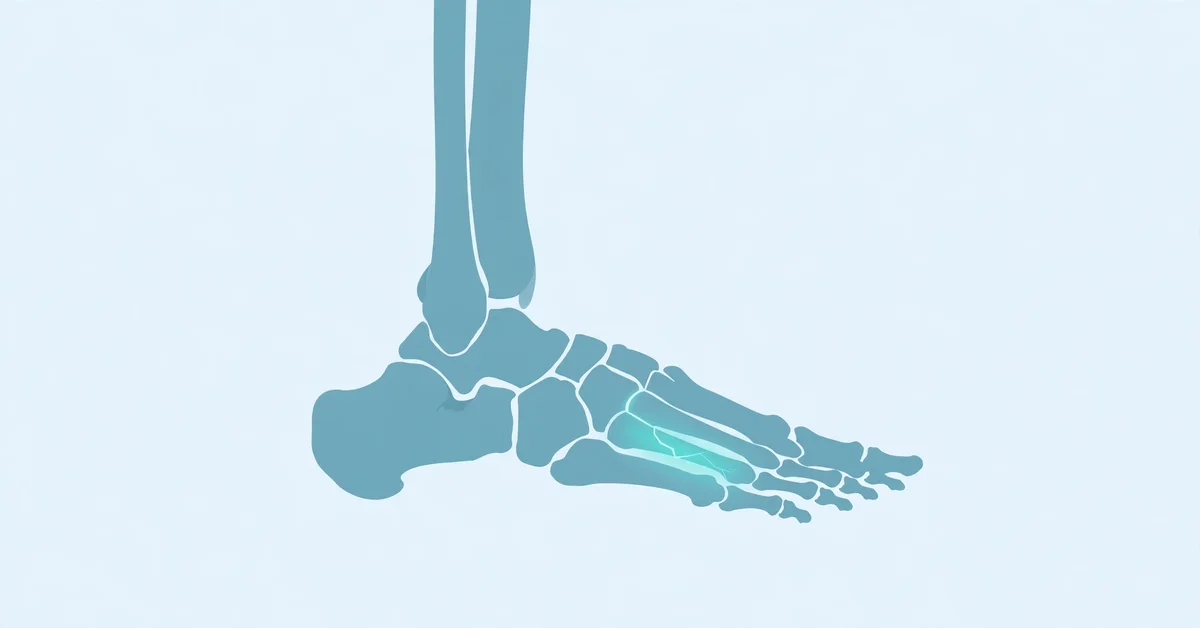
- The hallmark pattern: pain that builds, eases, then returns
- The main symptoms, one by one
- 1. Pain in one specific spot
- 2. Pain that worsens with weight bearing
- 3. Swelling on the top of the foot or around the ankle
- 4. Tenderness when the area is touched
- 5. Bruising
- 6. Pain that lingers at rest or at night
- 7. Limping or changing how you walk
- Where in the foot it happens, and why the spot matters
- Who gets a foot stress fracture
- What else could it be
- How doctors diagnose it
- Treatment and recovery: what actually heals it
- A safe return to running and walking
- Prevention: the habits that keep bones ahead of the load
- When to get help fast
- Foot Stress Fracture Symptom Checker
Three miles into her Saturday long run, Maya felt a dull ache bloom across the top of her right foot. It wasn’t sharp enough to stop her, so she finished the run and iced it that night. The next weekend the ache came back sooner, a little louder. By the third weekend, walking to the mailbox hurt. There had been no twist, no fall, no single moment she could point to. That slow, creeping pattern is how a stress fracture in the foot usually announces itself, and why so many people miss it until a small crack becomes a real break.
A stress fracture is a tiny crack in a bone, or a deep bruise inside it, caused by repeated force rather than one hard hit. Bone is living tissue: every run and jump breaks down a little old bone and builds a little new bone. When the load outpaces the repair, a crack forms. In the foot, the metatarsals, the long bones running to the toes, are hit most often, especially the second and third, according to the American Academy of Orthopaedic Surgeons (AAOS). The heel bone, the navicular on top of the midfoot, the talus, and the small sesamoid bones under the big toe can crack this way too.
This guide walks through the signs and symptoms of a stress fracture in the foot, bone by bone, so you can tell it apart from ordinary soreness and know when to get it checked. Only a clinician with imaging can confirm one, but knowing the pattern helps you act weeks earlier, and weeks matter here.

The hallmark pattern: pain that builds, eases, then returns
The story is almost always the same. The pain starts mild. It builds during activity. It eases with rest, at least in the early weeks. Then it comes back the next time you load the foot, often sooner and stronger than before. That on-off rhythm is the single most useful clue.
Plantar fasciitis, by contrast, usually hurts worst with the first steps in the morning and eases as you move. A stress fracture does the opposite: the foot feels okay when you get up, then aches more the longer you stay on it.
Early on, the pain may show up only near the end of a run or a long shift. Many runners describe a deep ache rather than a sharp stab. That is the trap. Keep loading it and the pain arrives earlier in each workout, then during ordinary walking, and in later stages at rest or at night.
The main symptoms, one by one
1. Pain in one specific spot
The pain of a foot stress fracture is local. It sits over one bone, often on the top of the foot, and you can usually find it with one fingertip. Pressing that spot hurts in a way that pressing a centimetre to either side does not. Doctors call this pinpoint tenderness, and the University of Washington Medicine health library lists it as a core symptom. If you can point to it with one finger, pay attention.
2. Pain that worsens with weight bearing
Standing, walking, running, and jumping all load the bone and make the pain worse. The UW Medicine library notes pain in the front of the foot after long or intense activity, and pain that goes away after exercise, then returns when exercise starts again. That relief can mislead: a day off is not a healed bone.
3. Swelling on the top of the foot or around the ankle
Swelling is common but not universal. The UW Medicine library notes it may be absent in some cases, and University Hospitals notes swelling at the top of the foot or the outside of the ankle. When it appears, it tends to sit right over the injured bone rather than puffing up the whole foot. Compare both feet in the mirror: a visible difference is worth a doctor visit even if the pain feels mild.
4. Tenderness when the area is touched
Even light touch can sting. Shoes that used to fit fine may press on the sore spot, and some people first notice the problem while lacing up, not while running.
5. Bruising
Bruising shows up in some cases and not others, usually faint and near the painful spot. A bruise with no remembered injury, sitting over a tender spot, deserves the same respect as one you can explain. Plenty of confirmed stress fractures never bruise at all.
6. Pain that lingers at rest or at night
This is the symptom that marks a turning point. Early stress fractures hurt only under load. As the crack deepens, the ache starts to hang around after you sit down, and some people feel it at night in bed. Night pain means the bone is irritated even without load. Book an appointment within days, not weeks: a fracture that hurts at rest is closer to becoming a complete break.
7. Limping or changing how you walk
Some people limp without realising it. Others roll weight onto the outside of the foot, or avoid pushing off with the big toe. Sesamoid fractures, under the big toe, often show up this way: pain when lifting the big toe, tenderness and sometimes swelling under it, and limping in severe cases, according to Nationwide Children’s Hospital. Any change in gait loads other joints in ways they are not built for.
Where in the foot it happens, and why the spot matters
Not all foot stress fractures carry the same risk. The location decides how fast it heals and whether it needs a boot, crutches, or surgery. Doctors split them into low-risk and high-risk sites, and the split shapes the questions to ask.
| Location | Risk level | What makes it different |
|---|---|---|
| 2nd and 3rd metatarsals | Low | Most common site, often called a march fracture. Heals in 6 to 8 weeks with rest. |
| Calcaneus (heel bone) | Low | Common in runners and recruits. Heel pain that builds with running. |
| Navicular (top of the midfoot) | High | Poor blood supply, slow healing, often missed on early X-rays. Needs non-weight-bearing care. |
| Base of the 5th metatarsal (Jones zone) | High | Poor blood supply at the base. Heals slowly; surgery more likely, notes Mayo Clinic. |
| Sesamoids (under the big toe) | High | Tiny bones, fragile blood supply. Pain pushing off the big toe. Slow to heal. |
| Talus (ankle bone) | High | Less common. Deep ankle pain; needs prompt specialist care. |
The second and third metatarsals take the most load when you push off, which is why they crack most often. The navicular takes force from both directions and has a patchy blood supply, so a crack there heals slowly and is easy to miss. If your pain sits on the outer edge of the foot or on top of the midfoot, say so at your appointment: the location changes the plan.

Who gets a foot stress fracture
Anyone who loads bone faster than it can rebuild is at risk, but a few groups show up far more often.
- Runners who ramp up too fast. A sudden jump in weekly mileage, speed, or frequency is the classic trigger, even in fit people.
- People who switch sports or surfaces. A strong swimmer who takes up running, or a runner moving from treadmill to concrete, loads bones in a new way.
- Dancers, gymnasts, and court-sport athletes. Basketball, tennis, dance, and gymnastics combine jumping with hard landings.
- Military recruits. The march fracture name comes from new soldiers marching long distances in boots; hikers who suddenly cover big daily distances show the same pattern.
- People with weak bones. Osteoporosis, low calcium or vitamin D, and some medications thin bone, so a fracture can happen during everyday activity. Mayo Clinic notes higher risk in female athletes and in people with thin bones, flat feet, or rigid high arches.
- People with low energy intake. Relative Energy Deficiency in Sport (REDs) covers under-fuelling that weakens bone in athletes of any gender; irregular periods are one warning sign.
Foot shape plays a part too: high, rigid arches transmit more force to the metatarsals, and flat feet shift the load sideways. Both are worth mentioning to a clinician.
What else could it be
Foot pain has many look-alikes. Here is how the main ones compare with a stress fracture.
| Condition | How it usually feels | Key difference from a stress fracture |
|---|---|---|
| Plantar fasciitis | Heel or arch pain, worst with first steps in the morning | Pain eases as you move. Stress fracture pain builds as you move. |
| Peroneal or tibial tendonitis | Ache along the tendon, stiffness that loosens with gentle movement | Pain follows the tendon line, not one spot on a bone. |
| Metatarsalgia | Ache under the ball of the foot | Diffuse pain. A stress fracture is pinpoint and tender to one-finger pressure. |
| Gout | Sudden, hot, red, swollen joint, often the big toe | Comes on fast with visible redness and heat, often overnight. |
Tingling, numbness, or a red, hot joint point away from a stress fracture and toward a different problem. Tell your doctor.
How doctors diagnose it
Diagnosis starts with your story: when the pain began, what changed in your training, which spot hurts, and whether rest helps. Then comes the exam: pressing the painful area for pinpoint tenderness, watching how you walk, and sometimes a hop test on the sore foot.
Imaging comes next, and timing matters. X-rays are usually first, but a fresh stress fracture often does not show up at all. The AAOS notes early X-rays can look normal, with a fracture line becoming visible only days or weeks later. A normal X-ray does not rule out a stress fracture when the symptoms fit.
MRI is the most sensitive test and the one doctors trust most early on. It shows bone swelling and the crack itself, often weeks before an X-ray would. A bone scan is another option, though less specific, and a CT scan can help in tricky spots such as the navicular.
If your X-ray is clear but the pattern fits, ask about an MRI.
Treatment and recovery: what actually heals it
There is no shortcut. A stress fracture heals when the bone is protected from the load that cracked it, for long enough. The AAOS puts typical healing at 6 to 8 weeks for low-risk sites; Mayo Clinic describes recovery in weeks or months for harder sites.
- Stop the loading activity. No running, jumping, or pain-producing activity until a clinician clears you, and stop walking too if it hurts.
- Protect the bone. A stiff-soled shoe, boot, or brace spreads the load. High-risk fractures often need crutches and full non-weight-bearing for 6 to 8 weeks.
- RICE in the first days. Rest, ice for 20 minutes at a time, compression if it helps, and elevation. Ibuprofen can ease pain and swelling; ask your clinician first if you have stomach, kidney, or bleeding issues.
- Keep fit without loading the foot. Swimming, cycling, and upper-body work keep fitness up while the bone knits; pool running keeps the running motion without the impact.
- Surgery for some sites. Some need internal fixation with screws, pins, or plates, says the AAOS, most often in bones with poor blood supply or fractures that do not heal with rest.
Healing is confirmed with follow-up imaging and a pain-free exam, not a calendar date. Returning too soon is the most common reason a fracture comes back, and a second fracture in the same spot takes longer to heal.
A safe return to running and walking
Once a clinician clears you, build back slowly: raise weekly running volume by no more than about 10 percent per week, starting with walk-run intervals on soft surfaces.
Stop the session if the pinpoint pain comes back. Pain the morning after means drop back a step.
Keep a simple log of date, distance, surface, shoes, and a pain score from 0 to 10: patterns jump out of a log that memory hides.
Prevention: the habits that keep bones ahead of the load
Most foot stress fractures are preventable. Raise mileage gradually and change one variable at a time: distance, speed, or surface, never all three in one week. Replace running shoes after 300 to 500 miles. Eat enough to cover training. Mix in rest days. A week off early beats two months in a boot later.
When to get help fast
Book an appointment within days for pinpoint pain that builds with activity and eases with rest, swelling over one spot, or pain that keeps coming back when you train. Seek urgent care the same day if the foot is very swollen or deformed, you cannot put weight on it, or the pain is severe and sudden. People with diabetes or poor circulation should never wait on any foot injury.
Foot Stress Fracture Symptom Checker
Tick every statement that matches your foot. This checker is for information only and does not diagnose anything.
Maya stopped running the week the pain reached her daily walks. An MRI showed a second metatarsal stress fracture, and she spent six weeks in a walking boot, pool running for fitness. She came back ten percent at a time and finished her next race season without a relapse. The difference between six weeks in a boot and a full break with surgery is often just how early someone listens to the pattern: pain that builds with activity, eases with rest, and keeps coming back to the same spot.
Disclaimer: This article is for education only and is not medical advice. See a qualified clinician for diagnosis and treatment.
Frequently Asked Questions
It usually feels like a deep ache in one precise spot, often on the top of the foot. The pain builds during activity, eases with rest, and comes back the next time you load the foot. Pressing the spot with one fingertip often hurts more than pressing around it.
Many people can walk in the early stage, which is why the injury gets missed. Walking still loads the crack and can make it worse. If walking hurts in one spot, stop the activity that brings on the pain and see a clinician rather than walking through it.
A stress fracture hurts in one pinpoint spot on a bone and gets worse the longer you stay active. Plantar fasciitis usually hurts worst with the first steps in the morning and eases as you move. A sprain follows a twist or roll and swells around a joint. Imaging and an exam settle it.
Often not at first. Early stress fractures can look normal on X-ray, with a line becoming visible only days or weeks later. MRI is the most sensitive test early on and is the one doctors trust most when the symptoms fit but the X-ray is clear.
Most low-risk sites, such as the second and third metatarsals, take about 6 to 8 weeks with rest and protection, according to the American Academy of Orthopaedic Surgeons. High-risk sites such as the navicular or the base of the fifth metatarsal can take months and sometimes need surgery.
See a clinician within days if you have pinpoint pain that builds with activity and keeps returning, swelling over one spot, or pain that lingers at rest or at night. Seek urgent care the same day if you cannot bear weight, the foot looks deformed, or you have diabetes or poor circulation.
Read Next

How to Get Perky Breasts Without Surgery

How Rear Lateral Raises Can Benefit Your Workout Routine

What Level of AST Is Dangerous? Ranges, Causes, and When to Worry
Tick Bite Pictures: What Tick Bites and Lyme Rashes Actually Look Like
Asking for a Friend: Are ‘Hangover Shakes’ Normal?

Heat Rash (Prickly Heat) Pictures: The 3 Types and How to Tell Them Apart
Related Posts

8 Ankle Stretches to Try at Home
Sep 15, 2026 • 5 min read
7 Stretches for Shin Splints
Sep 15, 2026 • 7 min read
7 Ways to Remove Dead Skin from Your Feet
Sep 10, 2026 • 6 min read
8 Exercises to Ease Heel Spur Pain
Sep 27, 2026 • 6 min read
Tonsillitis Symptoms: What They Look and Feel Like
Nov 13, 2026 • 13 min read