What Are the Different Types of Teeth Called?


Most grown-ups have 32 teeth. Different categories of teeth serve distinct roles when processing food. For example, molars grind food down, while incisors cut into it. Your teeth are also vital for clear speech.
Teeth rank among the toughest structures in your body. They’re composed of proteins like collagen and minerals such as calcium. Beyond helping you chew even firm foods, they play a key part in enunciating words.
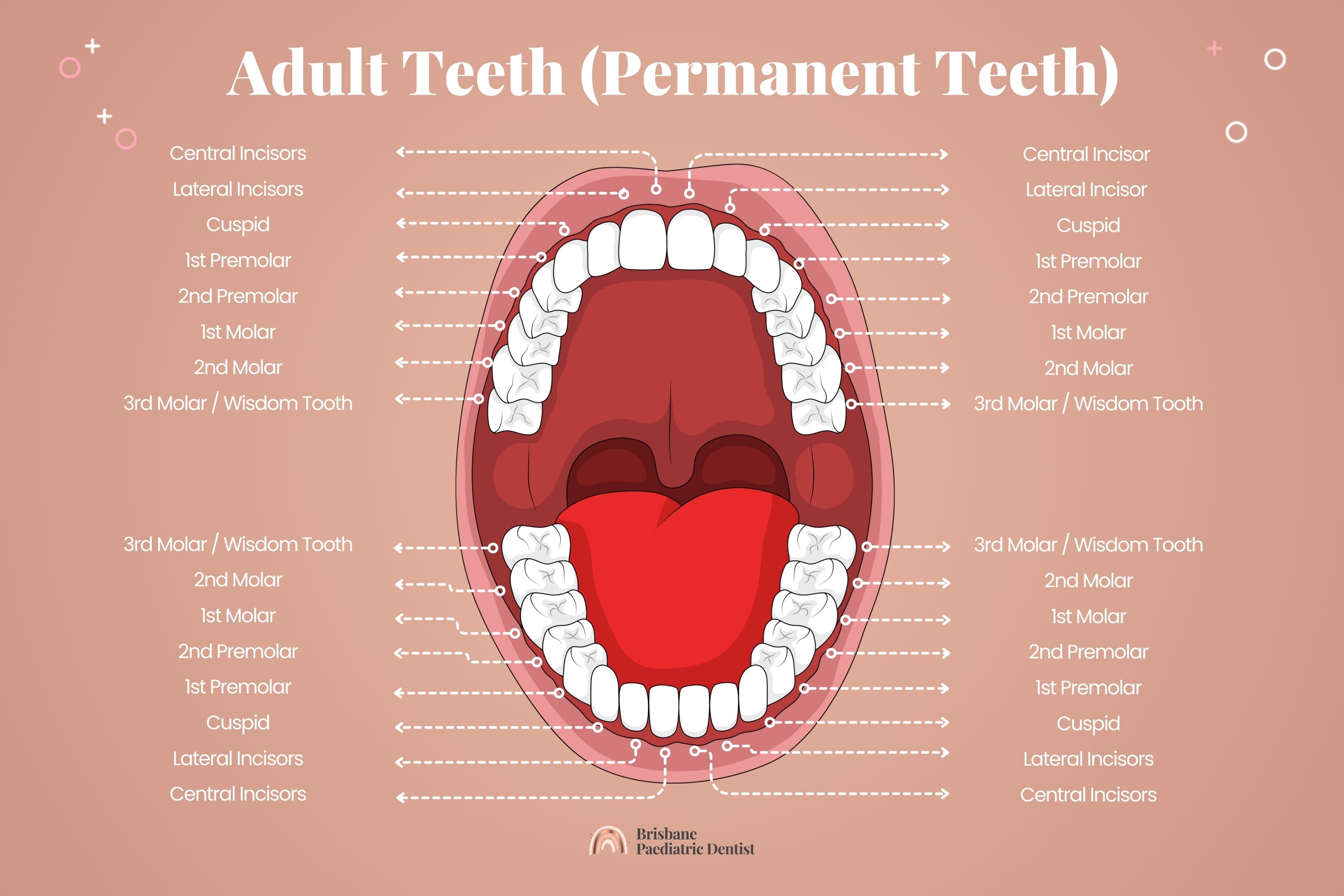
Adult teeth are referred to as permanent or secondary teeth:
- 8 incisors
- 4 canines, also known as cuspids
- 8 premolars, also called bicuspids
- 12 molars, which include 4 wisdom teeth
Children have only 20 teeth, called primary, temporary, or baby teeth. These include the same 10 teeth in the upper and lower arches:
- 4 incisors
- 2 canines
- 4 molars
Primary teeth begin erupting through the gums when an infant is around 6 months old. The lower incisors are generally the first baby teeth to appear. Most children have all 20 of their primary teeth by about age 3.
Kids commonly lose their baby teeth between ages 6 and 12. They’re subsequently replaced by permanent teeth. Molars tend to be the first permanent teeth to emerge. Most people have their full set of permanent teeth by age 21.
Keep reading to discover more about each kind of tooth, including their shapes and functions.
Diagram

What are incisors?
Your eight incisors are situated at the front of your mouth. There are four in the upper jaw and four in the lower jaw.
Incisors resemble small chisels. They have thin, sharp edges that enable you to bite into foods. Whenever you take a bite of something like an apple, your incisors are at work.
Incisors are typically the first teeth to erupt, showing up at roughly 6 months of age. The permanent set appears between ages 6 and 8.
What are canines?
Your four canine teeth are positioned beside the incisors — two on the top and two on the bottom.
Canines feature a pointed, sharp cusp used for tearing food.
The first baby canines usually erupt between about 16 and 20 months. Upper canines emerge before the lower ones.
The timing reverses for adult canines. The lower permanent canines often break through around age 9, followed by the upper canines at about 11 or 12.
What are premolars?
Your eight premolars are located adjacent to the canines. Four are in the upper jaw and four are in the lower.
Premolars are larger than canines and incisors and have flattened surfaces with cusps for crushing and grinding food into smaller pieces, making swallowing easier.
Primary molar teeth are replaced by adult premolars. Babies and very young children don’t have premolars because these teeth generally don’t appear until around age 10.
For minor cosmetic gaps between teeth, some people consider teeth fillers for gaps as a noninvasive option to improve the smile’s appearance.
What are molars?
Your 12 molars are the largest and most robust teeth. There are six on the top and six on the bottom. The main eight molars are sometimes referred to by the ages at which they typically erupt — the 6-year and 12-year molars.
The broad chewing surfaces of molars enable them to grind food finely. When you eat, your tongue moves food toward the back of your mouth, and the molars break it down into pieces small enough to swallow.
Among the molars are four wisdom teeth, the final set to appear. They generally erupt between ages 17 and 25 and are also known as third molars.
Not everyone has enough space in their mouth for wisdom teeth. At times they become impacted, meaning they remain trapped beneath the gums and lack room to grow. If space is insufficient, extraction is often necessary.
The bottom line
Your 32 teeth are crucial for biting and grinding food and for speaking clearly. Although teeth are built to be strong, they won’t endure a lifetime without proper care.
To maintain healthy teeth, floss and brush regularly, and schedule professional dental cleanings every six months.
Frequently Asked Questions
The main types are incisors (cutting), canines (tearing), premolars (crushing) and molars (grinding). Adults typically have 32 teeth including wisdom teeth.
Adults usually have 8 incisors, 4 canines, 8 premolars and 12 molars (including 4 wisdom teeth). Children have 20 primary teeth with fewer premolars.
Primary (baby) teeth often begin around 6 months and most are in by age 3. Permanent teeth erupt between about age 6 and 21, with wisdom teeth appearing last.
Wisdom teeth can become impacted or lack space to align properly, causing pain, crowding or infection. Dentists may recommend extraction to prevent problems.
Brush twice daily, floss daily, limit sugary foods and beverages, and visit a dentist regularly—typically every six months—for cleanings and checkups.
Read Next

What Should I Do About a Molar Broken Off at the Gum Line
Everything You Need to Know About Fever Blister Remedies, Causes, and More
Everything You Need to Know About Mini Dental Implants

Debunking the Myth of Tooth Worms and Other Cavity Causes
Hyperdontia: Do I Need to Have My Extra Teeth Removed?
How Long Will I Have to Sit in the Dentist Chair During a Root Canal?
Related Posts

What You Need to Know About Snap-In Dentures
Aug 12, 2026 • 3 min read
The 9 Best Mouthwashes For Whitening, Cavities, Gums, Breath, and More
Sep 16, 2026 • 25 min read
Veneers vs. Lumineers: What’s the Difference?
Sep 11, 2026 • 3 min read
What Exactly Is a Tooth Piercing?
Sep 11, 2026 • 9 min read
How to Remove Nicotine Stains from Your Teeth
Aug 14, 2026 • 14 min read