
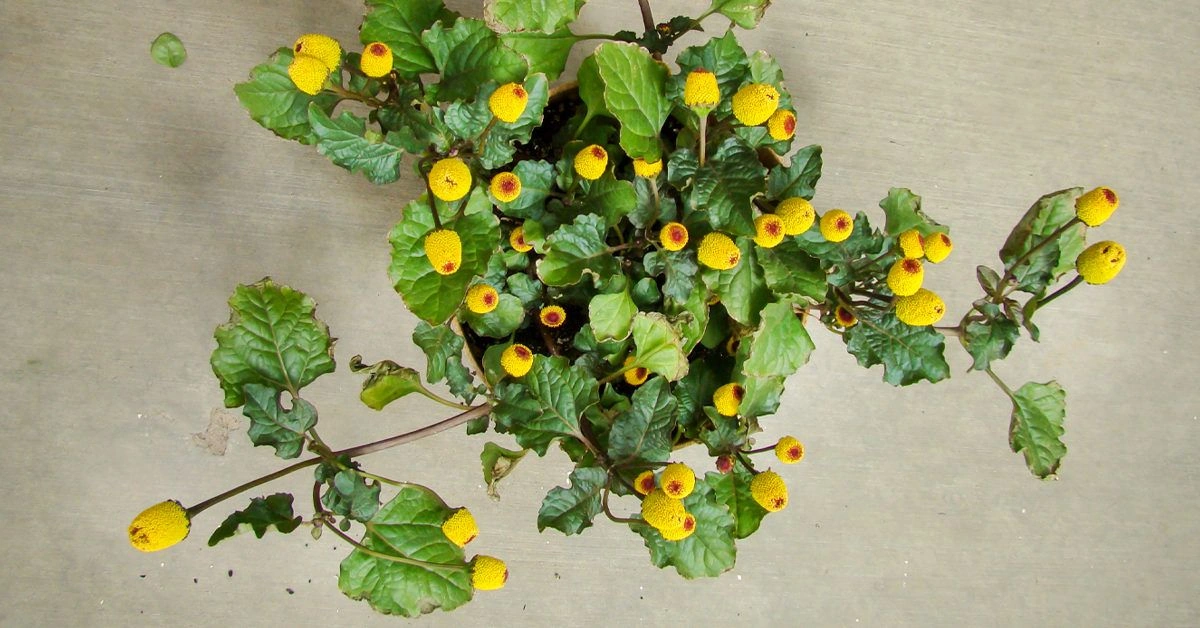
The toothache plant (Acmella oleracea) is a flowering species originating from Brazil. It goes by several names, such as:
- Spilanthes acmella
- jambu
- electric daisy
- paracress
- eyeball plant
Although related to daisies, its appearance is distinct. The plant produces round, yellow flower heads with dark red centers. These blooms — often referred to as buzz buttons or Sichuan buttons — are actually composed of many tiny florets grouped together.
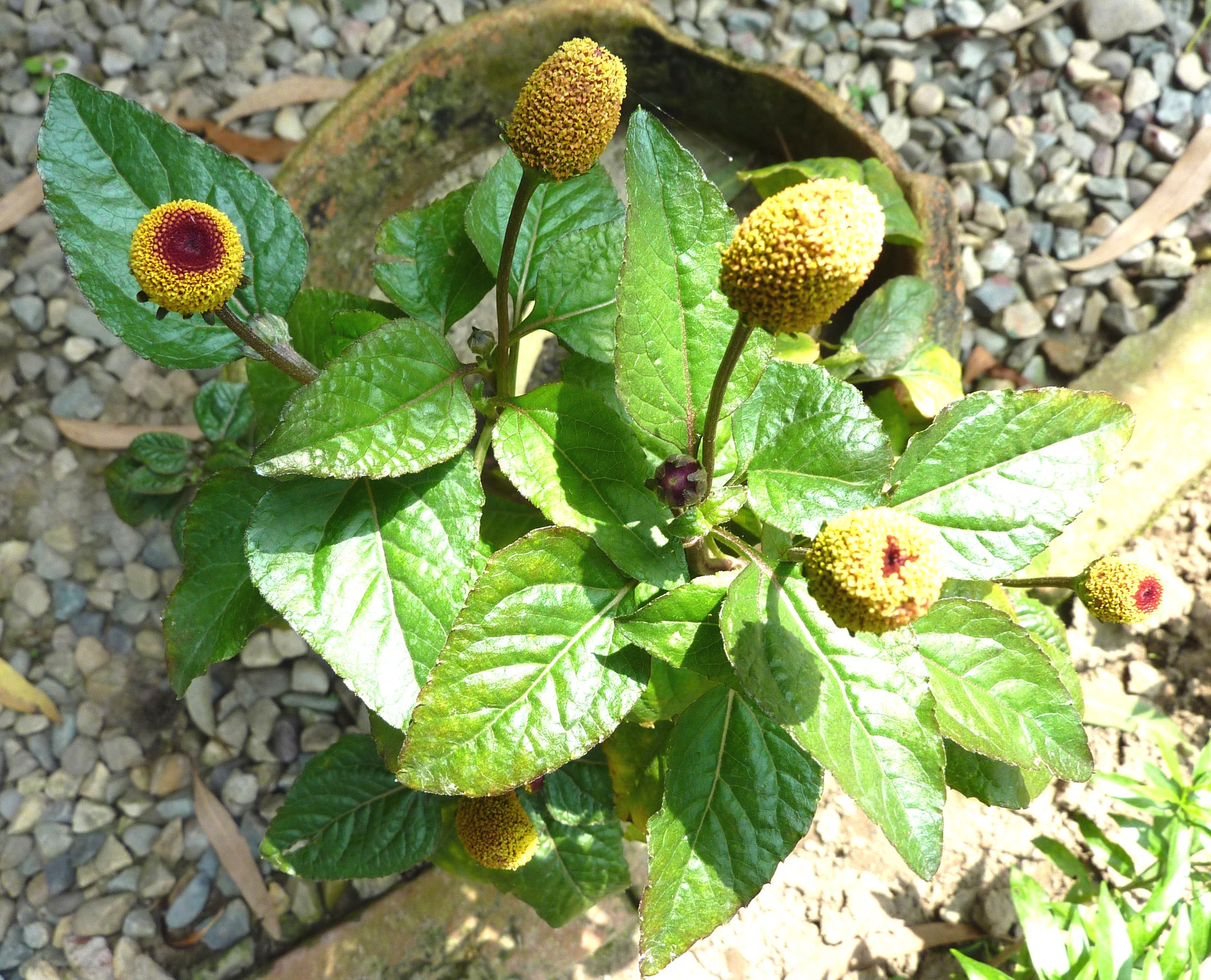
The toothache plant grows in tropical and subtropical zones, including northern Australia, parts of Africa, Sri Lanka, and regions of southern and central India.
Traditionally, people have used this plant for medicinal purposes. Some of these traditional uses are supported by scientific research. While it’s famous for easing tooth pain, it’s also applied for inflammation and digestive issues.
In various cultures, the toothache plant is used as an ingredient in food. Its intense, slightly bitter taste lends a distinctive flavor to recipes.
Keep reading to explore more about the toothache plant, possible adverse effects, and tips for growing it.
Evidence-backed benefits of Acmella oleracea
There is scientific research indicating that the toothache plant provides certain health benefits.
Tooth pain
True to its common name, the toothache plant is traditionally used to relieve dental pain.
When chewed, it produces a tingling, numbing sensation in the mouth. This local anesthetic action is attributed to spilanthol, the plant’s principal active compound, according to a 2020 review.
The plant also contains flavonoids, which help reduce prostaglandin production and can alter pain perception.
Stomatitis
The toothache plant is used to address stomatitis, an inflammation of the mouth that can make eating and drinking painful.
Spilanthol’s pain-relieving properties may provide symptomatic relief. Additionally, the phytochemicals in Acmella oleracea, including spilanthol, demonstrate anti-inflammatory actions that could benefit stomatitis, as noted in a 2024 review.
Dermatitis
Because of its anti-inflammatory qualities, the toothache plant might help reduce dermatitis-related inflammation and swelling.
A 2019 animal study investigated this effect and found that spilanthol can inhibit the migration of inflammatory cells, producing an anti-inflammatory outcome that lessens swelling associated with dermatitis.
Diuretic action
The tropical herb also functions as a natural diuretic, promoting increased urine production to help the body eliminate excess fluid.
A 2016 animal study in mice showed that spilanthol enhances urine output. The investigators suggested that spilanthol influences kidney cellular processes involved in urine formation and water reabsorption.
Dry mouth
When salivary glands produce insufficient saliva, a condition called dry mouth can result, causing bad breath and chapped lips.
The strong, bitter sensation of the toothache plant can stimulate salivation. That bitterness is largely due to spilanthol, which activates the salivary glands.
In Sri Lanka, extracts of the flower are used to address dry mouth. A small 2017 study found that toothpicks infused with spilanthol increased saliva production in individuals with dry mouth.
Gastric ulcers
A 2021 animal study suggests the toothache plant may aid in healing gastric ulcers. The plant contains a complex carbohydrate (polysaccharide) called rhamnogalacturonan (RGal).
Researchers observed that RGal encourages cell proliferation and reduces inflammation, which can support repair of gastric ulceration.
Possible adverse effects
When used as a flavoring or culinary ingredient, the toothache plant and its active compounds are generally regarded as safe.
However, complications may arise in certain situations; exercise caution if any of the following apply to you, per clinical guidance:
- Allergy to the daisy family: If you are sensitive or allergic to members of the daisy (Asteraceae) family, avoid use or proceed cautiously.
- Concurrent use of diuretics: Since spilanthol has diuretic effects, it may interact with prescription diuretic medications.
- Prostate cancer: The plant might stimulate male hormone production, potentially interfering with prostate cancer treatments. The risk may rise with high consumption.
- Pregnancy: Large amounts could be teratogenic. Pregnant individuals should not use it.
Always consult a healthcare provider before trying the plant or its extracts.
Where to buy plants, seeds, or toothache plant products
Availability of the toothache plant varies by region. Nurseries or online sellers specializing in tropical plants are often the best sources.
If you prefer preparations made from the plant, look for them at:
- health food stores
- apothecaries
- herbal shops
- vitamin and supplement retailers
Products containing the toothache plant are commonly labeled under “Spilanthes.”
Growing Acmella oleracea at home
If you want to cultivate the toothache plant, follow these steps:
- Choose good-quality, well-draining potting soil.
- Start seeds indoors 4–6 weeks before the last expected frost. Press seeds onto the soil surface without covering them, then water gently.
- Maintain consistent moisture until seeds sprout.
- After the last frost, transplant seedlings into 12-inch pots or into garden beds, spacing plants at least 12 inches apart.
- Water every few days, taking care not to overwater.
Plants typically flower between August and October.
Bottom line
Recognizable by its spherical yellow blooms, the toothache plant possesses anesthetic and anti-inflammatory properties and is used as an herb or culinary ingredient in some regions.
Exercise caution if you take diuretic medications, are pregnant, or have allergies to the daisy family; similar caution applies for those with prostate cancer.
The plant can be grown in pots or garden beds and flourishes during warm months, adding a distinctive and colorful element to home gardens.























Leave a Reply
You must be logged in to post a comment.