

Your big toe plays a key role in helping you walk and maintain your balance, yet it’s not something most people think about often.
The instant your big toe develops any unusual tenderness or sensitivity, however, it’s on your mind with every step.
What’s making my big toe swollen?
There are several potential reasons your big toe may be swollen. These include:
- an ingrown toenail
- a fracture
- a bunion
- gout
- hallux rigidus
Symptoms and treatments by condition
Ingrown toenail
How does an ingrown toenail happen?
Many ingrown toenails result from incorrect trimming techniques — cutting nails too short or rounding the corners to match the toe’s curve.
Wearing tight-fitting shoes can also contribute to an ingrown toenail.
How can I tell if my big toenail is ingrown?
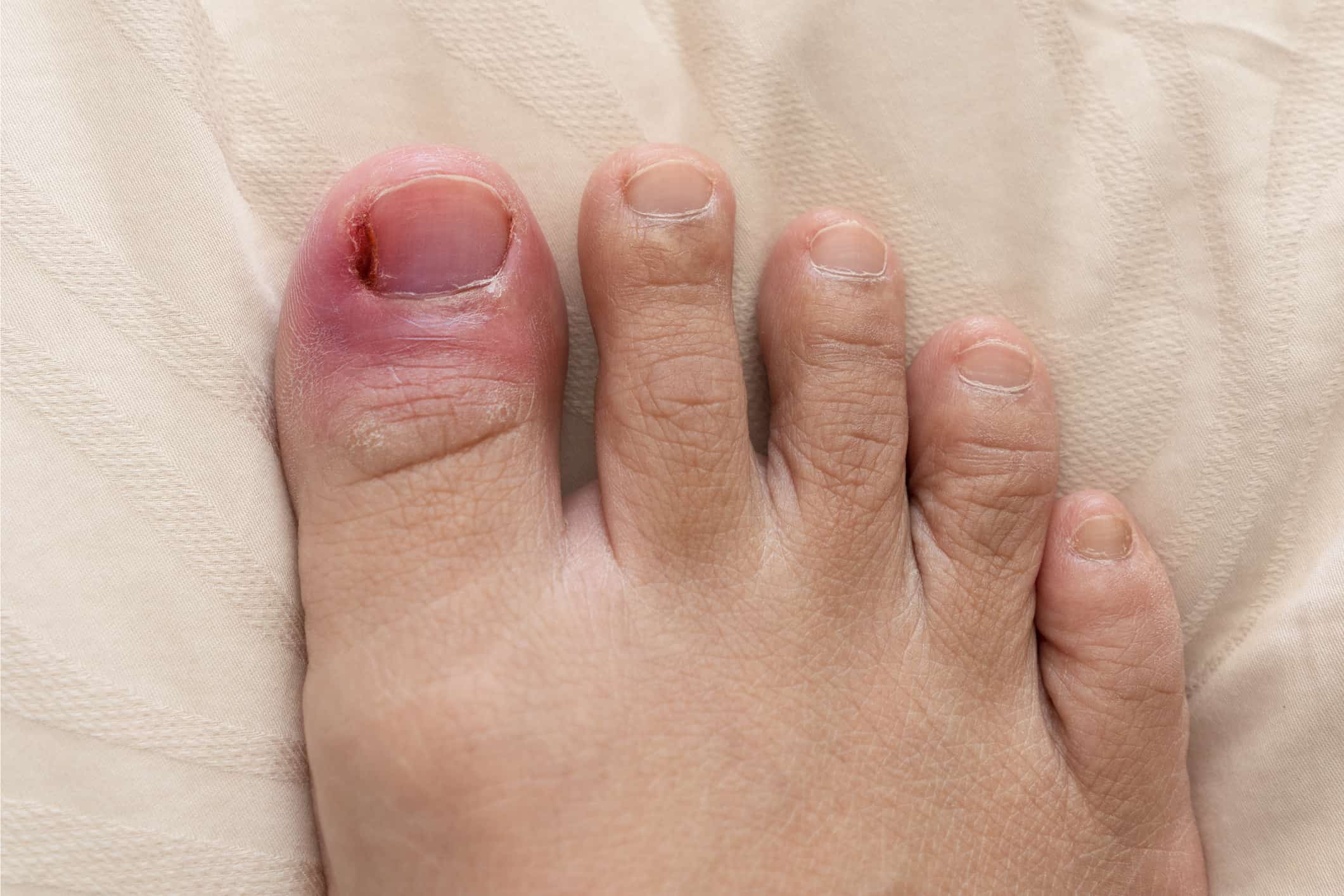
Early on, an ingrown nail can make the toe feel firm, swollen, and tender.
As it worsens, the area may become red, infected, increasingly painful, and possibly drain pus. Eventually the skin beside the nail can start to grow over the nail edge.
How is an ingrown toenail treated?
Initial care involves soaking the foot in warm, soapy water at least three times daily.
After the final soak of the day, gently lift the ingrown edge and place a small piece of cotton between the skin and the nail. Replace this cotton packing each day.
If an infection develops, your clinician may prescribe antibiotics.
If pain is severe or the infection won’t resolve, a partial nail plate avulsion — removing part of the nail — may be recommended.
For recurrent issues, a full nail plate avulsion or a minor surgical procedure to remove the nail-forming tissue permanently may be advised.
During recovery, wear clean socks and consider open-toed footwear like sandals.
Broken or fractured toe
How does the big toe get broken?
Stubbing your toe or dropping a heavy object on it are common ways to break the big toe.
How can I recognize a broken big toe?
Typical signs of a broken toe include:
- pain
- swelling
- discoloration
How do you treat a broken big toe?
Some fractures can be stabilized by taping the injured toe to the adjacent toe (buddy taping), though a cast may be necessary. In certain situations surgery is needed to align the bones for proper healing.
Most toes heal in four to six weeks. See a healthcare provider to ensure correct recovery.
Bunion
Also called hallux valgus, bunions are a progressive change in the bony alignment of your foot.
They begin with the big toe angling toward the second toe; over time the bones shift and create an expanding bump. This misalignment forms the classic bunion prominence.
What causes a bunion?
Most bunions stem from an inherited foot structure that predisposes to the condition.
Wearing shoes that squeeze the toes or spending long periods standing won’t cause a bunion by itself, but can worsen an existing deformity.
How can I tell if I have a bunion?
Besides swelling at the big toe’s first joint, you may notice:
- soreness or pain
- redness or inflammation
- a burning sensation
- numbness
What are the treatments for a bunion?
Initial care generally includes:
- wearing properly fitting shoes
- using orthotic inserts
- placing padding over the area
- avoiding activities that provoke pain, like long periods of standing
- taking over-the-counter pain relievers such as acetaminophen (Tylenol) or ibuprofen (Advil, Motrin)
If pain remains problematic, your doctor may discuss surgical correction as the next step.
Gout
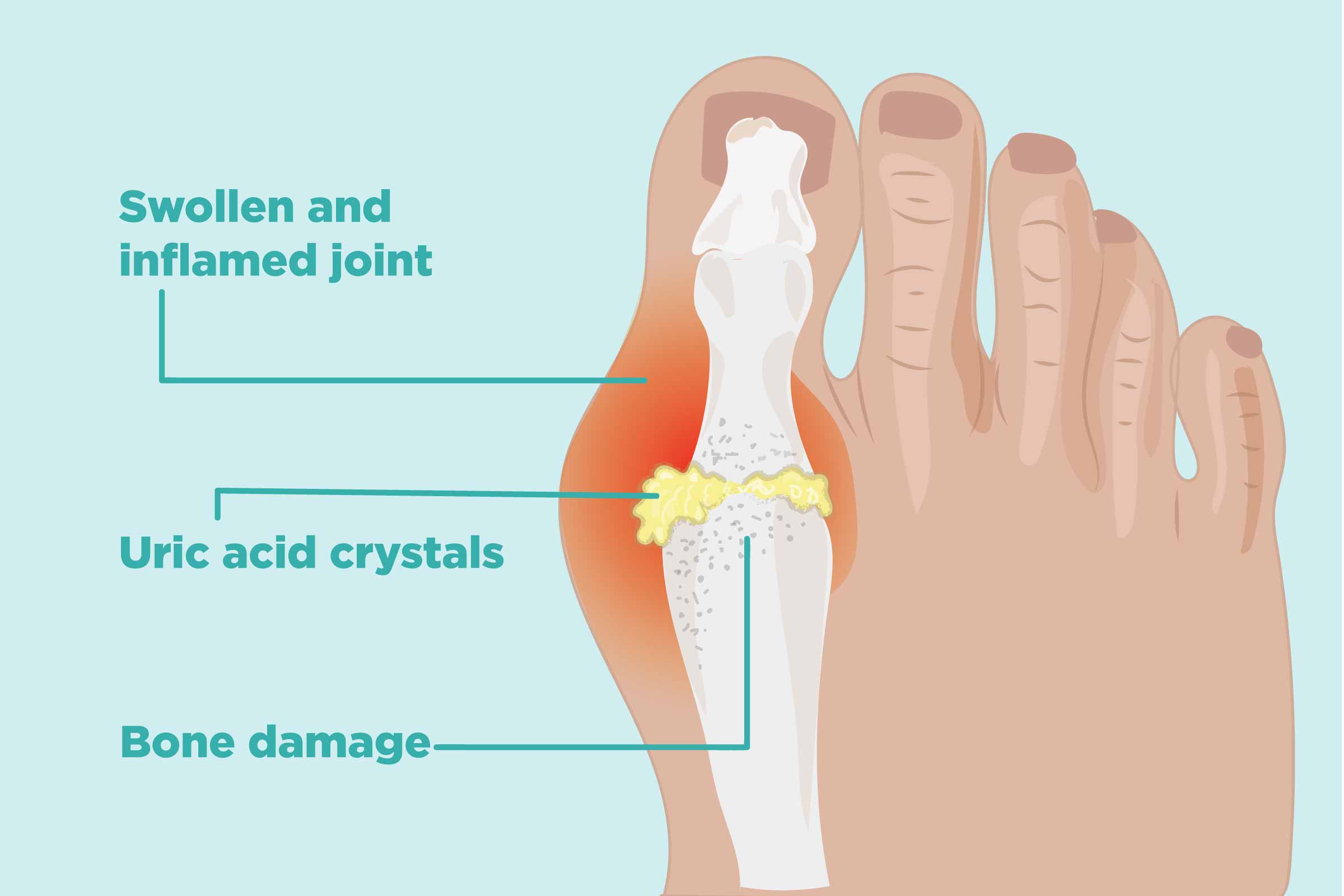
Gout is a painful type of arthritis that frequently affects the big toe.
What leads to gout?
Gout occurs when uric acid accumulates in the body.
How can I tell if I have gout?
The initial sign is often sudden, severe pain. Other accompanying symptoms may include:
- swelling
- redness
- warmth to the touch
How is gout treated?
To control pain, doctors often recommend nonsteroidal anti-inflammatory drugs (NSAIDs) like ibuprofen, corticosteroids, or colchicine.
Lifestyle and dietary adjustments are frequently suggested, such as:
- losing weight
- reducing alcohol intake
- eating less red meat
For chronic gout, medications that lower serum uric acid may be prescribed, including:
- allopurinol
- febuxostat
- pegloticase
Hallux rigidus
Hallux rigidus is a degenerative arthritis that produces pain and stiffness at the base joint of the big toe.
What causes hallux rigidus?
Typical contributors include:
- structural foot issues such as flat feet or excessive ankle pronation
- overuse from activities that place extra stress on the big toe
- inflammatory conditions like gout or rheumatoid arthritis
How can I tell if I have hallux rigidus?
Primary symptoms are swelling and inflammation, with pain and stiffness in the big toe that become more noticeable while walking or standing.
Symptoms may worsen in cold or damp weather.
As the condition advances, you might experience:
- toe pain even at rest
- formation of bone spurs
- hip, knee, or back pain from gait changes as you favor the affected toe
- increasing difficulty bending the toe
How is hallux rigidus treated?
Early treatment can often delay or prevent the need for surgery.
Management of mild to moderate hallux rigidus may include:
- properly fitting footwear
- custom or over-the-counter orthotics
- OTC pain relievers like acetaminophen or ibuprofen
- corticosteroid injections
- surgical options when conservative care fails
Takeaway
Your big toe may swell for a variety of reasons.
If your pain is severe or you notice other concerning symptoms, make an appointment with your healthcare provider for an evaluation.
If you’re worried about your big toe and don’t yet have a primary care clinician, you can search for doctors in your area using the Healthline FindCare tool. You might also find related information on hairy toes, swollen jaw, and when your big toe is numb on one side.






















Leave a Reply
You must be logged in to post a comment.