
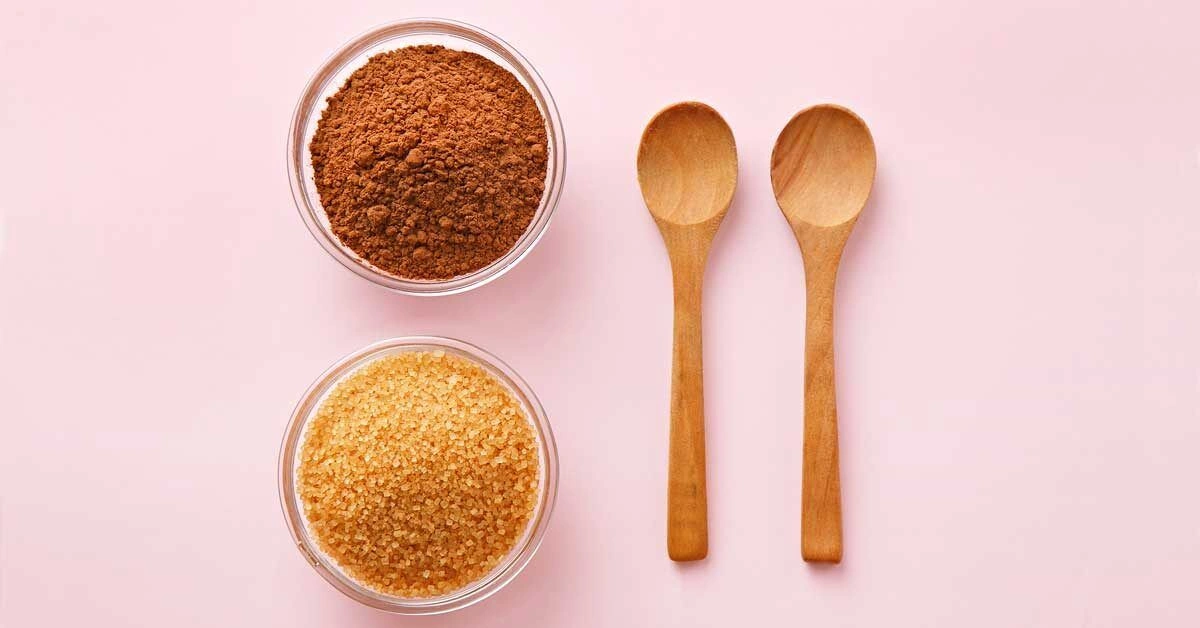
There are several alternatives you can use instead of brown sugar, such as coconut sugar, plain white granulated sugar, and less-refined options like demerara or turbinado.
You’ve probably experienced the annoyance of getting partway through making perfect chocolate chip cookies only to discover you’ve run out of brown sugar.
Fortunately, there are practical swaps you can make in a pinch — many of which you likely already have in your pantry.

1. White sugar plus molasses
Mixing white sugar with molasses is the most authentic substitute for brown sugar, since brown sugar itself is simply white sugar with molasses added.
To create light brown sugar, stir together 1 cup (200 grams) of granulated white sugar with 1 tablespoon (15 milliliters) of molasses. For dark brown sugar, increase the molasses to 2 tablespoons (30 milliliters).
And just like that, you’ve recreated brown sugar.
2. White sugar plus maple syrup
Brown sugar is traditionally made from white sugar and molasses.
If you don’t have molasses available, pure maple syrup can be swapped in with very little change to the finished dish.
Combine 1 cup (200 g) of white granulated sugar with 1 tablespoon (15 mL) of pure maple syrup to make a brown sugar replacement that can pass for the original in most recipes.
3. Coconut sugar
Coconut sugar comes from the sap of coconut palms.
Coconut sap may be considered a healthier sugar choice, although its nutritional profile is quite similar to brown sugar.
You can substitute coconut sugar for brown sugar on a 1:1 basis.
Although coconut sugar resembles brown sugar in flavor and appearance, it doesn’t retain as much moisture. That difference can change the texture of baked goods, potentially making them slightly drier or denser.
To boost moisture, consider adding a bit more fat, such as butter or oil, to your recipe. Melting the coconut sugar on the stove briefly before incorporating it can also help.

4. Honey, maple syrup, or agave nectar
With a few straightforward tweaks, liquid sweeteners like honey, maple syrup, or agave nectar can be good alternatives to brown sugar.
Because these are liquids, account for the additional moisture and how it might affect the final product, particularly in baking.
Substitution guidelines vary by recipe, but these general rules are helpful:
- Swap each cup of brown sugar (200 g) for about 2/3 cup (160 mL) of your chosen liquid sweetener.
- For every 2/3 cup (160 mL) of liquid sweetener used, reduce other liquids in the recipe by roughly 1/4 cup (60 mL).
You might also want to shave a few minutes off the cooking time, since liquid sweeteners can brown and caramelize faster than brown sugar.
5. Raw sugars
Less-refined sugars such as turbinado or demerara are excellent brown sugar stand-ins because their pale amber hues and mild caramel notes mirror those of brown sugar.
In most preparations, you can replace brown sugar with raw sugar at a 1:1 ratio without a noticeable difference.
Keep in mind raw sugar is much drier and coarser than brown sugar, which can affect the texture of the finished dish.
Coarse raw sugar crystals don’t always blend as smoothly into batters or doughs, sometimes leaving a slightly gritty texture, especially in low-moisture or delicate baked goods.
If needed, grind the raw sugar in a spice grinder or mortar and pestle to achieve a finer consistency that will incorporate more readily.
Another option is to dissolve the crystals partially in a small amount of warm liquid — such as melted butter, oil, or water — before folding them into your mixture.
6. Muscovado sugar
Muscovado is a minimally processed sugar that works well as a brown sugar replacement because it also contains molasses.
However, muscovado has a higher molasses and moisture content than standard brown sugar, making it stickier and more prone to clumping.
You can generally substitute muscovado for brown sugar in equal amounts, but when baking you may want to sift it first to remove lumps before adding it to dough or batter.
Using an electric mixer and adding muscovado gradually can also help it blend more evenly into the mixture.
7. Plain white sugar
When you have no other choice, granulated white sugar can replace brown sugar in equal measure without ruining your recipe.
White sugar lacks the deep, caramel-like notes that brown sugar imparts, but depending on the dish, the flavor difference may be minimal.
The more noticeable change is often textural: brown sugar gives baked goods a denser chewiness, especially in cookies. Substituting white sugar may produce a crisper end result — which isn’t necessarily undesirable.
The bottom line
Running out of an ingredient mid-recipe can be stressful, but with brown sugar there’s no need to panic.
Brown sugar can be swapped with common pantry items like white sugar, molasses, maple syrup, and coconut sugar.
Some substitutions require small recipe adjustments, but after that you should be good to go.
For more on sweetener choices and how they compare, see brown sugar vs white sugar.
















Leave a Reply
You must be logged in to post a comment.