
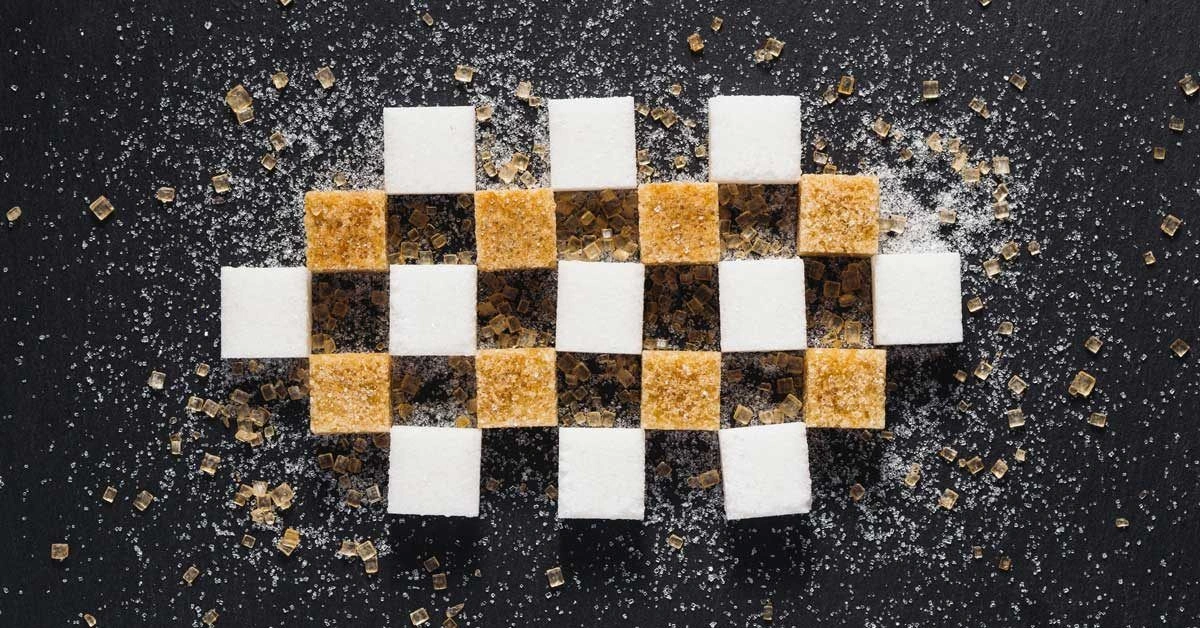
Brown sugar is essentially granulated sugar combined with molasses, which gives it a darker hue. It differs from standard white sugar in taste, baking applications, manufacturing, and marginally in nutrient composition.
Sugar has been a natural part of human diets for millennia.
Although there are numerous varieties, brown and white sugar remain among the most commonly used types.
This piece examines the differences between brown and white sugar to help you choose which suits your needs.

Nutritional differences
Because both white and brown sugar are derived from the same source — either sugarcane or sugar beet — their nutritional profiles are very similar (1).
Most brown sugar is produced by combining white sugar with molasses, a syrup obtained during sugar processing. That molasses imparts the darker color and slightly elevates its nutritional value.
The clearest nutritional distinction is that brown sugar contains marginally higher amounts of calcium, iron, and potassium.
However, the quantities of these minerals in brown sugar are trivial, so it isn’t a meaningful source of vitamins or minerals (2, 3).
Brown sugar also has slightly fewer calories per teaspoon than white sugar, though the gap is negligible. One teaspoon (4 grams) of brown sugar has about 15 calories, while the same amount of white sugar contains roughly 16.3 calories (2, 3).
Aside from these slight distinctions, they are largely alike nutritionally. Their primary differences lie in flavor and appearance.
Summary: Brown sugar has a bit more minerals and marginally fewer calories compared with white sugar. Still, the nutritional gaps between them are negligible.
How they’re made
Sugar crops are cultivated in warm climates where sugarcane or sugar beet thrives.
Both plants go through comparable initial processing to yield sugar, but the techniques to produce brown versus white sugar vary.
First, the sugary sap from either crop is extracted, cleaned, and heated into a concentrated brown syrup called molasses (4, 5, 6).
Then the sugar is crystallized and spun in a centrifuge to separate the crystals from the molasses; a centrifuge spins rapidly to separate solids and liquids (7).
To make white sugar, the crystals are further refined to remove remaining molasses and reduced to finer crystals. Often, filtration systems that may use bone char are employed to obtain the white appearance (4, 5, 6).
Refined brown sugar is essentially white sugar with molasses added back in, whereas less-processed, whole brown sugar retains some molasses naturally from earlier stages, preserving its brown tone (7).
Summary: White sugar is extensively purified to eliminate a brown syrup known as molasses. Brown sugar either results from reduced refining that keeps molasses, or by blending molasses into refined white sugar.
Culinary applications
Both white and brown sugar have roles in the kitchen, especially in baking.
While they can sometimes substitute for each other, swapping them can alter the color, flavor, or texture of the finished dish.
The molasses in brown sugar helps retain moisture, so recipes using it typically yield baked goods that are moister and denser.
For instance, cookies made with brown sugar stay chewier and more compact, whereas those made with white sugar tend to rise more and have a lighter, airier crumb.
Consequently, white sugar is preferred for items that require significant lift, like meringues, mousses, soufflés, and other fluffy bakes. Brown sugar is better suited to denser treats such as zucchini bread and hearty cookies.
Brown sugar is also often chosen for rich glazes and sauces, including barbecue sauces, thanks to its deeper flavor.
Different tastes and colors
The biggest distinctions between white and brown sugar are taste and color.
Replacing white sugar with brown sugar will deepen the hue of your dish, imparting a light caramel or amber tone.
Conversely, using white sugar results in a paler outcome. Your choice should depend on the visual and flavor result you’re aiming for.
Flavorwise, brown sugar carries a richer, caramel- or toffee-like note due to molasses, making it excellent in chocolate desserts, cookies, and dense fruit cakes.
White sugar, being more neutral and perceived as sweeter, often requires smaller quantities to reach the same sweetness. Its clean flavor makes it adaptable in fruit-based sponges and delicate pastries. For guidance on alternatives you might want to try in recipes, see brown sugar substitutes.
Summary: White and brown sugar serve similar culinary roles, but molasses in brown sugar changes both flavor and color of foods.
Which one should you pick?
The decision between white and brown sugar mainly comes down to preference, since taste and color are their primary differences.
Although brown sugar has a touch more minerals than white sugar, the amounts are so small they offer no meaningful health advantage.
Importantly, excessive sugar consumption is linked to obesity and major illnesses like type 2 diabetes and cardiovascular disease (8, 9, 10).
Because of this, health organizations advise limiting added sugars to no more than 5–10% of daily calories, and many experts suggest aiming even lower for better health (11, 12).
Enjoying sweets occasionally is fine, but all types of sugar should be moderated within a balanced diet.
When deciding between brown or white sugar, let taste and the intended outcome guide you — both have similar effects on health.
Summary: Choosing white versus brown sugar is largely a matter of preference. They are comparable nutritionally and exert similar health impacts. Remember to limit overall sugar intake, since overconsumption can be harmful.
The bottom line
Brown and white sugar are the most widely used forms of granulated sugar.
Although their production differs and they offer distinct flavors, colors, and baking properties, brown sugar is frequently just refined white sugar with molasses reintroduced.
Contrary to what some believe, their nutritional profiles are similar.
Brown sugar has slightly higher mineral levels than white sugar, but not enough to deliver health benefits.
Overall, consumption of any type of sugar should be kept in check for the sake of good health.























Leave a Reply
You must be logged in to post a comment.