
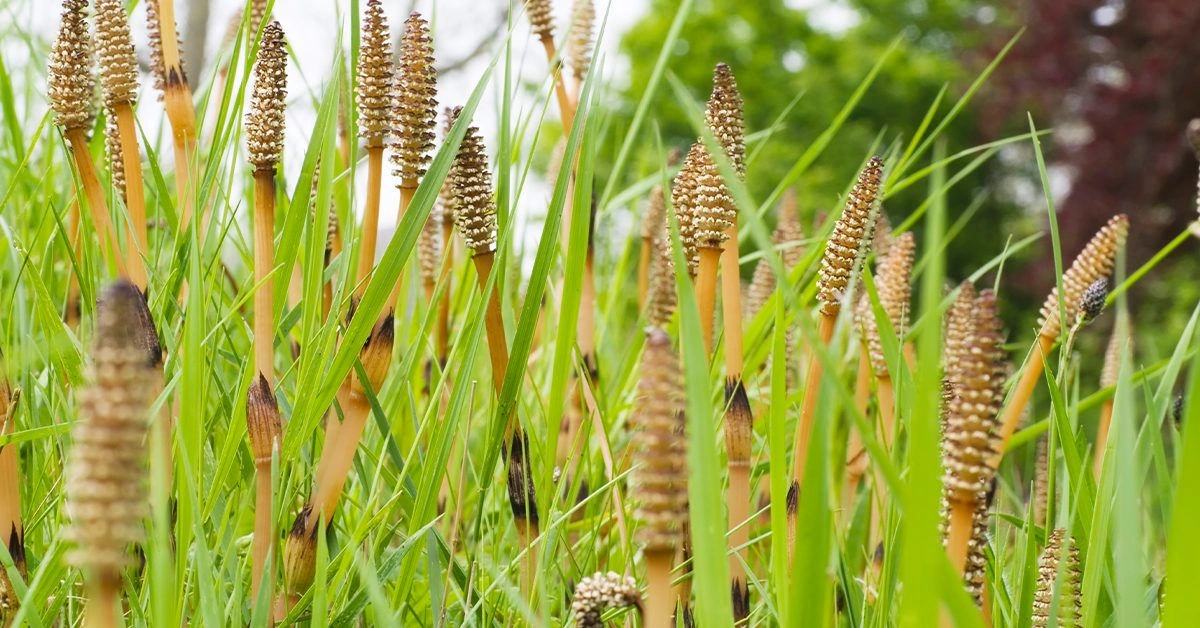
Horsetail is a traditional herbal remedy touted for various health-supporting properties. Possible claims include supporting the health of hair, skin, and nails, though robust scientific backing is limited.
Field horsetail has enjoyed use as a medicinal plant since ancient Greek and Roman times (1, 2).
Historically, it has been applied for treating wounds, supporting skin, hair, and bone integrity, and addressing a range of other ailments (1, 3).
Nonetheless, human research is insufficient to confirm many of horsetail’s traditional claims.
This article reviews horsetail, its suggested benefits, common uses, and potential risks.
What is horsetail?
Common or field horsetail (Equisetum arvense) is a perennial fern belonging to the family Equisetaceae (3, 4).
It grows wild across northern Europe and parts of North and Central America, favoring moist, temperate environments. The plant produces long, green, densely branched stems from spring through autumn (1, 4).
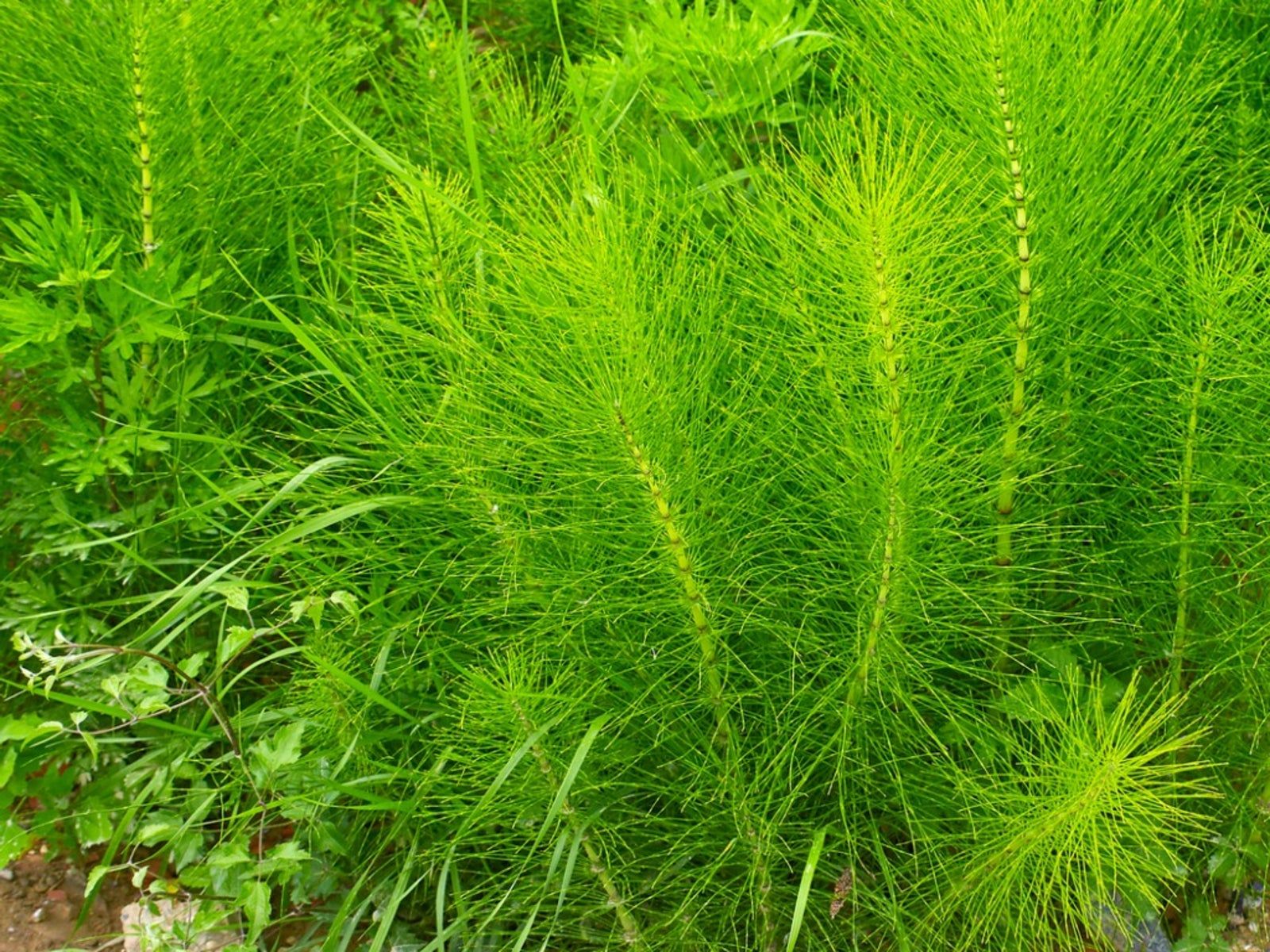
Horsetail contains several bioactive components thought to confer health effects, with antioxidants and silica being particularly notable (1, 4).
Antioxidants help shield cells from damage caused by free radicals, while silica — a compound of silicon and oxygen — is proposed to underlie many of horsetail’s skin, nail, hair, and bone benefits (3, 4).
Horsetail is commonly consumed as a tea made from the dried herb, though it’s also sold as capsules and tinctures.
Summary: Horsetail is a fern rich in compounds like antioxidants and silica. It’s commonly found as a tea, tincture, or capsule.
Horsetail’s potential benefits
Used for millennia in folk medicine, horsetail shows some preliminary scientific support for certain effects, though evidence is limited.
May support bone health
Some research indicates horsetail could help with bone repair.
Bone is constantly remodeled by osteoblasts (which build bone) and osteoclasts (which resorb bone). Maintaining a balance between these cells prevents bone fragility.
In vitro studies suggest horsetail may suppress osteoclast activity while promoting osteoblast function, indicating possible usefulness in conditions like osteoporosis, where excessive osteoclast activity weakens bones (1, 5).
In an animal study, rats given a daily horsetail extract dose of 55 mg per pound (120 mg per kg) experienced notable increases in bone density versus controls (6).
Scientists attribute these bone effects largely to horsetail’s high silica content; up to roughly 25% of its dry matter can be silica, a concentration uncommon among plants (1, 5).
Silica, present in bone tissue, may enhance collagen formation and improve calcium absorption and utilization, contributing to better bone and cartilage quality (6, 7).
Has diuretic properties
Diuretics increase urine production, and horsetail’s diuretic action is one of its prominent traditional uses (1, 2).
Historically, it has been applied for treating wounds, supporting skin, hair, and bone integrity, and addressing a range of other ailments (1, 3).
Nonetheless, human research is insufficient to confirm many of horsetail’s traditional claims.
This article reviews horsetail, its suggested benefits, common uses, and potential risks.
What is horsetail?
Common or field horsetail (Equisetum arvense) is a perennial fern belonging to the family Equisetaceae (3, 4).
It grows wild across northern Europe and parts of North and Central America, favoring moist, temperate environments. The plant produces long, green, densely branched stems from spring through autumn (1, 4).
Horsetail contains several bioactive components thought to confer health effects, with antioxidants and silica being particularly notable (1, 4).
Antioxidants help shield cells from damage caused by free radicals, while silica — a compound of silicon and oxygen — is proposed to underlie many of horsetail’s skin, nail, hair, and bone benefits (3, 4).
Horsetail is commonly consumed as a tea made from the dried herb, though it’s also sold as capsules and tinctures.
Summary: Horsetail is a fern rich in compounds like antioxidants and silica. It’s commonly found as a tea, tincture, or capsule.
Horsetail’s potential benefits
Used for millennia in folk medicine, horsetail shows some preliminary scientific support for certain effects, though evidence is limited.
May support bone health
Some research indicates horsetail could help with bone repair.
Bone is constantly remodeled by osteoblasts (which build bone) and osteoclasts (which resorb bone). Maintaining a balance between these cells prevents bone fragility.
In vitro studies suggest horsetail may suppress osteoclast activity while promoting osteoblast function, indicating possible usefulness in conditions like osteoporosis, where excessive osteoclast activity weakens bones (1, 5).
In an animal study, rats given a daily horsetail extract dose of 55 mg per pound (120 mg per kg) experienced notable increases in bone density versus controls (6).
Scientists attribute these bone effects largely to horsetail’s high silica content; up to roughly 25% of its dry matter can be silica, a concentration uncommon among plants (1, 5).
Silica, present in bone tissue, may enhance collagen formation and improve calcium absorption and utilization, contributing to better bone and cartilage quality (6, 7).
Has diuretic properties
Diuretics increase urine production, and horsetail’s diuretic action is one of its prominent traditional uses (8, 9).
A small trial with 36 healthy men reported that 900 mg of dried horsetail extract daily (capsule form) had a stronger diuretic effect than a standard diuretic drug, a result attributed to the herb’s antioxidant and mineral content (9).
Horsetail has also shown promise for treating urinary symptoms such as incontinence, urgency, and nocturia (waking at night to urinate) (10).
A 2021 review suggested horsetail might be useful for certain kidney issues, including urethritis and kidney stones (8).
Despite encouraging findings, human data remain limited.
May aid wound repair and strengthen nails
Topical horsetail preparations seem to support wound healing.
In a 10-day study of 108 postpartum women who had episiotomies, applying an ointment with 3% horsetail extract improved healing and reduced pain (11).
Compared with controls, wound redness, swelling, and discharge were significantly reduced, effects researchers linked to the herb’s silica content.
Older rodent studies found that ointments containing 5% or 10% horsetail extract achieved wound closure rates of 95–99% and enhanced skin regeneration relative to controls (12, 13).
Horsetail extracts have also been included in topical nail treatments for nail psoriasis. One trial reported that a lacquer combining horsetail extract with other nail-strengthening agents reduced nail psoriasis symptoms (14, 15).
Still, more focused research is needed to confirm horsetail’s direct effects on wound healing and nail health.
May encourage hair growth
Evidence suggests horsetail could benefit hair, probably due to its silicon and antioxidant content.
Antioxidants can limit micro-inflammation and oxidative aging of hair fibers, while higher silicon levels in hair are linked to reduced hair shedding and better shine (16, 17, 18).
For instance, a 3-month trial of women concerned about hair thinning found that participants taking two daily capsules containing dried horsetail combined with other ingredients experienced improved hair growth and strength compared with a control group (19).
Similar benefits appeared in studies of formulations containing horsetail-derived silica alongside other agents (20, 21).
Because many trials examine multi-ingredient products, evidence isolating horsetail’s sole effect on hair is still sparse.
Other possible effects
Horsetail may offer additional actions, such as:
- Anti-inflammatory effects. In vitro work indicates horsetail extracts can inhibit lymphocytes, immune cells that play major roles in inflammatory disorders (4, 22, 23).
- Antimicrobial action. Horsetail essential oil shows activity against bacteria and fungi, including Staphylococcus aureus, Escherichia coli, Aspergillus niger, and Candida albicans (4, 24).
- Antioxidant capacity. Horsetail is rich in phenolic compounds, potent antioxidants that help protect cell membranes from oxidative damage (4, 25, 26).
- Antidiabetic potential. Animal and in vitro studies suggest horsetail extracts might lower blood glucose and help repair pancreatic tissue (27, 28).
Summary: Horsetail may offer several benefits, including support for bone, skin, hair, and nail health.
Uses and dosage
Most horsetail products are marketed for skin, hair, and nail support, though some claim benefits for urinary and kidney concerns (3).
Regarding dosing, one human trial found 900 mg daily of dried horsetail extract (capsules) — the upper recommended daily amount for dry extracts per the European Medicines Agency — produced a diuretic response when taken for 4 days (9).
Overall, an evidence-based standard dose has not yet been firmly established.
Summary: Horsetail is commonly used for cosmetic and urinary concerns. A 900 mg daily dose for 4 days may act as a diuretic, but definitive dosing guidance is lacking.
Side effects and precautions
As with many herbal products, horsetail is not FDA-approved. It should be avoided by pregnant and breastfeeding individuals.
Animal data suggest low toxicity in rats, but human safety studies remain limited (29).
Horsetail can interact with certain medications, including antiretroviral drugs used to treat HIV (30).
Those with kidney disease should avoid horsetail, as it may raise potassium to unsafe levels; people with renal impairment are generally advised to steer clear of herbal supplements (31).
Horsetail contains traces of nicotine, so it should be avoided by anyone allergic to nicotine or those attempting to quit smoking (32).
There is also a reported case of a 56-year-old woman who developed pancreatitis after consuming horsetail tea; her symptoms resolved when she stopped (33).
Furthermore, horsetail exhibits thiaminase activity — an enzyme that breaks down thiamine (vitamin B1). Long-term use, or use by people with low B1 status (for example, those with alcohol use disorder), could contribute to vitamin B1 deficiency (34).
Summary: Because horsetail is an herbal product, it lacks FDA approval. It should be avoided by pregnant or breastfeeding persons, people with low vitamin B1, those with kidney disease, and individuals on antiretroviral therapy.
The bottom line
Horsetail has a long history of use as an herbal remedy.
It’s mainly used for skin, hair, nail, and urinary issues and can be consumed as a tea, capsule, or tincture.
However, it’s not FDA-approved and should be avoided by pregnant and breastfeeding people, those with low B1 levels, people with kidney problems, and individuals taking antiretroviral medications.






















Leave a Reply
You must be logged in to post a comment.