
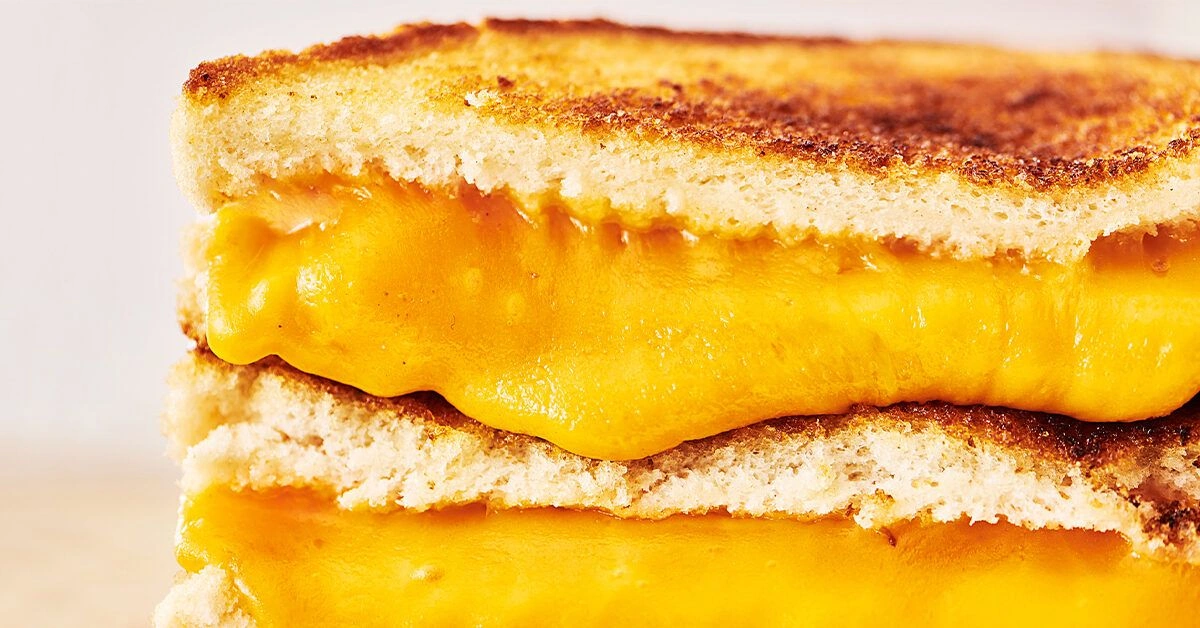
American cheese is a processed cheese product created by combining multiple cheeses with additional ingredients. It delivers a notable amount of protein but is also relatively high in sodium and saturated fats.
This cheese is commonly used in iconic American fare, like cheeseburgers and grilled cheese sandwiches.
Even if you’ve sampled it before, you might be curious about what exactly American cheese is — and whether its sometimes poor reputation is warranted.
This piece examines American cheese, covering its nutritional profile, possible advantages, and potential drawbacks.
What is American cheese?
American cheese is a processed variety produced by blending one or more cheeses such as Cheddar, washed-curd, Colby, and granular cheese (1).
Although commonly called “American cheese,” its formal designation is “pasteurized process American cheese.”
Unlike natural cheeses made directly from milk, American cheese is a mixture of cheeses. The combined cheese component must constitute at least 51% of the finished product by weight (1, 2).
Additional components include acidulants, water, salt, artificial colorants, emulsifiers to keep the texture uniform, and seasonings or artificial flavorings (1).
American cheese has a gentle taste and a creamy, smooth mouthfeel. Its hue can vary from white to pale yellow or orange (3).
You’ll typically find it as blocks, shreds, cubes, spreads, or as individually wrapped slices commonly called “singles.”
Summary: Rather than being a natural milk cheese, American cheese is a processed product formed by blending varieties like Cheddar, washed-curd, Colby, and granular cheese along with other ingredients.
American cheese nutrition
American cheese contains both nutritious and less-desirable nutritional elements.
:max_bytes(150000):strip_icc()/american-cheese_annotated-353bb54376d74d25bdd4a48a7655267f.jpg)
A 1-ounce (28-gram) pre-sliced portion of American cheese supplies (4):
- Calories:102
- Carbs: 1.3 grams
- Protein: 5 grams
- Fat: 9 grams
- Calcium: 23% of the Daily Value (DV)
- Sodium: 21% of the DV
- Phosphorus:14% of the DV
- Vitamin D: 11% of the DV
- Vitamin A: 10% of the DV
- Zinc: 6% of the DV
On the positive side, American cheese is low in carbohydrates and supplies high-quality protein. It’s often fortified with vitamin D and naturally contributes vitamins and minerals such as vitamin A, phosphorus, calcium, and zinc.
Vitamin D supports bone health by aiding calcium and phosphorus absorption; vitamin A benefits vision and immune function; zinc is vital for growth, digestion, and DNA synthesis (5, 6, 7).
Conversely, American cheese is calorie-dense and contains substantial saturated fat, cholesterol, and sodium.
Of the 9 grams of fat per slice, about 5 grams are saturated fats — representing roughly 25% of the DV, which is equal to the typical recommended maximum amount per day. The same portion also provides around 10% of the DV for cholesterol (4).
Diets rich in saturated fat and sodium are linked with a higher risk of cardiovascular disease, including atherosclerosis (arterial plaque buildup) and elevated blood pressure (8, 9, 10).
How does it compare with other cheeses?
While American cheese is a leading choice for sliced cheese, there are many other sliced options available.
The table below compares 1-ounce (28-gram) slices of American, Swiss, and Cheddar cheeses (4, 11, 12):
| American cheese | Swiss cheese | Cheddar cheese | |
|---|---|---|---|
| Calories | 102 | 111 | 114 |
| Fat | 9 grams | 9 grams | 9 grams |
| Saturated fat | 5 grams | 5 grams | 5 grams |
| Protein | 5 grams | 8 grams | 6 grams |
| Carbs | 1.3 grams | 0.4 grams | 0.9 grams |
| Calcium | 23% of the Daily Value (DV) | 19% of the DV | 15% of the DV |
| Sodium | 21% of the DV | 2% of the DV | 8% of the DV |
Swiss and Cheddar contain marginally more calories due to their higher protein levels compared with American cheese. Nonetheless, all three deliver similar total and saturated fat amounts per slice.
American cheese stands out for having the most carbohydrates and the highest calcium proportion, but its sodium concentration is about 10 times and 4 times greater than Swiss and Cheddar, respectively.
Summary: American cheese is calorie- and fat-rich and contains a lot of sodium. Still, it provides quality protein and several vitamins and minerals, including vitamins A and D, phosphorus, calcium, and zinc.
Potential benefits
American cheese does offer several advantages.
High in calcium
While calcium is present in both dairy and non-dairy foods, dairy sources such as American cheese contribute roughly 72% of dietary calcium intake in the U.S. (13).
Calcium is the primary mineral composing bone structure. It’s essential for bone strength and can help lower the risk of osteoporosis, a condition marked by fragile bones and higher fracture risk (14).
Beyond bones, calcium plays roles in other bodily processes, such as:
- Blood pressure. Studies in humans and animals indicate higher calcium intake may help reduce systolic blood pressure among people with low calcium intakes and can lower the risk of preeclampsia during pregnancy (13, 14).
- Blood cholesterol. Some evidence suggests calcium intake might reduce total and LDL (bad) cholesterol while raising HDL (good) cholesterol (13, 14).
- Nerve transmission. Calcium is used by nerve cells to communicate, coordinating muscle movement, secretions, and organ operations (14, 15).
High quality protein source
Protein is one of the three macronutrients alongside fats and carbohydrates.
Its quality depends on the amino acid profile. Proteins that provide all essential amino acids are considered high-quality.
Dairy items like milk, cheese, and yogurt supply all essential amino acids, making them high-quality protein choices (16).
Therefore, eating an occasional slice of American cheese can help raise your intake of high-quality protein.
Extended shelf life
As a processed product, American cheese typically has a longer shelf life than many natural cheeses (2).
In fact, unlike some soft cheeses that require constant refrigeration, unopened American cheese doesn’t always need to be refrigerated, though chilling will prolong its freshness (17).
After opening, it can remain usable for up to about 2 months when stored in the fridge (18).
Summary: American cheese supplies calcium and high-quality protein and tends to keep longer than many soft natural cheeses.
Potential health concerns
The main health issues tied to American cheese are its elevated saturated fat and sodium levels.
High saturated fat intake can raise LDL (bad) cholesterol, raising the risk of atherosclerosis (8, 19).
Atherosclerosis involves narrowing of arteries because of plaque accumulation. It’s a major risk factor for heart attacks and strokes and is a leading cause of mortality worldwide (8, 19).
Although official U.S. dietary guidance favors low-fat or fat-free dairy, some research suggests saturated fats from dairy might not harm heart health and could have neutral or even beneficial effects (20, 21, 22).
Regarding sodium, evidence links high-sodium diets with greater hypertension risk, while lowering sodium can reduce that risk (9, 23, 24).
On average, U.S. sodium consumption exceeds recommendations by around 48%, and as noted, a single slice of American cheese supplies about 20% of the suggested daily sodium allowance (4, 24).
Therefore, eating too much American cheese could contribute to excess sodium intake and increase your risk of elevated blood pressure.
Summary: American cheese’s saturated fat and sodium levels may raise the likelihood of hypertension and heart disease if consumed in excess.
How often should you eat American cheese?
American cheese contains beneficial nutrients, but its less favorable components may outweigh those benefits.
There are no precise rules about how much American cheese you should eat, but it’s sensible to have it only occasionally to avoid raising your cardiovascular risk.
While it does provide calcium and protein, other dairy choices such as milk, yogurt, and many other cheeses can deliver these nutrients with potentially healthier profiles (11, 12, 16).
Summary: Although American cheese contributes useful nutrients, it’s best enjoyed in moderation to limit the potential harms from too much saturated fat and sodium.
The bottom line
American cheese is a processed dairy product made by combining various cheeses, including Cheddar, washed-curd, Colby, and granular cheese.
It supplies calcium and high-quality protein and generally keeps longer than many other cheeses.
That said, it should be eaten in moderation because of its high saturated fat and sodium content, which can raise cardiovascular risk.
Just one thing
Try this today: Since American cheese often contains Cheddar, swapping in Cheddar may modestly improve the nutritional profile of your dish without noticeably changing flavor. For more on cheese choices and their nutrition, see parmesan cheese nutrition benefits uses and options for low-carb eating like keto diet cheese.



















Leave a Reply
You must be logged in to post a comment.