
What is it?
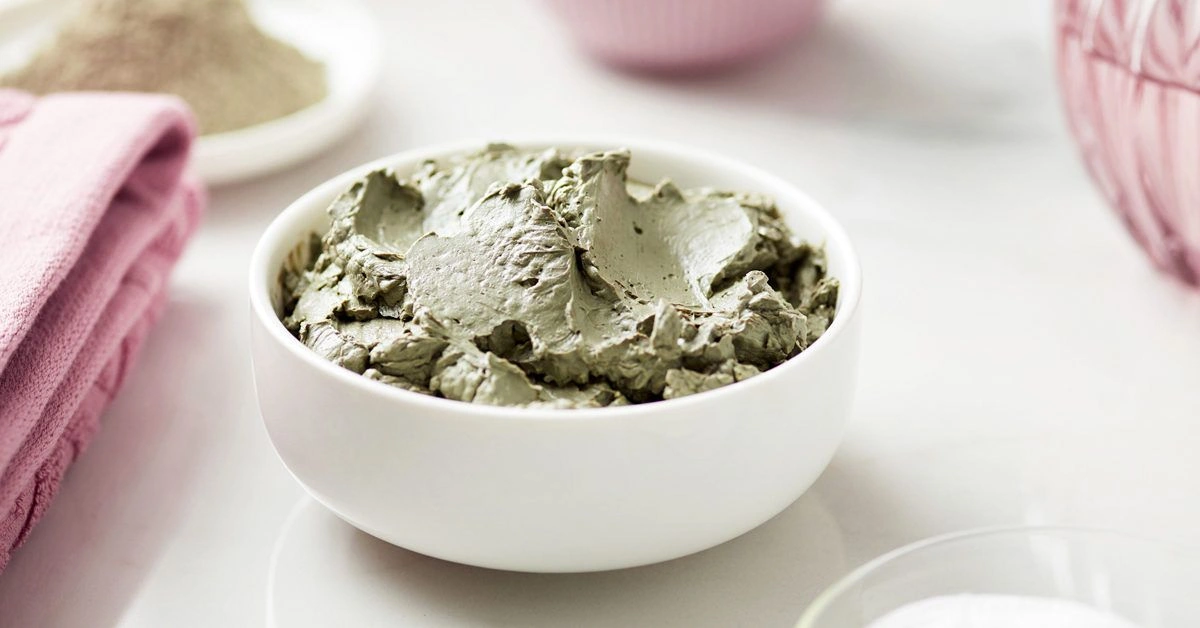
In simple terms, green clay is a form of clay. More precisely, it’s known as illite, a subgroup of clay minerals.
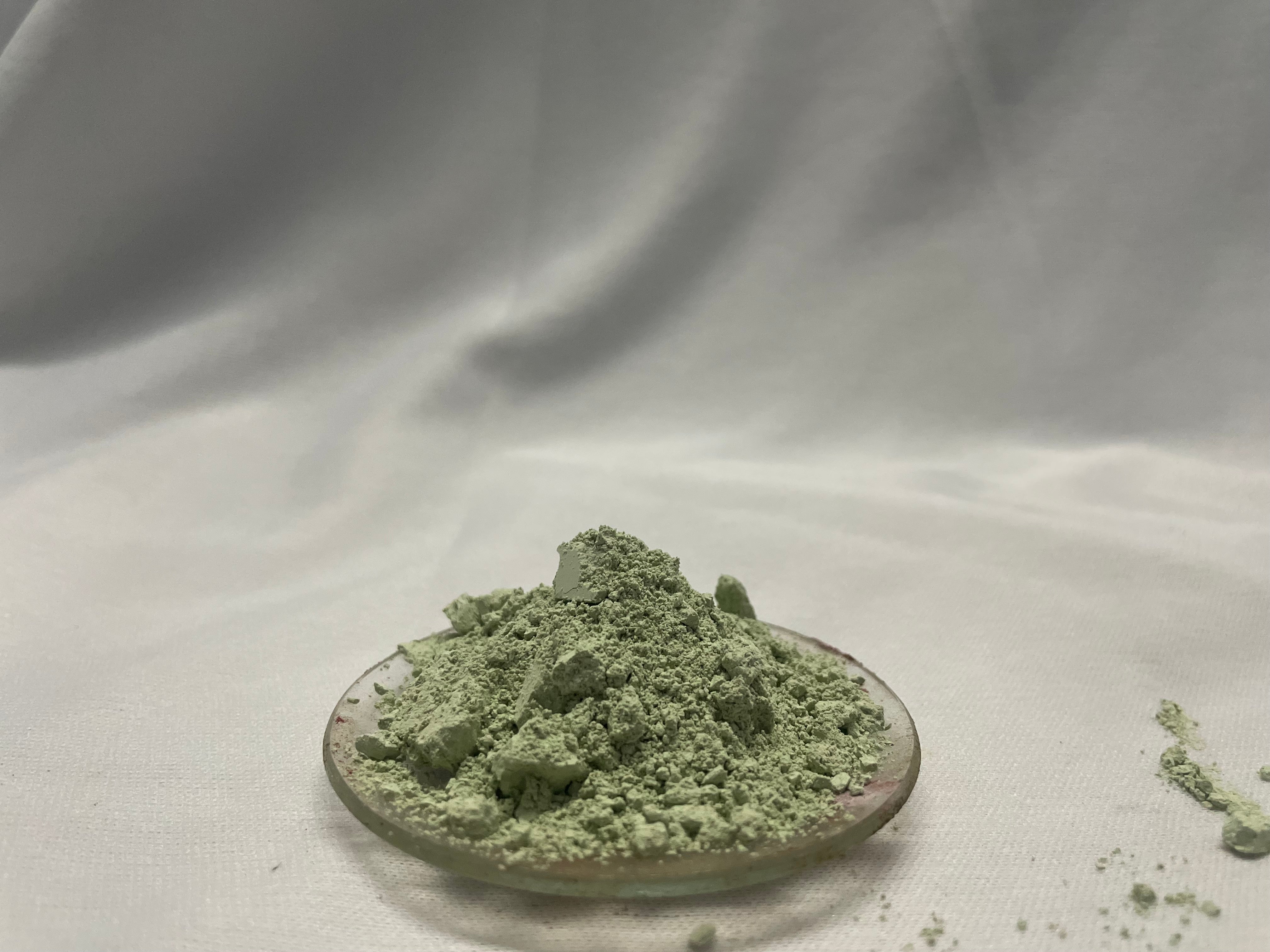
The label comes from the clay’s green hue, which is produced by a blend of iron oxides and decomposed organic material — often algae or chlorophyll.
The richer the green shade, the more prized the clay tends to be.
Beyond the pigments that give green clay its color, it contains a variety of trace minerals.
These include:
- montmorillonite
- dolomite
- magnesium
- calcium
- potassium
- manganese
- phosphorus
- aluminum
- silicon
- zinc
- cobalt
- copper
- selenium
Is French green clay the only option?
No. It’s often called French green clay because of extensive mineral-rich deposits found off southern France’s coast.
That said, green clay is also extracted in other regions of Europe and the northwestern United States.
What is it used for?
Many people attribute both internal (when swallowed) and external (when applied topically) advantages to green clay.
However, scientific evidence supporting many of these claims is limited. Numerous benefits stem from tradition or anecdote.
Historically, people believed green clay carries a natural negative electrical charge that can bind to positively charged toxins on the skin, in the bloodstream, or in the gut.
Suggested topical benefits include:
- sloughing off dead skin cells
- firming and toning the skin
- boosting circulation
- aiding blemish recovery
- soothing minor cuts, scrapes, small burns, insect bites, and sore muscles
Proposed internal benefits include:
- supplying minerals to the body
- binding and removing toxins
Note that intake-based uses aren’t widely endorsed by medical professionals. Consult a physician or other healthcare provider before ingesting clay or similar supplements.
Is there any research to support its use?
There’s some research, but it’s limited.
One study from 2008 indicated green clay can inhibit bacterial growth, suggesting potential for treating Buruli ulcers and other skin disorders.
Research has also examined other clays like kaolin and bentonite.
Nevertheless, direct studies focused solely on green clay remain sparse.
More investigation is necessary before researchers can confidently confirm the topical or internal benefits attributed to green clays.
Are there any side effects or risks to consider?
As with any topical agent or ingestible, there are potential risks.
When applied to the skin, some users report increased sensitivity, rashes, dryness, or flaking — especially when used too frequently or in thick layers.
When taken internally, green clay can cause constipation. Because of its absorbent nature, it might also interfere with2>What is it?
In simple terms, green clay is a form of clay. More precisely, it’s known as illite, a subgroup of clay minerals.
The label comes from the clay’s green hue, which is produced by a blend of iron oxides and decomposed organic material — often algae or chlorophyll.
The richer the green shade, the more prized the clay tends to be.
Beyond the pigments that give green clay its color, it contains a variety of trace minerals.
These include:
- montmorillonite
- dolomite
- magnesium
- calcium
- potassium
- manganese
- phosphorus
- aluminum
- silicon
- zinc
- cobalt
- copper
- selenium
Is French green clay the only option?
No. It’s often called French green clay because of extensive mineral-rich deposits found off southern France’s coast.
That said, green clay is also extracted in other regions of Europe and the northwestern United States.
What is it used for?
Many people attribute both internal (when swallowed) and external (when applied topically) advantages to green clay.
However, scientific evidence supporting many of these claims is limited. Numerous benefits stem from tradition or anecdote.
Historically, people believed green clay carries a natural negative electrical charge that can bind to positively charged toxins on the skin, in the bloodstream, or in the gut.
Suggested topical benefits include:
- sloughing off dead skin cells
- firming and toning the skin
- boosting circulation
- aiding blemish recovery
- soothing minor cuts, scrapes, small burns, insect bites, and sore muscles
Proposed internal benefits include:
- supplying minerals to the body
- binding and removing toxins
Note that intake-based uses aren’t widely endorsed by medical professionals. Consult a physician or other healthcare provider before ingesting clay or similar supplements.
Is there any research to support its use?
There’s some research, but it’s limited.
One study from 2008 indicated green clay can inhibit bacterial growth, suggesting potential for treating Buruli ulcers and other skin disorders.
Research has also examined other clays like kaolin and bentonite.
Nevertheless, direct studies focused solely on green clay remain sparse.
More investigation is necessary before researchers can confidently confirm the topical or internal benefits attributed to green clays.
Are there any side effects or risks to consider?
As with any topical agent or ingestible, there are potential risks.
When applied to the skin, some users report increased sensitivity, rashes, dryness, or flaking — especially when used too frequently or in thick layers.
When taken internally, green clay can cause constipation. Because of its absorbent nature, it might also interfere with medications.
Always discuss personal risks with a doctor or healthcare provider before using green clay or other supplements orally.
Some anecdotal sources advise against storing green clay in metal containers or using metal utensils to mix or apply it.
The idea is that metal could reduce the clay’s supposed benefits, but there’s no research to confirm or refute this claim.
How do you apply it to the skin?
Begin by gently cleansing your skin and patting it dry. Then:
- Apply. Use your fingers or a brush to spread a thin coat of clay over the target area. For instance, if your T-zone is oily, apply the mask to your forehead, nose, and chin.
- Let it sit. Allow it to remain for 10 to 15 minutes or follow the time recommended on the product label.
- Remove and dry. When the mask is dry and feels taut, rinse it off gently. Avoid scrubbing it off with a towel, which can irritate the skin.

How often should you do it?
Green clay can be drying, so don’t use it more than once weekly.
If your skin is dry or sensitive, consider spacing treatments every couple of weeks instead.
What should you use?
When selecting green clay skincare, choose formulations that contain more than just clay.
Hydrating additives like aloe and squalane can help counteract the drying effects of clay.
If you have oily or acne-prone skin, look for products that include additional clays such as kaolin or bentonite.
Below are several well-known products to explore.
Starter scrub
If you’d prefer not to use a full mask, try a product that won’t remain on your skin as long, like the Acure Brightening Face Scrub.
A mild physical scrub is often better for sensitive skin that reacts easily.
Buy the Acure Brightening Face Scrub online.
Dry or flaky skin
For dry, dehydrated, or flaky complexions, the Biossance Squalane + Tea Tree Detox Mask is praised for its moisturizing, squalane-forward formula.
Buy the Biossance Squalane + Tea Tree Detox Mask online.
Oily or combination skin
The bareMinerals Dirty Detox Skin Glowing and Refining Mud Mask is an excellent pick for oily or combination skin.
Its formula combines three additional mineral-rich clays and charcoal to help purify and refine skin texture.
Buy the bareMinerals Dirty Detox Skin Glowing and Refining Mud Mask online.
Irritated or acne-prone skin
Suitable for acne-prone skin or those with rosacea or eczema, the Lancer Skincare Clarifying Detox Mask with Green Tea + 3% Sulfur also features sulfur, azelaic acid, and green tea.
Be careful not to apply it to open sores or pustules.
Buy the Lancer Skincare Clarifying Detox Mask with Green Tea + 3% Sulfur online.
Skin that shows signs of aging
For fine lines and other aging signs, the Tammy Fender Purifying Luculent Masque contains the herb fo-ti, believed to support cell regeneration. The milder formula also includes aloe to help reduce dryness.
Buy the Tammy Fender Purifying Luculent Masque online.
Is this all you need?
After rinsing off your green clay mask, continue with your regular skincare sequence.
For instance, in a basic three-step routine you might:
- Apply a serum after removing the mask. This helps address targeted skin concerns and can offset any clay-induced dryness, which is particularly helpful for dry skin.
- Follow the serum with a moisturizer and/or facial oil.
- If performed during the day, finish with a broad-spectrum sunscreen (SPF 30+) to shield your skin from UV damage.
How do you know if it’s making a difference?
Right after use, you may notice clearer-looking pores and a more radiant complexion.
Your skin could also display a temporary rosy tint, which is anecdotally linked to increased circulation.
With regular use, you might see smoother texture, tightened pores, and reduced surface oiliness.
What’s the bottom line?
If you have oily or acne-prone skin, you may appreciate green clay’s reputed cleansing and clarifying qualities.
Still, it’s wise to patch-test on one blemish or a small area first to ensure a full application won’t worsen dryness or irritation.
If you notice irritation or have questions about your skin type, consult a dermatologist. They can evaluate your skin and recommend alternatives if needed.




















Leave a Reply
You must be logged in to post a comment.