
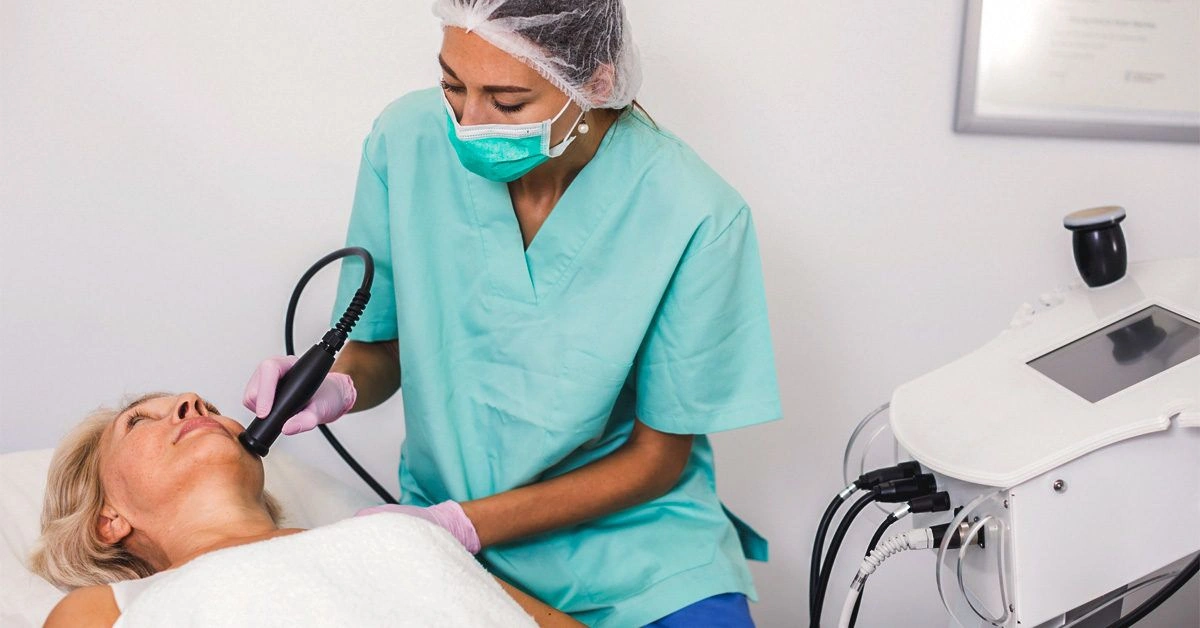
CoolSculpting for the chin is a noninvasive method to shrink localized fat. The price can fluctuate depending on where you live, the results you want, and the applicator size used.

Fast facts
About
- CoolSculpting is a proprietary, nonsurgical cooling approach designed to diminish fat in selected zones.
- It’s grounded in cryolipolysis. Cryolipolysis applies cold temperatures to freeze and eliminate fat cells.
- The treatment was developed to target stubborn pockets of fat that don’t respond to diet and exercise, including under the chin.
Safety:
- CoolSculpting received FDA clearance in 2012.
- The procedure is noninvasive and normally does not require anesthesia.
- More than 6,000,000 treatments have been performed worldwide to date.
- You may have temporary side effects that typically resolve within days after treatment, such as swelling, bruising, and increased sensitivity.
- CoolSculpting may be inappropriate if you have Raynaud’s disease or pronounced cold sensitivity.
Convenience:
- Treatment for the chin usually lasts about 35 minutes.
- Recovery time is minimal. Most people can return to normal daily activities almost immediately.
- It’s offered by plastic surgeons, physicians, or other licensed providers trained in CoolSculpting.
Cost:
- The typical price for chin treatment is about $1,400.
Efficacy:
- Typical outcomes show a 20 to 80 percent reduction of fat after a single cryolipolysis session in treated regions. For the chin, expect results toward the lower end of that spectrum.
- Roughly 82 percent of patients who had the procedure would recommend it to a friend.
What is CoolSculpting?
CoolSculpting for the chin is a nonsurgical fat-reduction technique that involves no needles, cuts, or general anesthesia. It works by cooling the subcutaneous fat until the fat cells are eliminated through the freezing process and then cleared by the body. Subcutaneous fat lies directly beneath the skin.
It’s intended for people who are already near their ideal weight, rather than as a method for overall weight loss.
How much does CoolSculpting cost?
Price depends on the size of the treatment area, the outcome you seek, the applicator size, and geographic location. The average cost for chin CoolSculpting is roughly $1,400, and each session typically takes about 35 minutes. One to two sessions are often needed. For comparison of noninvasive versus surgical options, see coolsculpting vs liposuction.
How does CoolSculpting work?
CoolSculpting employs cryolipolysis, which uses cells’ reaction to cold to degrade fatty tissue. By withdrawing energy from fat layers, the procedure prompts fat cells to die progressively while sparing nearby nerves, muscles, and other tissues. After treatment, the dismantled fat cells are routed through the lymphatic system and eliminated as waste over several months.
Procedure for CoolSculpting of the chin
A trained clinician or physician performs the procedure using a handheld applicator. The device resembles the nozzle of a vacuum cleaner.
During treatment, the provider places a gel pad and the applicator on your chin. The applicator applies calibrated cooling to the targeted fat. The device is positioned over your skin while delivering suction and cooling to the area.
You may feel sensations of tugging or pinching during treatment, but overall discomfort is minimal. The clinician usually massages the treated area immediately after the session to break up any frozen tissue and help the body start absorbing the damaged fat cells. Some patients report this massage can be uncomfortable.
Each treatment session lasts about 35 minutes. Many people listen to music or read while being treated.
Are there any risks or side effects?
CoolSculpting has FDA clearance. The applicator will feel cold on your chin and can produce numbness, but significant pain is not expected.
If you’re particularly sensitive to cold, you may feel more discomfort during the session.
Common sensations during the procedure include:
- tingling
- stinging
- pulling
These sensations usually fade once the area becomes numb.
Some post-procedure effects are common as your body continues to process the fat cells for weeks. These may include:
- achiness
- swelling
- tenderness
- painful or tingling sensations
The chin and neck may also feel a sense of fullness in the throat.
A rare but notable complication is paradoxical adipose hyperplasia, where fat tissue enlarges months after CoolSculpting. In the chin area, this uncommon outcome could mean recurrence or increase of fat beneath the chin.
What to expect after CoolSculpting of the chin
Recovery after CoolSculpting is minimal. Most people resume normal activities right away. Minor redness or soreness on the chin can occur but generally fades within a few weeks.
Initial improvements may be visible within about three weeks. Full results are often seen after two to three months, and the body’s elimination of fat cells can continue for up to six months following treatment.
CoolSculpting is not a treatment for obesity and should not replace healthy habits. Maintaining a balanced diet and regular exercise is essential to preserve results.
Preparing for CoolSculpting
There’s little preparation required for CoolSculpting. Ensure you are in good health and close to your target weight. People who are significantly overweight or obese are less suitable candidates. The best candidates are healthy and physically fit.
Because bruising from the applicator’s suction can occur, it’s wise to avoid anti-inflammatory medications like aspirin before treatment to reduce the risk of bruising.


















Leave a Reply
You must be logged in to post a comment.