
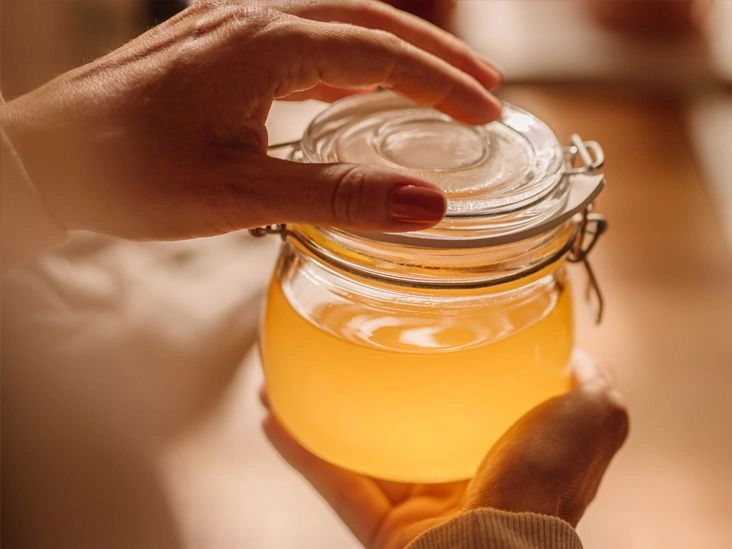
Each winter, we’d queue by the door as our mother smeared ghee over our lips before school. It was a practice she always upheld.
We never relied on commercial lip balms when we were children. Even now, I maintain the same approach for my kids, who, naturally, roll their eyes at my “old-school” habits.
Still, this straightforward, age-old household cure has consistently served me well.
A fixture of Indian kitchens and tradition, ghee is a pantry essential used for generations. It represents nourishment, wellness, and auspiciousness — essentially, abundance and prosperity.
Not surprisingly, ghee delivers a variety of advantages for the body, both internally and externally.
Whether it’s a time-honored skincare routine, how frequently you wash your hair, or the cosmetic products you’re curious about, beauty is subjective.
That’s why we consult a varied panel of writers, instructors, and specialists to share their insights on topics ranging from application techniques to the best sheet masks for specific needs.
We only endorse products we truly trust, so if you notice a shopping link to a particular item or brand, understand that our team has vetted it thoroughly.
What is ghee?
Often referred to as clarified butter, ghee is a golden, semi-liquid substance with a recognizable aroma and flavor.
A highly valued component in Ayurveda, India’s traditional medical system, ghee comes from the Sanskrit word ghṛta.
Thought to have originated in India, it has been employed since ancient times for cooking, ceremonies, and healing.
Called liquid gold across India, ghee was particularly practical when warm climates made storing butter without refrigeration difficult. By removing the milk solids through heat, this clear, fragrant liquid with a nutty taste delivers butter’s richness without the need for refrigeration.
Traditionally, ghee is produced from cow’s milk and occasionally from buffalo milk.
In Ayurvedic terms, ghee derived from cow’s milk is known as shuddh desi ghee, meaning “pure native ghee.” It’s traditionally regarded as the most pristine form.
A 2009 study suggests cow ghee supports multiple bodily systems. In Ayurveda it is even called amrita, or nectar.
“Desi ghee is rich in nutrients that support digestive wellness, and is often tolerable for those who struggle with other dairy due to lactose,” says Ayush Aggarwal, Ayurvedic specialist and founder-director of Rasayanam.in.
Ghee benefits for skin
Although scientific research specifically on ghee’s skin benefits is limited, countless people in India have relied on it for generations.

With a texture similar to a salve, ghee is commonly used to:
- soften and hydrate the skin
- impart a natural glow
- fade dark spots
- repair dry or damaged skin
- shield from cold, dry, windy conditions
- treat chapped lips
- lessen dark circles
- rejuvenate the eyes
- aid in healing minor wounds
Research from 2019 and 2020 indicates that ghee contains important short-chain fatty acids as well as fat-soluble vitamins, including:
- butyric acid
- omega-3 fatty acids, such as arachidonic and linolenic
- vitamin A
- vitamin B12
- vitamin D
- vitamin E
- vitamin K
Skin health
Ghee is abundant in omega fatty acids and antioxidants, which may help neutralize free radicals and nourish the skin.
“It aids skin moisturization and gives a luminous effect. Ghee helps transition dull skin to healthier skin thanks to its nutritional properties,” says Jatin Gujrati, Ayurvedic professional at Vedix.
“It enables potent substances to penetrate the skin and supports deeper absorption of herbal concentrates,” notes Geetika Goyal, physician consultant at Clinic Dermatech.
Skin hydration
Because ghee contains vitamin A and nourishing fatty acids, it functions as a natural emollient that provides profound, long-lasting hydration.
Skin brightening and pigmentation
Ghee lends radiance and may help stimulate collagen synthesis.
It also exerts a brightening influence because of its antioxidant content, which might prevent and diminish damage from oxidative stress.
Skin smoothing
The nutrients in ghee can help enhance skin elasticity, whether consumed or applied topically.
“You can use ghee by including it regularly in your diet or by applying it externally to the skin,” says Gujrati. “As it reaches the tissue level, it helps fortify collagen and maintain elasticity.”
Chapped lips
Ghee hydrates and conditions the skin due to phospholipids, making it an excellent remedy for cracked lips.
Hair and scalp
Ghee is frequently used for hair care in India. Vitamins A and E may soften the hair, while antioxidants could help clear toxins that contribute to heaviness and frizz.
Benefits of eating ghee for skin
You can enjoy ghee’s advantages by applying it to the skin or consuming it.
As previously noted, it’s abundant in antioxidants, vitamins, and essential fatty acids. Whether on your skin or inside your body, ghee can support overall skin health.
“Vitamin K assists with effortless collagen formation, a protein that keeps skin firm and prevents sagging,” explains Shalini Santhankrishnan, nutritionist at Kosmoderma Clinics. “Vitamin A acts as a natural hydrator.”
Santhankrishnan says adding ghee to your meal plan quenches parched skin from within while bolstering immunity.
“Cow ghee is high in conjugated linoleic acid (CLA), which may help with fat loss and encourage lean muscle,” she adds.
Types of ghee
Several varieties of ghee exist, including:
- cow
- sheep
- goat
- buffalo
- vegan ghee
The most commonly studied and accessible ghee is from cow’s milk, although other varieties may provide comparable benefits.
Vegan ghee is typically crafted from a mix of oils, often coconut, which itself offers multiple skin advantages.
Some ghee preparations also include herbal blends for therapeutic purposes.
Best ways to use ghee
The simplest method to use ghee is applying it directly to the skin and massaging gently in circular strokes.
Here are additional specific applications for ghee:
- face mask
- moisturizer
- spot treatment
- salve
- makeup remover
- cuticle care
- on dry elbows, knees, and heels
- for mild irritation
- for brightening and gentle exfoliation
“Ghee functions not only as a humectant but also as an excellent mask, rich in omega-3, vitamin E and other antioxidants,” says Richa Badhalia, founder of Faith and Patience cosmetics.
Combined with honey, ghee can help fade spots and impart a natural radiance.
Applying ghee to bruises and minor abrasions can soothe and speed healing. In India, it’s commonly used as a diaper rash ointment.
One notable topical form in India is shata dhauta ghrita, literally “100-times washed ghee.” It’s a multipurpose skin cream made by washing cow ghee in a copper vessel a hundred times.
The result is a light, whipped, deeply absorbent cream that calms the skin.
Shata dhauta ghrita is among the most effective topical uses of ghee and can be paired with other natural or herbal components.
When blended with ingredients like sugar, lemon juice, turmeric, or baking soda, ghee helps brighten and exfoliate the skin.
For related topical oils and their benefits, you might also consider sesame oil for skin as a complementary natural option.
DIY recipes
Face mask
Ingredients
- 2 tbsp. ghee
- 2 tbsp. gram (chickpea) flour
- pinch of turmeric
Directions
- Combine ghee and gram flour with turmeric.
- Spread on a clean, dry face.
- Leave for 20 minutes.
- Wash off with lukewarm water.
- Gently pat dry.
Moisturizer
Ingredients
- 2 tbsp. ghee
- 2 tbsp. aloe vera gel
Directions
- Gently melt ghee on very low heat.
- Remove from heat.
- Stir in aloe vera gel.
- Allow to cool.
- Apply to a clean, dry face.
- Leave for 10–15 minutes.
- Rinse with lukewarm water.
- Pat dry.
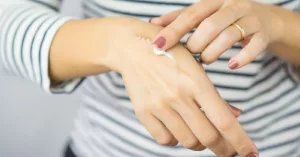
Hand cream
Ingredients
- 2 tbsp. coconut or almond oil
- 2 tbsp. ghee
Directions
- Mix ghee with coconut or almond oil.
- Massage into hands for soft, supple skin.
Lip balm
Ingredients
- 1 tsp. ghee
Directions
- Rub ghee between your fingers to soften it.
- Apply directly to lips.
You can also leave it on overnight for extra nourishment.
Lip scrub
Ingredients
- 1 tsp. ghee
- 1 tsp. sugar
- 1 tsp. honey
Directions
- Combine the ingredients.
- Gently rub onto lips in circular motions.
- Rinse or blot with a soft cloth.
- Seal with a thin layer of ghee to lock in moisture.
Body butter
Ingredients
- 1 tbsp. ghee
- 2 tbsp. coconut oil
- 1 tbsp. shea or cocoa butter
Directions
- Blend all ingredients into a smooth paste.
- Apply to skin, hands, knees, and elbows using circular motions.
Body scrub
Ingredients
- 1 tsp. ghee
- 1 tbsp. gram flour
- 2 tbsp. cow’s milk or coconut milk
- 1 tsp. sugar
Directions
- Mix the ingredients together.
- Gently exfoliate the skin in circular motions.
- Rinse with warm water.
- Pat dry.
Salve
Ingredients
- 1 tbsp. ghee
- 1 tsp. turmeric powder
Directions
- Stir together ghee and turmeric.
- Apply topically to cuts, scrapes, burns, or rashes.
- Cover with a bandage or gauze if needed.
Be cautious of staining on fabrics and furniture, as turmeric can discolor.
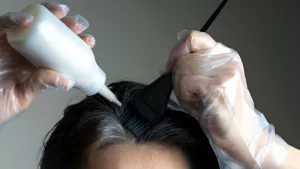
Hair and scalp mask
Ingredients
- 2 tbsp. ghee
- 2 tbsp. yogurt
- 1 tsp. honey
- 1 egg white
Directions
- Blend ingredients into a paste and apply about an hour before shampooing.
- Rinse with lukewarm water.
- Allow hair to air dry.
If you have very long or thick hair, consider doubling the quantities.
How to make ghee
You can prepare ghee at home by melting butter in a heavy-bottomed pan.
- Gently simmer the butter until fully melted and it begins to foam.
- Cook for roughly 20–25 minutes. The milk solids will sink to the bottom.
- Stir occasionally to prevent burning of the solids. A clear, golden liquid will form on top.
- Allow to cool completely before straining through muslin cloth.
- Store in an airtight jar.
Keep in mind
While ghee is prized in India as a skin elixir, it may not be appropriate in all cases.
Avoid using ghee if you have oily or acne-prone skin, as it can occlude pores. If you suffer from excess phlegm or cold-related issues, refrain from eating it. Also, do not consume frozen ghee.
Used in moderation, ghee is generally safe. Be sure to purchase ghee from trusted producers or prepare it yourself to avoid additives.
Some reputable brands include:
Takeaway
Ghee is widely regarded in India as a multipurpose food for skin, hair, and overall wellness. You can apply it to lips, elbows, cuticles, and hair to enjoy its benefits.
Ensure you source ghee from reliable brands without additives or prepare it at home.
Ghee may be one of the most adaptable natural ingredients for enhancing skin health.


















Leave a Reply
You must be logged in to post a comment.