
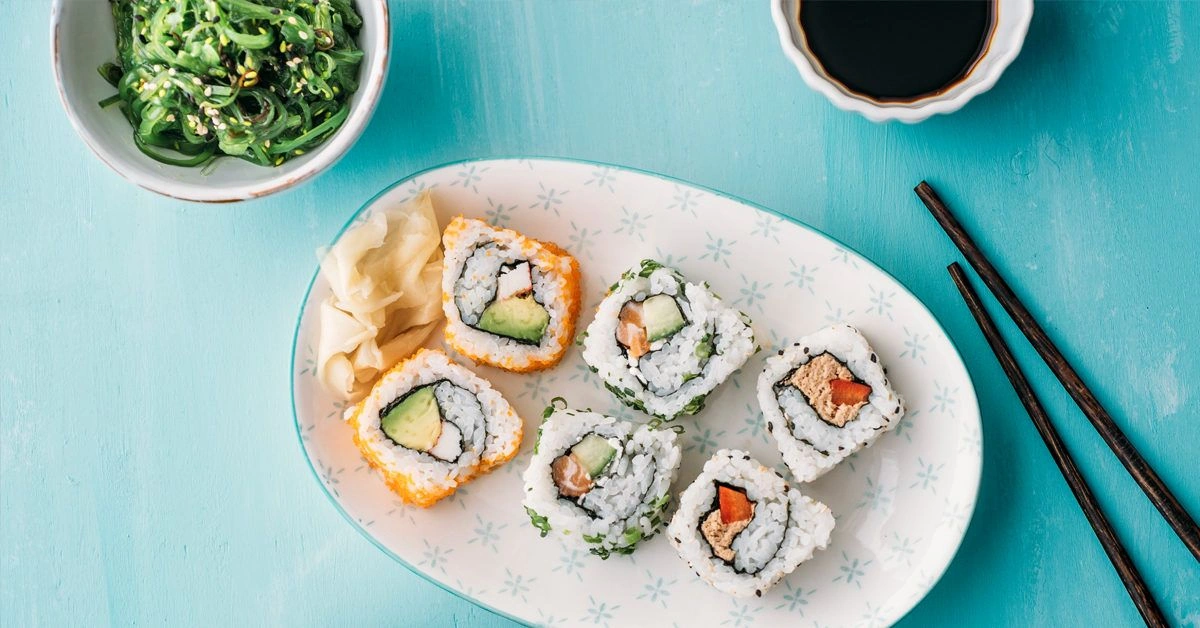
When dining out, always ask about what’s inside a sushi roll and be sure to say you cannot eat any raw fish.
If you jumped from seeing two lines to reading up on what you must avoid now that you’re expecting, you’re in good company. While some restrictions are obvious, other foods that seem healthy can actually present risks to you and your baby.
One thing to cross off your list is that tempting spicy tuna roll. That’s right — in addition to forgoing your usual glass of wine, skipping deli sandwiches, avoiding long hot-tub soaks, and delegating litter-box duties — eating sushi that contains raw fish isn’t recommended until after you give birth.
That said, before you cancel plans or toss out those California rolls, there’s a silver lining — not all sushi is strictly forbidden.
Related: 11 things not to do while pregnant
Which sushi should you avoid?
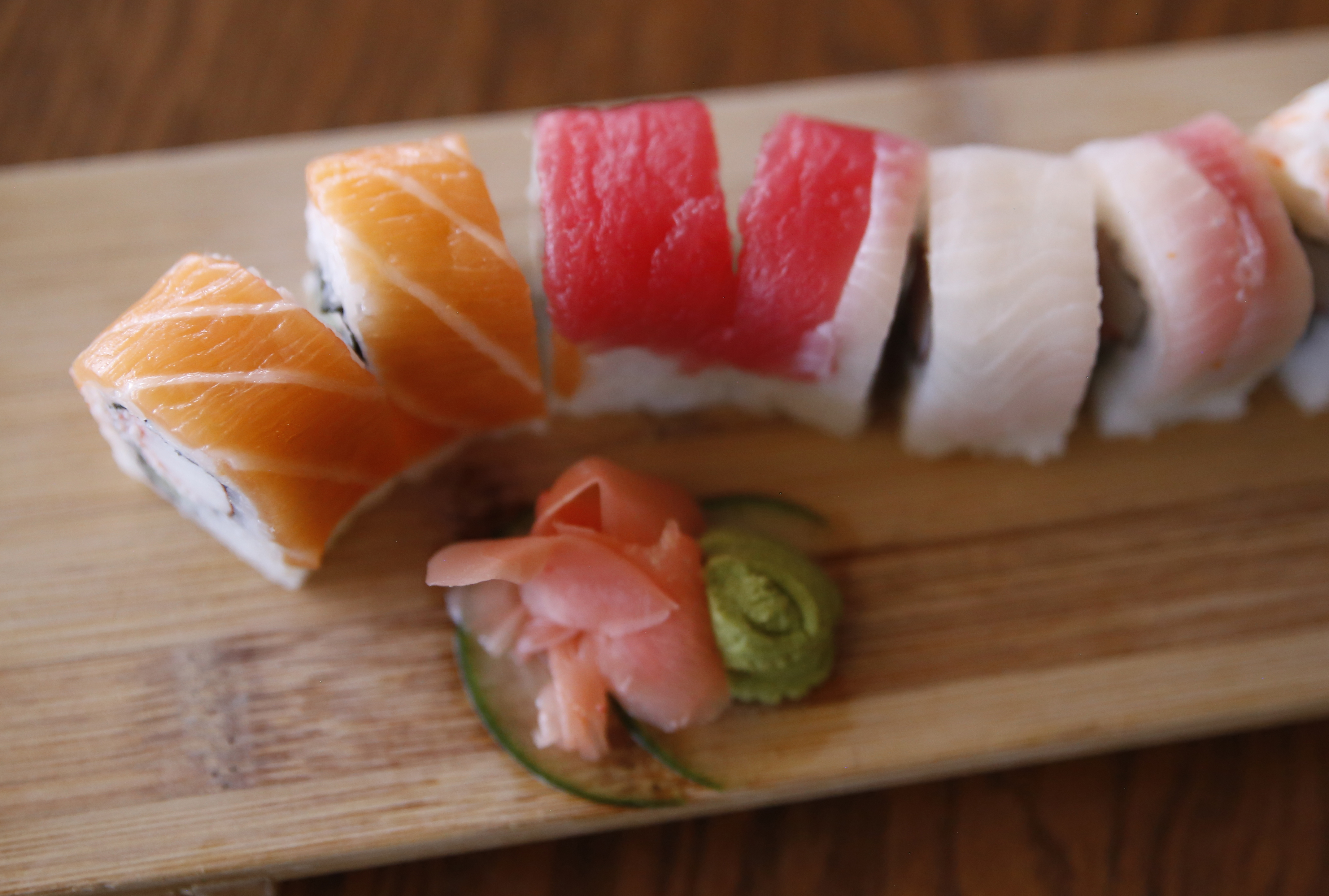
Any sushi made with raw or undercooked seafood should be avoided, according to FoodSafety.gov. Consuming raw or insufficiently cooked fish can expose your developing baby to mercury, harmful bacteria, and parasites.
“Because the immune system changes during pregnancy, pregnant people are more prone to infections, which can raise the risk of miscarriage, stillbirth, uterine infection, and premature delivery,” says Kristian Morey, RD, LDN, clinical dietitian at The Center for Endocrinology at Mercy Medical Center.
Additionally, your baby is particularly susceptible to mercury, which Morey notes can lead to neurological harm because methylmercury is toxic to the developing nervous system.
When should you stop eating risky sushi?
Short answer: Immediately. In fact, if you’re actively trying to conceive, it’s wise to avoid raw fish. The guidance against undercooked or raw-fish sushi applies throughout all three trimesters.
During the first trimester many critical developments occur, so it’s important to abstain as soon as you know you’re pregnant. Between weeks 1 and 8 the brain and spinal cord start forming, the tissues that will become the heart start to beat, and the eyes, ears, and nose take shape.
By the close of the first trimester most of your baby’s major organs are developing and beginning to function. These initial 12 weeks are when the fetus is most sensitive and at greatest risk from toxic exposures.
“During pregnancy, your immune system is suppressed since you’re sharing it with a growing fetus,” says Dara Godfrey, MS, RD, a registered dietitian for Reproductive Medicine Associates of New York. With a weakened immune system, Godfrey explains you’re more vulnerable to bacteria or parasites that might be present in raw or improperly handled fish.
However, if you only recently discovered you’re pregnant and you’ve eaten raw or undercooked sushi, try not to panic. It’s likely fine. Let your healthcare provider know you consumed raw fish so they can address any concerns and advise you on safer dietary choices during pregnancy.
Why avoid raw fish sushi?
Now that it’s clear sushi with raw fish or raw meat is a definite no during pregnancy, you may be wondering why a favorite dish was excluded.
“Undercooked or raw fish increases the chance of exposure to certain bacteria during pregnancy and is more likely to harbor bacteria and parasites,” says Dr. Lisa Valle, DO, OB-GYN at Providence Saint John’s Health Center.
Listeria — the bacterium that causes listeriosis — is a form of foodborne illness that can be particularly dangerous for you and your baby. Pregnant people face a higher risk of listeriosis.
Besides causing vomiting and diarrhea, listeriosis can trigger preterm labor, stillbirth, and miscarriage. If an infant is born with listeriosis, they may experience kidney and heart complications, or infections of the blood or brain.
To reduce listeriosis risk, the American College of Obstetricians and Gynecologists (ACOG) advises pregnant individuals to avoid sushi made with raw fish, along with other foods like hot dogs, deli meats, and unpasteurized milk.
Raw fish can also increase mercury exposure to your baby. Excessive mercury intake during pregnancy can endanger both mother and child. “High mercury levels can cause brain damage, as well as hearing and vision issues in the baby,” says Valle.
Godfrey points out that even reputable restaurants with skilled chefs and solid handling procedures can’t guarantee raw fish is completely safe to eat.
In short, there are two main reasons to avoid raw fish sushi while pregnant:
- heightened susceptibility to bacteria and parasites due to lowered immunity (possible in raw fish, meat, and some dairy)
- elevated mercury levels (present in many fish — more on this below)
Related: Is it safe to eat sushi while breastfeeding?
Sushi rolls that are safe during pregnancy
Here’s the good news we mentioned earlier: some sushi rolls are acceptable while pregnant. “Sushi that’s cooked (with seafood) and vegetable-only rolls are safe for pregnant people to eat,” says Valle.
In fact, ACOG recommends pregnant individuals consume at least two servings of low-mercury fish per week, such as salmon, catfish, and other fatty fish and shellfish that provide beneficial omega-3 fatty acids.
But before ordering a salmon roll, ensure the salmon is cooked — you need to protect both against mercury and listeria.
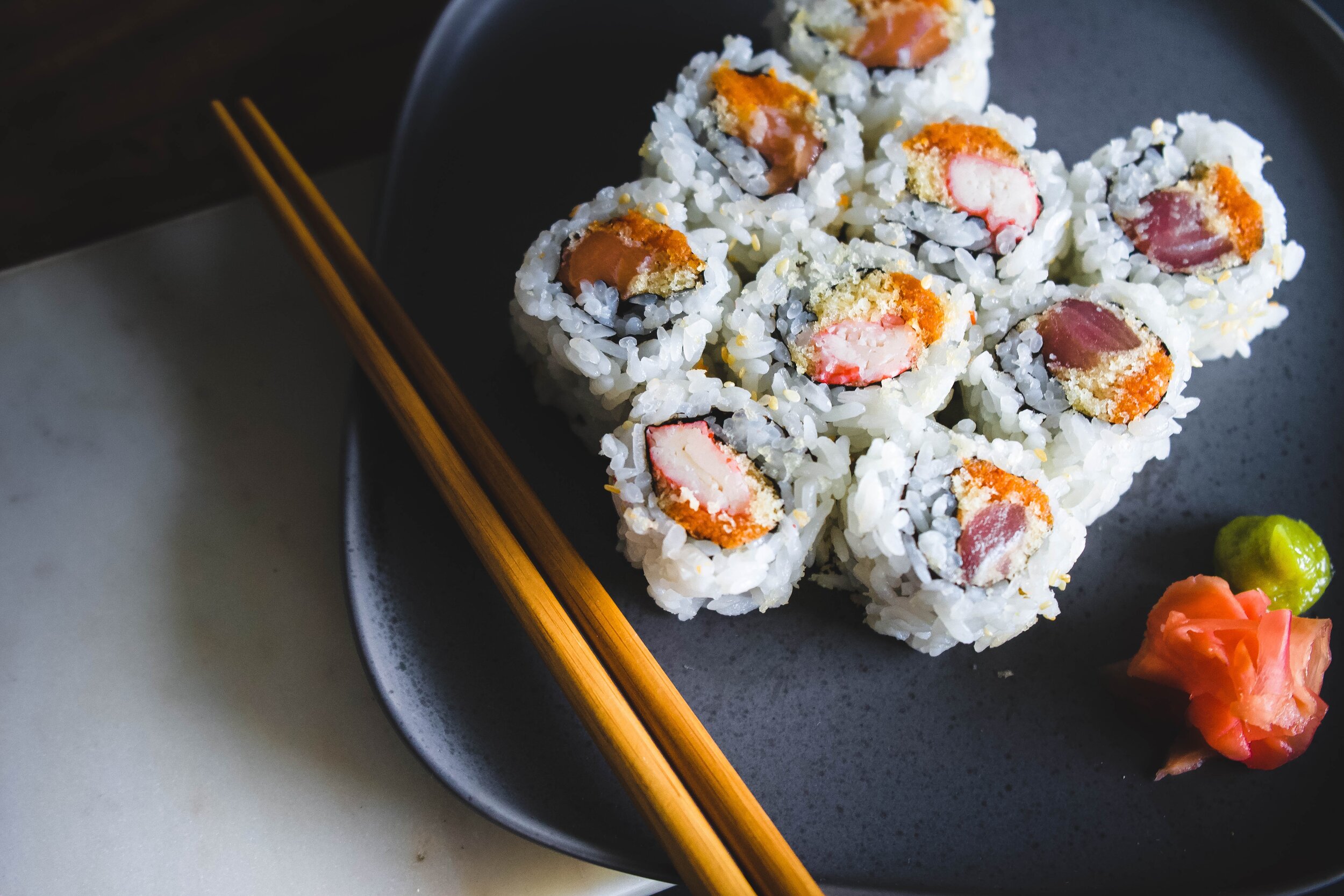
Cooked rolls that have been heated to 145°F are considered acceptable during pregnancy if they use low-mercury seafood.
When selecting a roll containing cooked seafood, the Food and Drug Administration (FDA) advises pregnant people to avoid these high-mercury species:
- swordfish
- tilefish
- king mackerel
- marlin
- orange roughy
- shark
- bigeye tuna
“Fish high in mercury generally have mercury levels above 0.3 parts per million,” says Valle.
A California roll, a popular choice, is often prepared with imitation crab, which is cooked and derived from lower-mercury fish, so it’s usually safe for pregnant people.
For any roll containing seafood, always ask about the components. What looks like crab or shrimp could contain other fish types that carry higher mercury levels.
Common cooked rolls you might find on a menu include:
- California roll
- ebi roll (shrimp)
- unagi roll (cooked eel)
- spicy chicken sushi roll
- spicy crab roll
- spicy shrimp roll
- chicken katsu roll
Common vegan rolls often include:
- cucumber maki roll
- cucumber avocado roll
- shiitake mushroom roll
- Futomaki roll (when vegan)
If you’re wondering about mushrooms during pregnancy or want to know more specifics, check out can pregnant women eat mushrooms for guidance.
The bottom line
Pregnancy calls for extra caution about what you consume. Understanding the ingredients in your meals helps protect you and your developing baby.
If you’re uncertain about what to eat over the coming nine months, consult your doctor or a registered dietitian. They can help you plan a diet that’s both safe and satisfying.











Leave a Reply
You must be logged in to post a comment.