
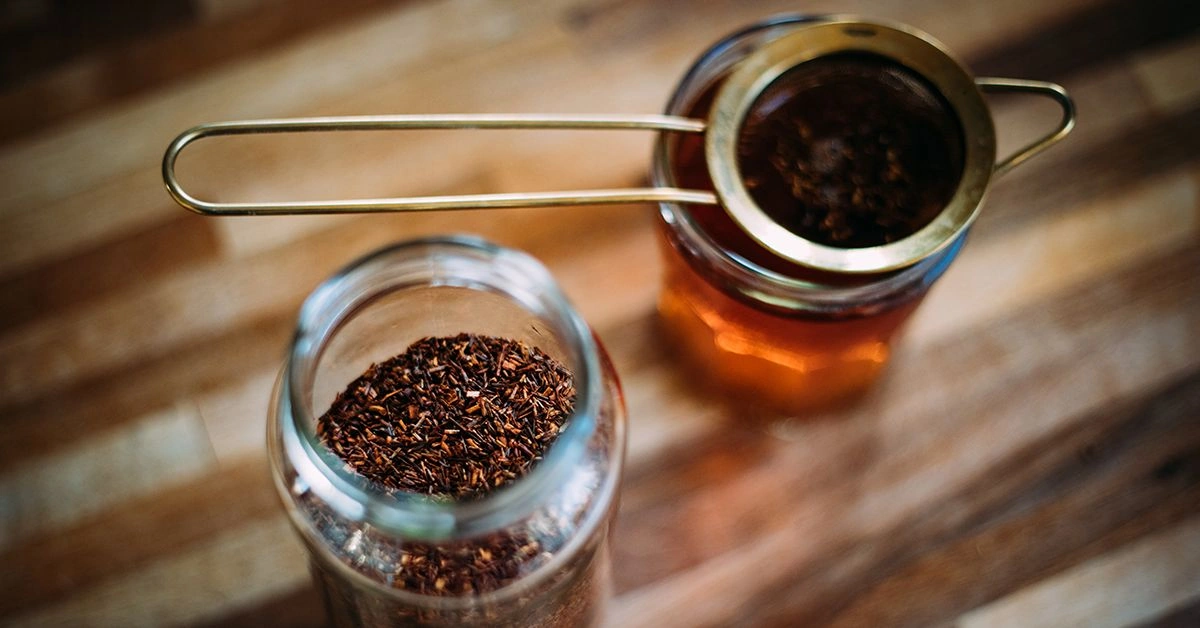
Rooibos tea is an herbal infusion abundant in antioxidants. It’s believed to be linked to several health advantages, including support for cardiovascular well-being, although more rigorous research is required to verify these claims.
Rooibos has grown in popularity as a tasty, healthful beverage. Consumed in parts of southern Africa for generations, it has since become a favored drink across the globe.
It offers a flavorful, caffeine-free substitute for black or green teas.
Proponents tout rooibos for potential health-promoting properties, suggesting its antioxidant content may help guard against conditions like cancer, heart disease, and stroke.
Still, you might ask whether those assertions are backed by solid evidence.
Below is a summary of what current studies indicate about rooibos tea’s benefits and possible adverse effects.
What is rooibos tea?
Rooibos is also called red tea or red bush tea.
It’s produced from the leaves of a shrub named Aspalathus linearis, which is primarily cultivated on South Africa’s western coastline.
Traditional rooibos is made by fermenting the leaves, which gives them a red-brown hue.
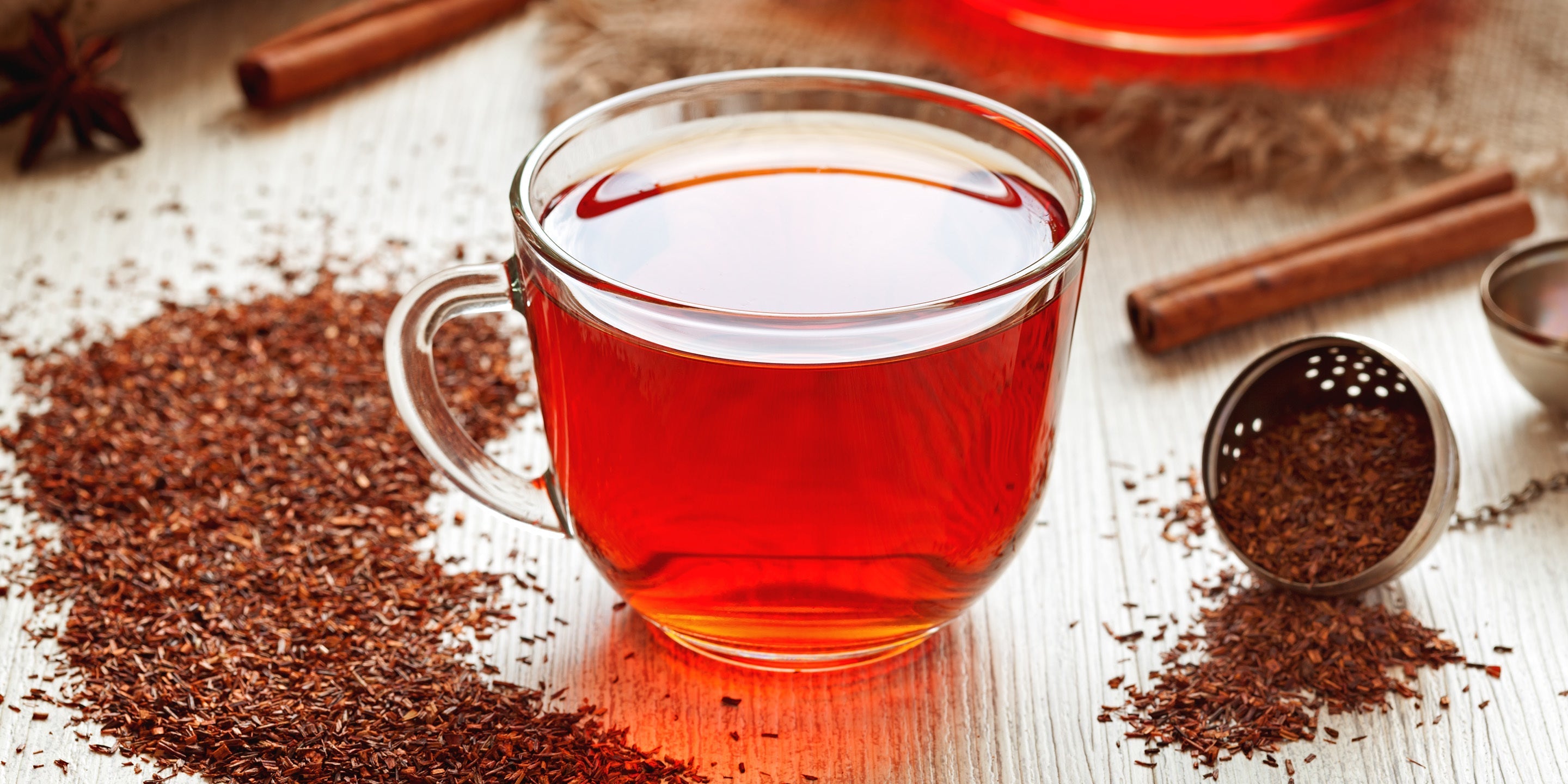
Rooibos is typically brewed like black tea and has a naturally sweet, nutty flavor. Some drinkers add milk and sugar; iced rooibos, espresso-based drinks, lattes, and cappuccinos have also gained popularity.
1. Low in tannins and caffeine-free
Rooibos is naturally free of caffeine, making it a suitable alternative to black or green tea.
It also contains lower levels of tannins than traditional black or green teas.
Tannins are natural compounds in green and black tea that can hinder absorption of certain nutrients, such as iron.
2. Rich in antioxidants
Rooibos is linked to potential health advantages because of its elevated levels of antioxidants, including aspalathin and quercetin.
Research indicates antioxidants may reduce the risk of some chronic diseases, such as cardiovascular disease and certain cancers.
There is limited evidence that rooibos tea can elevate antioxidant levels in the body.
Nevertheless, any observed increases have generally been modest and might not be sustained over time.
3. May inhibit ACE activity
A 2021 review reported that rooibos might positively impact inflammation by inhibiting angiotensin-converting enzyme (ACE) activity.
ACE contributes to rising blood pressure by causing blood vessels to constrict, which may increase the risk of heart disease.
4. Potential to lower cancer risk
Some studies indicate the antioxidants in rooibos may help hinder cancer cell development.
For example, a 2020 laboratory study on advanced prostate cancer suggested that green rooibos extract could reduce cancer cell migration and invasion.
However, it remains uncertain whether rooibos supplies sufficient antioxidants and whether they are absorbed effectively enough in humans to produce long-term protection.
Thus, more human trials are necessary to clarify rooibos’s potential anticancer effects.
5. May help people with type 2 diabetes
Rooibos is high in antioxidants that might be useful in alleviating some diabetes-related problems.
A 2023 review noted that rooibos provides several compounds, particularly flavonoids like aspalathin, which may assist in reducing blood glucose levels.
However, additional research is still required to determine the precise impact.
Potential side effects
Generally, rooibos is considered very safe and is not linked to major side effects. Consuming rooibos in moderation as part of a balanced diet is unlikely to cause problems for most people.
Still, research has reported rare cases of liver toxicity associated with rooibos consumption. If you have liver conditions such as hepatitis, it may be prudent to avoid rooibos. Consult a healthcare provider to determine whether it is safe for you.
The bottom line
Rooibos tea is a tasty, health-conscious beverage. It’s caffeine-free, low in tannins, and offers antioxidant compounds that may provide several health benefits.
However, many health claims about rooibos remain anecdotal and not firmly supported by strong clinical evidence.
It is still unclear whether benefits observed in laboratory and animal studies translate into tangible health improvements for people, so further human research is needed.




















Leave a Reply
You must be logged in to post a comment.