
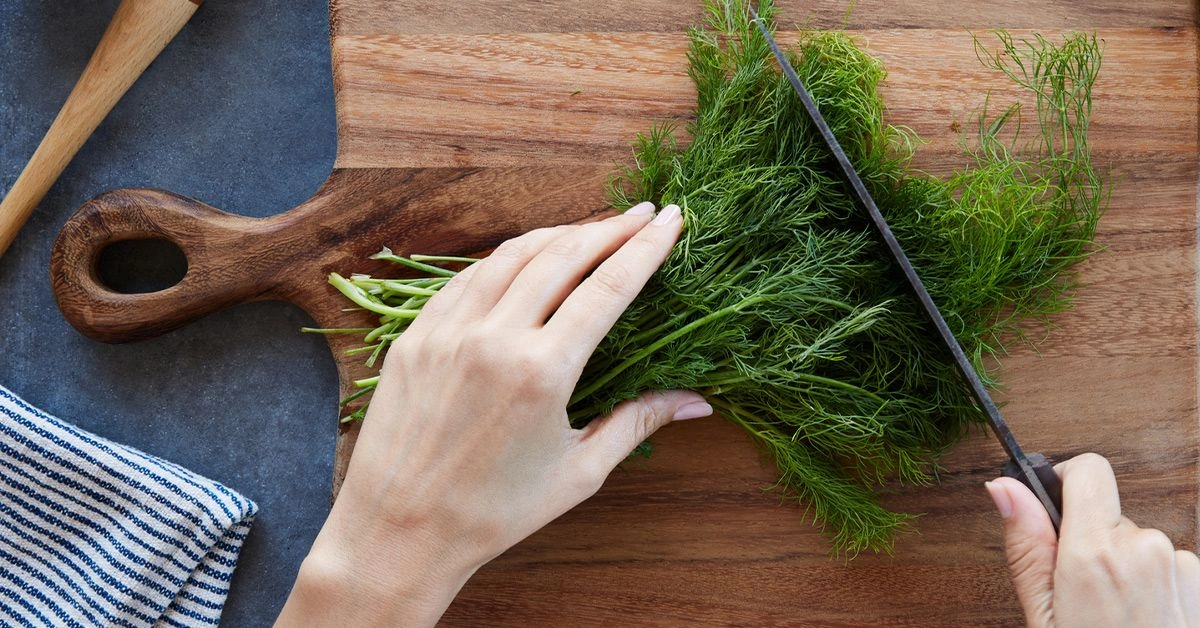
Dill (Anethum graveolens) is an herb commonly used across European and Asian kitchens (1).

Also known as dill weed, this plant features thin stems, feathery alternating leaves, and flat, brown oval seeds. The leaves offer a sweet, grassy note, while the seeds are more fragrant with a mild citrusy taste similar to caraway.
Both as an herb and a spice, dill is frequently used to enhance the flavor of many dishes. It pairs particularly well with salmon, potatoes, and yogurt-based sauces.
Beyond culinary applications, dill supplies several nutrients and has traditionally been applied to soothe digestive complaints, infant colic, and bad breath (1).
This article examines dill’s nutritional content, possible health advantages, and ways to incorporate it into cooking.
Nutritional profile
One cup (9 grams) of fresh dill sprigs supplies roughly (2):
- Calories: 4
- Vitamin C: 8% of the Daily Value (DV)
- Manganese: 5% of the DV
- Vitamin A: 4% of the DV
- Folate: 3% of the DV
- Iron: 3% of the DV
Fresh dill is very low in calories yet provides notable amounts of essential vitamins and minerals, including vitamin C, manganese, and vitamin A (2).
Vitamin A is crucial for good vision, a robust immune system, and also contributes to reproductive health in both sexes (3, 4).
Similarly, vitamin C supports immunity and plays roles in bone formation, wound repair, and metabolic processes (5, 6).
Vitamin C also acts as a strong antioxidant, helping defend cells from damage caused by reactive molecules called free radicals (6, 7).
Dill is a useful source of manganese, a trace mineral needed for healthy brain and nervous system function and for carbohydrate and fat metabolism (8).
Fresh dill also contributes small amounts (1–2% DV) of calcium, copper, magnesium, potassium, riboflavin, and zinc (2).
Keep in mind that people normally eat less than 1 cup (9 grams) of fresh dill, so the nutrient intake from a sprinkle will be proportionally smaller.
Dill seeds offer comparable nutritional value. One tablespoon (6.6 grams) of seeds supplies about 8% DV for calcium, 6% DV for iron, and 1–5% DV for magnesium, manganese, phosphorus, and potassium (9).
Summary: Fresh dill is low in calories but a notable source of several key nutrients, including vitamin C, manganese, and vitamin A.
Potential benefits of dill
The name dill comes from the Old Norse word “dilla,” meaning to calm, and historically the herb was used for infant colic, digestive complaints, and to support lactation (10).
Although many traditional uses lack solid scientific backing, dill has been associated with several other possible health advantages.
Rich in antioxidants
Antioxidants are compounds that shield cells from harm caused by reactive molecules known as free radicals (11).
Consuming antioxidant-rich foods may help lower chronic inflammation and could play a role in preventing or managing conditions like heart disease, Alzheimer’s, rheumatoid arthritis, and some cancers (11, 12).
Both dill leaves and seeds contain several antioxidant plant compounds, such as (1, 13):
- Flavonoids. These phytochemicals have been linked to lower risks of heart disease, stroke, and certain cancers, and they may support brain health (14, 15, 16).
- Terpenoids. Present in essential oils, these compounds may help protect the liver, heart, kidneys, and brain (17).
- Tannins. Known for contributing bitterness in many plants, tannins have notable antioxidant and antimicrobial properties (18).
Moreover, dill supplies vitamin C, another effective antioxidant (6, 7).
May benefit heart health
Heart disease is the top cause of death globally, but the World Health Organization suggests that up to roughly 75% of heart disease cases could be avoided by reducing risk factors like unhealthy diet, smoking, and inactivity (19, 20).
Other contributors to heart disease risk include high blood pressure, elevated triglycerides and LDL (bad) cholesterol, and chronic inflammation (21, 22).
Flavonoids in dill may support cardiovascular health through their antioxidant and anti-inflammatory effects (23).
Animal research indicates that dill extract could lower cholesterol and triglyceride levels, but human studies have produced mixed outcomes (10, 24).
For example, a trial of 91 participants with elevated cholesterol and triglycerides found that taking six dill extract tablets per day for two months significantly improved total cholesterol and triglycerides, but did not affect HDL (good) cholesterol (25).
Conversely, another trial of 150 people with high lipid levels reported no meaningful changes after six weeks of daily dill tablet consumption (26).
Importantly, most research assessing cardiovascular effects has used concentrated extracts, so it’s uncertain whether using fresh or dried dill in food would yield the same outcomes.
Overall, while dill extracts contain antioxidants that might support heart health, further human trials are needed to clarify effects on cholesterol and triglycerides.
May help lower blood sugar levels
Persistently high blood sugar raises the chance of insulin resistance, metabolic syndrome, and type 2 diabetes (27).
Dill has been proposed to help reduce blood glucose (10).
Several animal studies with diabetic models reported improvements in fasting glucose with daily dill extract, though evidence in humans remains scarce (10, 28).
May have anticancer properties
Monoterpenes are a group of terpenes—plant-derived compounds—associated with anticancer, antiviral, antifungal, and anti-inflammatory actions (1, 29).
They occur in essential oils of herbs like dill and have been linked to anticancer effects (1).
D-limonene, a specific monoterpene, has been studied for potential preventive and therapeutic effects against lung, breast, and colon cancers (30, 31, 32).
Since dill contains monoterpenes, notably d-limonene, it may possess anticancer potential. However, no direct studies have evaluated dill or its extracts for cancer prevention or treatment.
Other potential benefits
Dill may offer additional advantages, such as:
- Antibacterial effects. Dill’s essential oils exhibit antibacterial activity against organisms like Klebsiella pneumoniae and Staphylococcus aureus (33, 34, 35).
- Bone support. Dill provides calcium, magnesium, and phosphorus — minerals important for bone health (36).
- Relief for menstrual cramps. Some evidence suggests dill essential oils may alleviate period-related pain, though findings are limited and inconsistent (37, 38).
Summary: Dill contains various plant compounds that might provide health benefits, including cardiovascular protection and possible anticancer effects. It may also help reduce blood sugar, but more human research is required.
Potential side effects
Dill is typically safe to eat, though on rare occasions it can trigger allergic reactions, vomiting, diarrhea, oral itching, swollen red bumps on the tongue, or throat swelling (10).
Also, dill supplements or concentrated extracts should be avoided during pregnancy and breastfeeding due to limited safety data.
Summary: Culinary use of dill is safe for most people, but rare allergic responses can occur. Pregnant and nursing women should avoid dill supplements or extracts.
Uses for dill
Dill is an aromatic herb that’s simple to incorporate into meals.
Ways to use fresh dill include:
- Garnish soups or roasted vegetables.
- Sprinkle over cold cucumber salads.
- Mix into potato salads or scatter on baked or roasted potatoes.
- Top gravlax with it.
- Stir into yogurt-based dips such as tzatziki.
- Chop into green salads.
- Season fish, lamb, or egg dishes.
- Add to baked breads.
- Include in sauces, marinades, or salad dressings.
:max_bytes(150000):strip_icc()/81317garlic-dill-new-potatoeslutzflcat4x3-960045815f6a4ed5b09591e365994c77.jpg)
Dried dill works well in dips, marinades, and potato, chicken, or tuna salads.
Dill seeds can be used whole or crushed in breads, soups, and vegetable dishes, and they’re a classic ingredient for dill pickles.
Summary: Dill is versatile — use its leaves in salads, sauces, or over fish, and use the seeds to flavor pickles, breads, and soups.
How to store dill
To keep fresh dill, lightly mist the leaves with water, wrap the sprigs loosely in a paper towel, and place them in a zip-top plastic bag.
Store in the refrigerator’s vegetable drawer for up to one week. For longer preservation, freeze fresh dill by rinsing it and arranging sprigs in a single layer on a baking sheet in the freezer.
After freezing, move the sprigs to a freezer-safe bag and keep them frozen for up to six months for optimal flavor.
Frozen dill can be used directly in cooking without thawing. Keep dried dill and dill seeds in an airtight container in a cool, dark place for six months to one year (39).
Summary: Properly stored, fresh dill lasts about a week in the fridge and up to six months in the freezer. Dried dill and seeds remain good for six months to a year.
The bottom line
With antioxidants and a good supply of vitamin C, manganese, and vitamin A, dill may offer several health benefits, potentially including protection against heart disease and cancer.
However, most studies examine dill extracts, so it’s uncertain whether typical culinary use of fresh or dried dill would produce similar effects.
Either the leaves or seeds of dill can brighten and flavor many dishes. When stored correctly, fresh dill keeps for about a week refrigerated and several months frozen.
In summary, dill is a flavorful herb and spice that can contribute modest nutritional value and variety to your diet.

















Leave a Reply
You must be logged in to post a comment.