

Use this overview to learn how to distinguish between two frequent types of sores and what steps to take if you suspect one of them.
Unfamiliar bumps or blisters in the genital region can raise alarms — is it herpes, or merely an ingrown hair?
Recognizing a herpes lesion
A sore near the vulva or penis caused by herpes results from one of the herpes simplex viruses — herpes simplex virus type 1 (HSV-1) or herpes simplex virus type 2 (HSV-2). Nearly 1 in 5 U.S. adults carries the more typical HSV-2 strain.
HSV-1, commonly tied to oral herpes, produces cold sores or fever blisters and is increasingly found in the genital area.

Genital herpes can present with:
- a cluster of watery, blister-like lesions
- tiny bumps often under 2 millimeters
- recurring outbreaks of similar sores
- yellowish discharge if a blister breaks open
- sensitivity or pain when touching the sores
- headache
- fever
Sexually transmitted infections (STIs) such as HSV-2 spread through sexual activity — vaginal, anal, or oral sex. HSV-1 can also transmit via kissing.
Many people infected with herpes never experience visible symptoms. The virus can remain dormant for years without signs. Others may have frequent recurrences, particularly during the first year after infection.
During the initial infection you might also have a fever and feel generally unwell. Later outbreaks tend to be less severe.
There is no cure for herpes, and no treatment removes the virus once sores appear. Doctors often prescribe antiviral medication to reduce the frequency of outbreaks. These drugs can also decrease the length and intensity of lesions when they occur.
Recognizing an ingrown hair or razor bump
Ingrown hairs commonly cause red, sore bumps in the genital area. Razor burn — a painful irritation from shaving — can also produce small bumps or blisters around the genitals.
Normally hair emerges through the skin as it grows. Occasionally, the hair becomes trapped or grows at an odd angle and cannot break through the skin, producing an ingrown hair.
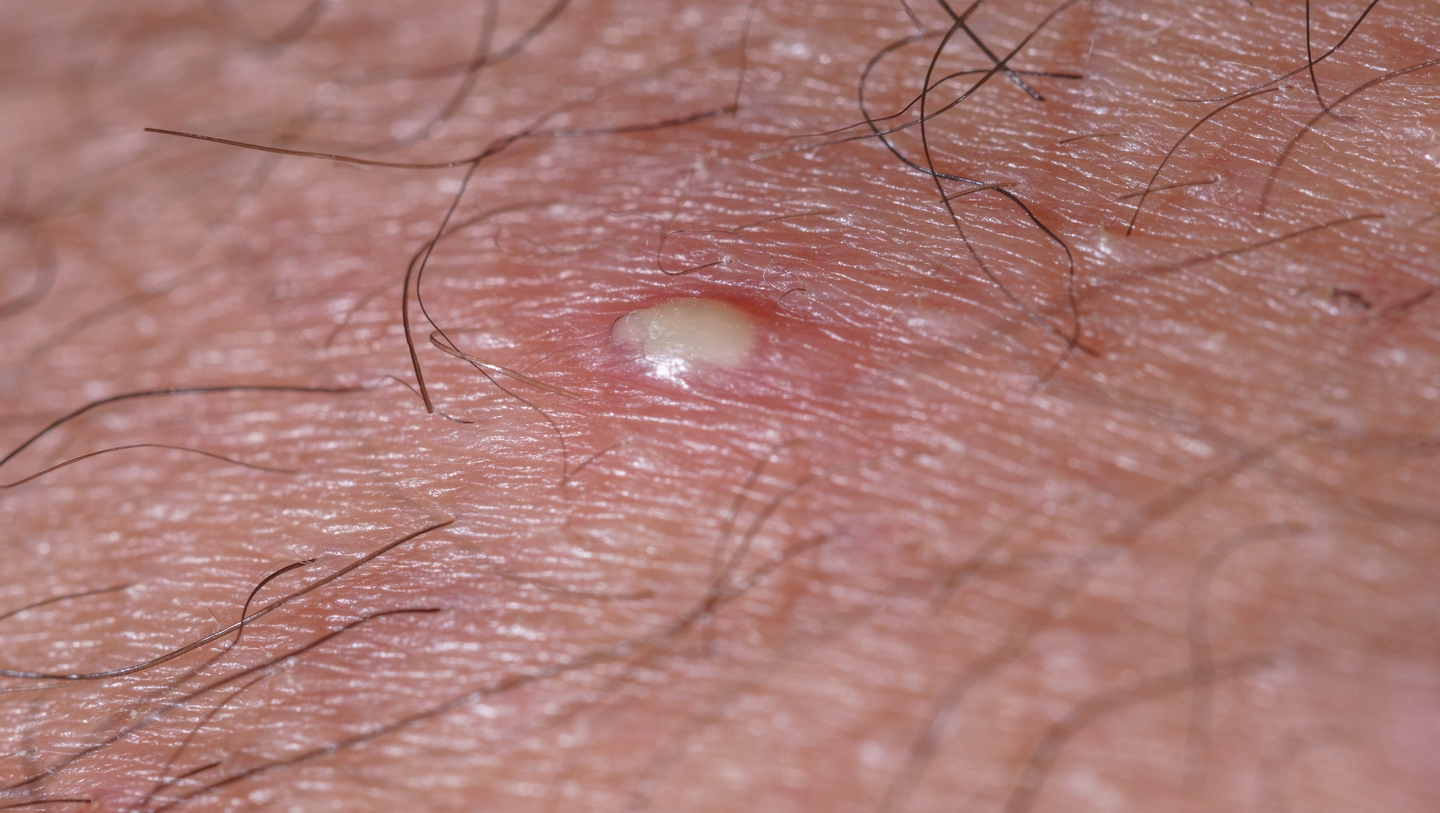
Signs of an ingrown hair include:
- a solitary sore or individual bump
- small red papules
- bumps with a pimplelike tip
- itchiness
- tenderness localized to the bump
- swelling and soreness
- white pus if the lesion is popped or bursts
Shaving, waxing, or plucking increases the chance of ingrown hairs in the pubic area, though some hairs simply grow abnormally at any time.
A clogged hair follicle can become infected, leading to pus-filled white bumps on the surface. Infection amplifies the irritation and discomfort.
Unlike genital herpes, ingrown hairs usually appear as isolated lesions rather than clusters. It’s possible to have multiple ingrown hairs at once, particularly after hair removal around the vulva or penis.
If you look closely, an ingrown hair may show as a dark line or tiny strand in the center of the lesion — the offending hair. Yet not every ingrown hair is visible externally, so absence of that line doesn’t rule one out.
Most ingrown hairs resolve without treatment once the hair emerges or is removed, and the lesion clears.
When to seek medical care
An ingrown hair typically disappears within a few days to a week. Gently cleansing the area when you shower can help slough off dead skin and allow the hair to pierce the surface.
As the hair emerges, associated symptoms should subside. Avoid squeezing the pustule, as doing so can worsen infection or lead to scarring.
Similarly, certain genital growths may fade on their own over days or weeks but can recur. Some people experience frequent herpes flare-ups, while others have only occasional episodes each year.
If you can’t identify the cause of your genital bumps or if they persist beyond two weeks, schedule an appointment with your healthcare provider.
Optum Now is operated by RVO Health. By clicking on this link, we may receive a commission. Learn more.
Getting the correct diagnosis
These common bumps can be hard to tell apart, even for clinicians. Providers may order one or more tests to reach a diagnosis.
A blood test can detect HSV infection. Your clinician might perform a complete STI panel to exclude other causes. If those tests are negative, your doctor will consider other possibilities such as an ingrown hair, blocked oil glands, or cysts.
Remember that ingrown hairs are a very common source of genital bumps. If you’re worried, discuss it with your doctor who can help clarify the issue and ease your concerns. For related skin and infection topics, see rashes herpes.



















Leave a Reply
You must be logged in to post a comment.