
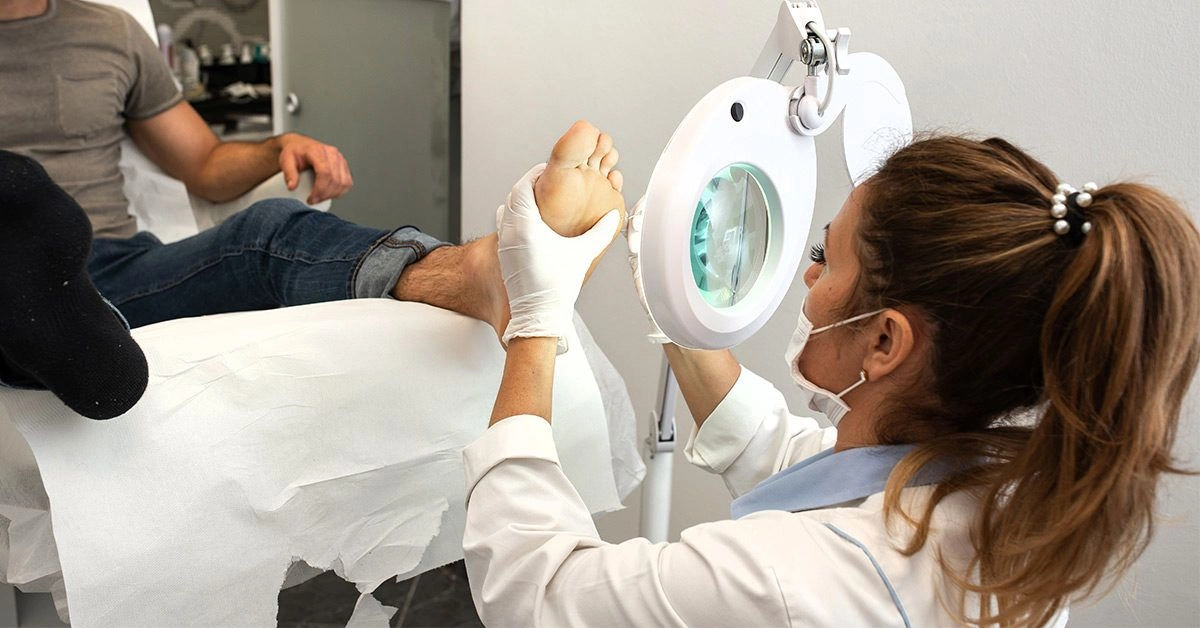
If you notice a skin bump or growth on your foot, you may be wondering whether it’s a wart or a corn.
Both can occur on the feet and, because they sometimes look alike, even clinicians can find them hard to distinguish. Despite these resemblances, warts and corns are distinct conditions.
Below is a guide to help you distinguish them, plus advice on treatment and prevention for each.
Wart vs. corn
So how do you differentiate them? The key differences are in their appearance, typical locations, and root causes.
What is a wart?
Warts are small skin lesions that can form on the feet, but they’re not limited to that area. They may appear anywhere on the body, with the hands and fingers being particularly common sites, according to Mayo Clinic.
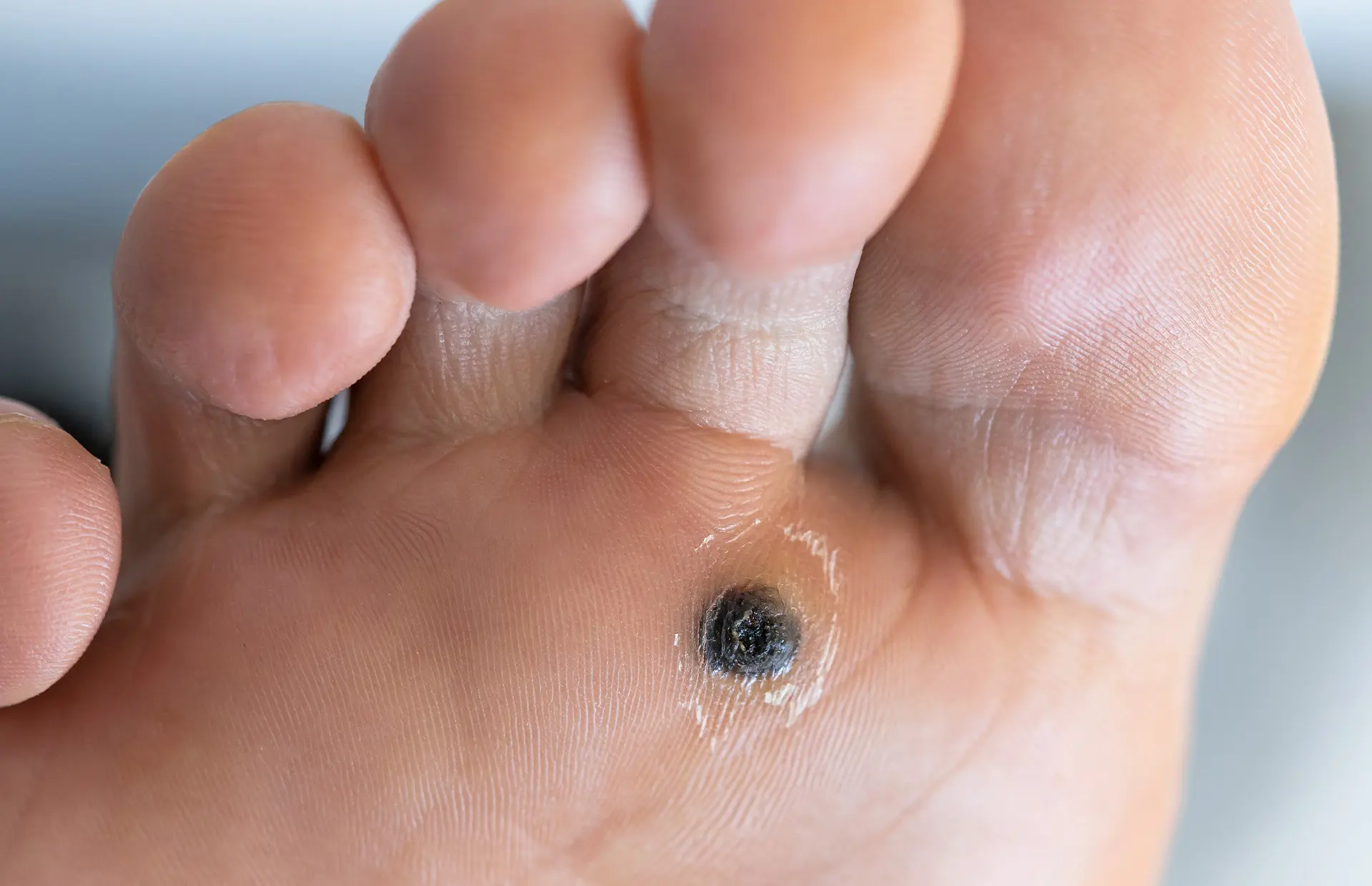
Warts are caused by the human papillomavirus (HPV), a contagious virus that spreads through direct or indirect contact.
Interestingly, a wart may not show up immediately after exposure; it can take as long as six months for one to develop.
Not everyone exposed to HPV will develop a wart—people with robust immune systems can often resist formation of the lesion.
Some warts resemble corns in that they can be small, skin-colored, and rough. A distinguishing feature, however, is that warts often have a grainy texture and tiny black dots or pinpoints scattered across their surface.
Warts can be painful and may appear in clusters. They’re generally harmless and often go away on their own over time.
What is a corn?
A corn is a localized, thickened patch of skin that forms from repeated rubbing or pressure, which is why they commonly appear on toes and other areas of the feet.
Unlike warts’ grainy look with black specks, corns present as firm, raised bumps surrounded by dry, flaky skin.
Another major difference is that corns are not viral and are not contagious.
Corns can result from wearing shoes that are too tight—creating excess pressure—or from shoes that are too loose, causing the foot to slide and rub repeatedly.
Similarities and differences
Warts and corns share several features:
- they show up as small, rough skin growths
- they can develop on the hands and feet
- they may be painful or tender when touched
They differ in these ways:
| Warts | Corns |
| can occur anywhere on the body | are limited to the feet |
| have grainy projections with tiny black dots | are hard, elevated, and flaky |
| are caused by a virus | result from friction and pressure |
How to treat a wart
Warts often don’t need active treatment and can resolve on their own. However, just as a wart may take up to six months to appear, it can likewise require months to disappear—sometimes one to two years.
If you want to remove a painful wart more quickly, over-the-counter wart removers are available as patches, liquids, or ointments. These products work to soften and break down the wart tissue.
If OTC remedies fail, a clinician may prescribe a stronger topical agent or recommend other procedures such as:
- cryotherapy (freezing the wart with liquid nitrogen)
- laser therapy to destroy the wart
- minor surgical excision to remove the wart
A common home remedy is duct tape occlusion, although evidence on its effectiveness is mixed.
To try duct tape, cover the wart with tape for about a week. After removing the tape, soak the area in water and gently file away dead tissue with a pumice stone.
How to treat a corn
To manage a corn, the first step is to eliminate the source of persistent pressure or rubbing. Choose shoes that fit correctly.
Use cushioning inserts or pads in your footwear to reduce friction and provide extra comfort.
Other self-care steps include soaking your feet to soften the corn, then carefully filing the thickened skin with a pumice stone.
Applying moisturizer can also help with dry or flaky skin around a corn.
If a painful corn doesn’t improve with home measures, a healthcare provider can remove the excess skin during an office visit.
Who’s at risk for a wart or a corn?
Anyone can develop a wart or a corn, but certain groups are more susceptible.
Because warts are viral, people with weakened immune systems are at higher risk. Those more likely to develop warts include:
- children
- young adults
- individuals with chronic conditions that suppress immunity, such as HIV
Risk factors for corns include wearing improperly fitting shoes or having foot deformities like bunions or hammer toes, which can cause toes to rub against each other or the sides of shoes.
How can you prevent warts and corns?
Preventing warts
To reduce your risk of warts, avoid contact with the virus. Don’t touch or shake hands with people who have visible warts, and avoid sharing personal grooming items like nail clippers, files, or pumice stones.
If you have a wart, avoid picking at it or biting your nails, as this can spread the virus to other areas of your body.
Preventing corns
To prevent corns, wear shoes that fit properly. You should be able to wiggle your toes comfortably—if you can’t, the footwear is too tight.
If your feet slide in your shoes, they’re probably too large and you should choose a better-fitting pair.
The takeaway
Although warts and corns can look similar, they are separate types of skin conditions.
Knowing how they differ helps guide appropriate treatment and can alert you to the presence of HPV if you have a wart. That knowledge allows you to manage symptoms and take steps to avoid spreading the virus.















Leave a Reply
You must be logged in to post a comment.